

FusionTech Reshapes Medical Informatization with Low-Code Platform, Backed by Longling Capital

FUSIONTECH
Provider of Comprehensive Medical Information Solutions
A limited set of basic LEGO bricks can be assembled into a myriad of ever-changing creations. Low-code is the “digital LEGO” that enables users to combine and build endless possibilities.
Fuxin Kechuang, which recently announced the completion of a RMB 50 million angel round of exclusive investment from Changling Capital, is precisely such an enterprise that offers limitless possibilities to hospitals and healthcare IT vendors. Established in 2015, Fuxin Kechuang is a vertical vendor specializing in the application of low-code technology to healthcare informatics scenarios.
At the recently concluded CHINC conference, Fuxin Kechuang showcased its Ziwei Hospital Software Customization Platform, DRG/DIP Solutions, Integration Platform/Smart Assessment Solutions, and Smart Hospital/Smart Medical Consortium Solutions, drawing enthusiastic attention from industry experts, hospital representatives, and healthcare IT enterprises across China.
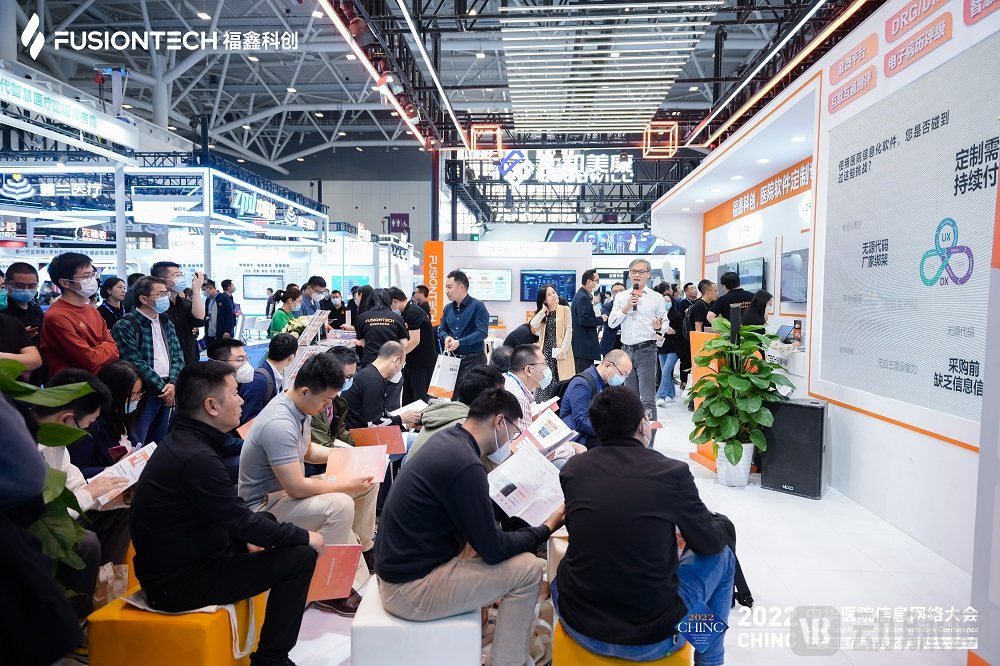
FUSIONTECH Draws Significant Attention at CHINC Conference
What kind of company is this? What possibilities will low-code technology bring to healthcare informatization scenarios? And what are the distinctive features of its highly anticipated Ziwei Hospital Software Customization Platform? With these questions in mind, VCBeat conducted an exclusive interview with Wu Di, founder of Fuxin Kechuang.
Out-of-the-Box “Ziwei Software Customization Platform”
Meeting the Fragmented and Diversified Customization Needs within Hospitals
According to Wu Di, founder of Fuxin Kechuang, there are currently over 3,000 tertiary hospitals and more than 10,000 secondary hospitals in China. The vast majority of these hospitals are not located in first-tier cities such as Beijing, Shanghai, Guangzhou, and Shenzhen, but rather at the grassroots level. Hospital software is primarily acquired through procurement, with little to no in-house development and almost no outsourcing. Consequently, hospitals—especially grassroots institutions—lack both professional technical staff for development and access to source code, meaning that customized services are nearly exclusively provided by vendors or system integrators. In light of this situation, Fuxin Kechuang believes that low-code platforms are highly suitable for healthcare informatization scenarios.
Currently, hospitals still face many fragmented and diverse customization needs. For hospitals, there is a large number of urgent informatization construction needs, but they lack the ability to build independently; each department has various customized requirements with high construction costs; there are many different business systems, leading to high and difficult maintenance costs. For IT integrators, hospital systems are complex and cannot be delivered from a single source; different hospitals have varying needs, making it difficult to standardize products, which results in high delivery costs; manufacturers in the market have inconsistent standards, leading to high integration costs.
Addressing the pain points of all stakeholders, FUSIONTECH has launched the “Ziwei Software Customization Platform,” a software customization platform for hospital informatization scenarios.
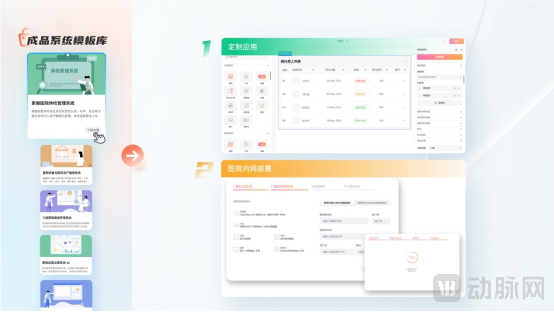
“Ziwei Software Customization Platform”Only10 Minutes to Customize and Launch Business Systems Without Coding
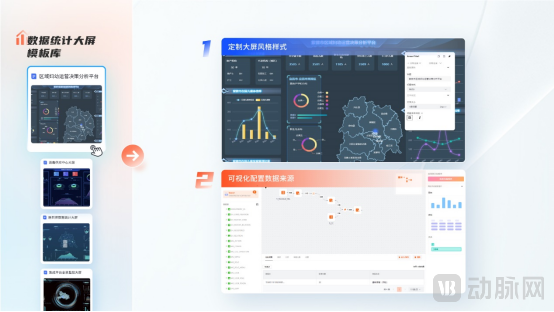
“Ziwei Software Customization Platform”OnlyMeet Hospital Large-Screen Display Needs in Just 2 Minutes
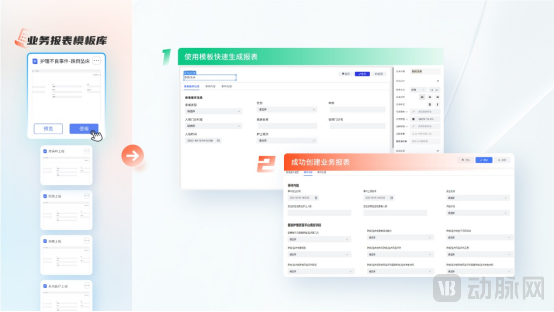
“Ziwei Software Customization Platform” completes business reporting requirements in just 15 seconds
“Ziwei Software Customization Platform” provides hospitals and vendors with a platform for rapid customization, delivery, deployment, and maintenance. It is a visual, highly open development environment that abstracts complex underlying architectures and infrastructure into a graphical interface, enabling the rapid construction of multi-terminal applications through industry-specific templates, drag-and-drop components, and visual configuration, thereby eliminating the need for manual coding.
Users can flexibly customize business processes through simple drag-and-drop operations, eliminating the need for development from scratch, reducing development complexity, saving significant time, enabling out-of-the-box usability, and lowering operational and maintenance costs.
Platforms such as the Hospital Clinical Information System, Hospital Clinical Management System, Hospital Operations Management System, Hospital Operations Statistics System, and Patient Service System feature a library of over 100 applications and an N+ report repository. They provide more than 100 medical software templates, each comprising a complete set of user interfaces, databases, and business logic. Furthermore, all business component libraries support parameterized configuration, enabling hospitals or vendors to conduct secondary development tailored to their specific needs.
The software features built-in standard data and models, integrates data from multiple platforms, is compatible with development environments, and enables interoperability among various data sources. This facilitates data sharing across healthcare programs, third-party applications, EHR systems, and other platforms, thereby enhancing data utility and allowing users to access data from multiple disparate sources through a single platform.
For traditional healthcare IT vendors, issues that previously required on-site personnel to spend days or weeks resolving can now be deployed simply through the low-code “Ziwei Software Customization Platform.” According to data from FUSIONTECH, the Ziwei Software Customization Platform enables vendors to rapidly respond to any customized hospital requirements, reducing delivery time by 81% and response time by 95%, thereby helping vendors quickly capitalize on business opportunities.
“A medical software integrator commented, ‘The adverse event reporting system delivered to the client via the Ziwei Hospital Software Customization Platform has been running smoothly for four months. Ad-hoc client requests can also be addressed rapidly through the platform, significantly facilitating our company’s swift system delivery.’”
Deeply Integrate Traditional Healthcare IT Talent with Low-Code Technology Experts
Maintaining R&D Vitality and Professionalism
Fuxin Sci-Tech Innovation’s ability to keenly capture the needs of hospitals and manufacturers, and to provide efficient, user-friendly platforms through technological innovation, is inseparable from its unique team-building model.
Fuxin Kechuang’s founding team is a rare composite group in the industry, combining expertise in low-code cloud-native technologies with extensive experience in healthcare informatization.
Wu Di, the founder of Fuxin Kechuang, boasts a rich and diverse background. As an investor, he acquired enterprise and cloud computing companies worth over $5 billion and, as the founder of Dell Ventures in the United States, backed unicorns such as Nutanix. Additionally, he is a successful serial entrepreneur who founded Shenzhen Xingyun Innovation, which was later partially acquired by Alibaba. Earlier in his career, he held positions at Dell and Huawei, where he was responsible for cloud computing-related businesses, accumulating solid technical and operational expertise.
Co-founder Wu Xu, a medical informatics product expert, possesses nearly a decade of experience in the operation and management of medical informatics products, along with over ten years of executive experience at publicly listed companies in the healthcare sector. During this period, he led his enterprise to achieve growth exceeding 150% for three consecutive years.
Wu Di explained to VCBeat that the application of technology in the healthcare industry is ultimately aimed at solving practical clinical problems. For instance, with electronic medical record (EMR) editor components, the code components themselves are merely the surface presentation; the underlying design logic involves a deep understanding of business operations and clinical practices. Without the oversight of experts in clinical business systems, general-purpose low-code companies struggle to translate clinical needs into data and code, making it difficult for them to develop platform products that meet hospital requirements.
Therefore, the FUSIONTECH team integrates traditional healthcare IT talent with low-code technology experts. The company currently employs over 200 people, 75% of whom are R&D personnel. The team includes senior professionals with more than a decade of experience in Hospital Information System (HIS) development, technical experts who have spent over ten years developing Electronic Medical Record (EMR) products, and seasoned engineers deeply specialized in key technologies such as cloud-native architecture and AI. The deep integration of these two technical disciplines enables the joint design and optimization of a low-code development platform tailored for healthcare scenarios, thereby lowering the barrier to entry for developing healthcare IT systems and accelerating efficiency across the industry.
“Last year, the pandemic made it difficult for us to travel and visit clients, with most of our revenue coming from our direct sales team. This year, we will adopt a very aggressive distributor strategy.”
Fuxin Kechuang CEO Wu Di revealed to VCBeat that the company achieved nearly RMB 50 million in contract revenue in 2022, a year significantly impacted by the pandemic. In terms of customer structure, approximately 70% of the revenue came from hospitals, primarily from their information technology departments, while the remaining 30% was derived from system integrators. This year, Fuxin Kechuang will focus on expanding its distribution model.
As of the end of February 2023, Fuxin Kechuang had secured nearly RMB 20 million in new contracts, with its 2023 revenue expected to double and projected contract revenue ranging from RMB 150 million to RMB 200 million. The company has established close partnerships with multiple healthcare IT firms and has developed channel markets in Guangdong, Zhejiang, Jiangsu, Jiangxi, Hunan, and other regions. Channel revenue is anticipated to account for more than 50% of total contract revenue in 2023. In the upcoming second quarter, Fuxin Kechuang will continue to intensify its market efforts, aiming to onboard hundreds of channel partners throughout the year.