

Vitestro Files for IPO Following €12M Series A Round Backed by 'Father of Surgical Robotics'

Sonder Capital
Early-Stage Venture Capital Firms

Vitestro
Developer of Autonomous Blood Drawing Devices
When we feel unwell and visit an outpatient clinic, the first thing doctors often say is, “Go get a blood test first.” From minor colds to routine weekly check-ups after chemotherapy, venipuncture for blood testing is required. However, long queues at blood collection windows and the potential need for multiple needle sticks during venipuncture have turned this routine examination into a “major hassle” for medical institutions, healthcare professionals, and patients alike.
Given the shortage of healthcare professionals and global population growth, there is a clear need for a future-proof innovative approach to ensure the timeliness and continuity of venous blood collection services. Thus, automated AI-powered phlebotomy robots have emerged.
Vitestro, a Dutch medical technology innovation company founded in 2017, has developed Europe’s first blood-drawing robot. This robotic phlebotomist utilizes near-infrared (NearInfrared,NIR) and ultrasound technology to detect veins, 3D technology to reconstruct vein images, and then AI algorithms to intelligently analyze the images to select the most suitable location and method for needle insertion, achieving automated venipuncture for blood tests.
Vitestro Completes €12 Million Series A Financing on March 21, Led by U.S.-Based Sonder CapitalVitestro completed a €12 million Series A financing round on March 21, led by the U.S. investment firm Sonder Capital. The funds will be used to further accelerate Vitestro’s product development, manufacturing, and market entry in Europe. Currently, clinical trials for the CE marking certification of the device prototype are underway in the European Union, with Vitestro planning to enter the European market in 2024.
In this funding round, Dr. Frederic Moll, Managing Partner at Sonder Capital, was appointed as a Non-Executive Director of Vitestro. Dr. Moll is a co-founder of Intuitive Surgical and the namesake of the da Vinci Surgical System, earning him the title “Father of Surgical Robotics.”
Dr. Frederic Moll has founded four companies in the medical device sector, three of which successfully went public and one of which was acquired by Johnson & Johnson. Why has Vitestro’s robotic device, dedicated to venous blood collection, earned the favor of the “Father of Surgical Robotics”?
Blood continuously circulates throughout the human body, playing a crucial role in maintaining the balance of metabolism, internal environment, and functional regulation.Individuals of nearly all ages and with various medical conditions will undergo venipuncture for blood collection one or more times in their lifetime.
According to statistics published by the Society of Hospital Medicine, there are over 140 million venipuncture blood tests performed annually in the United States alone. Consequently, various challenges arise across all stages of care, from healthcare institutions and medical staff to patient treatment. To address these issues, Vitestro has developed an innovative blood-drawing robot that specifically tackles the following three major challenges in phlebotomy.
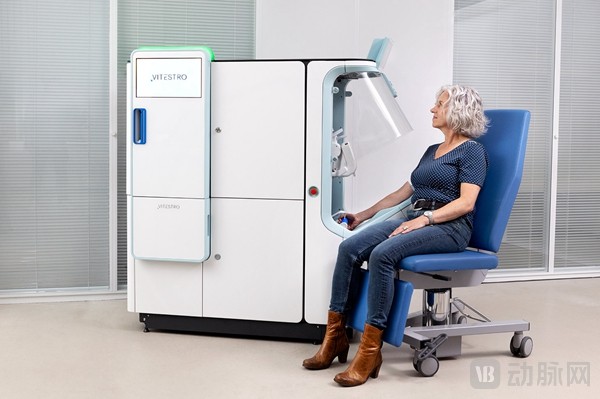
Vitestro's Blood-Collection Robot
Image source: Vitestro official website
A survey by AMN Healthcare (hereinafter referred to as the “Survey”) reveals that 85% of healthcare institutions face a shortage of nurses. Although venipuncture is considered a “minor” procedure, it involves rigorous and complex operational protocols.
Becoming a skilled phlebotomy nurse requires rigorous training and extensive practice. Moreover, sampling techniques are not fully standardized across different medical institutions. In response, the World Health Organization (WHO) has issued WHO Guidelines on Drawing Blood: Best Practices in Phlebotomy. In addition to the shortage of proficient phlebotomy staff, the long training cycle and high costs associated with new employees have become key drivers behind the long queues at blood collection stations.
Venipuncture is a highly repetitive, mechanical task that imposes significant psychological stress on healthcare professionals. The emergence of blood collection robots can effectively alleviate the personnel burden caused by traditional labor-intensive procedures, while standardized blood collection processes also improve the quality of care, contributing to the establishment of a sustainable, efficient, and resilient medical blood collection system.
According to WHO’s “Environmental Burden of Disease Series, No. 3,” globally, sharps injuries cause approximately 66,000 HBV (hepatitis B virus), 16,000 HCV (hepatitis C virus), and 200–5,000 HIV infections among healthcare workers each year.
Vitestro’s blood collection robot initiates fully automated operation as soon as the patient extends their arm. Medical staff only need to assist the patient in securing the tourniquet; subsequent steps—including disinfection, needle insertion, tourniquet release, and disposal of the used needle—are all handled through an automated process. This intelligent, contactless blood collection method reduces the risk of cross-infection between patients and healthcare workers, particularly benefiting medical personnel in infectious disease departments and hospitals.
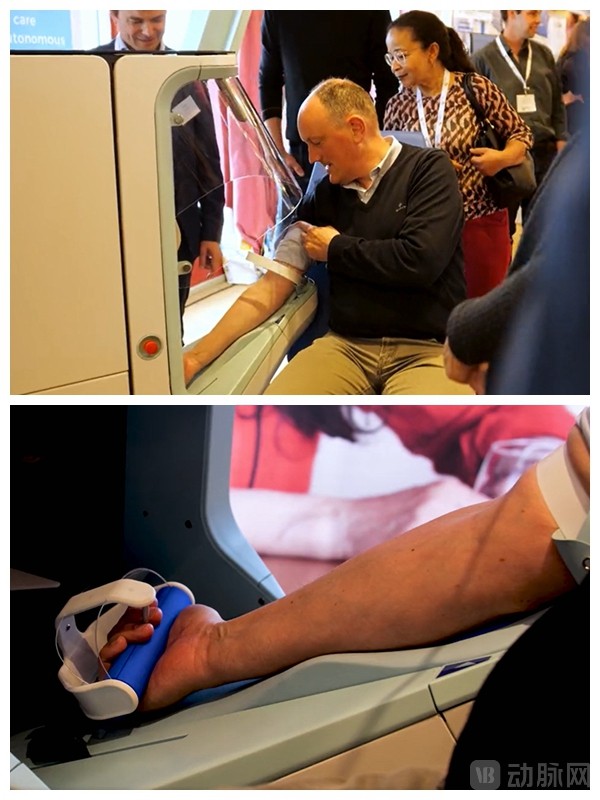
Vitestro Blood Collection Robot
Image source: Vitestro
Survey data also indicate that 82% of healthcare institutions choose to hire newly graduated nurses to alleviate the shortage of medical staff. This transitional staffing model may lead to patients, particularly those with poor peripheral venous conditions, requiring multiple venipuncture attempts, which can in turn cause complications such as phlebitis or thrombosis. Furthermore, improper collection and handling of blood samples can introduce significant errors into laboratory result analysis, thereby affecting clinicians’ treatment decisions.
Vitestro’s phlebotomy robot utilizes near-infrared and ultrasound imaging technologies to visualize peripheral veins in the arm. Throughout the blood collection process, AI technology tracks veins in real time and employs 3D reconstruction to accurately identify the optimal puncture site for each patient. This approach minimizes the pain associated with repeated needle sticks, while standardized and safe disinfection protocols reduce the risk of secondary infections.
Furthermore, repeated invasive punctures not only entail the risk of delayed treatment but also lead to increased time and labor costs for healthcare institutions in treating individual patients.
This blood-drawing robot takes approximately 90 seconds to collect blood from each patient. By visualizing blood vessels and employing an automated, precision-needle insertion protocol, the system optimizes phlebotomy efficiency, reduces the incidence of medical errors, and significantly alleviates labor shortages in healthcare facilities and laboratories. It enhances hospital service quality at the source, thereby increasing the value of hospital services.
Survey data show that, in addressing staff shortages, two-thirds (67%) of managers at these healthcare institutions opt to expand their workforce by offering additional recruitment incentives, such as signing bonuses and salary increases.
Vitestro’s 24/7 on-call blood-drawing robot frees nurses from tedious, repetitive tasks, helping healthcare institutions save on labor and financial costs while improving hospital operational efficiency. Trained medical staff can simultaneously manage multiple blood-drawing robots and patients, thereby unlocking employee productivity and value by redeploying them to areas of greatest need, thus creating additional capacity within constrained healthcare environments.
Multidimensional Technology Combination of NIR + Ultrasound + AI + 3D,
Enhancing the Adaptability and Accuracy of Blood Collection Robots
Patients with varying body mass index (BMI) values, skin pigmentation depths, vein calibers, and developmental venous anomalies (DVAs) present different requirements and levels of difficulty for venipuncture. It is necessary to identify appropriate puncture sites, angles, and force levels to avoid subcutaneous tissue damage caused by multiple needle insertions.
NIR (Near-Infrared Light) has limited penetration depth and cannot be used accurately for obese patients. Therefore, Vitestro employs a combination of NIR and ultrasound technology as the device’s “eyes” to identify patient veins. During identification, AI algorithms continuously track the vascular information captured by the blood collection robot and reconstruct it into 3D images. Furthermore, all tracked information and data are updated in real time to reflect changes in the patient’s veins throughout the entire process.
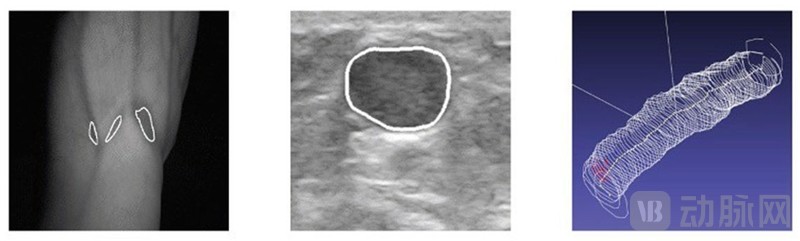
Figure 1: Near-Infrared Vein Detection
Figure 2: AI-Based Vein Tracking in Ultrasound
Figure 3: Real-time creation of a 3D image of the vein
Image source: Vitestro official website
Currently, Vitestro’s blood-drawing robot prototype is in the deep learning phase for its AI algorithms. With full AI integration and 3D image fusion reconstruction, the robot can intelligently and precisely determine the optimal needle insertion site, angle, and force based on individual patients’ venous variations. The overall puncture accuracy reaches the sub-millimeter level to prevent vessel perforation.
Currently, Vitestro has completed six clinical trials across three centers in the Netherlands: OLVG Lab BV, Result Laboratorium, and St. Antonius Hospital. The prototype device was used to perform 1,000 blood draws on more than 1,500 patients, with approximately 2,000 blood collection tubes analyzed in total.
Trial data indicate that Vitestro’s blood-drawing robot achieves a venipuncture success rate comparable to that of experienced healthcare professionals, yields blood samples that meet collection quality standards, and results in patient pain levels not significantly different from those associated with manual phlebotomy, thereby standardizing, automating, and digitizing the blood collection process.
Vitestro’s R&D team spent five years developing this breakthrough medical device. Although the blood-drawing robot does not yet have its own name, founder and CEO Toon Overbeeke and Business Director Brian Joseph have infused the project with genuine passion and commitment since its inception.

Co-founders Toon Overbeeke and Brian Joseph
Image source: Vitestro official website
CEO Toon Overbeeke holds a master’s degree in mechanical engineering from Delft University of Technology, while Brian Joseph has served as an assistant professor at Delft University of Technology since 1999. Delft University of Technology is known as the “MIT of Europe.” After graduation, Toon worked as a strategy consultant at the renowned management consulting firm Bain & Company. The two founders also previously worked together at Zarafa in the Netherlands, where Brian Joseph was co-founder and CEO.
Toon Overbeeke’s friend’s father struggled with venipuncture after undergoing multiple rounds of chemotherapy, while one of Brian Joseph’s children required regular blood tests that involved lengthy wait times and frequently yielded inaccurate results due to improper sample collection and handling. These experiences prompted them to reflect on the quality of patient care and the cornerstone of clinical diagnosis: routine and ubiquitous blood testing.
This mirrors the early experiences of Dr. Frederic Moll, who initially abandoned medicine for economics after his father’s sudden death from a heart attack, but was later moved by the life-saving power of surgery to reclaim his medical dream. Since then, he has been dedicated to striving to provide the highest quality and most equitable healthcare services to everyone in the world.
According to a report released by Fior Markets, the global capillary and venous blood sampling market is expected to grow from $1.5 billion in 2019 to $2.62 billion in 2027, with a projected compound annual growth rate (CAGR) of 7.2% from 2020 to 2027.
Facing a blue-ocean market of over a billion people, Vitestro, which has secured €12 million in financing, aims to set a new global standard for robotic phlebotomy. Leveraging Sonder Capital’s proven expertise in the commercialization of medical robots, the company will expand into the European market. Vitestro’s goal is to make its device the standard for blood collection in many European hospitals and private laboratories within ten years, while also capturing a share of the U.S. market.
CEO Overbeeke commented on the current commercial strategy: “Following CE marking, the phlebotomy robot will initially be marketed to outpatient venipuncture departments at a price competitive within the industry.”