

Mediar Therapeutics Secures $105M to Advance First-in-Class Myofibroblast-Targeted Antibody Therapies for Fibrotic Diseases

Mediar Therapeutics
Biopharmaceutical Manufacturer
Recently, VCBeat learned that biotechnology company Mediar Therapeutics announced it had secured $105 million in financing, including an $85 million Series A round recently backed by multiple pharmaceutical companies such as Novartis, Pfizer, Bristol Myers Squibb (BMS), and Eli Lilly & Company. Mediar will use the proceeds from this financing to advance the development of its first-in-class antibody therapeutic pipeline.
Mediar Therapeutics was founded in 2018 and is headquartered in Cambridge, Massachusetts. Its goal is to improve treatment options for fibrotic diseases by targeting myofibroblasts, the key cell type driving fibrosis progression. The company originated from pioneering research on fibrosis conducted at Massachusetts General Hospital and Brigham and Women’s Hospital, and subsequently launched commercial operations with support from investors such as MGH Brigham Ventures and Viva Biotech.
To date, Mediar has completed three rounds of financing, raising a total of over $100 million, and has garnered strong support from multinational pharmaceutical companies such as Novartis and Pfizer. How exactly did Mediar achieve this?
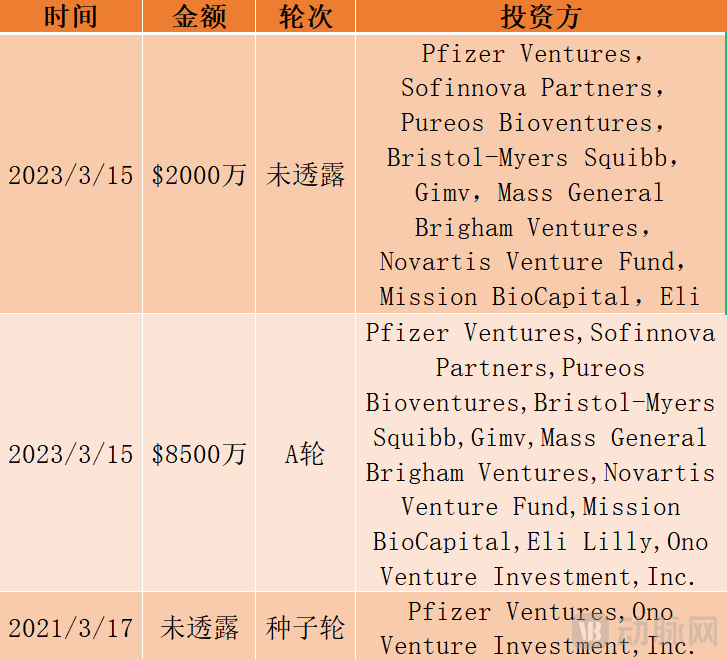
Mediar Therapeutics Historical Investments
Data source: VCBeat
Fibrotic diseases can affect multiple organs, with the primary pathological changes being an increase in fibrous connective tissue and a decrease in parenchymal cells within organ tissues. The persistence of this condition can lead to structural damage, functional impairment, and even failure of the affected organs. Moreover, this process is often irreversible and progressively worsens, posing a serious threat to human health and life.
The development of fibrotic diseases involves numerous distinct triggers; however, the hallmark common to all fibrotic conditions is the activation of myofibroblasts leading to extracellular matrix (ECM) production. Upon tissue injury, myofibroblasts initiate the wound-healing response by remodeling the extracellular environment, thereby restoring tissue integrity and facilitating the replacement of parenchymal cells.
Under normal circumstances, the pro-fibrotic process ceases as tissue healing occurs. However, in exceptional cases, persistent injury can lead to dysregulation of the pro-fibrotic process, resulting in excessive deposition of extracellular matrix (ECM) proteins and increased myofibroblast activity, thereby creating a chronic inflammatory environment.
In this environment, major effector molecules involved in fibrosis, including WNT1, are released in large quantities, which further promotes the differentiation of myofibroblasts and the production and secretion of extracellular matrix (ECM) proteins, ultimately forming a vicious cycle of continuous ECM deposition that leads to fibrotic diseases.
In developed countries such as the United States, fibrosis-related deaths account for approximately 45% of all mortality. There are numerous fibrotic diseases, with liver fibrosis, renal fibrosis, and pulmonary fibrosis being among the most common. Given the diversity of fibrotic diseases and the often-unknown etiologies, therapeutic options are scarce and efficacy is limited, underscoring an urgent need to expand the currently limited anti-fibrotic treatment strategies.
Currently, therapeutic strategies for fibrotic diseases primarily focus on targeting the underlying immune initiators that drive disease pathogenesis. However, targeting these immune initiators may disrupt protective pro-inflammatory pathways essential for host defense, thereby raising safety concerns that limit their therapeutic applicability.
Therefore, Mediar focuses on targeting fibrotic mediators that drive disease progression and is developing multiple antibodies targeting myofibroblasts. This approach will help avoid the safety limitations of current therapies and holds significant potential for treating advanced fibrotic diseases that currently lack therapeutic options.
Mediar Therapeutics’ pioneering first-in-class anti-fibrotic antibody therapy may offer patients new treatment options. Its pipeline includes three innovative targets that are readily detectable in blood and correlate with disease severity, thereby reducing clinical development risk. The lead candidate is an antibody targeting WNT1-inducible signaling pathway protein 1 (WISP-1), a protein associated with fibrogenesis.
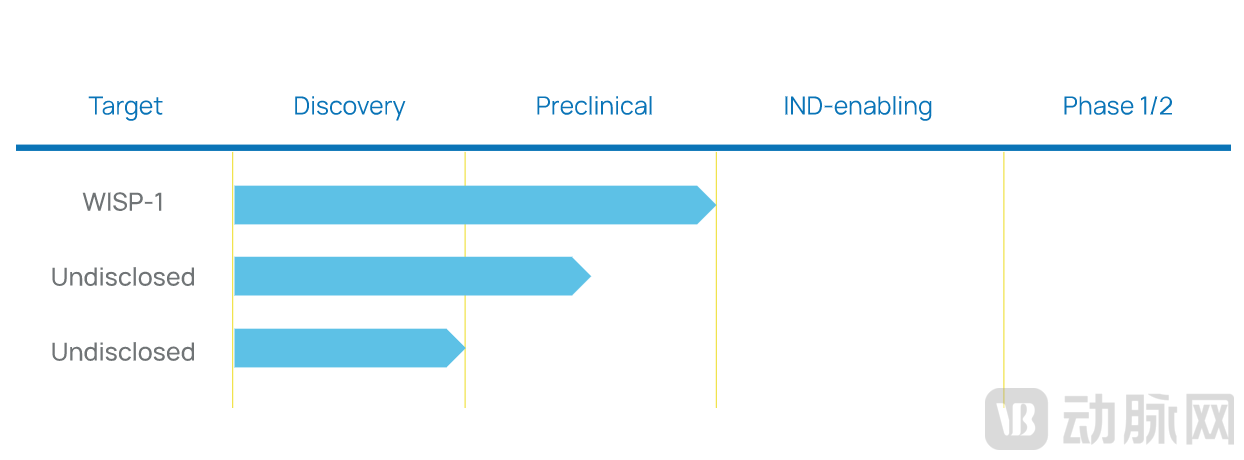
Mediar Therapeutics' Pipeline Projects
Image source: Mediar Therapeutics official website
WISP-1, short for WNT1-inducible signaling pathway protein 1, is a novel metabolism-related adipokine. As a secreted glycoprotein, it participates in multiple cell signaling pathways. WISP-1 is primarily expressed in embryonic stem cells and is involved in adult organ development. It also plays a role in numerous cellular processes, including proliferation, differentiation, apoptosis, and adhesion, and exerts significant effects in various pathophysiological conditions such as embryonic development, inflammation, injury repair, and cancer. Furthermore, WISP-1 is implicated in common fibrotic diseases.
Research Papers Co-authored by Genentech, Inc.A WISP1 antibody inhibits MRTF signaling to prevent the progression of established liver fibrosisThis study reveals a novel mechanism by which WISP-1 promotes the progression of liver fibrosis through the regulation of myocardin-related transcription factors (MRTFs), and demonstrates the feasibility of WISP-1-blocking antibodies in the treatment of liver fibrosis. Research conducted by Ning Ding’s team at Genentech, USA, found that reducing WISP-1 levels prevents fibrosis progression. In both carbon tetrachloride (CCl4)-induced models and non-alcoholic steatohepatitis (NASH) models involving choline-deficient, high-fat diet (CDA-HFD) or Western diet (WD) combined with CCl4, they observed that WISP-1-blocking antibodies significantly ameliorated advanced liver fibrosis without affecting fibrosis initiation, inflammation, or metabolic parameters.
Currently, the WISP-1 project is on the verge of entering the IND-enabling stage, with plans to advance into clinical trials in 2024. Meanwhile, Mediar’s pipeline holds potential for treating various fibrotic diseases, including idiopathic pulmonary fibrosis (IPF), primary sclerosing cholangitis, non-alcoholic steatohepatitis (NASH), and other rare diseases.
If Mediar’s current research achievements represent a high-quality response to the challenge of antifibrotic diseases, this success would not have been possible without its three key contributors: Paul Yaworsky, Simon Sturge, and Rahul Ballal.
Among the three, Paul Yaworsky was the earliest to join Mediar. A Canadian national, Dr. Yaworsky holds a Ph.D. in Molecular Neuroscience from the Mayo Clinic Graduate School of Biomedical Sciences and a Bachelor’s degree in Molecular Genetics from the University of Toronto. He joined Mediar in August 2019 as Chief Strategy Officer. Prior to joining Mediar, he worked at Pfizer, where he spent over two decades focusing on drug discovery and development and formulating the initial scientific and commercial strategies for fibrosis research.

Mediar therapeutics CSO:Paul Sikorsky
Image source: Mediar Therapeutics official website
In September 2021, Simon Sturge joined Mediar Therapeutics as Executive Chairman, bringing with him extensive experience in large-scale pharmaceutical operations and biopharmaceutical startups. Sturge previously served as Senior Vice President of Biologics at Boehringer Ingelheim in Germany, where he was responsible for the global biosimilars business, and has also chaired two biopharmaceutical startups. As CEO of Kymab, a company developing innovative antibody therapies, Sturge led its sale to Sanofi S.A. for $1.45 billion. His background in developing and advancing antibody-based novel therapies at Kymab directly contributes to Mediar’s establishment of an antibody-based pipeline for fibrosis treatments.

Mediar therapeutics chairman:Simon Sturge
Image source: Merck KGaA, Darmstadt, Germany
Rahul Ballal joined Mediar in February 2023 and serves as its CEO. A biotechnology executive, he holds a Ph.D. in Biochemistry from Georgetown University, an M.S. in Bioinformatics from Johns Hopkins University, and a B.S. in Biology from Brown University. Prior to joining Mediar, he served as CEO of Imara, a publicly traded clinical-stage biotechnology company, where he led the company through a $200 million initial public offering (IPO) and completed its merger with Enliven Therapeutics (ELVN).

Mediar therapeutic CEO:Rahul Ballal
Image source: LinkedIn
According to Zhiyin Pharmaceutical’s report, “The ‘Large Market’ Within Rare Diseases: An In-Depth Analysis of the Fibrosis Therapeutic Landscape,” there is currently a gap in innovative drugs for anti-pulmonary fibrosis in China, with the market still dominated by traditional anti-fibrotic agents. Although the patient population with pulmonary fibrosis in China is substantial and growing year by year, treatment options remain limited and often yield suboptimal outcomes, leaving patients with few choices. Consequently, there is an urgent market need for affordable and effective therapies to fill this void.
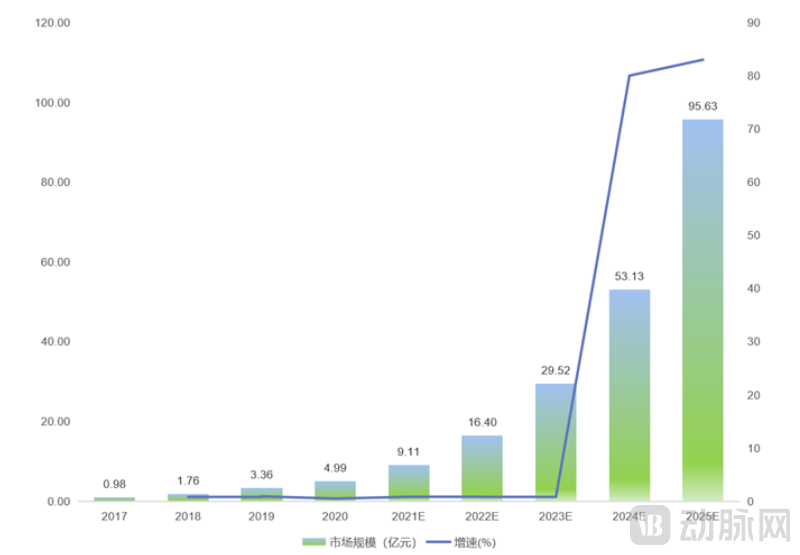
Market Size and Growth Rate of Anti-Pulmonary Fibrosis Drugs in China, 2017–2025
Image source: Huajing Intelligence Network, Zhiyin Pharmaceutical Database
Currently, two innovative drug companies in China are poised for launch: Weijiu Biopharma and Huitai Biopharma.
Weijiu Biopharma is a biopharmaceutical company that has received strong support from renowned institutions and individual investors, including Yonghua Investment, Chenyi Investment, Lichen Capital, and Juming Venture Capital. The company is dedicated to discovering, developing, and commercializing innovative therapies for debilitating diseases caused by inflammation and tissue fibrosis, such as idiopathic pulmonary fibrosis and systemic sclerosis. On January 6, 2022, the company completed a Series A financing round totaling tens of millions of U.S. dollars. The funds raised will be used to rapidly advance the Investigational New Drug (IND) applications and clinical trials for its global first-in-class drug candidates, accelerate the development and implementation of its product pipeline, and further enhance its R&D team and key technology platforms.
Huitai Biopharma was registered in January 2017 and is China’s first biotechnology company to establish an expert platform focused on fibrosis. The company places high priority on the development of novel drugs and the construction of related technical platforms, including three core technology platforms and two drug discovery platforms. Its lead candidate, HTPEP-001, has become the first TSP-1–targeted therapy globally to receive approval for clinical trials, and it is the first domestically developed drug approved for clinical investigation in the treatment of PF-ILD in China.