

Xiaolu Lvdong: Reclaiming Time for Community Healthcare Workers to Enhance Service Efficiency and Quality
The new healthcare reform plan implemented in 2009, the “Opinions of the CPC Central Committee and the State Council on Deepening the Reform of the Medical and Healthcare System,” elevated medical informatization to a strategic level as a core pillar supporting the reform of the medical and healthcare system. The vigorous promotion of tiered diagnosis and treatment in recent years has also relied heavily on the construction and improvement of information systems. Indeed, the critical importance of medical informatization to the development and reform of China’s healthcare sector needs no further elaboration, and its value is beyond doubt. However, we must also acknowledge that the practical implementation of medical informatization in China still has room for improvement.
“Numerous functional defects persist in the information technology software... As this software is still in its newly developed trial phase, many features are incompletely designed. Furthermore, its internet-based architecture has led to occasional slow response times and system crashes.” This excerpt is from a survey report on community health services, which further adds: “Overall evaluation indicates that the software has not significantly improved the efficiency of clinical management, nor does it offer any functional enhancements over the legacy systems previously used by various institutions.”
Although this is an extreme case, it offers a glimpse into the problems emerging in the actual implementation of healthcare informatization in China. However, any new initiative will inevitably encounter varying degrees of issues during its practical rollout; one should not dismiss it entirely due to minor imperfections. The correct approach is to focus on how to resolve and improve these issues. Since the fundamental purpose of building informatization systems is to enhance hospital operational efficiency, apart from achieving interoperability at the medical data level, are there other perspectives that can help primary care hospitals improve work efficiency and alleviate their heavy workloads?
Hefei Xiaolu Lüdong Technology Co., Ltd. (hereinafter referred to as “Xiaolu Lüdong”) has identified a unique niche by developing a grassroots medical convenience service platform. The company focuses on the National Basic Public Health Services Program and is dedicated to alleviating the administrative workload pressures faced by primary healthcare institutions.
Administrative tasks refer to duties other than clinical diagnosis and treatment by physicians, such as public education on vaccination, consultation on maternal and child healthcare and nursing, answering residents’ inquiries regarding routine medical visits and administrative procedures, online and offline health education and promotion, and publicity for primary healthcare and public health services.
As of June 2022, Xiaolu Ludong had established collaborations with more than 30 primary healthcare institutions in Hefei, hosting over 100 online and offline science popularization events with an average attendance of more than 200 participants per session. Furthermore, since late 2019, Xiaolu Ludong has cumulatively served 100,000 residents, with peak online consultation volume reaching 5,000 visits.
The origins of the Xiaolu Lüdong story can be traced back to founder Zhao Lu’s previous work experience.
“It was an internet healthcare company. As Zhao Lu recalled, ‘We tried almost every direction in the internet healthcare space.’ However, due to a broken capital chain, the company ultimately ended in failure.”
This professional experience made Zhao Lu realize that internet healthcare startups relying solely on “storytelling” could not achieve sustainable growth. Later, by chance, Zhao Lu came into contact with a pilot project launched by the National Health Commission called “Senior Nurses Serving in Communities.” It was precisely this project that became the impetus for Zhao Lu to later found Xiaolu Ludong.
In 2017, Anhui Province launched a pilot program for innovative urban medical consortia, inviting senior nurses from large tertiary hospitals to provide services at the community level. They established eight specialized nursing clinics, including maternal and infant care studios, geriatric nursing, and rehabilitation nursing, with a focus on serving three key populations: the elderly, pregnant and postpartum women, and infants and young children.
Perhaps by chance, a chief obstetrics nurse acquainted with Zhao Lu was invited to establish a maternal and infant care studio at a community hospital. However, due to the limited promotional capacity of the community, the development of this studio yielded unsatisfactory results—“many residents were even unaware of its existence, let alone that the community hospital had such high-quality resources.”
After learning about the operations of this maternal and infant studio, Zhao Lu decided to leverage the advantages of an internet healthcare company to support its daily promotional efforts. The results were quite significant: “The feedback from the promotions at that time was rather positive. Not only did attendance at each event increase significantly, but provincial and municipal leaders also visited for inspections, and many local media outlets covered the story.”
This experience not only made Zhao Lu realize the limited promotional capabilities of primary healthcare institutions, but also revealed a seemingly inconspicuous yet significant challenge in primary care that consumes a substantial amount of medical staff’s time and energy: administrative tasks.
This is closely related to the functions undertaken by community hospitals. It is reported that the primary responsibility of community hospitals is to provide public health and basic medical services to community members. Public health services mainly include health education, disease prevention, and healthcare.
Among these, health education naturally relies on publicity efforts. Vaccination, a key measure for disease prevention, also involves substantial administrative tasks, including the dissemination of vaccine-related information, public education on vaccination knowledge, and responses to inquiries regarding vaccination.
More specifically, through on-site visits to community hospitals, Zhao Lu found that the departments with the highest patient volumes were concentrated in the immunization clinic, pediatrics, and obstetrics and gynecology. The medical needs of patients in these three departments are primarily for vaccinations and health check-ups. As previously mentioned, vaccination involves a significant amount of administrative work, and so do health check-ups (e.g., selection of check-up items, scheduling of appointments, and communication of pre-check-up precautions).
In a nutshell, mothers and infants account for half of the daily patient volume at community hospitals, while communication with patients or community residents consumes the majority of healthcare workers’ daily energy. Unfortunately, against the backdrop of an undeniable shortage of talent in primary care institutions, staff are already somewhat “overburdened” by routine clinical duties, let alone additional administrative tasks.
This can lead to two scenarios: when residents know the community hospital’s phone number, it is difficult to get through; when they do not know the number, they are even less sure how to obtain it. Clearly, an “information gap” exists between community hospitals and local residents. This information gap may further strain doctor-patient relationships, leading to unnecessary complaints due to poor communication.
“Since neighborhood committees can collaborate with social organizations to implement grid-based governance and address issues in residents’ daily lives, why can’t third-party personnel assist primary healthcare institutions in resolving patients’ access-to-care challenges in the grassroots health sector, where medical resources are severely scarce?” Zhao Lu wondered.
It was precisely this idea that inspired Zhao Lu to found XiaoLu LvDong.
In summary,Xiaolu Ludong’s business is centered on addressing the administrative burdens faced by community healthcare workers and improving residents’ access to primary care at grassroots medical institutions.
If the administrative tasks of medical personnel are further detailed, they can be broadly categorized into two major areas: order maintenance and information dissemination (referring to health education, release of consultation information and appointment scheduling, healthcare consultations, etc.).
Anyone who has experienced the peak hours at a community hospital will likely be deeply impressed by such a scene: in the not-so-spacious corridors, it is “hard to find even a single seat.” Many parents are soothing the children in their arms while waiting for their numbers to be called. Meanwhile, the air is filled with children’s crying and the occasional friendly exchanges between medical staff and parents: “Doctor! How much longer until it’s our child XXX’s turn?” “Doctor, how long does my child need to be observed before we can leave? Can’t we leave earlier? For the next vaccination…” “Your number will be called when it’s your turn!” “A 30-minute observation period is mandatory. The next available appointment is…” “Please do not cut in line; wait for your number to be called!”
In such scenarios, healthcare professionals are required to simultaneously manage clinical consultations, address patient inquiries, and maintain order on-site, leaving them truly “stretched thin.”
Deer RhythmTargeting this pain point, we beganCollaborate with street-level public welfare organizations to recruit and assign community outpatient service volunteers to fixed posts at community institutions, maintaining order in high-traffic departments such as the immunization clinic and child healthcare clinic.
“Community service volunteers in second- and third-tier cities across China are mostly concentrated in the realm of daily living assistance, with few volunteer programs genuinely recruiting for medical-related services. However, mundane tasks such as maintaining order and answering inquiries actually consume a significant amount of time and energy for healthcare professionals at community hospitals. We aim to help these medical staff ‘break free’ from such trivial matters, enabling them to devote their energy to more professional duties,” said Zhao Lu.
If the primary purpose of establishing outpatient service volunteers is to maintain on-site order, then the establishment of community health assistants aims to address a more diverse range of issues.
In 2020, the Ministry of Human Resources and Social Security of China officially included “Community Health Assistants” in the national occupational classification system, defining them as professionals who apply knowledge and skills in health care and the internet to manage community health records, conduct health education and training, facilitate medical consultations, provide health and wellness counseling, act as patient advocates or companions, and handle public health incidents.
andBefore the Ministry of Human Resources and Social Security officially included “Community Health Assistants” in the national occupational classification, Xiaolu Lüdong had already joined hands with community hospitals in Hefei to launch pilot programs.
To this end,Xiaolu Ludong has recruited a team of healthcare professionals with pediatric medical backgrounds to form a Community Health Assistant team. Their primary responsibilities focus on providing convenient services and nursing care to address non-clinical issues encountered by residents when seeking medical care at primary healthcare institutions.
For example, in the context of vaccination, Community Health Assistants can provide services such as scheduling vaccination appointments, facilitating clinical visits, updating and disseminating community vaccine inventory information, offering personalized advice on vaccination schedules, and monitoring and providing feedback on suspected adverse events following immunization (AEFI).
For pregnant women and infants, community health assistants not only provide regular reminders for routine prenatal and postnatal check-ups but also address common caregiving concerns, disseminate medical consultation information, and facilitate appointment scheduling. Furthermore, they share daily health education content within the group, conduct monthly online health lectures, and offer one-on-one personalized health education consultations to residents in need.
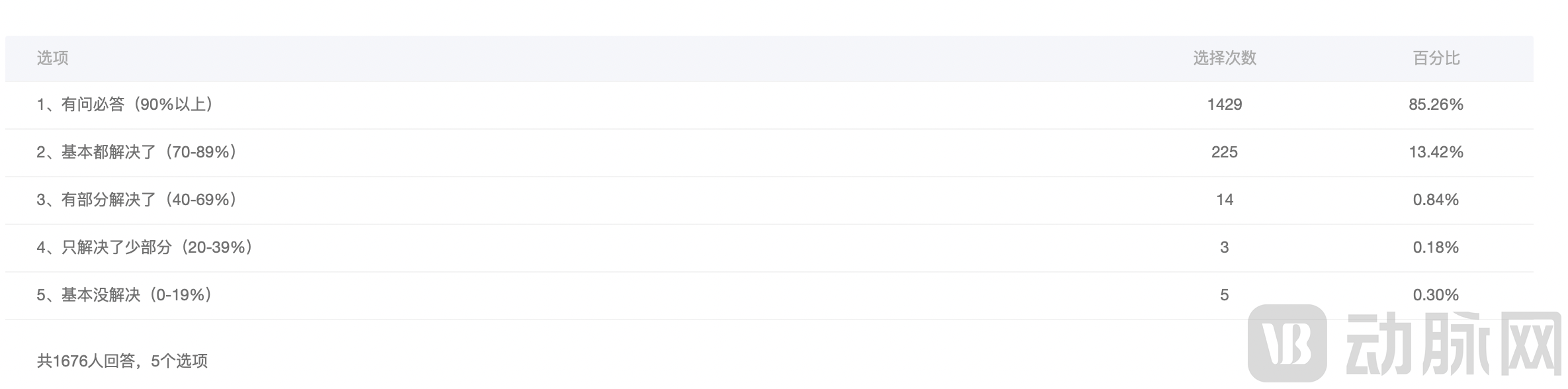
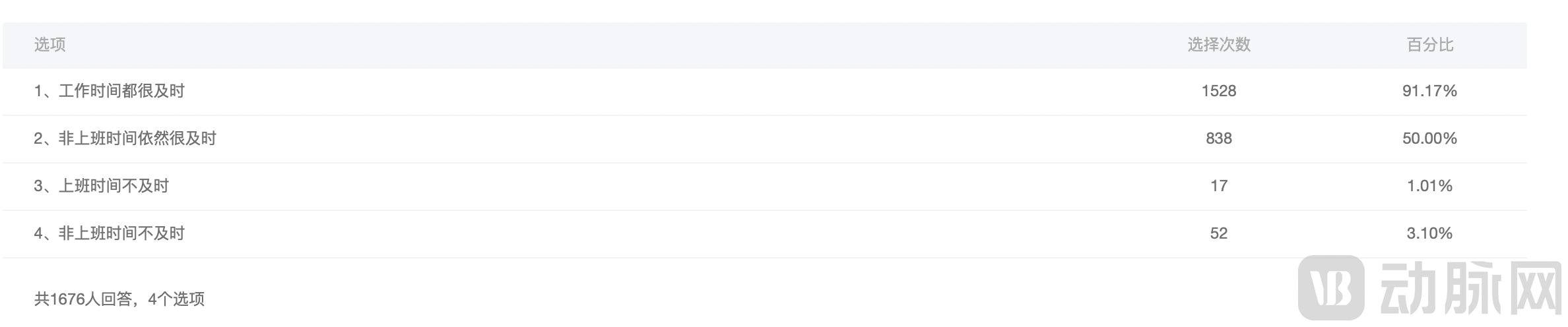
Partial Screenshot of the Survey Results for the Xiaolu Lüdong Community Health Assistant
"Furthermore, in select community hospitals with close partnerships, Xiaolu Yudong’s community health assistants can support family doctor service enrollment and conduct routine follow-ups and inquiries post-enrollment, thereby helping primary healthcare institutions increase family doctor enrollment rates and alleviating the burden of non-clinical consultations on family doctor teams."
“In fact, residents can consult our community health assistants online at any time regarding any questions they may have when seeking medical care at community hospitals. Even if items are lost during a visit, our community health assistants can help locate them,” said Zhao Lu.
As for internet platform operations, this is Xiaolu Lüdong’s core competency. Beyond addressing the fundamental issue of “information flow,” it also aims to empower grassroots medical institutions with enhanced promotional capabilities.
For example, the establishment and continuous content updating of community WeChat official accounts primarily address the promotional needs of community hospitals. According to Zhao Lu,Currently, many public community hospitals lack professional staff for operating internet platforms, resulting in weak online promotional capabilities. By providing managed operations for community WeChat official accounts and training relevant departmental personnel, Xiaolu Yudong can help community hospitals establish a new media matrix for primary healthcare. This not only supports the promotional efforts of community hospitals but also helps residents better understand the primary medical services available in their neighborhoods, bridging the information gap between both parties and facilitating the implementation of tiered diagnosis and treatment.
Moreover, as an internet company, Xiaolu Lüdong can also provide mini-programs, H5 promotional campaign production, development of customized tools, and video filming and production services tailored to the needs of medical institutions.
For example,To address the issue of scalpers snatching up appointments for cervical cancer vaccines at community hospital vaccination clinics, Xiaolu Yudong has independently developed a lottery-based appointment platform for cervical cancer vaccines.— Users must first register for an appointment, after which vaccination slots and times are allocated via random selection. Furthermore, given that vaccine administration is often subject to population- and age-specific restrictions, the Xiaolu Ludong appointment platform incorporates “population restriction” features. Community hospitals can configure gender and age limits in the backend system, thereby enhancing medical service efficiency while mitigating complaints arising from vaccine shortages. (Note: Restricting the eligible population helps prevent vaccination deadlines from being missed due to prolonged vaccine stockouts.)
Indeed, whether it is the recruitment of outpatient volunteers and community health assistants, or the operation of internet platforms,For community healthcare professionals, Xiao Lu Lüdong can, in theory, “liberate” them from a large volume of administrative tasks, allowing them to focus on clinical care. For community residents, it builds a bridge for doctor-patient communication, reducing the need for multiple visits while providing each household with a “health advisor” who is readily available to answer questions and resolve healthcare-related issues as they arise.
“Over the past three years since our inception, our entire team has devoted substantial efforts to public-welfare-oriented convenient services, while exploring commercial monetization across various sectors under the premise of delivering high-quality services to residents. As we strive to achieve break-even, we are also piloting additional healthcare-related services to diversify our revenue streams, such as ‘Internet Plus’ home-based nursing care and mental health counseling for family members,” said Zhao Lu solemnly. “However, given the public-welfare nature of our project, we aim to sustain its long-term operation through government procurement of services once our model matures. We hope that more leaders and industry peers will recognize the long-term advantages of this initiative and join hands with us to make tangible contributions to the development of primary healthcare services.”