

Angelexo's Intelligent Rehabilitation Robots: Pioneering the 'AI + Rehab' Era with Clinical-Centric Innovation
ANGELEXO
R&D and Manufacturer of Intelligent Rehabilitation Robots
Hemiplegia, prolonged bedridden status, burdening the family, and even spending the final moments of life in pain and loneliness—in the eyes of many, this is the outcome for patients with stroke (cerebrovascular accident).
Many stroke patients ultimately end up on this path precisely because of delayed rehabilitation therapy or a lack of effective rehabilitative medical devices. How to enable stroke patients with hemiplegia to progress from merely “surviving” to “living with dignity,” and further to “living healthily,” thereby achieving the goal of “illness without disability, and disability without incapacitation,” is an urgent ethical, medical, economic, and social issue that demands resolution. Moreover, this problem will become increasingly severe as population aging intensifies.
At the recently concluded Two Sessions, health and elderly care emerged as a hot topic, with promoting the high-quality development of rehabilitation medicine in China becoming a consensus among numerous committee members and deputies.
The National Health Commission explicitly stated in its “Opinions on Accelerating the Development of Rehabilitation Medical Services” that high intelligence, advanced technology, and high quality should serve as key directions for the development of rehabilitation medical devices, with the aim of reducing reliance on the number and experience of rehabilitation physicians.
Rehabilitation robots represent the high intelligence, advanced technology, and superior quality of rehabilitation medical devices.. Creating rehabilitation robots that meet urgent clinical needs requires innovation, but choosing to innovate means not following the crowd or being a trend follower; it means embarking on a solitary path. To prevent more hemiplegic patients from wasting their lives in isolation, Angelai Technology has chosen to persevere firmly on this path of innovation—a journey it has been on for six years.
The medical device industry is a serious one. Therefore, the sole criterion for achieving breakthroughs in this sector is product strength, which must be validated by clinical outcomes.
According to data from the Global Burden of Disease study, the total number of stroke patients in China is nearly 29 million, with more than 18.76 million living with the condition, and approximately 3.94 million new cases requiring rehabilitation each year.
In response to the substantial needs of this large population, Angelai’s R&D team immersed itself in neuroscience and clinical rehabilitation medicine. The team visited nearly one hundred rehabilitation hospitals across China, consulted with clinical experts, and engaged in multidimensional academic discussions with leading figures in the domestic and international rehabilitation industries, thereby gathering extensive clinical feedback.
The development of exoskeleton robot technology has spanned over 60 years. It was introduced into the field of rehabilitation medicine after 2014. Despite several iterations during this period, the following issues persist:
1. Primarily passive-assisted training, with weak human-machine interaction capabilities;
2. Primarily controlled by preset programs, lacking personalized training;
3. Predominantly peripheral sensory nerve stimulation, with limited overall benefits for neurological rehabilitation.
In other words, while traditional exoskeleton rehabilitation robots can assist paraplegic patients in standing and walking, further optimization and innovation are required for therapeutic rehabilitation. It is essential to break through the constraints of existing concepts and technologies, ensuring that the hardware is lightweight and durable in terms of clinical rehabilitation mechanisms, and that the software is personalized, intelligent, and precise.
In the field of rehabilitation, diverse needs urgently require attention, ranging from the hand, wrist, and shoulder to the hip, knee, and ankle; spanning psychology to cognitive science; and addressing populations from children with cerebral palsy to elderly individuals with muscle weakness.
Anjie Lai closely addresses the rigid demands of rehabilitation by deploying a multi-tiered product portfolio, which includes single-lower-limb exoskeletons, single/double ankle-foot orthoses, upper-limb devices, hand function trainers, pediatric cerebral palsy rehabilitation robots, trunk rehabilitation robots, and balance training robots. As Anjie Lai’s first approved product, the LiteStepper® single-lower-limb hemiplegia rehabilitation robot serves as a pioneer, embodying the company’s philosophy for rehabilitation medical devices.
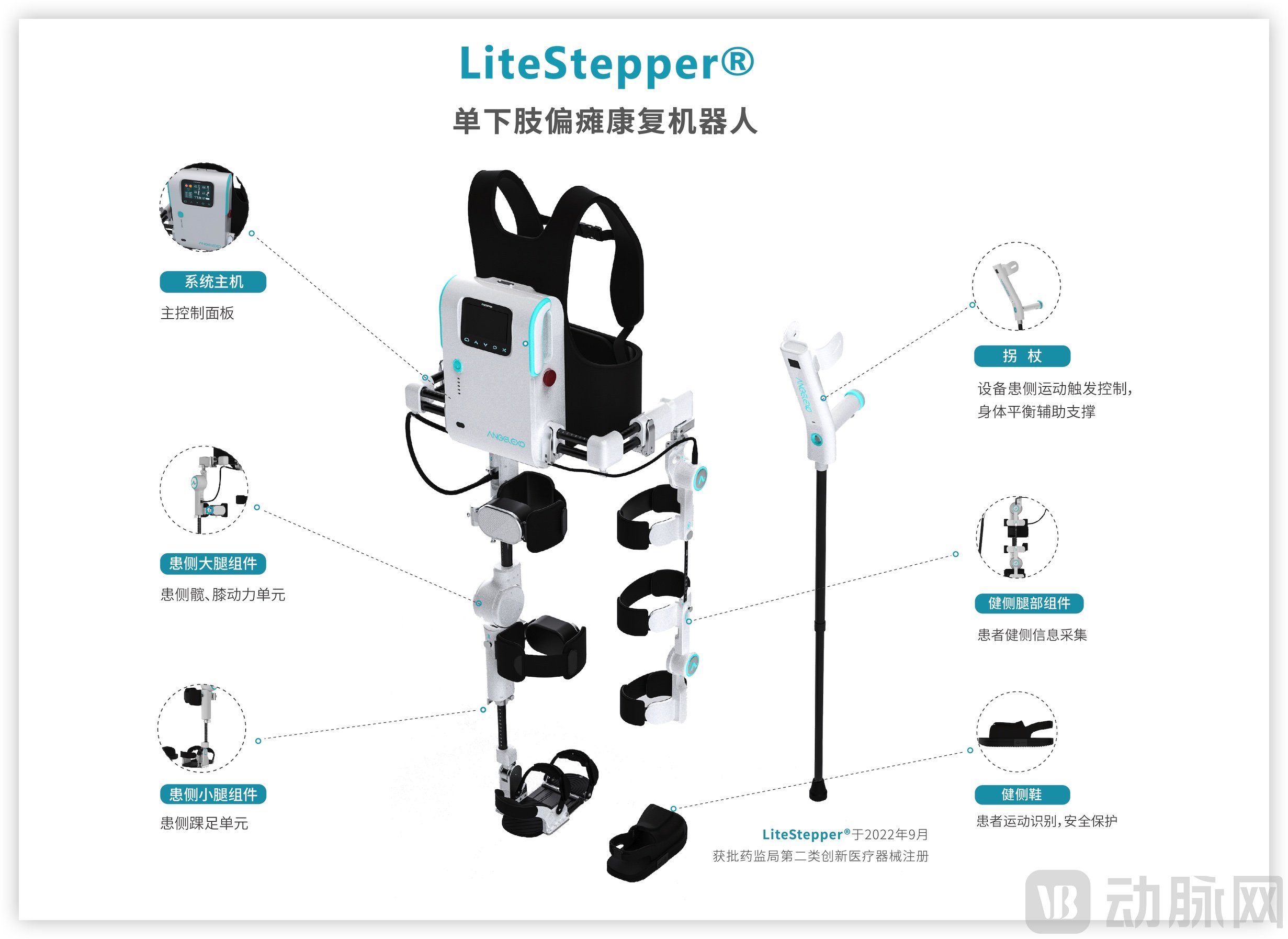
LiteStepper® Single-Leg Hemiplegia Rehabilitation Robot
The LiteStepper® single-leg hemiplegia rehabilitation robot features a globally pioneering single-lower-limb design. Compared to common dual-lower-limb products, it offers the advantages of being lighter and easier to don. Furthermore, supporting AngelRay’s commitment to this technical pathway is the team’s insight into the future out-of-hospital application scenarios for rehabilitation robots.
From the outset of its R&D initiatives, AngelRay has firmly believed that the applications of rehabilitation robots extend far beyond neurological recovery for patients, and their usage scenarios are not confined to hospitals; there remains substantial untapped potential for rehabilitation needs in clinical settings. In addition to having lower requirements for the operating environment, the single-lower-limb configuration can also adapt to a wider range of application scenarios by adjusting its functional modules.
During the recently concluded Two Sessions, numerous deputies and committee members submitted proposals advocating for the decentralization of rehabilitation medical resources to bridge gaps in primary care, promoting the integration of rehabilitation assistive devices into households and communities, optimizing community-based leasing services for such devices, and establishing DRG payment models and standards tailored to rehabilitation disciplines. These initiatives indirectly highlight a developmental trend wherein the application scenarios for intelligent rehabilitation robots will expand into community and home settings.
Products that have not laid the groundwork in fundamental innovation and R&D will lack sufficient competitiveness in new application scenarios. Improvements in form are merely superficial; true innovation lies in the transformation of rehabilitation models.
Traditional exoskeleton rehabilitation robots mostly adopt passive training modes, in which patients undergo mechanical movement exercises under program control to stimulate peripheral nerves. This approach limits the ability of the brain’s motor nerve centers to control movement on the patient’s unaffected side and forfeits the opportunity for positive neuroplasticity during the critical period of brain remodeling following brain injury.
This is the innovation achieved by Angelai: through an exoskeleton design that leaves the patient’s unaffected side open, data from the unaffected side is replicated to the affected side via algorithms in milliseconds, thereby guiding rehabilitation of the affected side.
Such innovation is not without purpose. Research has found that after nerve damage in the brain's motor function areas, patients' central nervous system control over their limbs is weakened, thereby affecting limb motor function. After undergoing rehabilitation training, brain-injured patients can achieve a certain degree of repair in the affected areas. This clinical neurorehabilitation principle is known as "brain plasticity."
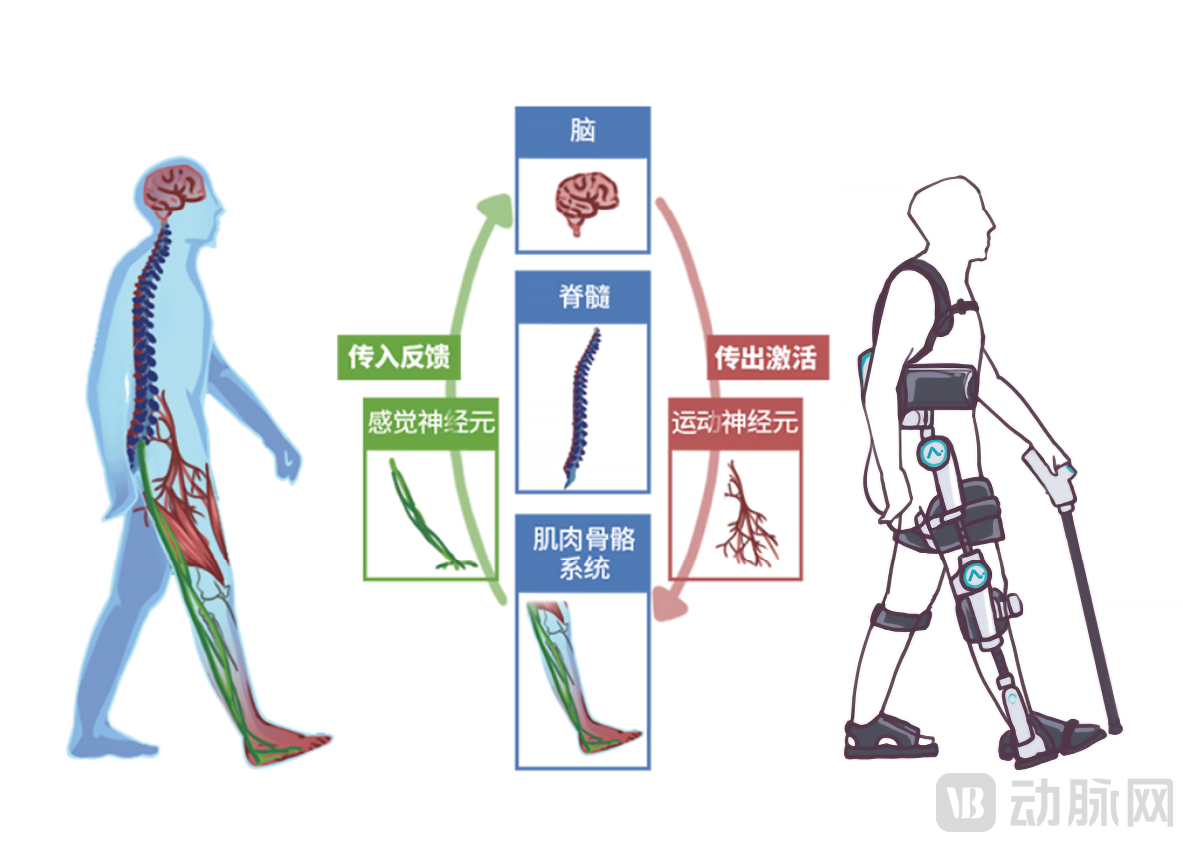
Schematic of the Innovative Closed-Loop Neurorehabilitation Process
Meanwhile, clinical practice has confirmed that methods such as “motor imagery,” “mirror therapy,” “motor relearning,” and “bilateral coordinated training” are effective in promoting brain plasticity. The challenge lies in how to efficiently apply these methods on rehabilitation robots.
In the past, these training methods relied on the experience of rehabilitation therapists, with outcomes influenced by the therapist’s expertise, skill level, and physical stamina, making it difficult to achieve personalized, precise, and objective treatment. AngelRay leverages its products to visualize these uncertain and hidden clinical pathways, using the movement patterns of the unaffected limb to guide the motor intent of the affected limb. This facilitates interactive gait training, achieves seamless human-machine integration, and promotes efficient rehabilitation of motor neurological function.
The LiteStepper® single-lower-limb hemiplegia rehabilitation robot provides patients with full-cycle, active, efficient, personalized, and movement-induced “central-peripheral-central” closed-loop neurological rehabilitation, enabling them to restore complete neuromuscular control of the affected limb in a short period.
Anjielai, which has laid out a full-ecosystem rehabilitation robot portfolio, leverages a single flagship product as its breakthrough point to establish clinical research and trial collaborations with dozens of renowned medical institutions both in China and abroad, jointly advancing academic research and clinical applications of intelligent neurorehabilitation robots on a global scale.
Enable frontline healthcare professionals to recognize and understand Anjielai in actual clinical practice. Once Anjielai’s product matrix is established, the synergy and efficiency of departmental rehabilitation work will increase significantly. The ultimate vision is: one rehabilitation department, one brand, and one intelligent solution suite.
In March this year, the ExoMax® dual-ankle rehabilitation training robot was approved, once again demonstrating Angelai's innovation capability.
Compared to the development of innovative drugs, the R&D of medical devices involves an additional layer of complex precision manufacturing systems. Consequently, innovation in medical devices is rarely achieved overnight; instead, it follows a spiral upward trajectory. Although this developmental path may be slower, it leads to more robust and sustainable growth after periods of accumulation and consolidation.
For innovative medical device companies, leveraging existing technology platforms for horizontal expansion to develop a broader product portfolio and form comprehensive solutions is a clear path forward, and Anjielai is no exception.
Hemiplegia caused by stroke leads to impaired ankle range of motion and muscle strength after prolonged bed rest, affecting normal walking. Common symptoms such as foot drop and foot inversion also restrict the ability to walk normally. Meanwhile, hemiplegic patients are further troubled by joint stiffness, leg muscle atrophy, and adhesions of tendons and ligaments.
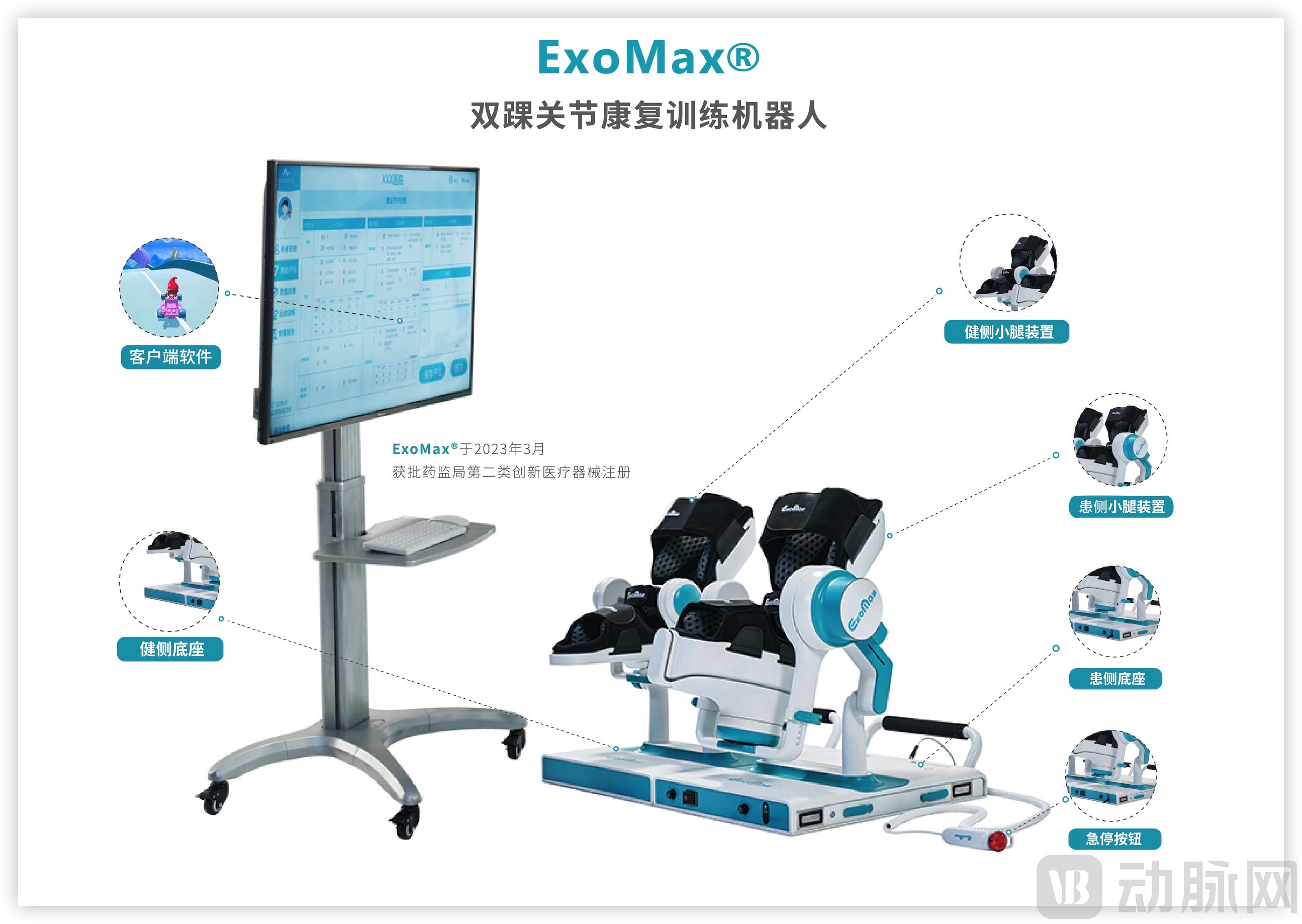
ExoMax® Dual-Ankle Rehabilitation Training Robot
The ExoMax® Dual-Ankle Rehabilitation Training Robot matches customized prescriptions to patients’ ankle motor dysfunction, generating personalized rehabilitation plans on demand. The system monitors patients’ rehabilitation progress in real time and evaluates various physiological indicators, thereby enabling targeted, differentiated rehabilitation training to gradually achieve rehabilitation goals and restore motor control function of the nervous system.
This system also adheres to the bilateral learning and active participation model, enabling patients to use their unaffected side to guide movement of the affected side, thereby directing ankle rehabilitation training through an active training paradigm based on symmetric motor relearning.
Furthermore, in response to clinical feedback highlighting the monotony of rehabilitation training and the resulting difficulty in patient adherence, Angelcare has developed a gamified mode. This feature enables patients to engage in immersive interactions through entertaining, motion-sensing games, creating a relaxed and enjoyable rehabilitation environment. This approach maintains training quality while significantly reducing boredom and fatigue during the rehabilitation process.

"Quickly switch between sitting and lying positions to create a relaxed and entertaining rehabilitation environment."
Anjilai’s closed-loop intelligent rehabilitation system features key innovations in the effective integration of perception, action, and creativity. It enables gait control of the affected limb to be based on the perceived movement intentions and gait characteristics of the patient’s unaffected limb. Rather than learning from standardized “programs” or “other individuals,” the system learns from the patient’s own unaffected limb. By simultaneously stimulating central and peripheral nerves, it introduces correct motor patterns to facilitate personalized and highly efficient rehabilitation for patients.
Multi-point innovations, including personalized training, automated strategies, digital assessment, and the integration of human-computer interaction, have significantly enhanced the intelligence level of Anjielai’s comprehensive rehabilitation system. In the future, as product application scenarios expand from hospitals to communities and home settings, coupled with continuous data accumulation, digitalization will empower the entire rehabilitation lifecycle, demonstrating value in various aspects such as intelligent rehabilitation assessment, customization of personalized rehabilitation plans, and remote rehabilitation.
Meanwhile, the accumulation of data and clinical feedback can also feed back into product R&D, accelerating the development cycle and enabling rapid refinement of the product portfolio.
With the rapid development and application of technologies such as exoskeletons, human-computer interaction, and brain-computer interfaces, intelligent rehabilitation robots, as representative innovative products in the rehabilitation field, have entered a period of significant growth. In the coming years, intelligent rehabilitation robots are poised to become a new engine driving the high-speed development of the rehabilitation industry.
In 2016, a friend said to Dr. Li Luya during a conversation, “There are robots overseas designed to assist paraplegic patients with walking. As a Ph.D. in robotics who has successfully developed several innovative medical devices abroad, and with access to friends who are experts in various disciplines, you should also develop a medical robot. It would be an immensely meritorious endeavor!” Little did they know that this very conversation led to the birth of Angelai.
In December 2017, Li Luya and Dr. Yang Sen co-founded Angelexo, naming the company after the English abbreviation for “Angel Exoskeleton.” They aspire for Angelexo’s products to radiate an angelic glow, illuminating the lives of hemiplegia patients and their families, and bringing angelic solutions to alleviate the pain points plaguing the rehabilitation industry.
Rehabilitation robotics spans numerous disciplines, including clinical rehabilitation medicine, biomechanics, mechanics, materials science, and robotics. The research and development of rehabilitation robots rely heavily on the collaborative efforts of multidisciplinary talent. To date, AngelRay has accumulated over 140 independent intellectual property rights, mastered core industry technologies, and established a stable and efficient supply and production chain, thereby completely overcoming the dependency on external suppliers for core components and key technologies. Furthermore, by establishing its own manufacturing facilities, AngelRay effectively controls production costs, creating favorable conditions for the commercialization and deployment of its products.
With independent intellectual property rights and assured control over production, Anjielai has gained the confidence to expand overseas. Its overseas business divisions, located in Seattle, USA, and Vancouver, Canada, have officially commenced operations, while overseas clinical trials and product registrations are poised to begin, paving the way for global market expansion.
As Angelai’s product portfolio continues to expand, rehabilitation physicians and patients worldwide will gain access to efficient, safe, reliable, and accessible rehabilitation solutions made in China. Time may pass, but our commitment remains unwavering. Angelai’s Angel Exoskeleton Robot is on the move!
Correspondent Li Pu also contributed to this article.