

If You're Watching In Vivo Gene Editing in 2026, Keep an Eye on These Key Players and Pipeline Updates

Intellia Therapeutics
Gene Editing Therapy Developer
This March, the FDA rarely opened a door for in vivo gene editing: Intellia Therapeutics announced that the FDA had approved its investigational pipeline NTLA-2002 for the clinical trial application (IND) for the treatment of hereditary angioedema (HAE), meaning that the company can include US patients in its ongoing global clinical trials.
NTLA-2002 is a one-time, in vivo gene-editing investigational therapy for hereditary angioedema (HAE), designed to permanently reduce plasma kallikrein protein activity after a single dose by inactivating the gene encoding kallikrein KLKB1, thereby preventing HAE attacks.
Intellia has long been a star player in the CRISPR arena. As one of the earliest companies to advance in vivo gene editing pipelines into clinical trials, it has become a bellwether in the field of in vivo gene editing this year, driven by new progress in the FDA’s approval of an Investigational New Drug (IND) application for NTLA-2002.
In vivo gene editing is one of the future directions of gene therapy, which has become a consensus in the industry.Compared with ex vivo gene editing, which has already entered widespread clinical trials, in vivo gene editing covers a broader range of indications, target cells, and target organs. It offers a more favorable development timeline, as the products are off-the-shelf therapeutics such as nanoparticles or viral vectors, eliminating the need for complex cell preparation processes. Most importantly, it enables cost control, with prices potentially reaching only a fraction of those associated with existing ex vivo gene therapy regimens. Therefore, in contrast to the “exorbitantly priced” ex vivo gene editing approaches, a greater number of patients are eagerly awaiting the commercialization tipping point of in vivo gene editing.
Intellia’s one-shot, lifelong “cure” may truly rewrite humanity’s “destiny” and usher in a new era.
The potential of in vivo gene editing is exciting, yet challenges and safety concerns give pause. Amid the overall cooling of enthusiasm in the CGT sector this year, how should we approach this field?
Intellia in the Spotlight
After obtaining clinical trial approval, Intellia subsequently announced on March 21 that the FDA had granted Regenerative Medicine Advanced Therapy (RMAT) designation to NTLA-2002.
Typically, applicants granted RMAT designation are able to engage in higher-level interactions with the FDA, including discussions on alternative or surrogate endpoints; benefit from the preferential policies associated with Breakthrough Therapy and Fast Track designations; receive intensive guidance from the FDA on efficient drug development; and gain support for potential approaches to accelerated approval and meeting post-approval requirements, priority review of potential Biologics License Applications (BLAs), and other opportunities to expedite development and review.
NTLA-2002 can edit disease-causing genes in the human body with a single dose. The Phase I/II study not only yielded impressive data, demonstrating the potential for a functional cure of hereditary angioedema (HAE), but also showed good tolerability across all three dose levels, with most adverse events being mild. Currently, Intellia is actively accelerating patient enrollment for larger-scale clinical trials of NTLA-2002. It is expected that two doses will be selected for a placebo-controlled, dose-expansion study. The entire field is closely monitoring the progress and results of this human trial.
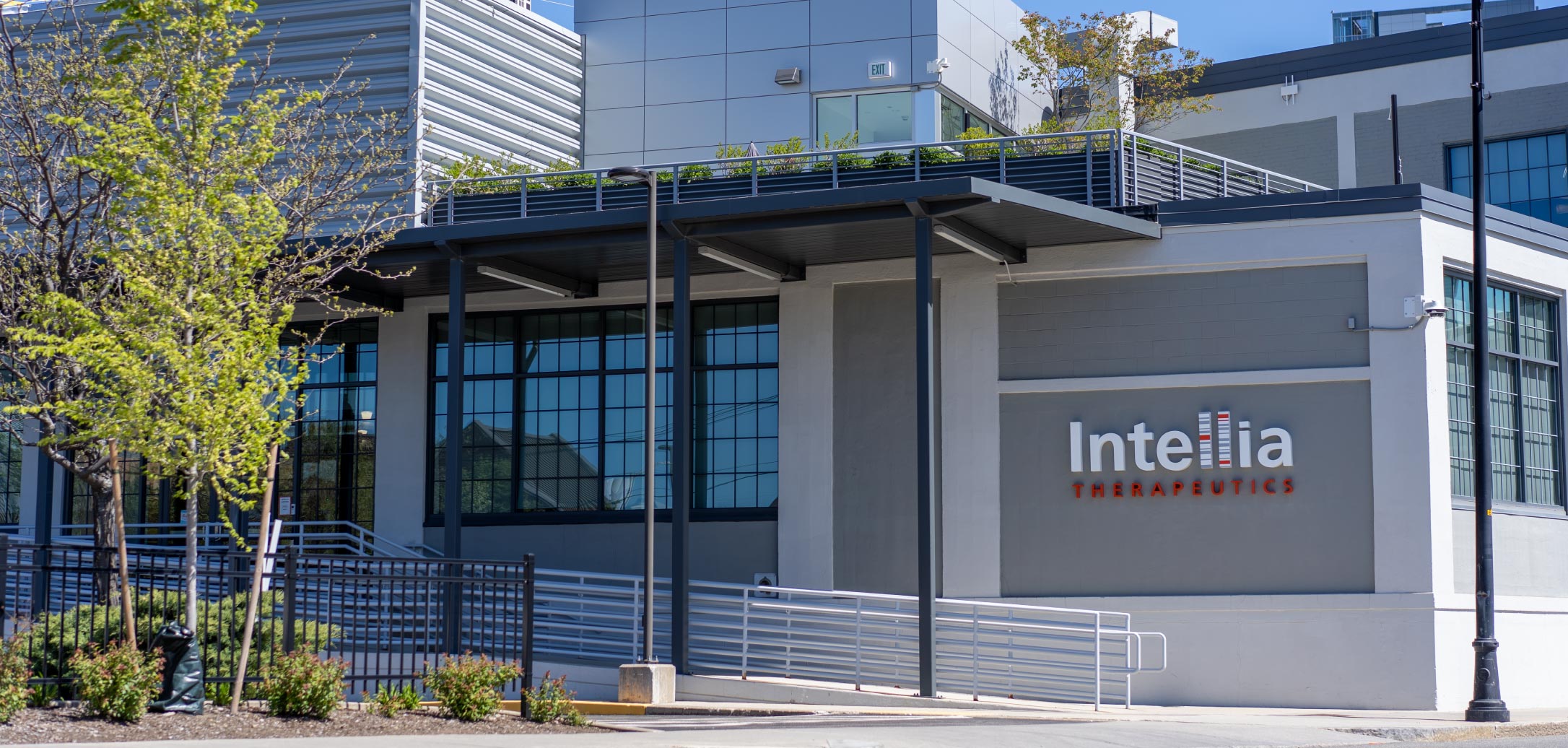
Intellia Therapeutics, Image source: Company website
With the positive news surrounding NTLA-2002 and the trust demonstrated by the FDA, Intellia has become one of the most closely watched gene-editing companies in the market, while also bolstering investor confidence.The FDA’s recent IND approval signals that regulatory authorities consider the safety risks of in vivo gene-editing therapies based on classic CRISPR/Cas9 technology to be, to some extent, manageable and amenable to further validation through additional clinical trials.
Unlike gene therapy approaches utilizing AAV delivery or local administration, Intellia is the first company to employ LNP-mediated systemic delivery. Founder Jennifer Doudna and her experienced team excel in both technological innovation and external collaborations. In addition to NTLA-2002, NTLA-2001—a investigational drug developed by Intellia in partnership with Regeneron for the treatment of transthyretin (ATTR) amyloidosis—has been granted Orphan Drug Designation by the FDA. Recently released data indicate that a single dose of NTLA-2001 significantly reduces serum TTR levels in patients, with an overall favorable safety and tolerability profile.
However, as more patients receive treatment, unexpected side effects may emerge. Safety concerns could lead the FDA to delay product approval or even require its withdrawal from the market. This is a costly gamble that all gene-editing companies must accept. Nevertheless, Intellia appears to be moving in the desired direction, and the FDA’s recent IND approval has bolstered confidence. Meanwhile, Intellia maintains a strong cash position; as of December 31, 2022, the company held $1.3 billion in cash, sufficient to support its projects for the foreseeable future.
The Cautious FDA
Gene therapy has undergone a long journey from its early conceptual stage to the phase of translational application. It is only after years of accumulation, cross-disciplinary technological integration, and the realization of industrialized, large-scale manufacturing that gene therapy has begun to see the dawn of commercialization.
In vivo gene editing therapies offer the potential to address the root causes of many genetic diseases; however, due to technical limitations and ethical concerns, in vivo gene editing has long been considered a “no-go zone.” The direct delivery of gene editing systems into patients via vectors poses greater challenges for regulation, and the prolonged expression of core components, such as nucleases, in the body increases the risk of off-target effects.
The development of in vivo gene editing has primarily benefited from the emergence of CRISPR-Cas9 technology, which has made gene editing in eukaryotic cells simpler and more efficient. Compared with other technical approaches such as TALEN and ZFN, CRISPR-Cas9 represents a revolutionary breakthrough.Subsequently, gene editing has become increasingly precise: In 2016, the emergence of base editing enabled targeted modification of one or several point mutations, allowing for the directional alteration of specific bases at designated genomic locations. This technique modifies only the single target base without affecting other bases. In 2019, Dr. David Liu’s prime editing technology was unveiled, capable of achieving arbitrary conversions among the four nucleotide bases as well as precise insertion and deletion of small fragments. Meanwhile, continuous advancements in delivery systems such as adeno-associated virus (AAV) and lipid nanoparticles (LNP) have propelled in vivo gene editing therapies into clinical application.
As early as 2017, Sangamo initiated the world’s first in-human gene editing trial, using zinc finger nucleases (ZFNs) as vectors to insert genes encoding functional enzymes into patients’ genomes for the treatment of Hunter syndrome (mucopolysaccharidosis type II) or Hurler syndrome (mucopolysaccharidosis type I-H). However, development of this trial for rare diseases was ultimately discontinued due to suboptimal efficacy.
Prior to NTLA-2002, the FDA rarely approved clinical trials for in vivo gene-editing therapies in humans. The progress of approved projects could also be described as “arduous”:
Editas and Excision’s in vivo gene-editing therapy EDIT-101 for Leber congenital amaurosis type 10 demonstrated favorable safety profiles and significant biomarker improvements, but suboptimal clinical efficacy in humans; LogicBio’s in vivo gene-editing therapy LB-001 for methylmalonic acidemia is currently listed as “not recruiting” following its acquisition by AstraZeneca; Sangamo’s in vivo gene-editing approach SB-FIX for hemophilia B enrolled only one patient before the study was terminated in 2021.
VERVE-101, the first in vivo base editing therapy to enter clinical trials and developed by Verve, was suspended by the FDA last December. This therapy is indicated for the treatment of heterozygous familial hypercholesterolemia (HeFH). According to the company, the drug can “prevent heart disease with a single injection.”
The FDA has always been cautious in its approach to gene editing, with even greater concerns regarding base editing.Base editing employs chemical processes to alter specific letters within target genes. However, off-target deamination by deaminases can introduce biases in base editors unless the editing is precisely targeted. Beam Therapeutics’ ex vivo gene-editing products were also halted by the FDA during the same period, with the agency requiring the company to provide additional control data from genomic rearrangement assessments and further analyses of certain off-target editing experiments, among other relevant data. Although Beam’s project was restarted after submitting the required information, VERVE-101’s dual nature as both an in vivo and base-editing therapy has led the FDA to demand more extensive safety data from Verve Therapeutics and to exercise greater caution.
Gene editing companies have expressed understanding of the FDA’s cautious stance. Gilmore O’Neill, CEO of Editas Medicine, stated, “The regulators’ caution is warranted; it is their job. As for us, we have a responsibility to ensure rigorous risk management while advancing new technologies such as in vivo gene editing.”
As a pioneer in in vivo gene editing, Editas Medicine has also faced challenging times recently. In November last year, Editas announced the suspension of clinical studies for EDIT-101, the world’s first in vivo gene editing therapy. EDIT-101 is its core pipeline candidate, designed to treat Leber Congenital Amaurosis (LCA). The decision was driven by suboptimal clinical efficacy observed in humans, despite the therapy demonstrating a favorable safety profile and significant improvements in biomarkers. The limited efficacy may be related to target selection rather than reflecting poorly on the overall potential of in vivo gene editing therapies. To some extent, EDIT-101 has actually bolstered industry confidence in the safety of in vivo editing, which had been a major concern. To ensure survival, Editas announced layoffs and business restructuring in January this year. However, the company remains committed to focusing on in vivo editing, leveraging advanced technologies such as in vivo targeted integration and targeted delivery to develop next-generation in vivo gene editing therapeutics.
When the first human trials of CRISPR gene-editing therapies were launched in the United States, the FDA adopted a similar stance. Perhaps as more positive results emerge from clinical trials of in vivo gene editing, the FDA will gradually relax its regulatory posture.
In fact, regulatory agencies have been striving to advance the regulatory and approval frameworks for gene therapies.Recently, a senior FDA official stated that the agency needs to consider accelerated approval for gene therapies. Dr. Peter Marks, head of the FDA’s Center for Biologics Evaluation and Research (CBER), said that the FDA will support the use of measurable biomarkers as surrogate endpoints in clinical studies of gene therapies to help drug developers obtain accelerated approval.
What should domestic companies do?
Currently, only a very small number of companies in China are engaged in the research and development of in vivo gene editing products,Foundational scientific discoveries, patents, technologies, and manufacturing processes constitute three major barriers.
The foundational scientific discoveries underlying gene editing were made in Europe and the United States; consequently, patents in the CRISPR-Cas9 field are predominantly held by entities in these regions. As a result, achieving patent breakthroughs for derived therapies, such as gene editing and base editing treatments, remains challenging. Meanwhile, patent disputes over CRISPR-Cas9 have persisted for years, with divergent prospects for patent grants in the United States and Europe, rendering the landscape highly complex.Patent issues are challenges that domestic companies must address; if licensing is required across the board, it becomes imperative for these companies to strategize and plan early on to avoid future obstacles to their growth.
In terms of patent layout, a representative approach is to circumvent CRISPR-Cas9. For instance, the underlying patents for Cas13X (also known as Cas13e) and Cas13Y (also known as Cas13f), components of the CRISPR-Cas13 system independently developed by Huida Gene, were officially granted by the United States Patent and Trademark Office in January 2022. Huida Gene is one of the few companies in China that hold foundational CRISPR patents. In addition to reducing the expression of target genes via RNA targeting, Cas13X/Y can be engineered to fuse with deaminases to achieve single-base RNA editing, with an editing efficiency approaching 80%. Besides Huida Gene, Ruifeng Bio also possesses proprietary CRISPR/Cas13m technology, characterized by high cleavage efficiency, low off-target effects, and a compact size that facilitates easy delivery.
Compared with CRISPR-Cas9-mediated DNA editing technology, the CRISPR-Cas13 system primarily targets mRNA for editing and does not cause permanent changes to genomic DNA, thus offering unique advantages in disease treatment, particularly in terms of safety. Therefore, CRISPR-Cas13-mediated mRNA editing, like the ADAR (Adenosine Deaminase Acting on RNA) system, represents one of the key directions in mRNA editing.
From a technical perspective, in vivo gene editing imposes more stringent requirements on critical aspects such as vector technology and manufacturing processes. In particular, vector technology must simultaneously meet safety and efficacy standards, necessitating fundamental scientific innovation.Although lipid nanoparticles (LNPs) demonstrate excellent performance in the liver, their ability to achieve efficient and safe delivery in other tissues remains to be addressed. High doses of LNPs can trigger strong immune responses, which may limit their application in other systems. Notably, LNPs also face significant patent barriers. Furthermore, the development of delivery systems targeting tissues beyond the liver is a area worthy of considerable attention.
As for the step of clinical application, the biggest challenge lies in the process development and stable scale-up production of gene-editing drugs.For in vivo gene editing products, the manufacturing process is inherently complex, requiring the concurrent production of plasmids, mRNA, and long-sequence gRNAs, as well as the formulation of delivery systems such as lipid nanoparticles (LNPs). Additionally, companies must possess CMC (Chemistry, Manufacturing, and Controls) and clinical translation capabilities that comply with international regulations and industrial standards. In these areas, establishing complex manufacturing processes for gene editing therapies, scaling up LNP assembly and production, and setting up GMP-compliant manufacturing platforms all pose significant challenges to startup companies.
Among domestic startups, RayzeGene is developing in vivo gene editing therapies based on classic CRISPR/Cas9 and LNP technologies. However, the company is also exploring more cutting-edge delivery technologies: RayzeGene has established a joint venture with N1 Life, a company focused on innovative drug delivery and administration technologies, to jointly develop delivery systems that are less toxic, more efficient, and capable of targeting a broader range of organs compared to existing LNPs. Meanwhile, the background of RayzeGene’s team endows it with strong capabilities in CMC translation and industrialization, as the company has aimed at commercializing gene editing products since its inception.
The industry has witnessed numerous cases where laboratory technologies failed to achieve industrial translation and commercialization. For in vivo gene editing to enter the market, it must also overcome the hurdle of scalability.