

Breaking Through the $100B Out-of-Hospital Patient Management Market: Jingli Tech’s Multi-Touchpoint Follow-Up Model
The curtain has risen on the transformation of China’s pharmaceutical industry.
Since 2017, with the implementation of policies such as volume-based procurement, medical insurance negotiations, and the two-invoice system, China’s out-of-hospital pharmaceutical market has continued to expand. According to data from VCBeat, the share of the out-of-hospital pharmaceutical market rose from 28.34% in 2015 to 34.58% in 2020, and is projected to further increase to 65% by 2030.
Beyond market fluctuations, the outflow of prescription drugs from hospitals to external channels is profoundly transforming the industry’s operational logic.
For instance, patient education, patient awareness, and the real-world circumstances of patients outside hospital settings are receiving greater attention from the industry, thereby continuously unleashing patients’ demand for personalized disease management in out-of-hospital settings. The “2022 Online Medication Trends Report” shows that more than 70% of patients with chronic diseases hope to receive online medication guidance services, and over 30% of patients wish to join online patient communities for communication.
Over the years,Out-of-hospital patient management resembles the important yet non-urgent items on a task list. Recognizing the vast demand and opportunities, numerous companies are actively expanding into the out-of-hospital sector, providing an increasing array of solutions for the industry. This trend is driving the multi-billion-dollar out-of-hospital patient management industry toward deeper and more comprehensive development.
In this process, new challenges and new possibilities for imagination are gradually emerging.
“Important and Urgent”
Why Is Out-of-Hospital Patient Management So Important?
Why Is Out-of-Hospital Patient Management So Important?
The core reason is that patients spend 95% of their time outside the hospital,Patients' medication adherence and self-management outside the hospital directly impact disease control and ultimate treatment outcomes.
“Out-of-hospital patient management can also bring significant improvements in quality, efficiency, and experience to all stakeholders, including patients, physicians, and pharmaceutical and medical device companies,” said Shi Anjie, Head of Industrial Research at VCBeat.
InPatient SideHigh-quality out-of-hospital patient management services can promptly and accurately address patients’ daily concerns regarding their diseases or conditions. By providing guidance on issues such as daily diet and medication, these services reduce the time patients spend traveling for medical consultations and meet their needs for routine disease management.
andFor Doctorsas far as ... is concerned, out-of-hospital patient management enables physicians to conveniently and efficiently conduct follow-ups with patients outside the hospital, promptly address issues such as adverse drug reactions, foster positive doctor-patient communication, and build physician reputation. Furthermore, comprehensive end-to-end data spanning both in-hospital and out-of-hospital settings allows physicians to gain a more thorough understanding of patients’ conditions outside the hospital, providing robust data support for formulating treatment plans and conducting real-world research.
InPharmaceutical and Medical Device Enterprise Portal, out-of-hospital patient management is an effective channel for understanding patient needs. Under the volume-based procurement policy, some prescriptions are diverted to out-of-hospital settings, and patients’ medication experience plays a crucial role in extending duration of therapy (DOT). In response to challenges such as improving drug accessibility, enhancing patient adherence, and prolonging DOT, pharmaceutical companies have a stronger incentive to engage in out-of-hospital patient management. By delivering high-quality services, they can gain deeper insights into patient needs, provide targeted patient education, and thereby reduce patient attrition.
For many years,The most direct and effective approach to addressing this issue is long-term patient follow-up.This is because follow-up visits can regularly and promptly provide physicians with feedback on changes in the patient’s condition and treatment outcomes, enabling them to obtain first-hand data and accumulate case records for statistical analysis, thereby facilitating precise diagnosis and treatment for patients.
In light of this, both hospitals and enterprises are actively strategizing and entering the fray.
Behind the rush of companies to establish their presence,
Why Do Out-of-Hospital Follow-Ups Remain Riddled with “Bottlenecks”?
Currently, there is strong demand for out-of-hospital follow-up care, but the ultimate outcomes are often suboptimal.
On the one hand, hospital-led patient management lacks an additional payer, and is constrained by limited resources, time, and management tools, resulting in insufficient motivation among medical staff. On the other hand, traditional follow-up relies primarily on phone calls and text messages, which increases costs and limits scalability; furthermore, manual record-keeping leads to inadequate patient profiling and imprecise service delivery.
These factors have led to the current situation where out-of-hospital follow-up is fraught with “bottlenecks”: insufficient accessibility, overly unidirectional information collection, and persistently high costs.
For example, as cancer treatment increasingly shifts toward a chronic disease management model, the need for standardized, large-scale, long-term, and systematic follow-up has become increasingly urgent. However, the prolonged follow-up duration, complex workflows, and high level of specialization required in oncology make cancer follow-up a long-term, complex, and costly endeavor.
Therefore,How to Establish a Scientific, Timely, and Effective Follow-up System Remains a Major Challenge to Be Addressed
In response to this, multiple industry experts have told VCBeat that effective follow-up care must prioritize patients’ vested interests and experiences, delivering dynamic rehabilitation strategies through human-centered design and compassionate service, thereby guiding patients from passive to active self-management.
It is worth noting that, with the development of technological tools, the industry has been seeking new solutions,Jingli Technology’s Multi-Touchpoint Follow-Up System Emerges as Needed: Multi-touch follow-up is an emerging approach that leverages the internet, smart devices, or big data analytics to effectively track and manage patients, enabling timely understanding of their clinical conditions and treatment progress, thereby enhancing the quality and efficiency of healthcare services.Currently, in addition to some innovative technology companies making strategic moves, major pharmaceutical companies have also begun to experiment and increase their investments.
It is evident that a new landscape has been opened up precisely through the joint efforts of the industry.
New Strategies to Break the Impasse:
Multi-Touchpoint Follow-Ups Solve Complex Problems
In the field of patient follow-up, each company adopts a different strategic path.
In detail, some companies primarily focus on intelligent hardware devices, with the core function of collecting patient health data; others specialize in providing software support for intelligent follow-up services to hospitals, aiming to help medical institutions build patient follow-up platforms; still others concentrate on developing mobile applications to serve as a bridge for communication between doctors and patients. These diverse solutions have all achieved certain effectiveness and brought new directions to the industry.
As trials and explorations have multiplied, a consensus has gradually crystallized: efficient, precise out-of-hospital patient management remains a scarce resource in the industry and represents the commercialization pathway capable of delivering the greatest value.
So, what should be done?On the patient side, it is essential to address key issues such as low engagement in follow-up care and a lack of perceived value and benefit; on the enterprise side, the goal is to bridge the gap between persistently high follow-up costs and suboptimal outcomes.
Recently, VCBeat learned that as an industry innovator, Jingli Technology has pioneered a multi-touchpoint follow-up product centered on an efficient, precise, and accessible out-of-hospital patient management system, achieving successful practical implementation.
Specifically, Jingli Technology has builtMulti-Touchpoint Follow-Up Product: Leveraging Enterprise WeChat as the foundation and integrating smart hardware, AI robots, and other tools, with internet hospitals serving as the service platform, this software-hardware integrated solution achieves an informational closed loop for the entire course of care for out-of-hospital patients. It transforms traditional follow-up work by making it data-driven, intelligent, and visualized.
“Jingli has consistently structured its business around proactive patient management, and its multi-touchpoint follow-up model is built on this foundation,” Yu Junfeng, Vice President of Jingli Technology and Head of the Medical Business Division, told VCBeat. “In reality, many patients are reluctant to be managed. Therefore, Jingli’s approach is to build trust between doctors and patients through various means, thereby encouraging patients or their family members to actively engage in care management scenarios to improve patients’ lifestyles.”
Building on this foundation, Jingli Technology’s multi-touchpoint follow-up product is built upon the GemLife Intelligent Follow-up Platform. Leveraging the WeChat ecosystem, it integrates the patient-side mini-program, physician-side mini-program, and operational backend. Through interactive, intelligent follow-up services within private domain traffic, it enhances patient experience and adherence during the care journey while effectively reducing follow-up costs.
How to Understand Multi-Touch?
This concept encompasses three dimensions of touchpoints: first, touchpoints across the patient journey, such as initial consultation, post-operative care, chemotherapy, and rehabilitation; second, touchpoints via various tools, including phone calls, text messages, questionnaires, one-on-one private chats, and WeChat voice messages; and third, touchpoints defined by the follow-up recipients, comprising both patients and their family members.By comprehensively covering every treatment node in the patient journey, we establish warm, trust-based connections with patients through multi-dimensional product tools, walking alongside them throughout their disease journey to ultimately achieve superior patient engagement and management.
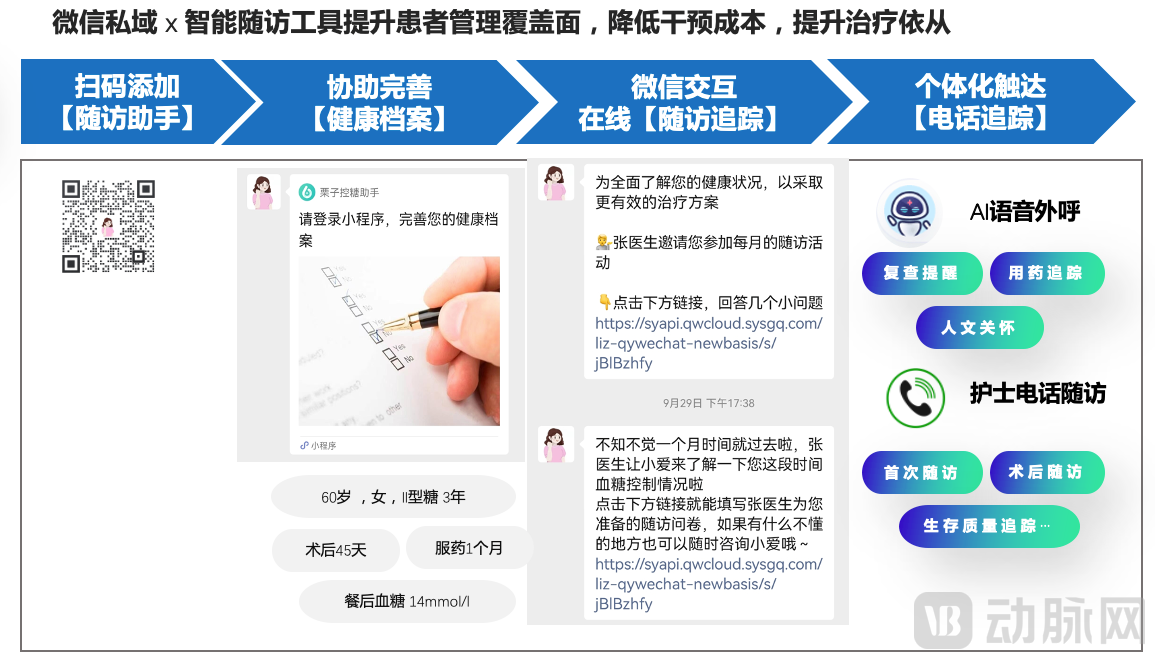
(Multi-Touch Follow-Up Model Pathway Diagram)
However, given the rigor and complexity of medicine and the diverse needs of patients, how can precision in multi-touchpoint follow-up be achieved? To address this, Jingli Technology has dedicated R&D resources to establish a comprehensive patient tagging system. Its medical services team, composed of oncologists, stratifies enrolled patients based on disease stage, subtype, and other factors, thereby enabling the customization of personalized follow-up plans for patients at different stages and with varying conditions.
Meanwhile, leveraging multimedia channels such as brand communities, official WeChat accounts, and WeChat Channels, Jingli Technology conducts disease education for patient populations and organizes single-disease management training camps. By providing engaging and empathetic services, the company stimulates patients’ interest in proactive communication, thereby achieving more effective follow-up outcomes.
For example, a patient from Changsha, who was among the first to be added on WeCom for multi-touchpoint follow-up, gained knowledge about standardized medication use through patient education activities in the community group. Armed with sufficiently professional and effective information, he was able to make basic judgments calmly when experiencing adverse reactions later on, and communicated promptly and thoroughly with his doctor, rather than discontinuing medication unauthorizedly due to side effects, which could compromise treatment efficacy.
Furthermore, the “friendly” interactions within the community have allowed patients to experience the warmth of dedicated services, thereby deepening trust. Patients have also developed the habit of turning to “Ruirui,” the project’s WeCom assistant ID, whenever they have questions. Such timely and effective interactions enable close monitoring of patient status, reducing the risk of medication non-adherence. To date, this patient remains in the study.
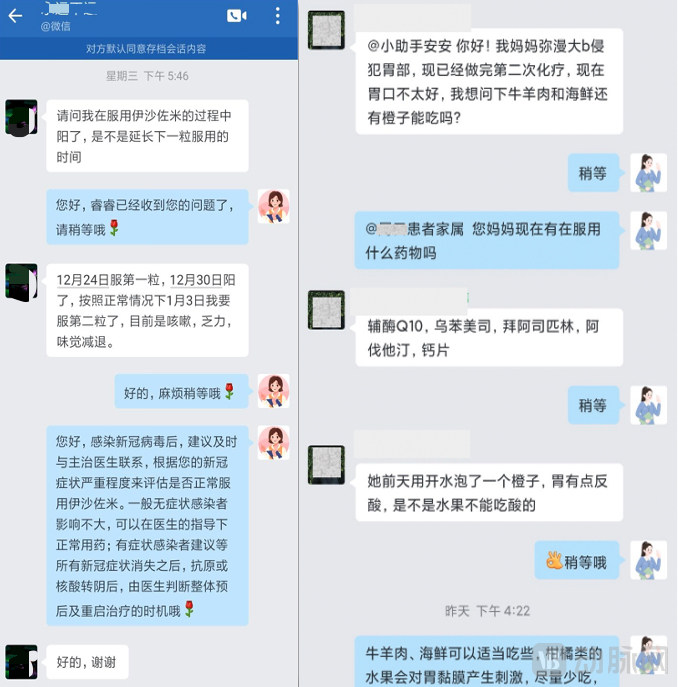
(Figure: Interaction between patients/patient families and the WeCom assistant)
“In terms of service experience, such as communication methods and timing, Jingli adjusts its approach based on the individual. For instance, basic patient information and service preferences are typically collected through questionnaires, while follow-up calls are scheduled during lunch hours or in the evening to avoid disrupting patients’ work and daily lives. Quality service means appearing at just the right moment, rather than being overly intrusive,” said Yu Junfeng.
Moreover, Jingli Technology has established standardized Q&A protocols and continuously iterates its FAQ knowledge base, leveraging a team of medical professionals and operational specialists to deliver personalized care services to patients.
In terms of effectiveness, the multi-touchpoint patient management service model (in a certain oncology patient follow-up project) has been effectively validated: the project’s DOT (Duration of Therapy) steadily increased, with patient DOT rising from 6.0 to 9.3; in terms of data, the enrollment rate stabilized at 83%, and the follow-up acceptance rate increased to 94%.Underlying this is a significant improvement in patient adherence.
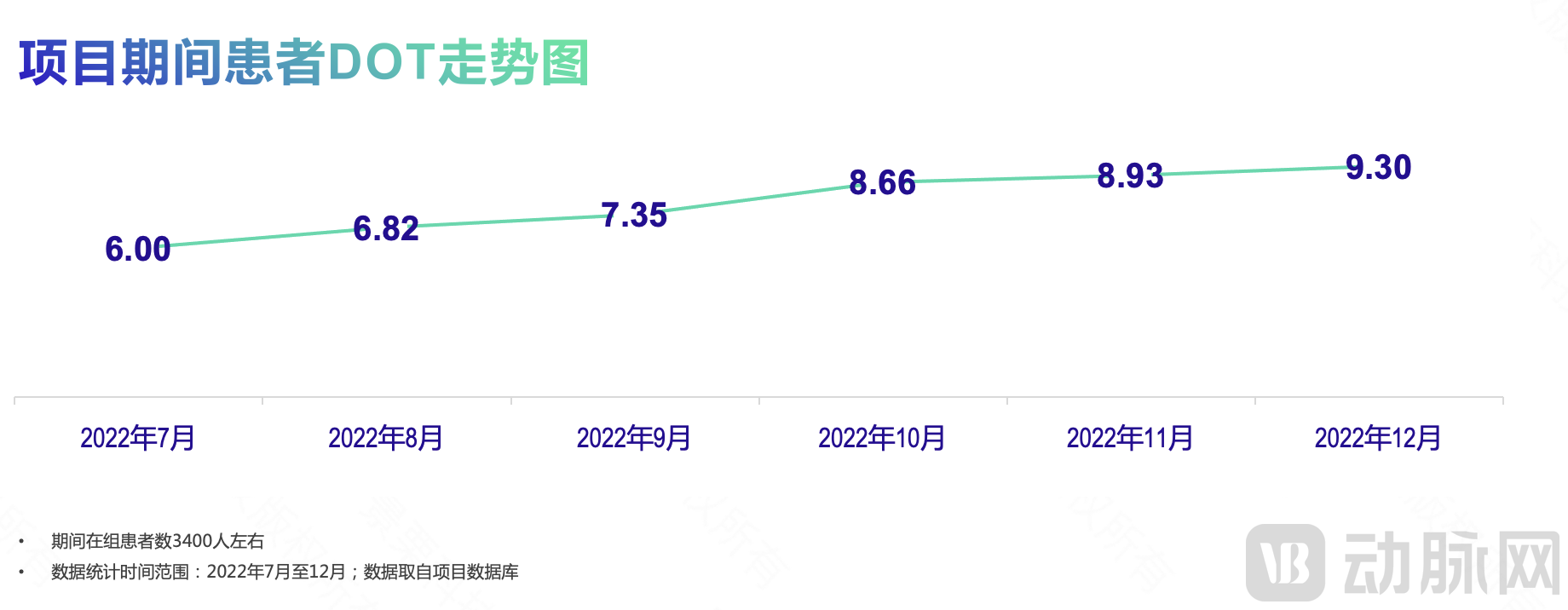
(Photo provided by the interviewed company)
A patient program director at a top-tier international pharmaceutical company collaborating with Jingli Technology told VCBeat, “By leveraging online digital platforms to continuously provide personalized care services, we can better achieve program diversification and broad coverage across diverse populations and regions. Such innovations help enhance systematic service capabilities and enable in-depth online follow-up management. Meanwhile, the online approach optimizes cost efficiency and facilitates more timely interactions to address patient concerns, thereby providing support for treatment and continuous disease management, improving treatment adherence, therapeutic outcomes, and quality of life, and bolstering patients’ confidence in fighting their diseases.”
More importantly,Jingli Technology has thus established a trusted communication channel for out-of-hospital patients, thereby unlocking greater possibilities.For instance, it enables better feedback on drug efficacy data. The subsequent potential this unlocks is that when innovative pharmaceutical companies seek market approval for their novel drugs, they can leverage insights from de-identified patient data generated during operational processes to gain a deeper understanding of patient needs, thereby allowing these companies to more effectively reach patients in need.
At its core, the competitive moat is built on Jingli’s continuous, in-depth, and meticulous efforts across every stage—such as establishing strong trust with patients in the early stages, leveraging effective data collection and analytics capabilities, and enhancing efficiency through scalable operations. This approach enriches the well-known industry model of patient follow-up, enabling its practical implementation and delivering tangible benefits to patients.
To date, Jingli Technology has established a presence in out-of-hospital patient management across multiple disease areas, including oncology, diabetes, and cardiovascular diseases. It has jointly developed patient management programs with dozens of large multinational pharmaceutical companies, such as Roche, AstraZeneca, Takeda, and Viatris. Furthermore, in the realm of real-world studies, the continuous accumulation of patient data has led to increasingly comprehensive patient profiling. The resulting clear “patient journey” not only helps physicians alleviate the challenges of out-of-hospital management but also supports their academic research endeavors.
In summary,The multi-touchpoint patient management service model has effectively addressed the “bottlenecks” in the out-of-hospital patient management market, paving a new path and opening up new possibilities for the industry.
Unlocking greater potential for imagination,
How will the industry evolve in the future?
As can be seen from the preceding discussion, follow-up care holds significant importance for the entire healthcare service industry.
Particularly with the industry’s transformation, patients, physicians, pharmaceutical companies, and other stakeholders increasingly require high-quality intelligent follow-up solutions to meet their respective needs. For instance, on the pharmaceutical company side, influenced by policies such as centralized procurement,"Deepening the in-hospital market and expanding the out-of-hospital market are common demands for pharmaceutical companies during their transition period."“It is becoming a consensus among pharmaceutical companies that ‘neglecting the out-of-hospital market will result in the loss of a large number of patients.’”
“Patient services are difficult to quantify and yield returns in the short term, but they create long-term value for a company’s market position and reputation. Whether a company is willing to make long-term investments and provide support is a challenge that most enterprises will face.” Another senior marketing executive from a top-tier international pharmaceutical company told VCBeat that the immediate priorities are to maintain innovation capabilities, persist in delivering differentiated services, leverage digitalization, retain patients, and enhance operational efficiency.
In this context,Out-of-hospital patient management has become a new growth driver for the industry, unlocking greater market potential.As a rapidly growing market, out-of-hospital patient services are expected to rival the in-hospital patient management market within three to five years.
How will the industry evolve in this process? VCBeat identifies three major trends to watch.
First, as more technology-driven enterprises deepen their involvement and iterate their solutions, pharmaceutical companies will increasingly collaborate with them to jointly drive the comprehensive and in-depth development of out-of-hospital patient management.It is well known that the healthy development of an industry ecosystem requires mutual learning and collaboration among enterprises. In the specific field of intelligent follow-up, pharmaceutical companies must also strengthen cooperation with high-quality innovative enterprises as they explore new pathways.
For instance, numerous pharmaceutical companies have partnered with Jingli Technology, recognizing its pioneering role in developing innovative and effective patient management solutions within the healthcare sector. By leveraging digital products and empathetic services, Jingli Technology enhances patients’ disease awareness and self-management capabilities, thereby achieving truly cost-effective, high-efficiency, and large-scale out-of-hospital patient management.
Second, the coordination among payers has become a key driver for the subsequent expansion of the out-of-hospital patient management market.It is important to recognize that within the relationship chain of healthcare services, in addition to the demand side represented by patients and the supply side represented by hospitals, pharmaceutical companies, and technology firms, another indispensable link is the payer.
The underlying reason is that disease management is not merely a matter of employing a single product; it also requires supporting services, making the role of payers particularly critical. Taking chronic diseases as an example, China currently has approximately 300 million patients with chronic conditions. This substantial patient population incurs significant medical expenditures, accounting for more than 70% of the total disease burden. Coupled with a lack of professional guidance and poor medication adherence, there is an urgent need to integrate commercial insurance models to alleviate the burden on basic medical insurance and reduce out-of-pocket expenses for patients.
Third, technologies such as the Internet of Things (IoT) and big data are driving the market for out-of-hospital patient management toward greater personalization, human-centricity, and dynamism.Thanks to the continuous development of emerging technologies, new models such as multi-touch follow-up can be better implemented. With the ongoing iteration of technology, a personalized, human-centric, and dynamic market for out-of-hospital patient management will gradually become feasible.
It is important to note that in the healthcare sector, high-quality resources remain scarce. To achieve optimal outcomes in the market for out-of-hospital patient management, deep collaboration among all industry stakeholders is essential. Moreover, upholding the patient-centered ethos at the heart of medical practice is crucial to ensuring sustainable and long-term development.
In this process, the industry will see the emergence of more new models and achievements, bringing greater market opportunities and fostering the growth of more star enterprises, all of which will jointly advance the realization of the goals of the Healthy China Initiative.