

FIRE1 Secures $25M Funding to Advance Remote Monitoring Solution for Heart Failure Management

FIRE1
Developer of Medical Remote Monitoring Devices
Recently, FIRE1, a medical technology company headquartered in Dublin, Ireland, completed its latest round of financing, raising $25 million. The funds will be used to revolutionize home monitoring for heart failure and accelerate the development of its novel remote monitoring solutions to improve outcomes for heart failure patients.
Heart failure is a syndrome characterized by reduced cardiac output that fails to meet the metabolic demands of tissues, occurring despite normal venous return and resulting from primary cardiac damage. Its primary cause is impaired myocardial contractility, and its hallmark symptom is dyspnea. This condition predominantly affects the elderly population and is the leading cause of hospitalization among individuals aged 65 years and older. At the “2023 Summit on Critical Care in Heart Failure,” Academician Hu Shengshou, President of Fuwai Hospital, Chinese Academy of Medical Sciences, stated that with the advancing aging of the population, the diagnosis and treatment landscape for heart failure patients is becoming increasingly severe.
So, how can FIRE1, which has secured tens of millions in financing, improve the treatment experience for heart failure patients?
FIRE1 is a company that provides connected medical devices and solutions, focusing on the development of novel therapeutic equipment to improve treatment outcomes for patients with chronic diseases and alleviate the burden on those with heart failure. It originated from The Foundry, a well-established “medical device incubator” founded in 1998. In addition to developing its own technologies, The Foundry works closely with external clinicians and scientists to generate promising ideas, adhering to its mission of “developing the most compelling solutions for significant clinical challenges.”
In alignment with this “mission,” The Foundry has amassed a strong track record since its inception in developing cutting-edge drug development and medical device companies. Addressing a wide range of clinical challenges through diverse technologies—from novel therapies for hypertension to proprietary ocular drug delivery systems—The Foundry has created some of the most impactful products in today’s medical device landscape.
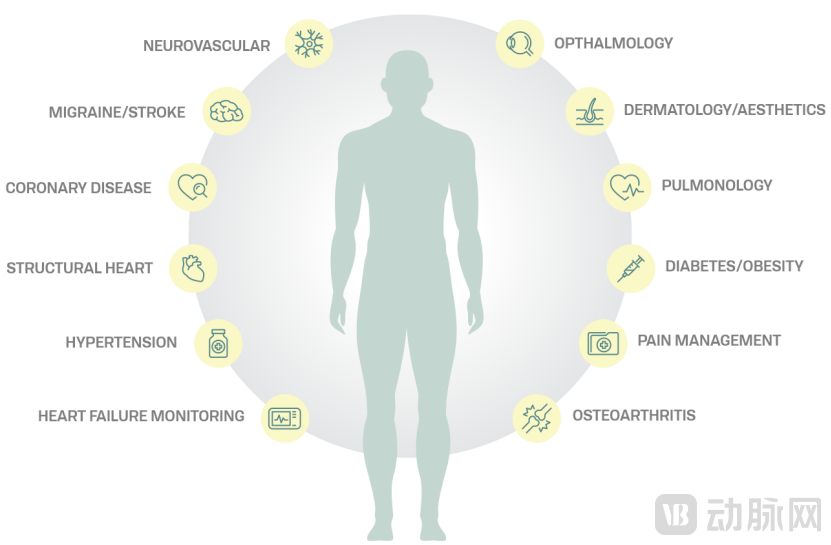
The Foundry’s Technical Fields Source: The Foundry Official Website
Over the decade-plus since its founding, The Foundry has “incubated” fourteen new companies, including Ardian (acquired by Medtronic), Cabochon Aesthetics, Cierra (acquired by Terumo), and Concentric Medical (acquired by Stryker). FIRE1, established in 2013, is its fifteenth company.
The FIRE1 team comprises 50 experienced engineers, clinical trial experts, and scientists who collaborate closely with researchers and physicians worldwide, including Jeff Testani, Associate Professor of Medicine and Director of Heart Failure Research at Yale School of Medicine; Javed Butler, Professor at the Baylor Scott & White Research Institute in Dallas, Texas, USA; and Paul Kalra, Principal Investigator at Portsmouth Hospitals University NHS Trust.
To date, FIRE1 has completed four rounds of financing totaling $82.1 million, attracting multiple rounds of investment from companies such as Medtronic, Glide, and Gimv.
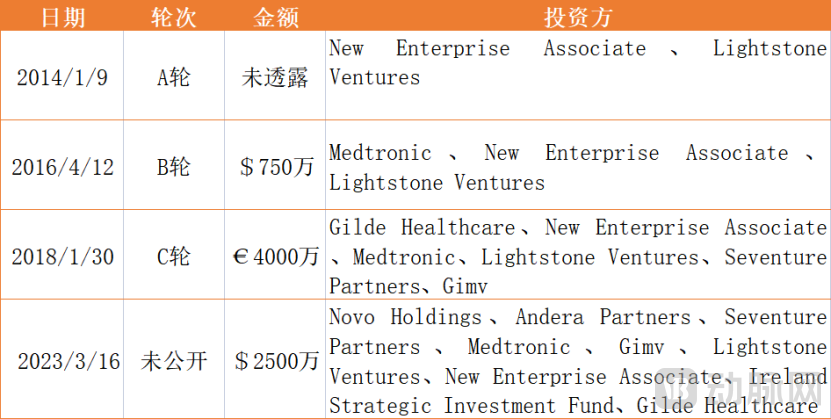 Source: VCBeat
In 2016, as FIRE1 completed a new round of financing, the company’s leadership team was infused with fresh “blood,” including newly appointed CEO and President Conor Hanley, Vice President of Commercial Operations John Britton, and Senior Director of Engineering Fiachra Sweeney.
Conor Hanley holds a Ph.D. in Chemical Engineering from the University of Pennsylvania, an MBA from INSEAD, and a First-Class Honours Bachelor’s Degree from University College Dublin. He co-founded BiancaMed and served as its CEO until its acquisition by ResMed in 2011, after which he assumed senior management roles at ResMed, including leading the company’s Chronic Care Management Solutions division, Cardiology business, and Venture Investments & Initiatives group.
The FIRE1 system is an implantable device designed to be placed in the body’s largest vein, the inferior vena cava (IVC), to monitor patient status by tracking IVC diameter, a biomarker of fluid volume. An increase in sensor readings indicates worsening heart failure and triggers an internal alert. Routine physiological data are also transmitted to a wearable belt paired with healthcare providers, enabling remote monitoring.
In February this year, a heart failure patient in the UK became the first to receive a novel warning sensor the size of a pen cap during a clinical trial at University Hospital Southampton (UHS) in Hampshire. The device is implanted during a 45-minute procedure; it folds at the entry point and is advanced into the inferior vena cava (IVC), where it expands to its full size. Dr. Andrew Flett, a cardiologist with an MD from University College London and a member of the University Hospital Southampton NHS Foundation Trust, who oversaw the procedure, stated, “This innovative new device has the potential to enhance patient safety and improve the management of chronic heart failure. We look forward to receiving the data so that we can intervene earlier, reduce hospital visits, and help patients maintain their health for longer.”
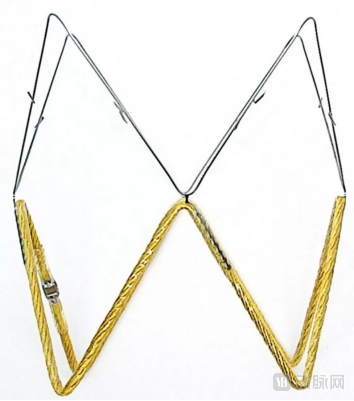
FIRE1 System: New Early Warning Sensor
The FIRE1 system is currently undergoing clinical trials. Enrollment for the first phase of its first-in-human clinical study was completed in July 2022, and enrollment for the second phase is ongoing.
Heart failure represents the end-stage of cardiac disease and can be considered the ultimate outcome of various cardiovascular conditions, posing significant challenges in treatment due to its complexity and high costs. According to the "Report on Cardiovascular Health and Diseases in China 2021," the prevalence of cardiovascular diseases (CVD) in China continues to rise, with an estimated 330 million individuals affected, including 8.9 million patients with heart failure. In 2019, the total hospitalization costs for CVD in China reached RMB 177.338 billion, of which heart failure accounted for RMB 13.064 billion.
For the treatment of heart failure, medications and medical devices can be used to alleviate symptoms in the early stages, while later stages may necessitate heart transplantation or atrial shunting. Given the scarcity of donor hearts, numerous players have already emerged in the artificial heart sector, including Thoratec (a subsidiary of Abbott), Medtronic, and Tongxin Medical. In contrast, atrial shunting remains an immature therapy; globally, only a few companies, such as V-Wave and Weike, have obtained regulatory approval for related therapeutic devices.
Therefore, the management of heart failure has gradually become a captivating “new frontier.”
For heart failure management, implantable devices are available, such as the novel warning sensors of the FIRE system mentioned earlier, Abbott’s CardioMEMS Heart Failure System, and the HeartLogic algorithm included in the Resonate ICD/CRT-D implantable cardioverter-defibrillator developed by Boston Scientific. These are all implantable devices that monitor human organs and other physiological parameters.
In addition to device implantation, there are non-invasive and precise solutions. For instance, Sensivest, a wearable vest developed by the foreign company Sensible Medical, can detect pulmonary fluid accumulation using radar wave technology. In China, DARMA (Daerma Technology) leverages fiber-optic sensor technology as its core competency and employs algorithms for analysis and processing to accurately assess left atrial pressure, thereby facilitating the management of heart failure patients.