

Cognito Therapeutics Files for IPO: Pioneering Wearable Neuromodulation Device for Alzheimer’s Disease Treatment

FoundersX Ventures
Venture Capital Firms

WS Investment
Venture Capital Firms

Cognito Therapeutics
Developer of New Digital Therapies

IAG Capital Partners
Venture Capital Firms

Starbloom Capital
Venture Capital Firms
On December 7, 2016, Nature published a paper on Alzheimer’s disease.
Researchers at the Massachusetts Institute of Technology have demonstrated that LED lights flickering at specific frequencies can reduce beta-amyloid plaques in the visual cortex of mice. Such amyloid plaques are commonly observed in Alzheimer’s disease.
Li-Huei Tsai, a professor of neuroscience at MIT and the corresponding author of the paper, believes that if humans respond to this treatment similarly to mice, this non-invasive therapy holds tremendous potential.

Li-Huei Tsai's TED Talk
Image source: ted.com
Li-Huei Tsai is attempting to bring this hypothesis to fruition through Cognito Therapeutics (hereinafter referred to as “Cognito”), the company she founded.
Cognito Therapeutics, founded in 2016 and headquartered in Cambridge, Massachusetts, is a clinical-stage company developing a pipeline of digital therapeutics designed to modify disease progression. Its wearable neurostimulation device delivers proprietary gamma-frequency light and sound stimulation for the treatment of neurodegenerative diseases, including Alzheimer’s disease.
In March 2023, Cognito Therapeutics completed a $73 million (approximately RMB 500 million) Series B financing round. The round was led by FoundersX Ventures, with participation from all existing investors. New investors, including the Alzheimer’s Drug Discovery Foundation (ADDF), StarBloom Capital, IAG Capital, and WS Investment Company, also joined the round. Since its inception, Cognito Therapeutics has raised a total of $93 million (approximately RMB 640 million).
The funds will be used to advance key clinical trials of Cognito’s wearable neurostimulation device.
Alzheimer's disease (hereinafter referred to as AD) is a neurodegenerative disorder, which means that the disease and its associated symptoms worsen over time.
The FDA has currently approved two classes of drugs for the treatment of AD: those that modify disease progression in AD patients and those that provide temporary relief of certain symptoms.
As a drug in the former category, the anti-amyloid antibody aducanumab is the first new therapy for Alzheimer’s disease (AD) approved by the U.S. Food and Drug Administration (FDA) since 2003. However, the approval of aducanumab sparked significant controversy, leading to the resignation of three FDA advisors due to the lack of evidence demonstrating the drug’s efficacy.
After decades of successive failures, biotech companies remain on the quest for Alzheimer’s disease therapies.
Many drugs and medical devices under development are designed to slow or halt disease progression by targeting one or more brain changes associated with Alzheimer’s disease (AD). These promising targets include the accumulation of beta-amyloid and tau proteins, neuroinflammation, immune responses, metabolic changes, and more.
Cognito’s patented neuromodulation platform technology, CogTx-001, developed by scientific founders Professor Li-Huei Tsai and Professor Ed Boyden of the Massachusetts Institute of Technology (MIT), is a non-invasive neurostimulation therapy that utilizes visual and auditory stimuli to treat neurodegenerative diseases.
CogTx-001 resembles a pair of over-ear headphones.It utilizes rapid, specific-frequency pulses of light and sound to evoke gamma oscillations in the brain, thereby stimulating the activity of immune cells known as microglia.. Its purpose is to help the central nervous system clear certain pathological proteins, these proteins may lead to various neurological disorders and dementia.

Rendering Model of Cognito Devices
Image source: Cognito Therapeutics
As envisioned by Cognito, CogTx-001 not only has the potential to improve a range of neurodegenerative diseases but also enables personalized configuration based on patients’ brain responses. Its headset design and compact size allow patients to adjust the device themselves and use it at home. The customizability of sensory stimuli, such as auditory and visual inputs, helps facilitate long-term patient engagement in personalized therapy.
In January 2021, CogTx-001 received the FDA’s Breakthrough Device Designation. Under this program, the FDA will provide Cognito with priority review and interactive communication regarding device development and clinical trial protocols.
Cognito has been releasing Phase II clinical trial data for CogTx-001 in stages since early 2021.
In March 2021, Cognito Therapeutics announced the results of its Phase II trial, demonstrating that its digital therapeutic utilizing gamma-frequency neuromodulation improved memory, cognitive function, and functional abilities in patients with mild-to-moderate Alzheimer’s disease (AD), while also reducing whole-brain atrophy and volume loss.
The OVERTURE study (NCT-03556280) is a multicenter, randomized controlled clinical trial evaluating the safety and efficacy of gamma-frequency neuromodulation in patients with mild-to-moderate Alzheimer’s disease (AD) over a 6-month treatment period. The study enrolled 76 patients aged 50 years or older with mild-to-moderate AD.
Over a 6-month period, compared with the placebo group (n = 20),The decline in Alzheimer's Disease Cooperative Study–Activities of Daily Living (ADCS-ADL) scores was significantly slowed by 84% in the treatment group (n = 33), and the decline in Mini-Mental State Examination (MMSE) scores was significantly slowed by 83%. Compared with patients in the placebo group (n = 19), patients in the treatment group (n = 30) exhibited a significant 61% reduction in AD-related whole-brain atrophy and volume loss at 6 months.
The Phase II clinical data disclosed in 2022 were also optimistic. During the six-month treatment period, researchers observedCompared with the sham surgery group, the treatment group exhibited a 65% significant reduction in whole-brain volume loss during the same intervention period.
Data from the OVERTURE study and the Alzheimer’s Disease Neuroimaging Initiative (ADNI) database indicate that 40 Hz gamma sensory stimulation with the Cognito deviceSix months of treatment can reduce white matter atrophy and protect axons,and may prevent myeloid and oligodendrocyte damage in patients with AD. Given the critical role of brain regions with expanded white matter connectivity, preventing or reducing their atrophy may delay the progression of AD.
As a non-invasive digital therapeutic, CogTx-001 has garnered significant interest from patients with Alzheimer’s disease (AD) and their families for participation in its clinical studies.
In February 2023, CogTx-001 entered the pivotal clinical trial (HOPE) phase.The HOPE study aims to demonstrate the safety and efficacy of the non-invasive stimulation device CogTx-001 in patients with Alzheimer's disease (AD).
In this blinded, sham-controlled study, 400 patients with Alzheimer’s disease (AD) will use the non-invasive wearable device CogTx-001 at home daily for 12 months.
Cognito has a total of five R&D pipelines. Among them, CogTx-002 is the pipeline developed by Cognito for mild cognitive impairment (hereinafter referred to as MCI). The development of this pipeline has also entered the Phase II clinical trial stage (the FLICKER study).
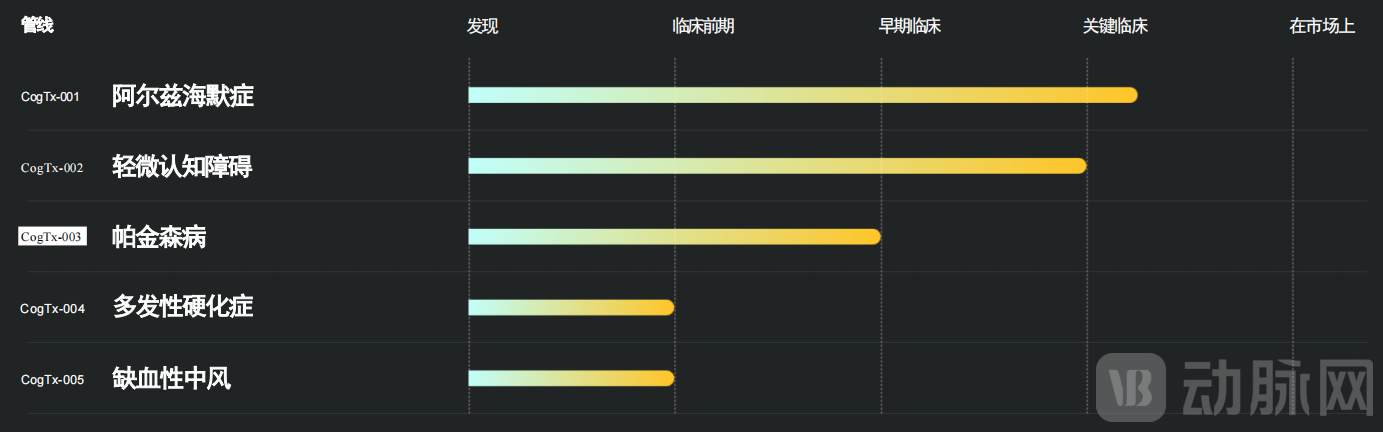
Cognito's Five Major Pipelines
Image source: Cognito Therapeutics
The rapid advancement of CogTx-002 is driven by extensive patient needs. In the United States, approximately 13.5 million adults aged 65 and older suffer from mild cognitive impairment (MCI), with about 16% of MCI patients progressing to Alzheimer’s disease (AD) each year. MCI is the leading risk factor for AD, costing the U.S. healthcare system an estimated $305 billion annually.
The results of the FLICKER study indicate that,CogTx-002 digital therapy was safe, with no reports of serious adverse events; participants demonstrated high tolerability to the treatment, and the study adherence rate was 95.5%.Furthermore, the FLICKER study also found that gamma-frequency therapeutic intervention induced synchronized neuronal firing in the brain and stimulated changes in intracellular signaling molecules, leading to alterations in the cellular immune profile. This study further elucidates the mechanism of action of gamma-frequency neuromodulation.
The journey of a medical device from R&D to commercialization truly tests investors’ patience and confidence in the industry.Thus, to accelerate R&D, Cognito chose to partner with a nascent digital company, forging a “shortcut.”
In March 2022, Cognito announced a strategic partnership with Aetion,To develop a validated predictive model for identifying patients with rapidly progressive MCI and AD.Aetion is a U.S.-based developer of medical data analysis technologies, providing clients with real-world analytics and evidence required for value-based care.
The predictive model developed in collaboration with Aetion will accelerate Cognito’s clinical development programs for mild cognitive impairment (MCI) and Alzheimer’s disease (AD). This model enables population-level risk and cost assessments for payers and integrated healthcare systems, clinical study populations, and enriched cohorts, and supports the deployment of Cognito’s interventions in patients at the highest risk of rapid disease progression.
The rising prevalence of Alzheimer’s disease and the approval of disease-modifying therapies are expected to drive market growth. According to data from the NCBI, approximately 6.2 million Americans aged 65 and older were living with Alzheimer’s dementia in 2021, a figure projected to rise to around 13.8 million by 2060.Mordor Intelligence reports that the Alzheimer's disease diagnosis and treatment market was valued at USD 6.9867 billion in 2019 and is projected to reach USD 9.63923 billion by 2027, with a compound annual growth rate (CAGR) of 5.51%.
Faced with a massive market size, a large number of biotechnology companies have flocked into the Alzheimer’s disease (AD) arena. This field has never lacked adventurers, yet the process of turning hypotheses into reality is not always smooth.
In January 2023, Eli Lilly’s Alzheimer’s disease (AD) drug donanemab was undergoing late-stage trials; however, the U.S. Food and Drug Administration (FDA) decided not to grant accelerated approval for the drug, citing the limited number of patients who had received the treatment for at least one year.
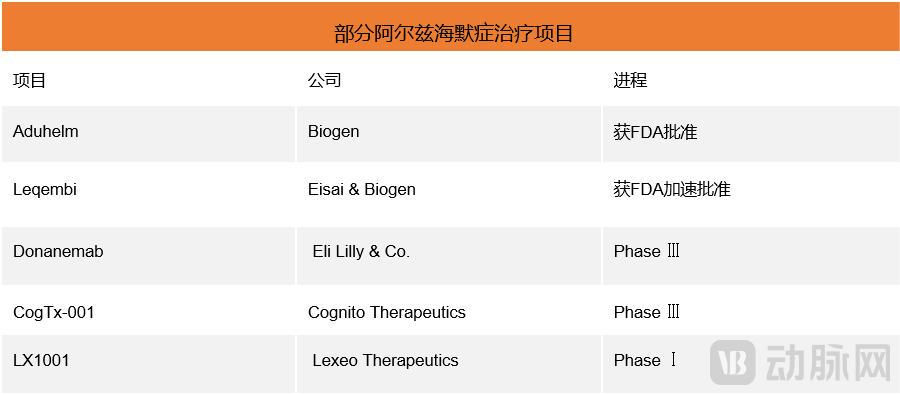
Also in January this year, the FDA granted accelerated approval to the new drug Leqembi. Leqembi is an intravenous infusion therapy featuring an anti-amyloid antibody, approved for the treatment of early-stage Alzheimer’s disease (AD). It works by binding to and clearing β-amyloid from the brain.
In the trial, over 18 months, the rate of cognitive decline in Alzheimer’s disease (AD) patients treated with Leqembi was slowed by 27%. In a September report, Cowen analysts estimated that,Leqembi is projected to capture approximately 11% of the Alzheimer’s disease (AD) market within three years of its launch, with U.S. sales alone reaching $4.3 billion.
Other biotechnology companies, such as Lexeo Therapeutics, have abandoned the beta-amyloid hypothesis and shifted their focus to developing gene therapies for Alzheimer’s disease (AD). Cognito Therapeutics is exploring the use of light and sound therapy to treat AD.
We hope that these therapies will ultimately provide better outcomes for patients with Alzheimer’s disease.