

Vital Software Files for IPO Following $24.7M Series B to Transform Emergency Care with AI-Powered Digital Health Platform

Transformation Capital Partners
Venture Capital Firms

Vital
Emergency Department Software Developer
Flatiron Health established an EHR (Electronic Health Records) system in the field of oncology and was acquired by Roche for $1.9 billion in 2018. The U.S.-based startup Vital Software has also built a similar intelligent digital platform for hospital emergency departments (EDs).
Vital is a modern consumer-grade software leveraging AI and NLP (Natural Language Processing). It has currently been deployed in over 100 hospitals and 31 health systems across the United States.
Vital raised $5.2 million in seed funding in 2019 from Nat Turner and Zach Weinberg, founders of Flatiron Health, along with other investors. Founder Aaron Patzer also invested $1 million of his own capital.
Recently, Vital announced that it has raised $24.7 million in its Series B financing round, bringing its total funding to over $40 million. The round was led by Transformation Capital, with participation from Threshold Ventures and founder Aaron Patzer.

Vital Financing History
Compiled and produced by VCBeat
Aaron Patzer, Co-founder and CEO of Vital Software, is a post-1980s internet entrepreneur who holds a Master’s degree in Electrical Engineering from Princeton University. His career began during the internet boom of 1998–2000, when he worked as an engineer at several internet startups.

Aaron Patzer
Image source: Twitter.com
In 2006, Patzer embarked on his first entrepreneurial venture: Mint.com. Mint is an online personal finance assistant that allows users to view all their account information in one place and offers services such as fully automated bookkeeping and automatic credit card payments.
In 2008, Patzer was named one of the “Top 30 Under 30” elites by Inc. magazine. In 2009, he was again recognized as one of the “40 Under 40” business leaders by Fortune magazine.
Patzer launched Fountain.com in 2013. Fountain is an online micro-consulting marketplace where users can obtain advice from professionals across various industries, including technical experts such as veterinarians and lawyers, through “1-on-1” chat or video calls.
In 2015, Patzer sold Fountain to the home services platform Porch for an undisclosed amount and subsequently left Silicon Valley for New Zealand. Patzer now plans to develop a modern artificial intelligence software solution for emergency departments, aimed at enhancing patient satisfaction, optimizing patient flow in both emergency and inpatient settings, and ensuring continuity of care for subsequent treatment plans.
Vital was initially inspired by Patzer’s effort to help his sister, a professor specializing in transplant research, develop machine learning algorithms for kidney transplantation. This work caught the attention of his brother-in-law, Justin Schrager, MD, an emergency medicine physician at Emory University in the United States. Schrager wondered whether this machine learning algorithm could be applied to the field of emergency medicine to optimize electronic health record (EHR) systems in emergency departments, thereby addressing the busy and chaotic conditions prevalent in such settings.
It turned out that the idea was feasible. In 2017, Patzer and his brother-in-law Schrager co-founded Vital Software after two years of peer-reviewed academic research and technological development.
In 2009, President Obama signed the HITECH Act (Health Information Technology for Economic and Clinical Health Act), which allocated tens of billions of dollars to help hospitals install and establish platforms such as electronic health records (EHRs). However, from the outset, the primary intention behind hospital EHR implementation was not to improve patient experience. Compounded by population growth and the onset of the COVID-19 pandemic, this has further strained an already overburdened emergency care system.
Due to a lack of new technologies, both patients and physicians have been affected, resulting in increased wait times for patients in emergency departments. A study by the American Medical Association found that for every hour physicians spend with patients in exam rooms, they spend nearly two hours in their offices completing electronic health record (EHR) documentation and performing other clerical tasks.
To replace hospital software with a Windows 98-style interface, Vital provides the ED with a modern AI-powered solution designed for both patients and clinicians. It is not intended to replace existing EHR systems, but rather to augment them. Vita can seamlessly integrate with any health system’s EHR and become operational within days or weeks.
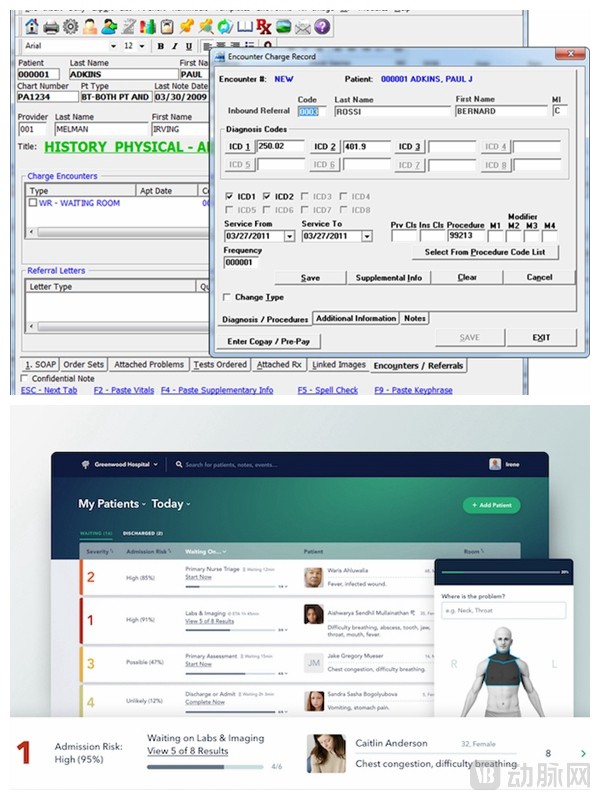
American Medical Software and Vital
Image source: AMS and Vital official websites
Vital is a consumer-friendly software that enhances productivity in the Emergency Department (ED) and improves patient health outcomes. Currently, it offers tailored solutions for EDs, inpatients, and hospitals respectively.
When patients present to the Emergency Department (ED), their care journey typically involves six key stages: registration, triage, bed assignment, waiting for medical staff, awaiting clinical decisions, and finally, admission or discharge. Although the ED is designed to provide urgent care for critically ill patients, it is increasingly characterized by a phenomenon where "emergency care is no longer urgent." In some U.S. emergency departments, patient wait times can reach up to 50 hours, leading to patient dissatisfaction and delays in treatment.

Emergency Department Patient Visit Process
Vital’s flagship product, ERAdvisor, is designed to address the challenge of “non-urgent emergency visits.” ERAdvisor provides patients with real-time updates on Emergency Department (ED) status. By building digital models to predict wait times at each stage, and leveraging AI, machine learning via Tecton, and natural language processing (NLP) for information analysis, Vital combines these insights with user interface (UI) design to deliver personalized, easy-to-understand data and visualizations.
By comparing the wait times predicted by ERAdvisor with the actual wait times experienced by patients in this process, ERAdvisor achieved an average prediction accuracy of 94%.
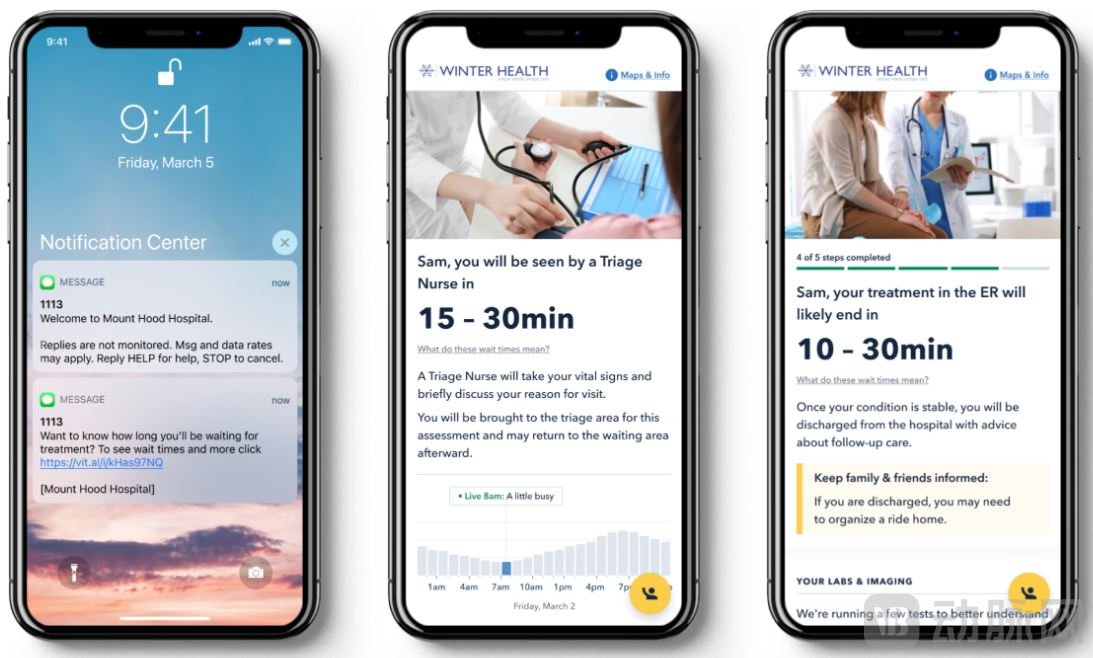
Figure 1: Patients automatically receive a text invitation with visit information, accessible without registration or download.
Figure 2: Wait Times, Process Information, and Full-Day Duration Predictions for the Emergency Department on That Day
Figure 3: Emergency Care Workflow Progress and Sharing Emergency Information with Family and Friends
Image source: Vital official website
ERAdvisor is hosted on a web platform, enabling family members and friends to communicate in real time with patients and the care team. Post-emergency department (ED) care reminders can be sent directly to patients’ mobile phones via SMS, and physicians can access follow-up care information for different patients through the platform. The timeliness of this follow-up process enhances ED operational and management efficiency.
CareAdvisor: Connecting the entire process from admission to discharge to achieve information transparency for hospitalized patients
CareAdvisor is a mobile inpatient platform designed for patients, clinicians, and hospital staff. By integrating with the hospital’s Electronic Health Record (EHR) system, CareAdvisor enables patients, clinicians, and family members to access the information they need through its modern user interface.
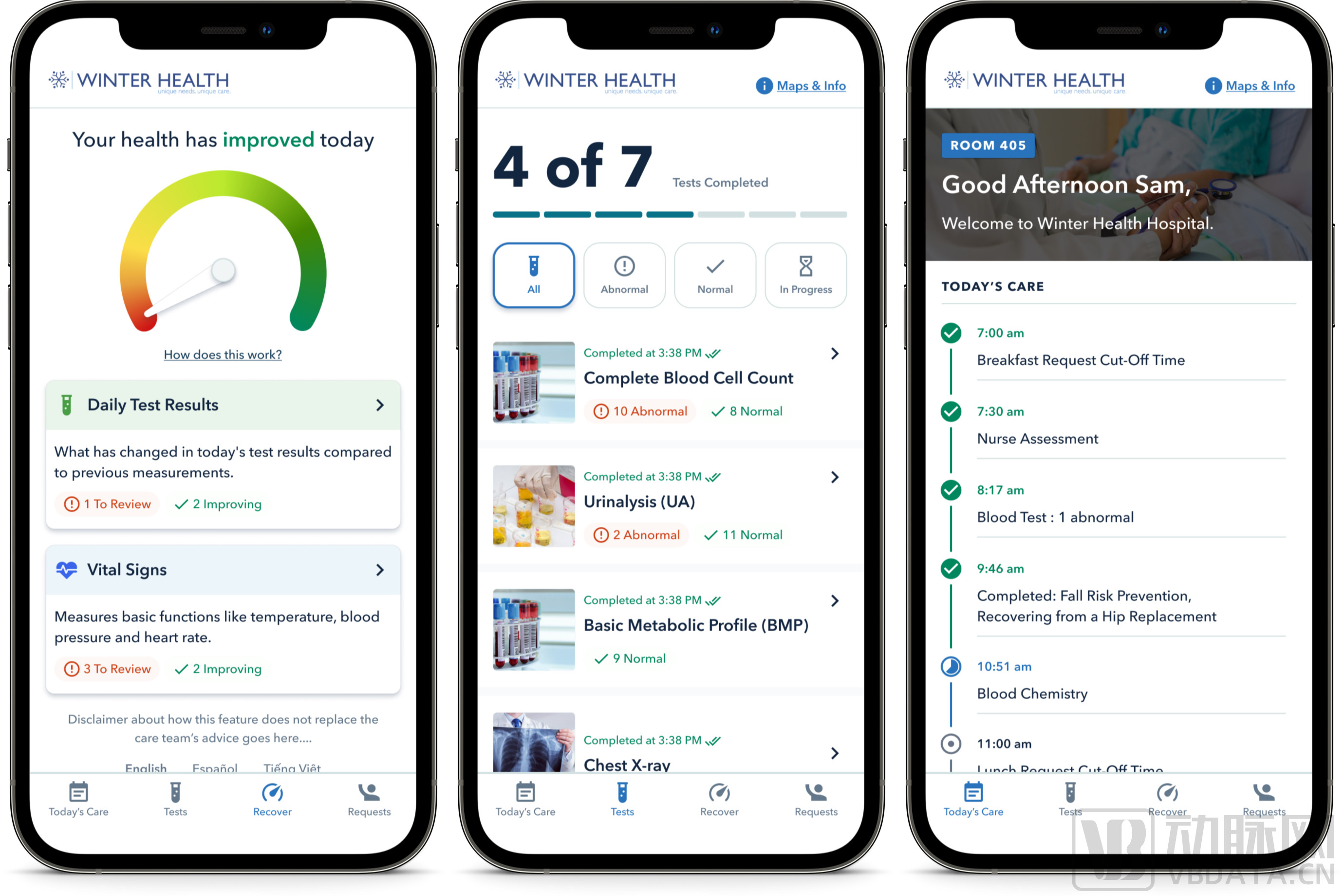
Figure 1: Patient EHR Information; AI-Predicted Patient Health Status and Discharge Planning Progress
Figure 2: Patient Examination Findings and Report Interpretation
Figure 3: Patients can view and record their hourly physical condition on a daily basis
Image source: Vital official website
Patients do not need to download an app for consultation; they can register by entering their mobile phone number via a secure link. After integrating with the Electronic Health Record (EHR) system, CareAdvisor leverages AI-driven predictive analytics to help patients understand disease progression and set treatment goals. Additionally, it can substitute for nurses in providing daily medication and nursing guidance to inpatients, thereby reducing healthcare workers’ workload and shortening patients’ hospital stays.
As a consumer-friendly software, CareAdvisor encourages patients to proactively engage in their treatment and care by addressing the questions that matter most to them. Inpatients can view their test reports through CareAdvisor, where AI-driven analysis provides predictive insights and recommends videos to help patients understand how to interpret their test results and data.
CareAdvisor provides a personalized care experience for inpatients. In addition to patients and physicians having real-time access to the patient’s hourly status records, patients can share links with their family members to jointly manage daily health conditions. Inpatients can also use CareAdvisor to order meals, request room cleaning, and other services, and rate each service online. CareAdvisor’s services continue through to the patient’s discharge summary.
The combination of ERAdvisor and CareAdvisor can significantly improve physicians’ efficiency in communication, treatment, and management.
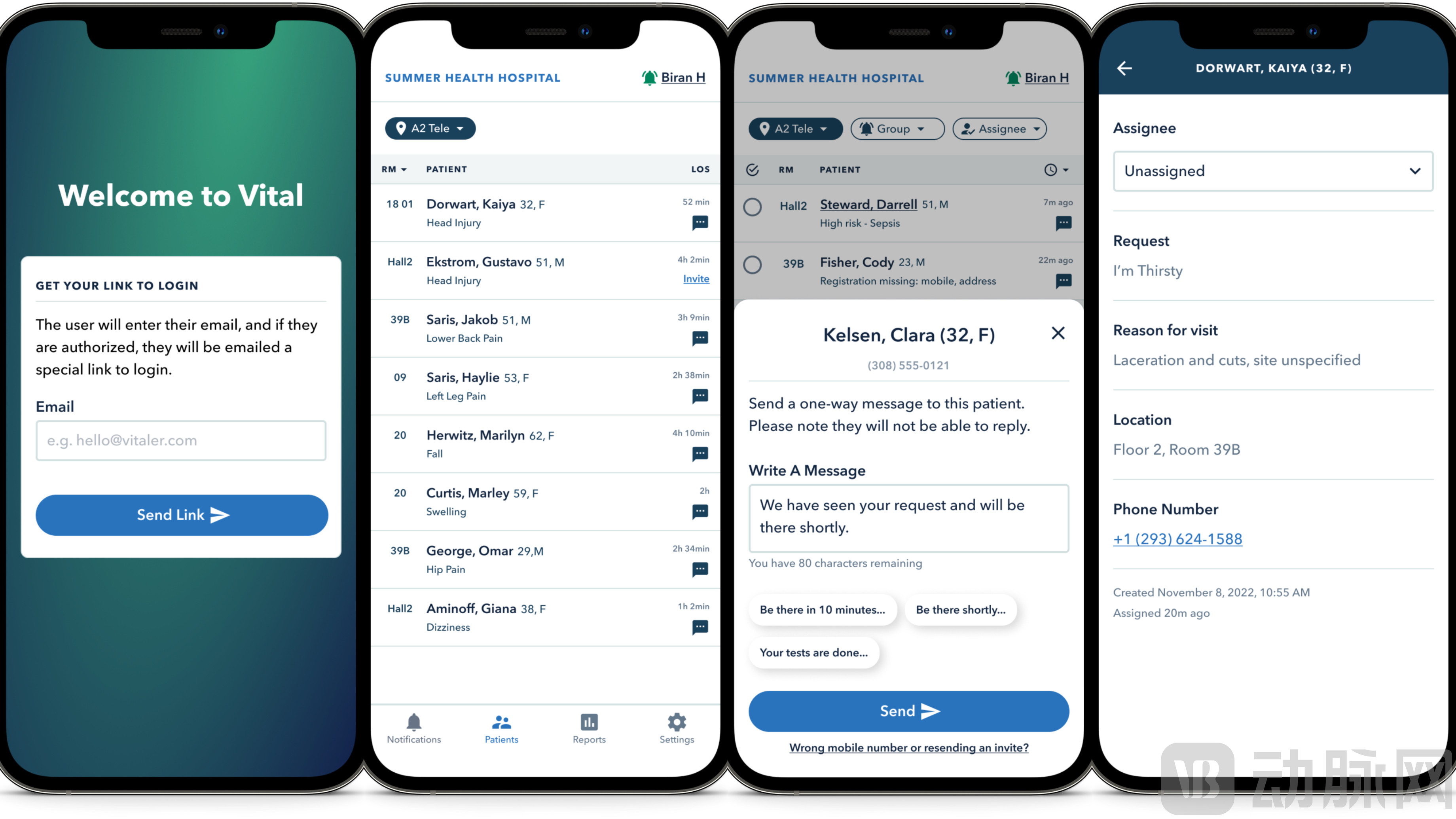
Mobile Service Page for Healthcare Professionals
Image source: Vital official website
Vital can be integrated with any emergency department EHR system, such as Epic, Cerner, and Meditech. However, how can hospitals prevent information leaks at any stage when connecting their inherent internal intranets to Vital, which operates and processes data in the cloud? To address this, Vital has implemented a two-tiered technical security safeguard.
First, Vital uses the HL7 (Health Level 7) standard framework FHIR (Fast Healthcare Interoperability Resources) interface to transmit critical information.
Secondly, no app download or registration is required. Vital adopts Single Sign-On (SSO) protocols such as LDAP, SAML, and OAuth, allowing doctors or patients to authenticate their identities across other sub-application systems with just a single login to Vital. This eliminates the need for repeated logins, thereby reducing the risk of account information leakage and enhancing users’ sense of security.
These two layers of security protection technology ensure that emergency room information data complies with the HIPAA Act. Currently, Vital has successfully completed the Type II audit under the Service Organization Control (SOC 2) report issued by the American Institute of Certified Public Accountants (AICPA), which primarily assesses Vital’s security and confidentiality.
Vital has also obtained HITRUST (Health Information Trust Alliance) r2 certification. HITRUST r2 validation is considered the gold standard for assessing information security.
Unlike Mint, a personal finance management system, Vital operates in the emergency care sector—a field subject to stringent regulation by governments, regulatory bodies, and patients. Nevertheless, Patzer’s original vision for Vital mirrors that of Mint: both are consumer-centric platforms designed to empower individuals to understand, engage with, and take responsibility for their emergency care processes. By leveraging AI technology, Vital aims to enhance patient experience and clinical care quality while ensuring transparent and secure information sharing.