

Starkey Hearing Technologies Files IPO Prospectus Amid Global Expansion and Innovation in AI-Powered Hearing Solutions

Starkey Hearing Technologies
Hearing Health Service Provider
Prior to 2019, the hearing aid industry was dominated by six leading brands. Following the 2020 merger of WIDEX and Signia’s parent company to form WS Audiology, the global hearing aid market has shifted to a landscape defined by five major competitors.
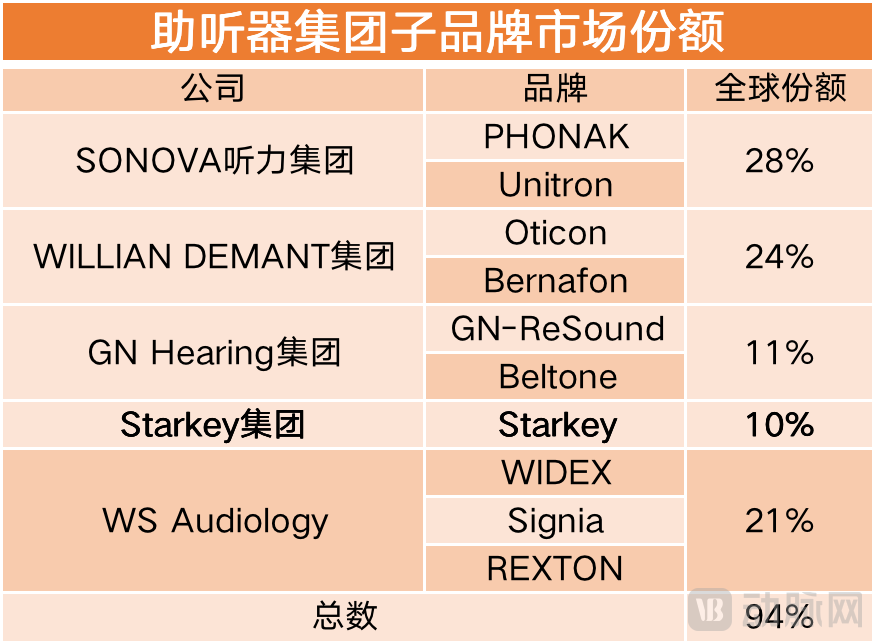
Market Share of Subsidiary Brands under the Hearing Aid Group Data Source: IDATE
According to data from the third-party research firm IDATE, Starkey is the only U.S.-based company among the top five global hearing aid brands. Although its market share is slightly lower than that of the other four brands, Starkey pioneered the launch of customized hearing aids and has rapidly expanded in the hearing aid sector by pursuing a dual strategy of commercial products and charitable initiatives, maintaining a dominant presence in the U.S. market for 62 years.
Currently, Starkey has more than 5,000 employees worldwide and operates 28 production and operational bases in over 22 countries.
Founders' Overseas Localization Services
On October 7, 2014, William F. Austin’s private jet landed in Kunming, Yunnan. As the founder of Starkey Hearing Technologies and the Starkey Hearing Foundation, he was accompanied by his wife, Tani, and a medical technical service team of more than 20 members that he had assembled. Having just concluded a hearing aid donation campaign in Africa, they crossed the Indian Ocean to inspect the on-site preparations at the ready-to-use hearing aid fitting venue.
That year marked the third year of collaboration between the Starkey Hearing Foundation and the China Hearing Medicine Development Foundation, as well as Austin’s first trip to China to provide services. Over the course of half a month, they provided free hearing aid fittings to more than 6,000 elderly individuals and children in Kunming, Chuxiong, Dali, and Lijiang.
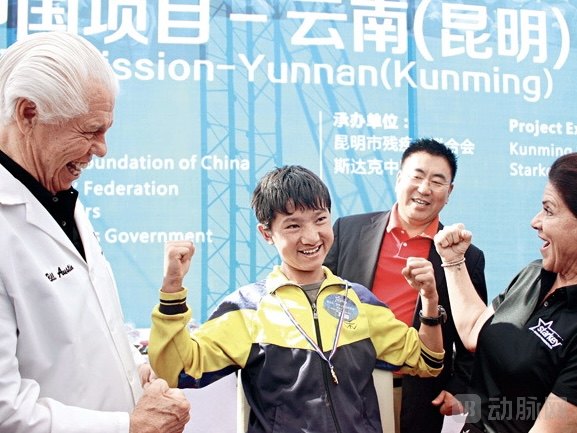
October 2014, the Austins at a hearing aid fitting site in Kunming. Image source: China Philanthropist Magazine
Founded just 62 years ago, Starkey is considered a newcomer among the top five global hearing aid brands. Yet it has achieved rapid growth and broken through in a market dominated by industry giants, thanks largely to its founder, William F. Austin.
In his youth, Austin regarded Albert Schweitzer, the “Father of Africa,” as his role model and aspired to become a professional physician to contribute to the world. In 1961, he was successfully admitted to the University of Minnesota to pursue a degree in medicine. However, due to financial pressures, he had to work part-time at his uncle’s hearing aid store to support himself. It was through this experience that he became exposed to the manufacturing process of hearing aids.
On his way home from work one day, Austin inadvertently noticed a quote on the ceiling of the bus: “The true path to benevolence lies not in lowering yourself, but in being yourself and confronting the greater nature, which will reveal how insignificant your greatness truly is.” These words struck him with sudden enlightenment.
As soon as he got home, he kept talking to himself, “How many patients can I see in a day? Twenty or twenty-five? And then my impact ends there. I thought I could change the world, but in reality, I only influenced a small corner of it.” That night, Austin suffered from insomnia. He said to himself, “I only live once and have just one life to give, so I must make this life count as much as possible.”
At that time, Austin was already capable of producing hearing aid products, so he decided to start with hearing devices.
"Core AI technology, applied to multiple scenarios including sports and masks."
In 1967, Austin founded Starkey Hearing Technologies in Minnesota, USA, and subsequently established the Starkey Hearing Foundation in 1973.
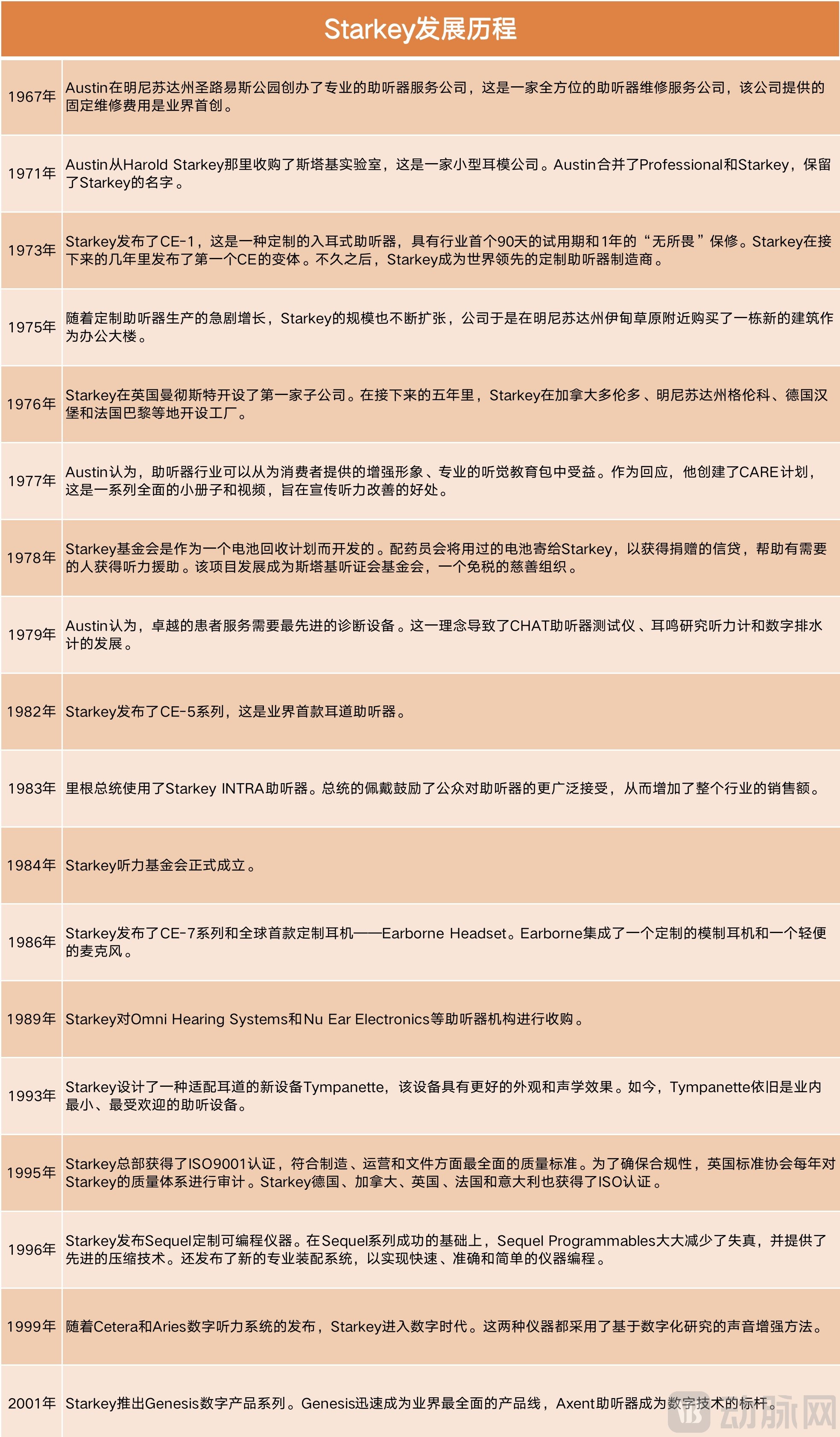
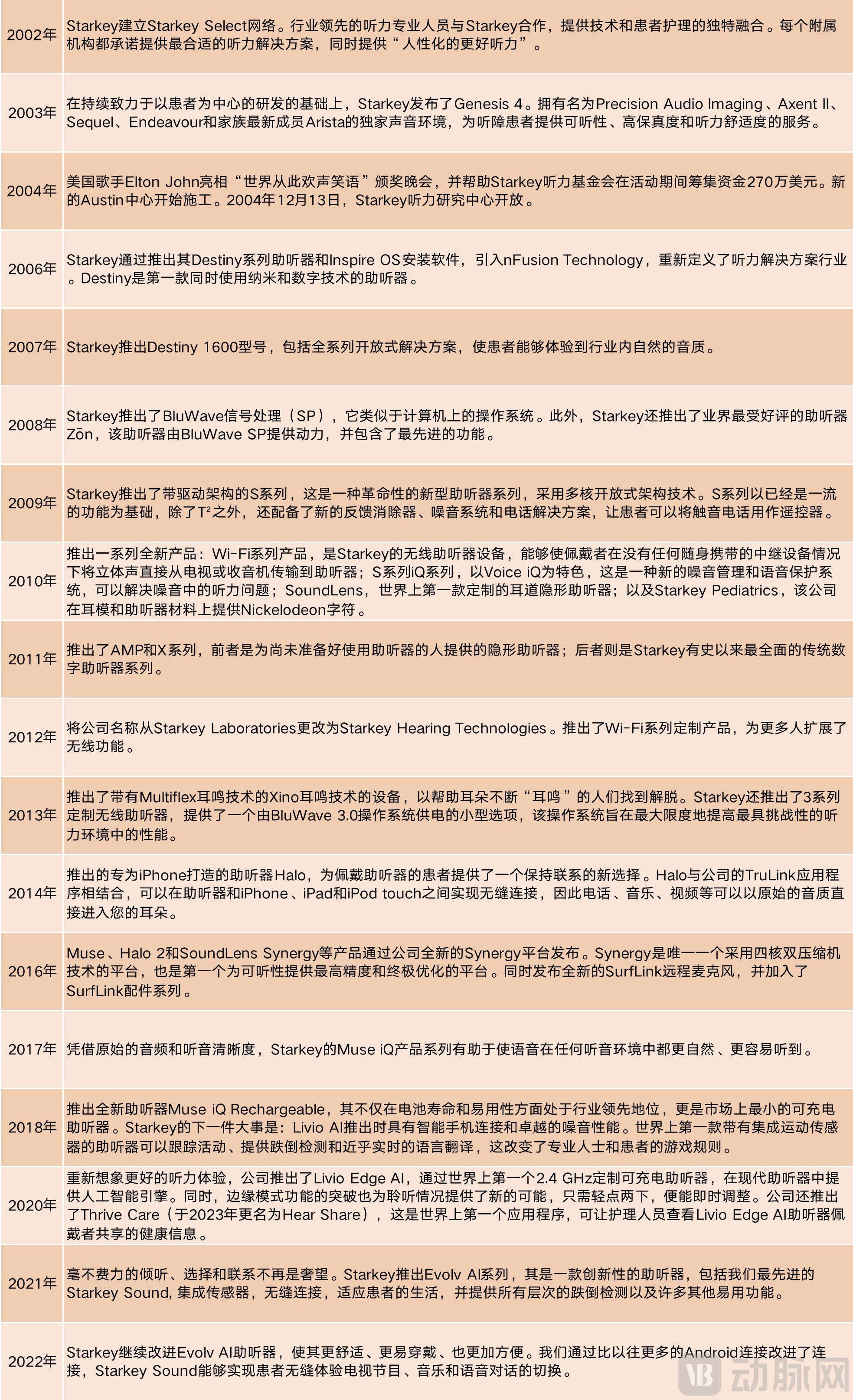
Starkey Development Timeline — Source: Starkey Official Website
Austin has never viewed his work as merely manufacturing and selling hearing aids; instead, he sees himself as leveraging technology and innovation to help people regain their hearing.
Hearing aids are precision instruments that are highly susceptible to damage and notoriously difficult to repair. Yet, in its early days, Starkey committed to offering users a 90-day free trial and a one-year “No Fear” warranty. Others attempted to emulate this model, but all failed. In Austin’s view, Starkey’s success stemmed from its genuine desire to act in the best interests of its users, whereas competitors merely followed passively, hoping to pressure Starkey into altering its market strategy.
For example, many patients refuse to use hearing aids due to their conspicuous design, fearing that wearing them will attract unwanted attention. In response, Starkey has shifted its industrial design from traditional models toward miniaturization and personalized customization, even offering a variety of color options. Its AMP series of hearing aids provides an option for patients who are not yet ready to adopt conventional devices. These custom-made, invisible hearing aids are placed deep within the ear canal, making them virtually undetectable and eliminating concerns related to aesthetic appearance.
To address battery life concerns, Starkey pioneered the launch of the first wireless custom rechargeable hearing aid. Equipped with a mini turbo charger, it achieves a full charge in just 3 hours, providing up to 24 hours of continuous use on a single charge. The charger is compact enough to fit in a pocket, and a fully charged mini turbo charger can recharge a pair of hearing aids four times.
Amid the wave of new technologies, Starkey continues to provide hearing-impaired patients with more high-definition, comfortable, and intelligent customized services. The Wi-Fi series comprises Starkey’s wireless hearing aid devices, which enable users to stream stereo audio directly from televisions or radios to their hearing aids without the need for any portable intermediary devices. Furthermore, by integrating AI chips with Xino tinnitus technology, Starkey’s hearing aids can intelligently recognize the user’s environment and automatically adjust sound settings accordingly, ensuring a more natural and effortless listening experience in any acoustic setting.
Furthermore, Starkey previously developed the Halo series of hearing aids specifically for iPhone users. By connecting via the TruLink app, these hearing aids enable seamless switching between iPhone, iPad, and iPod touch devices, allowing phone calls, music, videos, and other audio to be streamed directly into the ear canal in original sound quality. This model was subsequently updated and applied to Android systems, providing more patients with the ability to seamlessly switch between television programs, music, and voice conversations.
Building on this foundation, Starkey also created the world’s first hearing aid with an integrated motion sensor, capable of tracking activity, providing fall detection, and offering near real-time language translation. The breakthrough in Edge Mode functionality provides new options for listening scenarios, allowing instant mode adjustment with just a double tap.
During the pandemic, Starkey innovatively launched a “Mask Mode” for its hearing aids to address reduced volume caused by wearing masks and tangling issues during donning and doffing. Currently, Starkey has also implemented a custom memory program feature in its Thrive Care app (renamed Hear Share in 2023), enabling real-time sharing of wearers’ health information with backend personnel for health monitoring.
Austin’s personal journey has undoubtedly imbued Starkey’s development and product R&D direction with a strong “user-centric” foundation. Under Austin’s leadership, Starkey has centered both its market strategy and product development around users, continuously striving to overcome challenges related to comfort, convenience, and personalization from a technological perspective, while also expanding the applicability of its products to a wider range of scenarios.
Public-Private Partnership: Establishing Thousands of Professional Fitting Service Outlets Across China
In the 1970s and 1980s, Starkey attempted to enter the Chinese market but ultimately fell through.
In 1979, Austin personally funded the dispatch of an engineer to China to help the country produce better hearing aids. A year later, he visited China in person to explore business cooperation opportunities with the nation, which had just adopted the policy of reform and opening-up. Determined to establish a wholly owned factory in China to maintain autonomous control over product quality, Austin declined proposals for joint ventures at that time.
This less-than-smooth communication delayed Starkey’s commercialization process in China by 15 years.
In 1995, Starkey Hearing Technologies (Suzhou) Co., Ltd. (hereinafter referred to as “Starkey China,” a wholly-owned subsidiary of Starkey) was established in Suzhou. At its inception, the company featured a building area of over 4,500 square meters and was equipped with production facilities identical to those at its headquarters, along with a professional operations team. After years of development, Starkey China has now established branches and offices in Beijing, Shanghai, Guangzhou, Xi’an, and Hong Kong, and has set up more than 1,000 professional Starkey hearing aid fitting service centers, delivering the consistent, high-quality service associated with the American brand Starkey to individuals with hearing loss.
Starkey China also emphasizes the training of overseas local professional fitting specialists in the hearing aid industry, collaboratively promoting the development of China’s hearing aid dispensing sector and providing personalized hearing solutions for individuals with hearing impairment.
Due to the prolonged difficulty in finding suitable partners, Austin’s charitable endeavors reached China only in 2012, lagging behind the slow progress of its commercial collaborations. By that time, Starkey’s “Hearing a New World” program had already expanded to more than 50 countries worldwide.
In July 2011, Tao Siliang, who concurrently served as the full-time Vice President of the China Mayors Association, Executive President of the Women Mayors Branch, and Chairman of the China Hearing Foundation, traveled to the United States to discuss with Austin a charitable project aimed at supporting hearing-impaired patients in China.
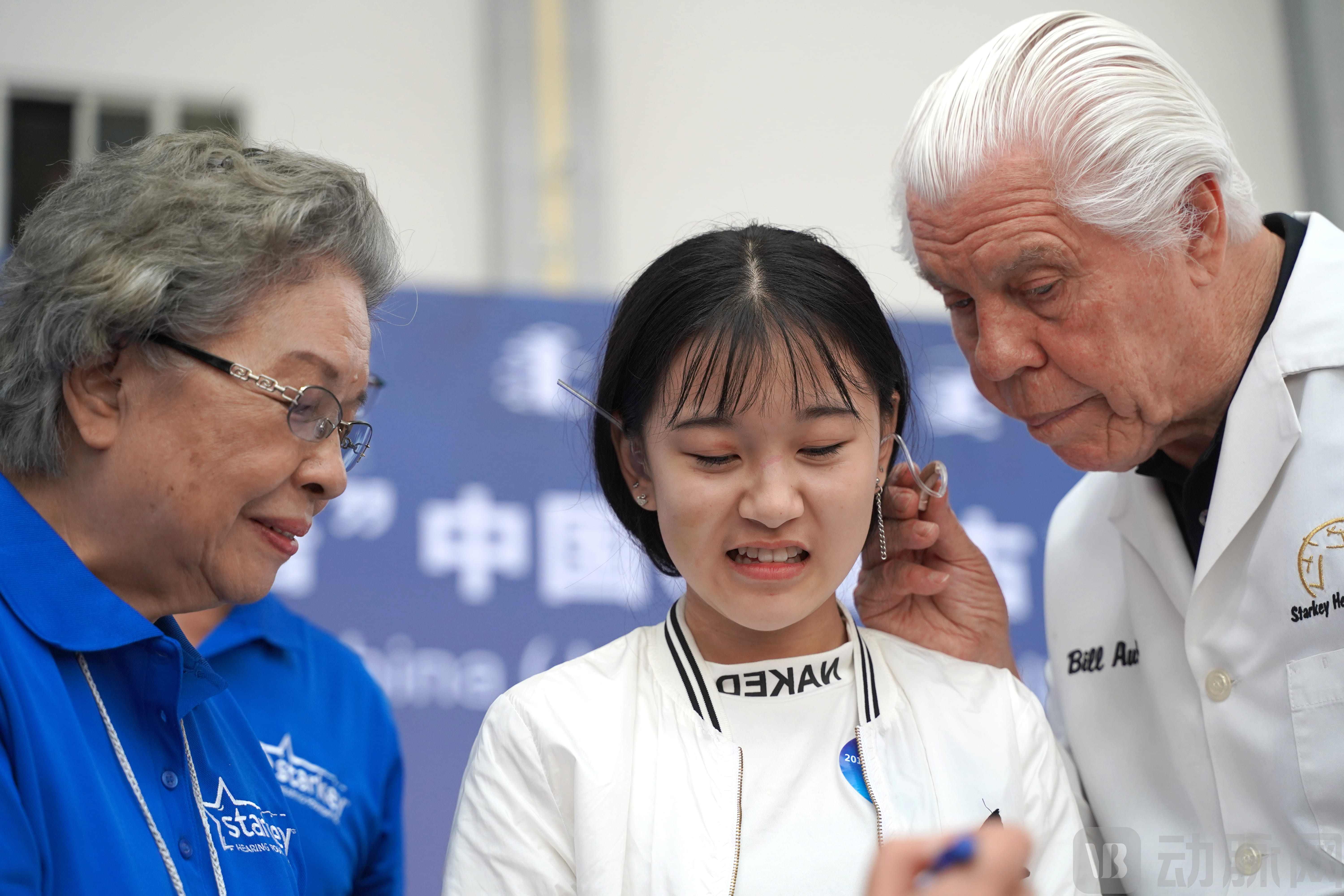
Austin and Tao Liang jointly fit hearing aids for children with hearing impairments. Image source: Starkey official website
Although Austin did not understand Chinese and Tao Zhu did not speak English, the two silver-haired seniors hit it off instantly, extending their originally scheduled 10-minute meeting to an hour. Feeling that he had found a suitable partner, Austin immediately decided to launch the project in China. In August 2012, Austin led his team to China and signed a cooperation agreement with Tao Siliang.
Driven by both Starkey’s strategic vision and Austin’s personal passion for healthcare, the “World of Laughter and Joy · China Project” has now expanded to 18 cities across nine provinces and autonomous regions in China. Through the concerted efforts of provincial governments, local Disabled Persons’ Federations, the China Mayors Association, the Beijing Aier Public Welfare Foundation, and Starkey China, Starkey has provided professional one-on-one hearing aid fitting services to nearly 50,000 individuals with hearing impairments from low-income backgrounds, donating close to 100,000 fully digital hearing aids free of charge.
Integrate top-tier resources and collaborate with prominent figures across various sectors to continuously expand influence
In China, Starkey’s partner is Tao Liangliang. Globally, Starkey similarly integrates top-tier resources, with its commercial clientele comprising “leading figures” across various sectors.
Initially, Starkey’s vision to “fill the world with laughter and joy” was merely an aspiration. However, during a charity event in Haiti, Starkey invited American celebrity Miley Cyrus, a household name in the United States with a massive fan base. Subsequently, media coverage of the event surged worldwide, and the ripple effect of her star power propelled Starkey to widespread fame.
Inspired, Starkey began to continuously invite prominent figures from politics, business, sports, and other fields to participate in its charitable events.
Today, Starkey is one of the world’s top five hearing aid manufacturers. For Starkey, business and philanthropy are like two intertwined threads. “Doing good” and “making big money” are not in conflict; instead, they form a closed loop.
Starkey does not operate large chain retail stores and has historically distinguished itself with custom-fit hearing aids. Although its market share among the top five global hearing aid brands is not prominent, Starkey’s business model still holds merit. For China, there remains substantial demand for hearing aids in the domestic market.
The report “Current Status and Development Trends of Hearing Health in China” indicates that the number of elderly individuals aged 65 and above, who constitute the majority of the population with hearing impairment, has currently reached 120 million in China. Moreover, according to data from the World Health Organization, approximately 1.1 billion young people worldwide (aged 12–35) are at risk of irreversible hearing loss. Factors such as staying up late, prolonged use of earphones, and working in noisy environments are posing significant risks for hearing loss, which is increasingly affecting younger populations.
It is worth noting that numerous domestic hearing aid brands are accelerating technological upgrades and increasing R&D investment in chips and algorithms. These efforts aim to address, from multiple angles, past challenges such as insufficient market education, complex fitting procedures, and inadequate infrastructure in remote areas. Furthermore, by leveraging technologies like chip integration, these brands are further expanding the application scenarios of traditional hearing aid products and breaking the monopoly held by foreign technologies.