

SolasCure Secures £10.9M Series B to Advance Maggot-Inspired Chronic Wound Therapy Aurase®

Seneca Partners
Venture Capital Firm
SolasCure
Wound Gel Developer
Recently, SolasCure, a biotechnology company based in Cambridge, UK, completed a £10.9 million Series B financing round. The round was led by Seneca Partners, with participation from BRAIN Biotech AG (Xetra: BNN) and Dr. Jonathan Milner, founder of Abcam.

SolasCure Funding History
Compiled and produced by VCBeat
SolasCure, established in 2017, is a subsidiary of the German biotechnology company BRAIN Biotech AG. The company develops therapeutic agents for chronic wound healing based on bionics and evidence-based medicine.
Slow Wound Healing Is Known as a Silent Epidemic. According to statistics from the National Institutes of Health (NIH), 1%–2% of people in developed countries will suffer from chronic wounds during their lifetime.
The funds raised in this round will be used for SolasCure's Aurase®Development of wound dressing gels and initiation of Phase II clinical trials for innovative wound debridement enzymes. Compared with the ongoing Phase IIa safety study, the next stage of trials will enroll a larger number of patients with more diverse clinical conditions.
Wound healing is inherently a complex yet orderly biological process; however, if patients have underlying chronic diseases that impair the body’s self-repair capacity, wounds will struggle to heal spontaneously. Therefore, a wound that remains open for more than 4–8 weeks is diagnosed as a Chronic Nonhealing Wound (CNHW).
According to the TIME principle of wound management: tissue debridement is the first and most critical step in treatment, serving as a prerequisite for controlling wound infection and moisture balance.
With the global aging population and the continuous rise in patients with heart disease, diabetes, and obesity, along with the resulting infection issues, chronic non-healing wounds (CNHW) have become a significant clinical, social, and economic challenge. According to data from the CDC (Centers for Disease Control and Prevention), approximately 90,000 to 120,000 Americans suffered from chronic lower-extremity wounds or non-healing ulcers in 2020.
Nature has long served as a source of inspiration for various human technological concepts. Nature has its own methods for wound debridement; maggot therapy was already employed by physicians as early as the 9th century. However, the advent of antibiotics gradually caused this natural biological therapy to fade from public view. It was not until antibiotic abuse led to drug resistance that this ancient therapy returned to the forefront of clinical practice. Bionics serves as the bridge connecting nature with biotechnology.
Unlike previous “folk remedies” using live maggots, SolasCure leverages bionics and evidence-based medicine to combine the targeted efficacy of maggot therapy with the convenience of hydrogels, aiming to improve the debridement process for use in diverse wound care settings, including hospitals, nursing homes, and home care.
Leveraging its “Nature Toolbox,” BRAIN Biotech AG developed a novel enzyme and discovered its potential for the biotherapeutic treatment of CNHW. To bolster business growth, BRAIN Biotech AG invested in establishing its subsidiary, SolasCure, and transferred the relevant patent to SolasCure for continued drug development, including future CE marking and commercialization.
SolasCure developed its first product, Aurase, based on preliminary research conducted by BRAIN Biotech AG.®Wound Gel Dressing: The active ingredient in this medication is a novel biological enzyme originally derived from maggot saliva.
These maggots are the larvae of Lucilia sericata (Meigen). Although Lucilia sericata and its larval maggots have traditionally been perceived as filthy, contrary to this stereotype, the maggots actually feed exclusively on necrotic and devitalized tissue in wounds, leaving a clean wound bed to facilitate healing.
Ensuring the safe and effective application of medical maggots to patient wounds presents a significant challenge. Medical maggot therapy involves a complex set of medical tools; the sterile rearing, transportation, and clinical use of maggots require experienced nursing staff and sophisticated infrastructure. Furthermore, medical maggots often provoke psychological aversion among both wound care providers and patients, thereby hindering treatment continuity.
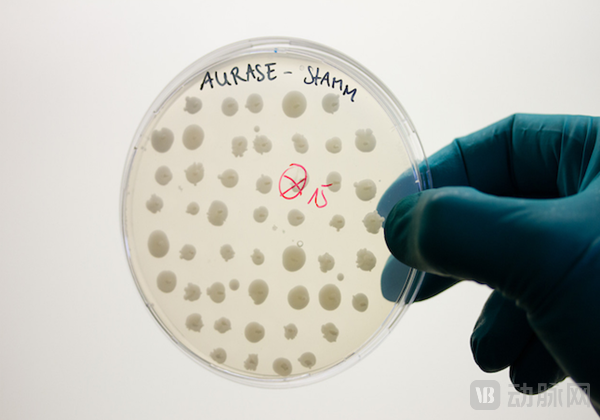
Aurase Trial
Image source: SolasCure official website
To address the challenges associated with application routes and methods, SolasCure employed biomimetic gene cloning to replicate the proteolytic enzymes found in maggot saliva. The process began with sequencing the gene responsible for enzyme production in maggots, followed by cloning it into Pichia yeast for propagation, thereby yielding recombinant enzymes at a sufficient scale. Finally, this novel proteolytic enzyme was incorporated into a hydrogel formulation, which not only preserved the enzyme’s activity but also facilitated ease of use for both healthcare providers and patients.
Aurase in Hydrogel Dressing Form®Caregivers can directly apply it to the wound using only a spatula, and then cover it with a barrier dressing. The dressing and the barrier film form a temporary skin barrier that prevents or controls wound infection, provides a favorable environment for repair, and promotes wound healing. Maggot-derived proteolytic enzymes can autonomously debride necrotic tissue in the wound; furthermore, these components are rapidly inactivated upon entering the patient’s systemic circulation, thereby avoiding adverse effects on the patient’s health.
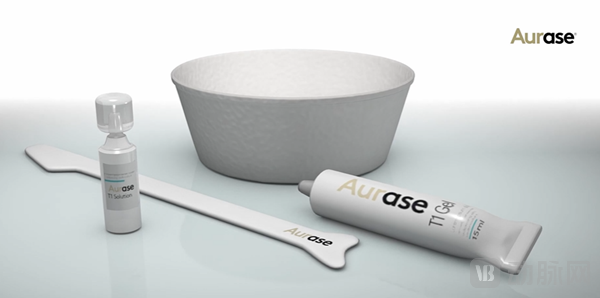
Aurase
Image source: SolasCure official website
Furthermore, compared with the operational complexity and risk of secondary injury associated with surgical debridement (which involves repeated removal of necrotic tissue using sharp instruments such as scalpels) and physical debridement methods (such as water irrigation and instrumental curettage), the use of dressings makes wound care more convenient for patients. Whether in a hospital or at home, patients can use Aurase® to improve prognosis, thereby avoiding the need for chronically wounded individuals—who often suffer from prolonged discomfort and debility—to make repeated visits to medical institutions. This approach reduces both the overall treatment costs and physical pain experienced by patients.
In 2021, SolasCure commenced Aurase under the authorization of the UK Medicines and Healthcare products Regulatory Agency (MHRA)®Phase IIa clinical trial of Wound Ge. In the same year, the product received FDA IND approval. The trial is currently being conducted at multiple medical research centers in the United Kingdom, the United States, and Hungary.

Aurase R&D Pipeline
Image source: SolasCure official website
According to the SolasCure official website, the results of this clinical trial will be announced in 2023.
In January this year, SolasCure published the preclinical trial results of Aurase® in the International Wound Journal. The results indicated that the novel recombinant proteolytic enzyme can be used for local or systemic debridement without impeding wound healing and is non-sensitizing, with data demonstrating favorable safety and efficacy.
According to data from market research firm Fortune Business Insights, the global chronic wound care market is projected to grow from USD 12.36 billion in 2022 to USD 19.52 billion by 2029, representing a compound annual growth rate (CAGR) of 6.7% during the forecast period.
Innovation is Aurase®The key to transitioning from biological experiments to the bioeconomy, and the driving force behind corporate development. Aurase®It offers novel solutions and economic value for the treatment of chronic wounds. Faced with such a large market for chronic wound care, how to obtain approval through clinical trials as soon as possible and successfully promote commercialization is the challenge that SolasCure needs to face.
SolasCure’s Founder and CEO, Sam Bakri, holds an MD from University College London (UCL) and an MBA from Harvard Business School.

Sam Bakri
Image source: SolasCure official website
As a serial entrepreneur, Dr. Sam Bakri has worked in the life sciences industry for over 20 years, serving as co-founder and CEO of Gelmetix, AIDA Health, Gelmetix Healthcare, and Kind Consumer. Dr. Bakri is also an Entrepreneur-in-Residence at Mayo Clinic and a faculty member at Johns Hopkins University’s Carey Business School.
As an international entrepreneur focused on the healthcare sector, Sam Bakri was drawn to BRAIN Biotech AG’s research on Aurase. With support from BRAIN Biotech AG, he founded SolasCure in 2017.
SolasCure’s Chief Medical Officer, David Goldsmith, formerly served as Professor of Cardio-Renal Medicine at University College London and is currently an Honorary Professor. With 30 years of experience in clinical medicine, he has extensive expertise in the oversight and management of clinical trials. David Goldsmith achieved an h-index of 73 in 2021, reflecting his significant academic influence.
Chief Technology Officer Bela Kelety holds a Master’s degree in Chemistry from the Technical University of Darmstadt, Germany, and a Ph.D. from the Max Planck Institute for Biophysical Chemistry (Max-Planck-Institut, MPI). Since 1992, Bela Kelety has been working in the biotechnology sector and previously served as Strategic Project Manager at BRAIN Biotech AG.
SolasCure has gained recognition across multiple platforms. In 2022, SolasCure won the championship in the Biotechnology category of the EIT Health Catapult competition. Supported by the European Commission, the Catapult competition aims to help innovative companies enhance their visibility and exposure, promoting their innovative solutions to improve the lives of patients and citizens in Europe.
In February 2023, SolasCure was also selected by the UK Department for Business and Trade as a “2023 UK Life Sciences Innovator.”