

YuanMeng Health: Scaling Global Emergency Rescue Services from Olympic-Designated Provider to a 200+ Country Network
On an ordinary holiday in 2022, Fei Qiao of Illinois, USA, accidentally fell into a pit in the basement while scrubbing the exterior walls of his residence and instantly lost consciousness. When Fei Qiao regained consciousness five minutes later and crawled out of the pit despite the pain, he was greeted by police officers who had arrived upon hearing the commotion, standing before him silhouetted against the light.
Yet, from the moment he fell and lost consciousness to regaining awareness and climbing out of the pit, Fei Qiao never made a call to the police. When Fei Qiao looked at the officers in confusion, they simply pointed to the branded smartwatch on his wrist. Equipped with a “Fall Detection” feature, the smartwatch is designed to initiate a 30-second countdown if it detects that the user has fallen and remains immobile for one minute. Once the countdown ends, it automatically contacts emergency services and the user’s designated emergency contacts, while sharing the user’s current location.
Such scenarios are not uncommon abroad; indeed, the aforementioned smartwatch brands have even expanded their emergency response features to include crash detection. However, in China, “emergency rescue” still seems distant to most ordinary citizens.
“Frankly speaking, the rescue services market in China is indeed relatively niche and involves lower-probability events. However, it is also a market driven by essential needs and remains relatively stable. In other words, the demand is perennial and largely immune to macroeconomic fluctuations,” said Deng Juhan, Chairman of Healthlink (hereinafter referred to as “Healthlink”).
ifTo summarize Healthlink’s corporate positioning in one sentence, it is a domestic platform service provider of precision health management solutions with insurance as the payer. If one keyword were to be highlighted, it would undoubtedly be “health management.”
However, unlike most domestic companies offering health management services, Healthlink’s health management business segment was established on the foundation of its “Smart Emergency Rescue” services.This is also the “foundation of Healthlink’s success” and one of its core business pillars.
“In the past, companies providing rescue services were all ‘Big Boys,’ meaning they originated from large corporations and were quite ‘elite.’”“When discussing the state of the emergency rescue industry at the time of Healthlink’s founding,” Deng Juhan remarked with emotion.
For example, the well-known International SOS was established in 1985. Its predecessor, Asia Emergency Assistance (AEA), was founded by a French physician together with his childhood friend, who managed a German financial group. By 1995, AEA had set up representative offices in all countries across the Asia-Pacific region and rapidly became a world-leading medical assistance organization. In 1998, AEA was officially renamed International SOS. To this day, it continues to provide emergency assistance services in more than 70 countries across five continents, with corporate clients as its primary service recipients.
EuropAssistance (hereinafter referred to as “EA”) was founded in Paris, France, in 1963. Its shareholders include Fiat, the renowned Italian automobile manufacturer, and Assicurazioni Generali, one of the world’s leading insurance groups and the largest insurance group in Italy (Generali, which previously held a 40% stake in Fiat, fully took over the EuropAssistance Group after divesting its interest in Fiat). Currently, EA’s business operations span more than 200 countries and regions, with 41 integrated assistance service platforms established, generating total revenues of €1.7 billion in 2018.
Another representative company, Allianz Global Assistance, is a subsidiary of the Allianz Group, one of the world’s leading insurance and asset management groups. It has established 37 operational centers in 29 countries worldwide, achieving sales of €2.005 billion in 2011.
It is evident that each emergency assistance provider is backed by large insurance institutions or financial groups, possessing superior economic and resource capabilities.
Therefore, it is not inappropriate to describe the emergency rescue sector, historically dominated by such “Big Boy” players, as “prestigious,” let aloneWhenThe clientele of emergency rescue services primarily consists of executives from Fortune 500 companies and has not yet expanded to the general public. In other words, this is a “premium” service enjoyed by social elites.
Moreover, it is equally evident thatIn the early years, no Chinese companies were present among emergency rescue service providers. This was partly due to differences in national conditions and culture between China and other countries.
According to public information, emergency rescue services originated in Europe in the late 1950s, primarily providing road and wilderness rescue, medical networks, travel assistance, and other services to individuals traveling outside their usual areas of residence. The emergence of these services in Europe can be understood from three perspectives:
First, the middle class in Western Europe has a penchant for outdoor recreational activities such as travel, hunting, and skiing, which carry certain risk factors and have indirectly spurred demand for emergency rescue services. Second, European countries are characterized by geopolitical attributes such as language barriers; when individuals encounter complex sudden accidents abroad, they are often ill-equipped to respond, underscoring the practical necessity of emergency rescue services. Third, the European insurance industry developed earlier than its Chinese counterpart. By that time, competition within the European insurance sector had already shifted toward service offerings, prompting many European insurance giants to establish emergency rescue service systems and corresponding operational entities. As a result, the supply of rescue services became more diversified and systematic.
In contrast, in China,According to Deng Juhan, “constrained by cultural habits, industry characteristics, and rescue infrastructure, the concept of ‘medical assistance’ in China was actually introduced by International SOS. The entire market remains undeveloped; indeed, even today, China’s third-party medical assistance market is still in its infancy. However, with the construction and improvement of infrastructure, deepened market education, and the formation and refinement of collaborative ecosystems among insurers, assistance providers, and third-party service agencies, the future growth potential of China’s medical assistance market remains promising.”
In 2019, Pascal Baumgarten, then CEO of Uro Group’s Asia-Africa region, made a similar remark: “In China, given the vast market size and the near absence of competitors, we believe the Chinese market is large enough to support the healthy growth of all companies.”
As Pascal Baumgarten noted, China’s emergency assistance market has not only attracted many internationally renowned assistance companies but also seen the emergence of several high-performing domestic enterprises.
For example,Healthlink has established coverage across a global rescue network spanning more than 200 countries and regions, connecting with over 3,500 rescue execution agencies and tens of thousands of hospitals. Domestically, it has achieved full coverage of pre-hospital emergency management services within all administrative divisions at the county level and above, and has achieved internet and IoT-based alarm information integration with more than 60% of emergency centers nationwide.
In 2018, Healthlink became the sole core partner of IAG (International Assistance Group) in China, providing localized on-the-ground services across China to the alliance’s members worldwide.
Meanwhile, Healthlink also took another step by redefining the boundaries of service recipients in the emergency rescue industry: it made elite rescue services more accessible, allowing more ordinary people to benefit from them.
This journey began with Healthlink’s unwavering commitment to fostering a sense of security: “Enhancing everyone’s sense of security is Healthlink’s corporate responsibility.” Yet, this process has not been without its challenges.
From the outset, Healthlink’s service demographic has no longer been confined to “elite individuals.”
Healthlink was established in 2008.This is a particularly special year for all Chinese people.Seizing the opportunity presented by the 2008 Beijing Olympic Games, Healthlink achieved a new milestone—being designated as the official provider of off-site emergency medical rescue services for the Beijing Olympics.
Specifically, at that time, Healthlink partnered with China Life to provide medical emergency assistance solutions to Chinese and international friends holding Olympic tickets.
“At the time, we considered that a large number of foreign spectators would come to China for the Beijing Olympic Games. They might not have substantial financial resources, meaning they could not necessarily afford the rescue services offered by international assistance companies at that time. Since this might be their only opportunity to visit China in their lifetime, there would likely be potential tourism needs beyond watching the events. Additionally, they faced language barriers, carried limited cash, and credit cards were hardly accepted within China’s domestic healthcare system then… All these factors combined indicated a latent demand for emergency assistance services among this group,” recalled Deng Juhan.
With the demand clearly present, how to meet it became a question for Healthlink to consider. In response, Healthlink primarily undertook three initiatives: first, it partnered with insurance companies to resolve payment issues; second, it established connectivity with the Beijing Olympic Games ticketing system to enable identity verification in the event of an accident involving a ticket holder; and third, it networked over 30 emergency medical centers across China, covering provincial capitals, municipalities directly under the central government, major tourist destinations, and key areas of Olympic host cities, enabling rapid response and rescue operations upon user identity confirmation.
“When Healthlink’s proposal was presented, it received high recognition from the Olympic Committee, which evaluated it as ‘highly aligned with the social security system.’” Speaking of this, Deng Juhan felt quite proud.
Thus, Healthlink has been continuously cultivating and “blooming” on its path beyond traditional medical rescue:In 2010, it was designated as the provider of off-site emergency medical rescue services for the Shanghai World Expo and the Guangzhou Asian Games; in 2016, it was designated as the provider of off-site emergency medical rescue services for the Hangzhou G20 Summit; in 2019, it provided comprehensive rescue support services for the “China-ASEAN BeiDou Tour” event; in 2022, it provided technical support for the intelligent platform of the off-site medical emergency dispatch and command center for the Zhangjiakou Chongli Zone of the Beijing Winter Olympics.
From the very beginning,Healthlink’s emergency rescue services are benchmarked against internationally mature medical transport systems and standardized service protocols. Healthlink has developed comprehensive, standardized transport solutions covering pre-transport assessments, modes of transport, necessary safeguards during transit, and claims processing for transport expenses.“Users need only ‘enjoy’ this service, without having to deal with a myriad of complex issues on their own.”
While standardizing rescue services, Healthlink has also partnered with multiple insurance institutions to jointly launch insurance products covering emergency rescue, enabling more people to access premium rescue services at lower costs.
The implementation of service standards and widespread adoption has rapidly positioned Healthlink as a leader in the emergency assistance industry. However, alongside the rapid expansion of the assistance market driven by the booming insurance sector in China, the low-frequency nature of assistance services and their “seemingly” high profit margins have attracted numerous new entrants, plunging the entire industry into a vicious cycle of price wars. Consequently, major foreign assistance service providers have successively exited the Chinese market.
When companies struggle to generate profits, they typically resort to one of two practices: either compromising service quality by substituting inferior offerings or engaging in exploitative tactics that prey on customers. Either approach contradicts Healthlink’s original mission in providing emergency assistance services—to make high-quality rescue services accessible to more ordinary people and instill a greater sense of security in their lives.
In the interview, Deng Juhan emphasized that Healthlink does not blindly promote the most expensive or high-end services to users; instead, it matches them with the most suitable and cost-effective options.
“Compared with other lifestyle services, rescue services involving life safety are more closely related to ‘people’s livelihood.’ They form the foundation of society and require the patience to deliver tangible results. ‘In recent years, a number of companies have emerged that excessively pursue online traffic and seek quick profits, which harms the industry. However, the health industry is fundamentally grounded in the principle of putting life first. Whether it involves capital or online traffic, any infringement on the fundamental interests of the public is intolerable. Therefore, companies in the health industry must shed their impetuosity, approach this sector with reverence, and jointly develop products that truly meet the practical needs of the general public,’ said Deng Juhan.”
Promoting the healthy development of the industry is the responsibility that every participant, especially leading players, should bear. In response, Healthlink stated that it leverages technology to expand the scope of emergency rescue services, thereby transforming the industry ecosystem.
Healthlink has invested substantial R&D resources in areas such as data alerts, intelligent sensing, proactive services, and smart delivery. By leveraging self-developed or collaboratively developed smart terminals and wearable devices equipped with the Healthlink Smart Rescue System, it has extended its service scenarios to home care, tourism, travel, and other contexts."Rapidly trigger alarms and synchronize emergency information when device users encounter danger, minimizing emergency response time to the greatest extent."
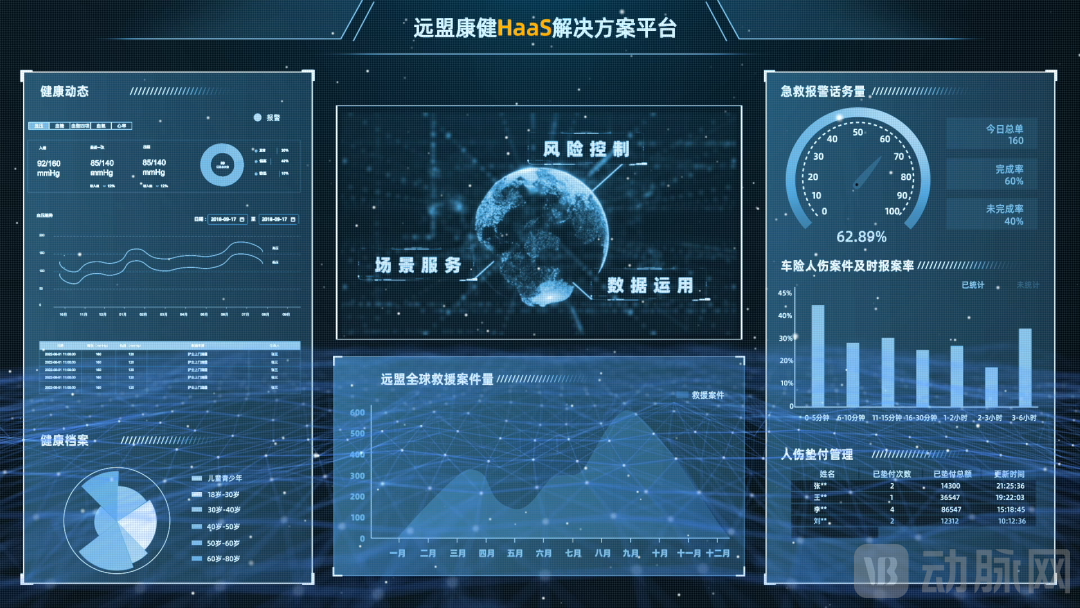
Through Technology, HealthlinkBreaking the tradition that emergency rescue services begin within hospitals,By integrating scenario-based risk assessment, risk early warning, risk intervention, pre-hospital emergency care, on-site rescue, in-hospital treatment management, and post-discharge rehabilitation into the entire service chain, service intervention is shifted to an earlier stage. Emergency rescue is no longer a passive response but serves as the foundation underlying users’ sense of security.
Therefore,In addition to its existing commercial assistance services, including a 24/7 emergency hotline, emergency medical evacuation and repatriation, and travel inconvenience assistance, Healthlink has also extended its service offerings into the two major sectors of professional emergency care and public emergency response.
The Professional Emergency Care segment is dedicated to providing the public with higher-quality emergency services, such as improving the efficiency of internet-based emergency call location and billing settlement. The Social Emergency Care segment aims to achieve broader and smoother integration between social resources and professional emergency services, enabling the public to access public emergency services more efficiently. Examples include integrating the emergency alert functions of various Internet of Things (IoT) devices with local 120 emergency command centers, establishing a coordinated network linking emergency volunteers, automated external defibrillators (AEDs), and 120 case management systems, and creating emergency reporting channels for individuals with hearing or speech impairments.
At this point,Healthlink has established a rescue service system centered on professional emergency care, public first aid, and commercial rescue. It has partnered with smart device manufacturers such as vivo, Lenovo, OPPO, XTC Kids’ Smartwatch, and Xiaodu Smart Screen, as well as internet technology companies like Tencent and Baidu. With a coverage of nearly 200 million people, it has become possible to extend rescue services to every aspect of users’ lives.
For the general public, the core value of Healthlink may lie in bridging the gap between them and rescue services that were previously labeled as “high-end.”
Apart from home and travel scenarios, what are the other primary settings in which rescue operations occur?
Outdoor environments are typically standard scenarios covered by rescue service providers, and Healthlink is no exception. Transportation is one of the primary application scenarios for rescue services; however, it is worth noting thatSince 2013, Healthlink has joined domestic organizations involved in relevant standards research, actively participated in the study of standards for vehicle-based emergency accident rescue and the drafting of standard documents, and promoted the application of China’s E-Call service standards within the industry.
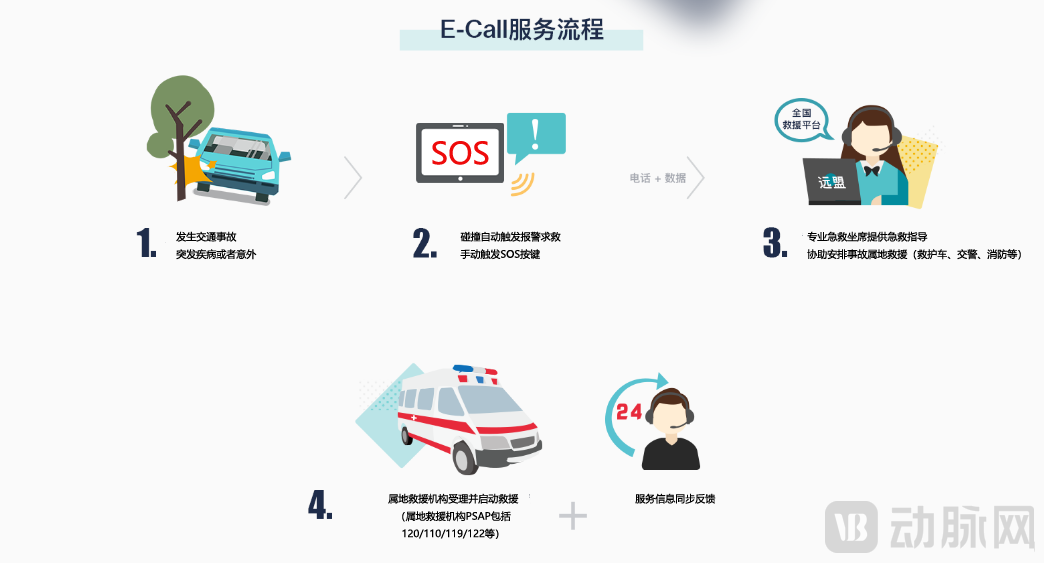
E-Call ServiceThe so-called E-Call service refers to a vehicle emergency call and rescue system. When a traffic accident occurs, the in-vehicle E-Call system is activated either automatically or manually. The system automatically dials the emergency response center and transmits the accident location information to its system. The emergency response center then organizes and dispatches local emergency medical services within the accident jurisdiction to carry out rescue operations, thereby ensuring the safety of the vehicle and its occupants. Currently, countries such as Russia and members of the European Union have enacted regulations mandating the installation of in-vehicle emergency rescue systems.
Meanwhile, China is also advancing the research and development of standards for in-vehicle E-Call systems. In 2018, the Ministry of Industry and Information Technology (MIIT) published a call for public comments on the proposed mandatory national standard project titled “In-Vehicle Emergency Call System for Accidents.” Since then, relevant standards organizations have been continuously researching and drafting the content of this standard.Healthlink also participated in the research and drafting of the national standard for “In-Vehicle Emergency Call System.”
In the industrial sector, an increasing number of automakers are also equipping their mass-produced vehicles with E-Call systems and services.Since 2012, Healthlink has been providing in-vehicle E-Call services to automakers and car owners. By the end of 2022, it had safeguarded the travel safety of over 21 million vehicles, accounting for approximately 10% of the existing passenger car market in China.
In addition to expanding horizontally into diverse rescue scenarios, Healthlink has also extended its business vertically, transitioning from rescue services to health services.
Essentially, rescue services are a small branch of health services, but it is precisely the accumulation in this branch that has enabled Healthlink to successfully elevate itself to the broader health services sector.
If the question is framed as, “After many years in emergency rescue services, what has been Healthlink’s greatest gain?” the answer would undoubtedly be resources, particularly the accumulation of medical resources.
Years of rescue experience have also led Healthlink to realize that no matter how efficient and precise rescue services are, the sense of security they provide is only temporary. To create a lasting sense of security for customers, it is necessary to help them reduce risks at the source.
“Emergency care resources serve as a crucial gateway to integrating medical resources across different regions.” This was Deng Juhan’s exact statement during the interview.
Typically, each city has only one emergency medical center, which corresponds to the five major specialized centers for chest pain, stroke, trauma, critically ill pregnant women, and critically ill children and newborns. In most cities, only the top-tier local hospitals—such as the People’s Hospital or the Central Hospital—are capable of integrating these five centers into a unified system. Therefore,When Healthlink had established collaborations with emergency centers in more than 300 cities across China, it also gained access to the medical resources of over 1,000 major medical centers behind these partnerships.
Therefore, it is only natural that Healthlink has achieved a significant business leap, driven by the integration of medical resources across multiple regions, years of stable partnerships with numerous insurance companies, and strong national policy support for the health industry in recent years.
In health management services, Healthlink aims to reduce health risks. Leveraging its medical rescue service network and driven by the dual engines of its Smart Active Health Risk Management Platform and Smart Rescue Platform, Healthlink has built a closed-loop service chain encompassing “risk warning, rescue management, basic diagnosis and treatment, post-hospital rehabilitation, and health management.” This integrated approach delivers high-quality, all-scenario rescue and active health management services to end insured individuals.
From rapid health screenings, health assessments, precision check-ups, and health management to AI-powered intelligent health consultations, psychological counseling, green channels for critical illnesses, medical assistance, and post-hospitalization care, and further extending to international medical services such as overseas medical treatment, second opinions abroad, and overseas assisted reproductive technology (ART) services, Healthlink has established a comprehensive, end-to-end health service ecosystem. This system covers the entire patient journey—from screening and diagnosis to post-treatment care—and spans both domestic and international healthcare landscapes.
However, it is important to note that Healthlink aims to build a health service platform by integrating its own advantageous services with third-party offerings, thereby providing users with comprehensive and high-quality health services. “Collaborative cooperation for mutual benefit and win-win outcomes” is the business philosophy upheld by Healthlink.
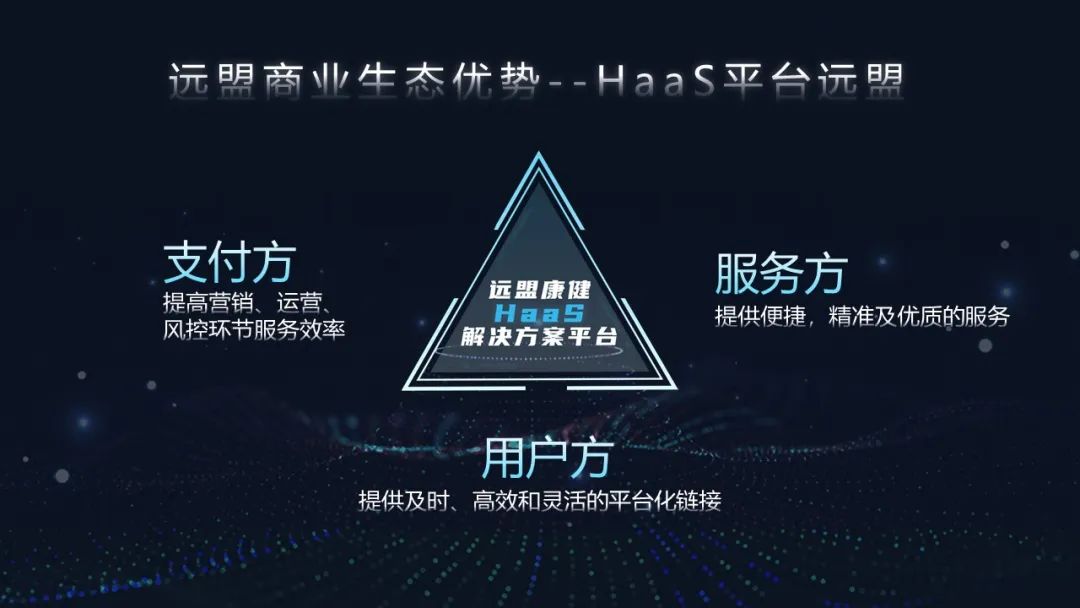
andIn the short term, Healthlink will focus its business efforts on building a comprehensive ecosystem. For instance, it aims to reach a larger population by collaborating with smart device manufacturers and connect with more vehicle owners through the installation of E-CALL systems. In the longer term, Healthlink also aspires to contribute to the development of China’s health insurance industry by developing more health insurance products that meet the public’s demand for health services.