

Accuredit Therapeutics' Co-founder Tao Jialin on Leveraging Pharma Expertise to Turn Cutting-edge Gene Editing into Viable Therapies
In March 2023, the Investigational New Drug (IND) application for Intellia Therapeutics’ NTLA-2002 was approved, marking the first in vivo gene-editing therapy IND cleared by the FDA. This approval has opened the door to clinical applications of in vivo gene editing, representing a significant milestone for gene-editing therapies with immense potential.
Also in March, the United States released Bold Goals for U.S. Biotechnology and Biomanufacturing, aiming not only to enhance the efficiency of gene editing but also to strengthen the ecosystem of gene editing production processes. This marks the positioning of gene editing as a core component of biotechnology and manufacturing, establishing it as a national-level priority development goal in the United States. Policy promotion at the national level has endowed the development of gene editing with greater potential and more possibilities.
Overseas gene-editing companies are continuously expanding and strengthening, while domestic gene-editing companies in China are also accelerating their strategic deployments in a highly intensive manner, among which,RuiZheng Gene, which focuses on the development of in vivo gene editing products, stands out thanks to its founding team’s unique industrialization perspective and extensive experience in commercialization.Dr. Tao Jialin, Co-founder and Head of CMC at RayZene Gene, is a central figure in product development. In a recent exclusive interview with VCBeat New Medicine, Dr. Tao shared his perspective, offering insights not only into RayZene Gene’s strategy but also into its rare approach of minimizing pitfalls and ensuring steady implementation in pipeline development and industrialization layout for frontier therapies.

Founding team with pharma capabilities, poised to target “in vivo gene editing”
RuiZheng Gene was founded in July 2021,What sets this startup apart from others is that its founding team consists not of scientists in the field of gene editing, but of seasoned industry veterans with comprehensive and extensive experience spanning the entire spectrum from product development to commercialization.Dr. Wang Yongzhong and Dr. Tao Jialin, the founders and CEOs, previously held positions at globally renowned pharmaceutical and CDMO companies. They respectively spearheaded the market launch of Conbercept, China’s first innovative biologic drug with an International Nonproprietary Name (INN), and secured the approval and launch of Hemlibra, Roche’s first bispecific antibody product in China. Through these endeavors, they have accumulated comprehensive experience across the entire project lifecycle, including pioneering the implementation of cutting-edge therapies.
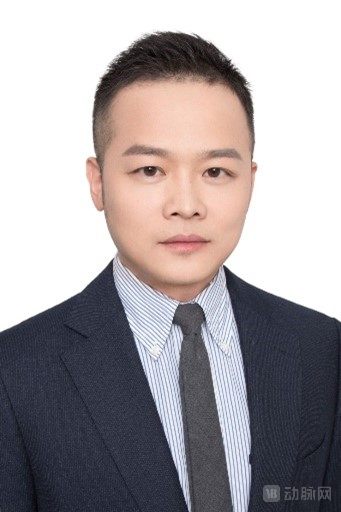
Dr. Tao Jialin, Co-founder and Head of CMC at RayGene
Tao Jialin graduated from Tsinghua University and Case Western Reserve University in the United States. After completing his doctoral studies, from his first job until he embarked on entrepreneurship, he focused on a single endeavor: overseeing the CMC (Chemistry, Manufacturing, and Controls) development of antibody drugs. In 2014, he led a team working on bispecific antibody drugs, such as ZW25, which was later licensed by BeiGene from Zymeworks. “Initially, the antibody yield for this project was low, at approximately 0.9 grams per liter. Through concerted efforts, we increased the yield to over 2 grams per liter, which was considered very high in 2014, particularly for bispecific antibodies.” Subsequently, he joined Chugai Pharmaceutical, a subsidiary of Roche and Japan’s largest antibody pharmaceutical company, where he participated in the development of the blockbuster drug Hemlibra.
After accumulating extensive CMC experience abroad, Jialin Tao returned to China in 2018 to join Simcere Pharmaceutical, where he met Dr. Yongzhong Wang. By chance, both Tao and Wang subsequently left Simcere to join WuXi Biologics (Suzhou), commonly known as Suqiao Bio. Together, they led Suqiao Bio to achieve the highest number of successful IND approvals in both the United States and China among all biopharmaceutical CDMOs of similar scale in the country during that period. Following WuXi’s acquisition of Suqiao in early 2021, they decided to return to their core expertise: innovative drug development.
At that time, they first needed to answer two questions.
Why Choose the In Vivo Gene Editing Sector?
“Our goal is to develop innovative drugs, and we hope to leverage our industrialization capabilities to create affordable innovative medicines that benefit the general patient population. This has been our original aspiration since founding.” Based on this principle, they listed all frontier therapies and recognized that “for certain diseases, gene editing holds the promise of a one-time curative effect. However, ex vivo gene editing is costly and cannot be manufactured at scale, which does not align with our original mission. In contrast, in vivo gene editing can overcome the limitations of ex vivo approaches: it does not require cells or viruses, and its indications are no longer restricted to rare diseases but can be applied to many conditions affecting tens of millions of patients, including infectious and metabolic diseases. Therefore, we chose in vivo gene editing technology.”
Does the team have the capability to carry it through?
Of course, transitioning from antibody drugs to gene editing requires not only courage but, more importantly, capability. “We need to assess whether we have the ability to establish a solid foothold in this sector,”All therapies are essentially ‘Product’ The processes and experience from 0 to 1 are transferable. When we broke down the various stages of in vivo gene-editing therapeutics from R&D to manufacturing and conducted a item-by-item comparative analysis of the required content and capabilities, we found that not only could the vast majority of our previously accumulated experience be transferred, but we also possessed advantages in many areas of CMC. This has further strengthened our resolve to pursue in vivo gene editing.“, and thus RuiZheng Gene was established,” said Tao Jialin.
Breaking Through Industry Bottlenecks with New Approaches: Building an End-to-End Technology Platform in Reverse
The concept of “fancy” is no longer the foundation for a biotech company to establish itself in the industry. Instead, clinical-need-oriented, ICH-compliant end-to-end drug development and feasible industrialization are the key tools that enable companies to break through in the ultimate competition. This characteristic is particularly prominent in RayzeGene.
Wang Yongzhong and Tao Jialin’s extensive experience in end-to-end product development and commercialization has brought unique perspectives and differentiated characteristics to the inception and growth of Ruizheng Gene. They willReverse-engineer from the application side to influence drug design, thereby enhancing the feasibility of product commercialization.
In vivo gene editing holds a bright future, but this field faces three key bottlenecks: First, overcoming CMC development challenges. In the CGT sector, 40% of clinical drug failures are attributed to inadequate CMC processes. How to control drug manufacturing processes and truly develop a safe, effective, and economically viable therapeutic product remains a significant challenge. Second, reducing off-target risks to enhance safety. Finally, breaking through extrahepatic delivery barriers to expand the scope of in vivo gene editing therapies.
In response to these bottlenecks, RayzeBio has gradually established an end-to-end platform for the entire in vivo gene editing process. This platform covers the design and validation of every stage, from RNA technology, gene editing, and LNP delivery systems to CMC process development, thereby bridging the critical gap between R&D and manufacturing translation.
To support security verification,RuiZheng has established a bioinformatics team and system database, forming a unique testing and evaluation framework.“We employ ICH systems, scientific principles, and risk management approaches, applying industrial-grade experimental design to assess off-target effects. By cross-evaluating the off-target effects of in vivo gene-editing therapeutics using six or seven different methods, this system has even enabled us to identify off-target risk points for certain in vivo gene-editing drugs that have already entered clinical stages,” introduced Tao Jialin.
RuiZheng continues to leverage its strengths in process development, bringing together a team of top-tier talents to form the gRNA synthesis design team. The synthesis of long-fragment gRNA presents high technical barriers and constitutes a significant challenge in CMC processes, with stringent requirements for safety, environmental impact, degradation, and purity. Currently, few companies are capable of synthesizing gRNA fragments containing 100 nucleotides, whileRuizheng can perform relevant modifications on gRNA. It not only possesses the capability for GMP-grade/gram-scale synthesis of long-fragment gRNA, but also reduces the risk of off-target effects while ensuring editing efficiency.
RuiZheng, through its collaboration with N1 Life,Development of a Next-Generation Delivery System Aiming for Dual Breakthroughs in Extrahepatic Delivery and Simplified CMC Processes“In addition to LNP delivery systems targeting the liver, we are developing single-component delivery vectors for extrahepatic targeting. First, achieving extrahepatic delivery will broaden the therapeutic prospects for in vivo gene-editing drugs. Meanwhile, compared with the four-component formulation of LNPs, single-component systems are easier to scale up from a CMC perspective.” Guided by an industrialization mindset and drug development logic, the RayZhen team prioritizes the feasibility of technology implementation. “From a CMC standpoint, greater technological complexity is not necessarily advantageous. By approaching delivery system development from an industrial perspective, we can work backward to inform and influence product design.”Our newly developed delivery system not only simplifies production steps but also reduces production costs.”
Filling in Capability Gaps During Development, Driving Sustainable Innovation with an Industrialization Perspective
After nearly two years of development, while assembling its technological platform puzzle, Ruizheng has been continuously attracting top-tier R&D talent, building a more versatile “team” and ensuring that every step the company takes is steady and clear.
Tao Jialin stated, “Product development requires a comprehensive understanding of the entire drug development lifecycle, with a focus on capturing key milestones at each stage. Looking back, our team’s multidisciplinary expertise enabled us to rapidly establish the company’s foundational framework, build out all necessary technical platforms for in vivo gene editing, and simultaneously accelerate the product pipeline toward its predefined goals.”
Currently,RuiZheng has four rapidly advancing product pipelines, two of which have already yielded robust efficacy and safety data from large animal studies.,This year, additional IIT data will further support and validate product feasibility, while the most advanced projects are expected to submit IND applications between late this year and early next year to initiate clinical trials.In terms of building its technical platform, Ruizheng will continue to refine its patent portfolio, with patent applications being filed on a quarterly basis.
Regarding pipeline strategy, Tao Jialin stated, “Our first product leverages technologies with more robust validation, such as CRISPR and LNP. While rapidly launching our inaugural product, we are pursuing more substantial innovations in underlying technologies and therapeutic indications. We have already achieved a series of breakthroughs; for instance, we have developed a new generation of gene editors and filed patent applications. Additionally, we will be filing patents for our novel single-component delivery system targeting non-hepatic sites. All these efforts will ensure sustained innovation across our future pipeline.”
A team of industry-focused talent has made Ruizheng Gene stand out in the in vivo gene editing sector. Their approach, which emphasizes technological translation and product implementation feasibility, will drive innovation in in vivo gene editing from an industrialization perspective.