

Revisiting Yinchuan's Internet Healthcare: The Current Status of 130 Internet Hospitals
In March 2023, at the inaugural Digital Health Yinchuan Summit, a batch of digital health projects were signed and launched in Yinchuan. This easily brings to mind the signing of Yinchuan’s internet healthcare industry projects in March 2017, which brought together nearly 20 companies at once.
Six years ago, the signing marked Yinchuan’s entry into the era of internet hospitals and digital healthcare.
By the end of 2022, China had established 2,700 internet hospitals, with online medical services widely recognized by patients, physical hospitals, general health enterprises, and regulatory authorities. This achievement is closely tied to the replication of Yinchuan’s pioneering experiences from that year, enabling more cities to catch up and stand alongside Yinchuan.
Can This Signing Mark the Dawn of a New Era for Yinchuan? Where Lie the Breakthroughs in This New Phase? VCBeat Conducted On-Site Interviews and Research in Yinchuan to Seek Answers.
According to data released by the Yinchuan Municipal Health Commission, as of the end of 2022, Yinchuan had introduced 145 "Internet + Medical Health" enterprises, with more than 130 having obtained the Medical Institution Practice License.
A diverse range of “Internet + Healthcare” enterprises have established operations in Yinchuan. Typical examples include: internet healthcare platforms and major tech companies, such as Haodf Online, WeDoctor, Medlinker, Zhiyun Health, Ping An Good Doctor, and JD Health; medical AI, big data, and health informatics companies, such as LinkDoc Technology, Keya Medical, Left Hand Doctor, and B-Soft; diagnostic and medical device companies, such as Anhan Medical and Dian Diagnostics, which have also ventured into internet healthcare services; health management companies covering traditional Chinese medicine, health management, and nursing care, such as Tongrentang, Guyitang, Yijiayi, and Gold Nurse; furthermore, several healthcare service groups operating physical hospitals have launched internet hospitals in Yinchuan, including Fosun Health, USCI Healthcare, and Yingkang Life.
Overall, the core businesses of these companies can be integrated into a full-process chain of “Internet+” diagnosis, treatment, and post-diagnosis management.
Diversified Services Implemented, Significantly Improving the Medical Experience
“Internet Plus” medical and health enterprises have localized their respective operations in Yinchuan after entering the market.
Taking licensing as an example, when enterprises establish internet hospitals by leveraging physical medical institutions such as Yinchuan First People’s Hospital, Yinchuan Second People’s Hospital, and Yinchuan Traditional Chinese Medicine Hospital, their cooperation with hospitals differs from the purely reliant online-offline models seen in many other regions. Such partnerships are not merely formalized through contracts; they also involve the application of technology or services within the partner hospitals or their integration into the citywide “Internet + Healthcare” platform, known as “Yinchuan Health Square.”
For example, Haodf Online has established and operates a National-Level Expert Telemedicine Center within Yinchuan First People’s Hospital; WingSpan has assisted Yinchuan First People’s Hospital in building the Yinchuan Remote Imaging Diagnosis Center; and Zuoshou Doctor’s intelligent triage product has been deployed in “Yinchuan Health Plaza”...
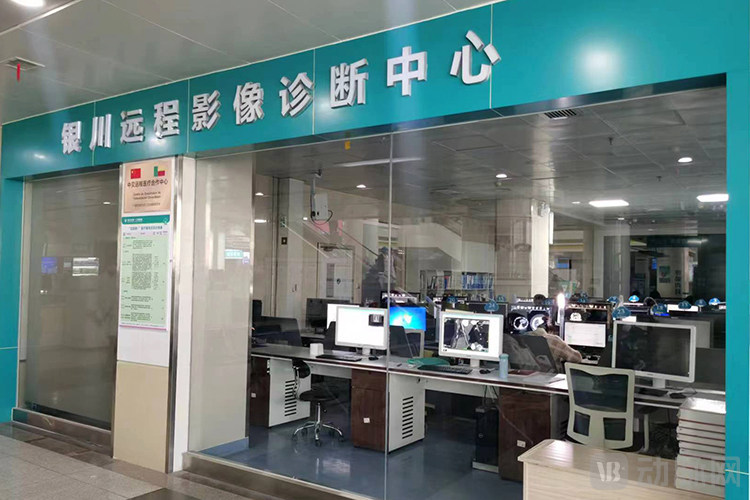
Yinchuan Remote Imaging Diagnosis Center
Over the years, Yinchuan has introduced various “Internet + Healthcare” enterprises to provide diversified services for residents, significantly enhancing the convenience and affordability of medical care.
In Yinchuan’s medical institutions, the healthcare landscape unfolds as follows: The National Expert Telemedicine Center integrates high-quality medical resources from cities such as Beijing and Shanghai, enabling patients in Yinchuan to receive treatment plans formulated by top-tier specialists and undergo local treatment. This approach allows them to benefit from local medical insurance reimbursement while avoiding the hardships of long-distance travel during illness. The Remote Imaging Diagnosis Center connects with numerous primary care facilities, allowing residents to obtain diagnostic reports issued by tertiary hospitals after undergoing imaging examinations at the grassroots level. Once a hospital issues a prescription, it is automatically uploaded to the Prescription Review and Circulation Center, where patients can independently choose their pharmacy and purchasing method based on factors such as distance and price. Furthermore, convenient applications such as facial recognition for medical visits and card-free medical insurance payments have significantly improved the patient experience.
From a public welfare perspective, internet healthcare has made it more efficient and convenient for Yinchuan residents to access high-quality medical resources.
A set of data provides a more intuitive illustration: To date, 898 experts from Beijing, Shanghai, and other regions have provided remote specialist outpatient services to local patients in Yinchuan, serving 3,139 patient visits; the Remote Imaging Diagnosis Center has connected with 230 medical institutions, diagnosing 395,000 cases; and the Remote Pathology Diagnosis Center has linked with 90 institutions, diagnosing 521,900 cases.
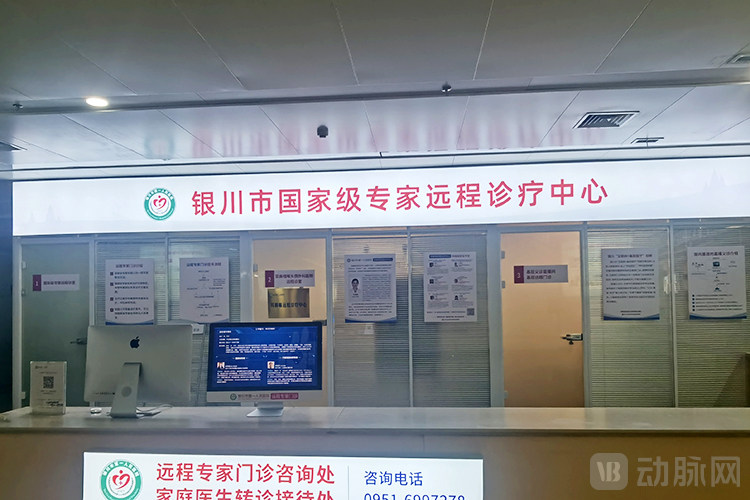
Yinchuan National-Level Expert Telemedicine Center
Relocating Businesses: The Myth of Quick Profits
Now, let’s turn to the industry side.
Yinchuan Zhongguancun Innovation Center, Yuehaiwan Central Business District, and Suyin Industrial Park are the primary hubs for internet healthcare enterprises. Among them, the Zhongguancun Innovation Center has already attracted 88 companies in the fields of “Internet+ Healthcare” and biopharmaceuticals for general health, with more than 20 additional companies awaiting registration.
In recent years, the Zhongguancun Innovation Center has witnessed the influx and exodus of various companies, with some office spaces having been occupied by multiple tenants in succession. It is understood that some enterprises relocated because they failed to obtain an internet hospital license after registering their companies, while others moved out due to business discontinuation. The market remained relatively sluggish in 2022 amid the pandemic impact; however, since 2023, inquiries regarding internet hospital services and office tenancy have gradually increased.
At the Zhongguancun Innovation Center, companies involved in internet healthcare are housed in Building B. This building is a mall-style office complex; if physical medical institutions were to move in, it would closely resemble a “Medical Mall.” However, since the building is predominantly occupied by internet hospitals—with doctors and patients interacting online and only a small number of staff working on-site—the spacious atrium gives the building a somewhat deserted feel.
Before applying for an Internet hospital license, enterprises must establish an “Internet Hospital Co., Ltd.” as the operating entity. Data from Qichacha shows that there are currently 193 such companies active in Yinchuan, with an additional 20 having been deregistered. In fact, this is not an isolated regional phenomenon; cities such as Chengdu, Haikou, and Tianjin have also seen between ten and several dozen such companies deregistered.
The “shutdown” of internet hospitals is reflected not only in company deregistrations and relocations, but also in their business operations.
“In Yinchuan, approximately two-thirds of the more than 130 internet hospitals established by enterprises are in a ‘dormant state’ and have not yet commenced actual operations,” Zhang Yuming, Director of the Yinchuan Municipal Health Commission, told VCBeat. He identified two primary reasons behind this phenomenon: first, many enterprises initially obtained licenses simply to follow the trend, but subsequently failed to establish suitable brand positioning or profitable business models; second, as online diagnosis and treatment regulations have become increasingly standardized, some operators whose business models did not comply with policy requirements have shifted to other industries.
VCBeat’s analysis of multiple operational internet hospitals reveals that online medical services must align with a company’s core business. For instance, Zuoshou Yisheng’s follow-up product involves doctor-patient communication, and its internet hospital license helps ensure compliance in such interactions. The Yinchuan Tongrentang International Internet Hospital primarily empowers offline clinics by facilitating patient follow-up visits and prescription renewals. Meanwhile, the parent company of Yinchuan Diegu Internet Hospital, Yijiayi, provides health management services into which online consultations can be integrated.
In terms of revenue, Yinchuan’s “Internet + Healthcare” enterprises have generated a cumulative turnover of RMB 2.2 billion in recent years. When this amount is distributed across more than 100 companies and viewed over time, the scale of revenue is not particularly significant.
“Internet hospitals still require continuous investment; they are not a get-rich-quick scheme, nor an industry where one can rapidly earn tenfold or hundredfold returns with a single infusion of hot money.” Zhang Yuming believes that only enterprises committed to long-term growth and aspiring to achieve notable success within the industry will persevere.
It can be said that,The Current State of Internet Healthcare in Yinchuan Reflects the Industry’s Overall Landscape: On this slow-moving train, tech giants have remained steadfast, with some boarding and others disembarking along the way; while it is difficult to accelerate its pace, all parties remain focused on their envisioned destination.
Just as every individual is unique, so too is every enterprise. Yinchuan has introduced companies that cover the entire process from diagnosis and treatment to post-diagnosis management, facing even more complex situations. Theoretically, these enterprises span the full cycle of disease needs and can form an industry ecosystem with upstream and downstream cooperation, but in practice, it is not as simple as 1+1=2.
How to Identify Common, Most Critical Needs for Enterprises Across Different Service Stages and Business Models? In light of Yinchuan’s current advantages and key initiatives, data will emerge as a major breakthrough.
It is reported that Yinchuan is promoting the interconnectivity of health data for all residents across the city, including data from electronic health records, hospital information systems (HIS), and internet hospitals.
“Over the past two years, we have devoted substantial efforts to governing and integrating the health records of 2.8 million residents across the city. Next, we will proceed with data integration with hospital HIS systems and internet hospitals,” stated Zhang Yuming. He indicated that there are plans to open health data to enterprises in an orderly and conditional manner. “If companies can provide quality products to residents, we can also explore mechanisms for information sharing.”
The challenges of data interoperability and cleansing governance are widely recognized within the industry. These difficult yet essential tasks have motivated healthcare institutions and technology companies to actively engage in them. How to effectively utilize data remains a challenge of immense magnitude, yet it is also an endeavor of tremendous value.
The value of medical and health data has long been self-evident, playing a critical role in various aspects such as disease risk prediction, etiological analysis, and precision diagnosis and treatment. However, medical and health data involve multiple stakeholders, including individuals, healthcare institutions, regulatory authorities such as health commissions and medical insurance agencies, and technology service providers. Consequently, the industry has long grappled with a reluctance to share such data, characterized by hesitancy and unwillingness.
Today, the mining of data value is facing a critical opportunity.
As early as 2019, data was defined as a factor of production. In 2022, the Opinions on Building a Basic Data System to Better Leverage the Role of Data Elements, serving as top-level design, proposed advancing the implementation of mechanisms for confirming rights and authorizing public data, and balancing the distribution of interests among stakeholders involved in different stages—including data collection, processing, circulation, and application—through various benefit-sharing models such as dividends and royalties. The Overall Layout Plan for Building Digital China, released in 2023, clearly stated that by 2025, the scale and quality of data resources would be acceleratedly improved, and the value of data elements would be effectively unleashed. In the new round of national institutional reforms, the National Data Bureau was established to coordinate the integration, sharing, development, and utilization of data resources.
With top-level design serving as the basic framework, the exploration of value mining in healthcare data has a more defined direction.
For Yinchuan, a foundation has already been laid in data accumulation and data governance. It is reported that Yinchuan will accelerate the market-oriented allocation reform of healthcare data factors, promote the classified and graded confirmation of rights and authorized use of public, enterprise, and personal data, and plan to establish and improve the institutional system for healthcare data property rights, circulation and trading, income distribution, and security governance by 2025. Additionally, it aims to build an integrated management service mechanism for health data collection, storage, governance, and security, as well as platforms for scientific research, circulation, and application.
In March 2023, the Quad-Party Alliance of National Institutes of Health and Medical Big Data was established in Yinchuan. The national institutes from Tianjin, Shenzhen, Shandong, and Ningxia will collaborate to improve and share medical data resource systems and think tanks. This also provides external support for Yinchuan’s exploration of data applications.
Certainly, unlocking the value of healthcare and medical data presents myriad challenges in areas such as infrastructure development, valuation methodologies, and distribution mechanisms. If Yinchuan can achieve a breakthrough in the market-oriented allocation of healthcare and medical data, it is poised to once again become the focal point of the industry. Moreover, overcoming the hurdles associated with data utilization will not only accelerate the development of internet-based healthcare but also drive the overall advancement of the entire healthcare and medical sector.
Returning to internet healthcare, another data-related topic, Yinchuan may focus on initial consultations and regulatory oversight.
Data-Driven Exploration of Initial Diagnosis
Since internet hospitals were restricted to follow-up consultations, calls within the industry for allowing initial consultations have never ceased.
The 2018 “Administrative Measures for Internet Hospitals (Trial)” stipulated that physicians may only provide follow-up consultation services via internet hospitals to patients with certain common and chronic diseases. Subsequently, the internet hospital administrative measures of some provinces established more specific criteria for the term “follow-up consultation.” The “Detailed Rules for the Supervision of Internet Diagnosis and Treatment (Trial),” implemented in 2022, requires that patients provide medical records with a clear diagnosis—such as outpatient records, inpatient records, discharge summaries, and diagnostic certificates—when seeking consultation. The attending physician shall retain these relevant documents and determine whether the patient meets the conditions for follow-up consultation.
“Follow-up visits” have evolved from initial framework-level descriptions to subsequent specifications with concrete conditions, and finally to entrusting the authority to define follow-up visits to physicians. This reflects a growing alignment between policy and industry innovation.
Meanwhile, there have been ongoing calls within the industry to conditionally allow initial consultations, with the strongest advocacy focused on opening up services for dermatology and mental health conditions.
From December 2022 to early 2023, many regions across China piloted online initial consultations for COVID-19 infections, with some even establishing fee schedules for such internet-based initial visits. However, this special period was short-lived; certain areas have since issued official notices explicitly discontinuing online initial consultations, while in other regions, patient volumes have dwindled to negligible levels even without formal announcements.
A Brief Attempt Reignites Debate on Initial Consultations: Should Initial Visits Be Permitted Within Certain Limits? Which Specialties or Conditions Could Be Included?
In Zhang Yuming’s view, addressing these issues requires evidence-based data. “While online initial consultations indeed offer convenience to patients and provide internet hospital-related enterprises with greater scope for application, our approach is to select conditions that do not require extensive physical examinations and can be diagnosed through online consultations. Nevertheless, this necessitates extensive data comparison and careful selection of individual cases within certain diseases. The data must be submitted to the relevant departments of the National Health Commission for approval, after which exploratory initial consultations may proceed under the premise of ensuring safety.”
Data- and Technology-Driven Online “Health Supervision”
Currently, regulatory platforms for internet hospitals have been established across various regions to oversee their operations. Integrating the internet hospital system with these regulatory platforms is one of the core steps in obtaining an operating license. Policies also require internet hospitals to upload data to the platform in a timely manner during their operations. According to the interface specification documents of regulatory platforms in certain regions, this data primarily includes information on medical institutions, physicians, electronic medical records (EMRs), prescriptions, and medication orders.
As the service scale of internet hospitals expands, these data accumulate over time, resulting in a substantial volume.
“We have the data, but we lack sufficient manpower and resources, as well as a mature mechanism for oversight,” Zhang Yuming noted. While offline health supervision already has a well-established operational system, the same does not hold true for the online sphere. Therefore, plans are underway to leverage technology to strengthen online health supervision. “For instance, we can use artificial intelligence to ‘scan’ data and flag anomalies.”
In fact, the “Detailed Rules for the Supervision of Internet-Based Diagnosis and Treatment (Trial)” had previously proposed encouraging the establishment of criteria for determining the appropriateness of internet-based diagnosis and treatment within regulatory platforms, and leveraging emerging technologies such as artificial intelligence and big data to conduct analysis and supervision.
From this perspective, backed by data, Yinchuan will implement a strategy of “expanding” the scope of diagnosis and treatment while “tightening” regulatory measures. The ultimate goal is to foster the industry’s development in a healthier environment.
Despite the ebb and flow of enterprises, Yinchuan’s “Internet+ Healthcare” ecosystem is steadily expanding.
At the First Digital Health Yinchuan SummitThe Yinchuan Internet Plus Nursing Extension Service Center, Digital Regional Laboratory Testing Center, Digital Brain Health Management Center, and 5G+ Remote Pathology Diagnosis Center—eight major health management centers in total—were unveiled. These centers are jointly built and operated by local medical institutions, enterprises, research institutes, and other stakeholders. Meanwhile, 12 internet healthcare companies signed cooperation agreements with medical institutions.

A Batch of Internet Healthcare Companies Sign Agreements
Compared with other regions, Yinchuan is indeed more distinctive. In addition to developing health and healthcare services, its health authorities have been actively engaged in investment promotion and industrial development.
As envisioned, Yinchuan will leverage technologies such as big data, blockchain, and artificial intelligence to tap into the core advantages of local medical and health data, activate the entire “medical care + pharmaceuticals + testing + wellness + insurance” industry chain, and accelerate the digital and intelligent transformation and upgrading of industries including pharmaceuticals, medical services, healthcare, and health management. Meanwhile, it aims to establish a sustainable operational mechanism for the “Internet + Medical Health” industry, attract more than 50 leading enterprises in the broader health sector, and grow the overall size of the big health industry to exceed RMB 10 billion.
Yinchuan has a relatively small population, and its demand-side appeal to enterprises is limited. Therefore, Yinchuan is more keen on attracting companies to jointly pioneer innovative business models that can subsequently be replicated in other regions.
“Going forward, we will devote more efforts to collaborating with enterprises, open up more application scenarios, and help them identify profitable business models that suit their needs. It is simply unrealistic to expect companies to operate purely on altruism without generating revenue,” Zhang Yuming stated candidly.