

mOm Incubators Files IPO Prospectus for Its £250 Portable Neonatal Incubator, CE-Cleared Since May 2022

mom incubators
Baby Incubator Provider
According to WHO statistics, there are 15 million preterm births globally each year, accounting for one-tenth of all newborns. Among these 15 million preterm infants, approximately 1 million die from complications related to preterm birth, while the surviving children may face lifelong disabilities such as deafness and paralysis. However, many of these deaths could be prevented through thermal management.
Therefore, preterm infants require admission to the Neonatal Intensive Care Unit (NICU) to receive continuous monitoring, management, and treatment.
The primary function of a neonatal incubator is to provide a comfortable and stable care environment for newborns.Premature infants are highly susceptible to hypothermia due to immature neurological thermoregulation and insufficient subcutaneous tissue. In addition to maintaining a comfortable and stable temperature, incubators also serve to isolate infants from environmental noise and bacterial exposure.
In contrast to large neonatal incubators that often cost tens of thousands of dollars, UK-based mOm Incubators (hereinafter referred to as “mOm”) has developed the mOm Essential Incubator, a lightweight, portable, and cost-effective neonatal incubator. This product enables precise thermal management with low power consumption, features a modular design for easy disassembly, assembly, and transport, and obtained EU CE certification in May 2022.
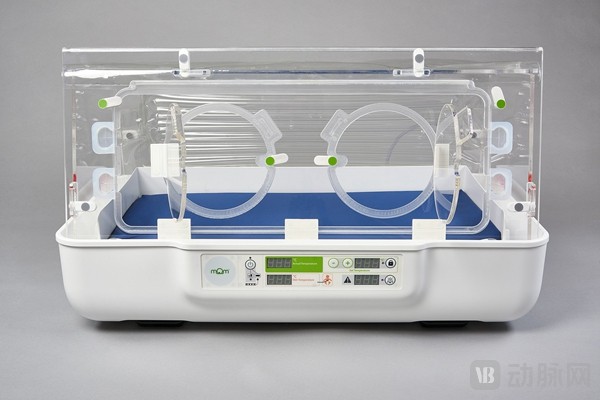
mOm Essential Incubator
Image source: mOm official website
According to Crunchbase, mOm has secured multiple rounds of seed funding, totaling over $880,000. In February 2023, mOm Incubators was selected by the UK Department for Business and Trade as a 2023 UK Life Sciences Innovator.
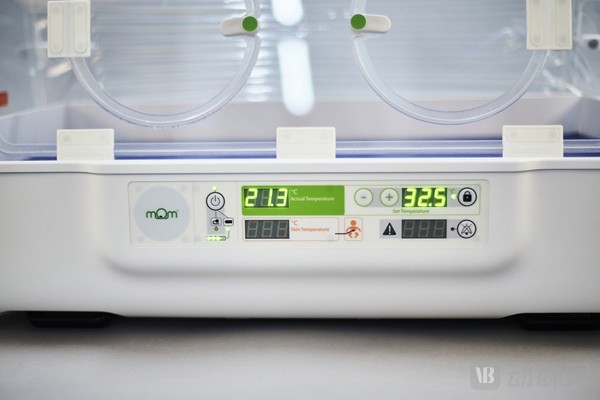
The mOm Essential Incubator provides a stable thermal environment for neonates, with a temperature regulation range of 30°C–37°C and adjustment increments of 0.5°C, catering to the sensitivity of preterm infants to subtle temperature changes. Caregivers can also insert a skin temperature probe to monitor the body temperature of preterm infants.
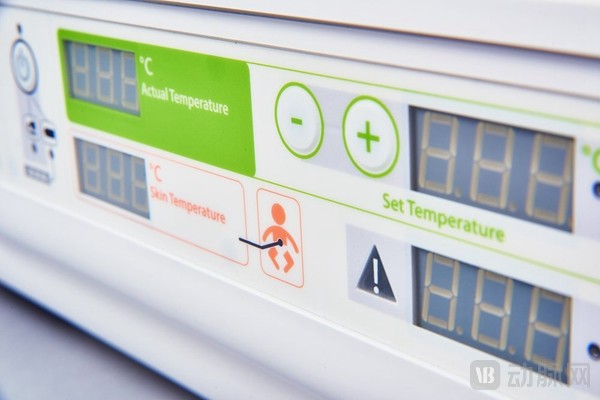
mOm Essential Incubator Control Panel
Image source: mOm official website
The mOm Essential Incubator weighs 20 kg, approximately one-third the weight of a traditional neonatal incubator. The unit measures approximately 0.7 meters in length, with both height and width under 0.5 meters, representing about one-third the size of the upper chamber of a modern neonatal incubator. Its lighter weight and compact footprint enable installation on any bed frame, including cribs, or assembly onto a dedicated trolley. The entire assembly process requires only simple snap-fit connections.
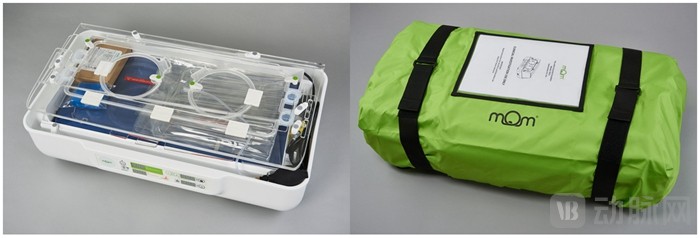
mOm Essential Incubator Storage Bag
Image source: mOm official website
The manually inflatable outer shell of the mOm Essential Incubator is made from thermoplastic polyurethane (TPU) elastic film, featuring fatigue resistance and lightweight properties. It is weldable, reducing the incubator’s self-weight while providing a sealed insulating air layer to minimize heat loss, thereby enhancing energy efficiency and performance. A manual access port is located on one side of the incubator to facilitate infant care and other medical procedures.
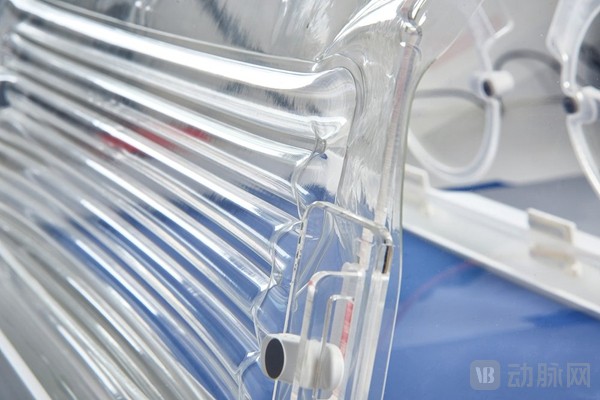
mOm Essential Incubator Inflatable High-Elasticity Garment
Image source: mOm official website
Many developing countries and low-income areas in developed nations lack adequate space for neonatal care and the necessary knowledge of nursing procedures, while also struggling to afford the cost of using incubators for several months. mOm Essential Incubator transports portable and accessible incubators to these countries and regions, even delivering them directly to the bedsides of mothers with premature infants. By popularizing cost-effective and portable equipment, it aims to alleviate the global issue of early childhood mortality.
The mOm Essential Incubator also features a replaceable infant compartment and a built-in backup lithium battery. When the temperature is set to 36°C with an ambient temperature of 25°C, the incubator can operate for 60 minutes without being plugged in. The backup lithium battery ensures stable operation of the neonatal incubator in underdeveloped regions with unstable power supplies. Additionally, this product can be used for intra-hospital infant transport, helping to maintain stable core body temperature in newborns during transfer.
mOm Essential Incubator: Power Supply Method and Battery Level
Image source: mOm official website
mOm Essential Incubator also incorporates low-carbon, energy-efficient design considerations. The incubator consumes approximately 100 watts of power during stable operation and is compatible with various voltage and power standards across multiple countries, effectively mitigating the impact of voltage fluctuations. In extreme environments, it can even be placed in a vehicle and powered by the car’s battery.
The inspiration for the portable neonatal incubator initially stemmed from a course design project by founder and CEO James Roberts at Loughborough University. Deeply moved by the soaring mortality rates among premature infants in war-torn refugee camps, Roberts sought to design an incubator tailored for low-income regions or countries affected by conflict, aiming to reverse this trend. This product became the prototype for the mOm Essential Incubator.
The portable neonatal incubator designed by James Roberts won the 2014 Sir James Dyson Award for Global Innovation, presented by the James Dyson Foundation. Sir James Dyson, founder of Dyson and hailed as the “King of British Design,” praised the mOm incubator for delivering performance comparable to modern incubators costing tens of thousands of pounds, while its manufacturing, testing, and shipping costs amount to only £250.
Winning the Global Innovation Award has secured £30,000 in incubation funding for James Roberts, founder of mOm, which will be used for further design and development testing of the prototype, with the ultimate goal of achieving mass production.
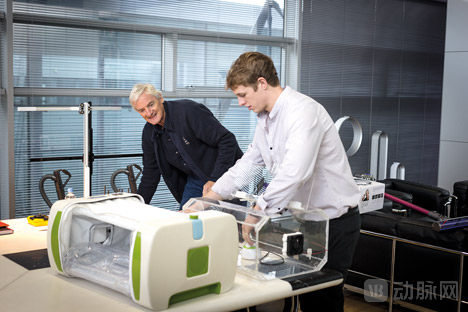
Sir James Dyson and Founder James Roberts
Image source: James Dyson Award official website
Regulations governing the development of neonatal incubators are extremely stringent. By collaborating with Cambridge Medtech Solutions, a UK-based medical device technology and strategic consulting firm, James Roberts guided the mOm Essential Incubator through compliance with IEC 60601 for medical electrical equipment, achieved Class C conformity under IEC 62304, and secured EU CE certification in 2022. James Roberts transformed a university project into a fully approved and regulated medical device.
mOm first implemented the clinical application of the mOm Essential Incubator at St. Peter's University Hospital in the UK in 2021, and has subsequently deployed this incubator across the National Health Service (NHS).
An Idea That Started on Paper Is Saving the Lives of Thousands of Newborns Worldwide. In May 2022, mOm, in partnership with Crown Agents, a non-profit international development company, delivered the first batch of 51 mOm Essential Incubators to Ukraine. This initiative provided much-needed portable incubators to the local healthcare system, enabling life-saving interventions for more than 100 newborns each week.
Dr. Alan Davies, former Chief Medical Officer at GE Healthcare and a member of the mOm advisory board, stated that there is substantial global demand for portable neonatal incubators. In addition to the mOm team’s efforts to provide innovative product support for preterm infants in low-income countries and regions, other product designers are also entering the field of portable neonatal incubators.
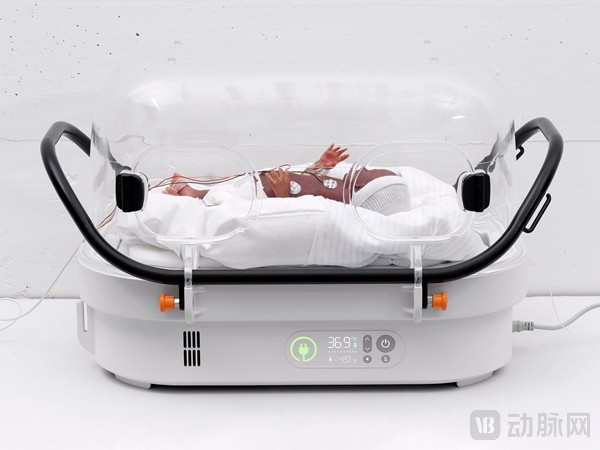
Robust Nest
Image source: James Dyson Award official website
In 2021, Swiss architect Fabien Roy collaborated with the École Polytechnique Fédérale de Lausanne (EPFL) to develop a portable neonatal incubator for sub-Saharan African countries: Robust Nest.
The heat source for the Robust Nest neonatal incubator is paraffin wax. When the Robust Nest incubator is plugged in, the bagged paraffin wax within the battery unit is heated and melts into a liquid. In the event of a power outage, the paraffin gradually solidifies and releases heat, providing a sustained thermal environment for newborns.
Fabien Roy also designed black metal handrails around the incubator, which not only facilitate gripping by healthcare personnel during equipment transport but also serve as a “bumper” to prevent impact damage to the enclosure and the neonates inside. The control panel of the Robust Nest features pictogram-based design, enabling accurate operation across regions with diverse languages and varying levels of education.
Similar to the early experiences of James Roberts, founder of mOm, Robust Nest was Fabien Roy’s master’s thesis project in product design at ECAL. The design also won the Gold Award at the 2021 Sir James Dyson Award for global innovation. Robust Nest underwent trials in Kenya in late 2021 and has not yet been put into use.
However, compared with the Robust Nest, the mOm Essential Incubator features a detachable and foldable upper casing, resulting in a more compact footprint. It has obtained multiple certifications, thereby realizing its practical design value. Mass production has made this cost-effective portable device accessible to regions worldwide in need of portable incubators. Meanwhile, the Robust Nest achieves standardization of labeling, making product operation more convenient and accurate.
The designers of both neonatal incubators addressed the issue of high infant mortality in developing countries by embedding the core needs of healthcare professionals into their product designs, ultimately delivering portable, lightweight, and highly essential functional products to those most in need.