Dr. Yu Tian Wang, Fellow of the Royal Society of Canada, Presents Peptide-Mediated Degradation of Endogenous Proteins for CNS Drug Development at China's Top 100 Healthcare Innovators Forum
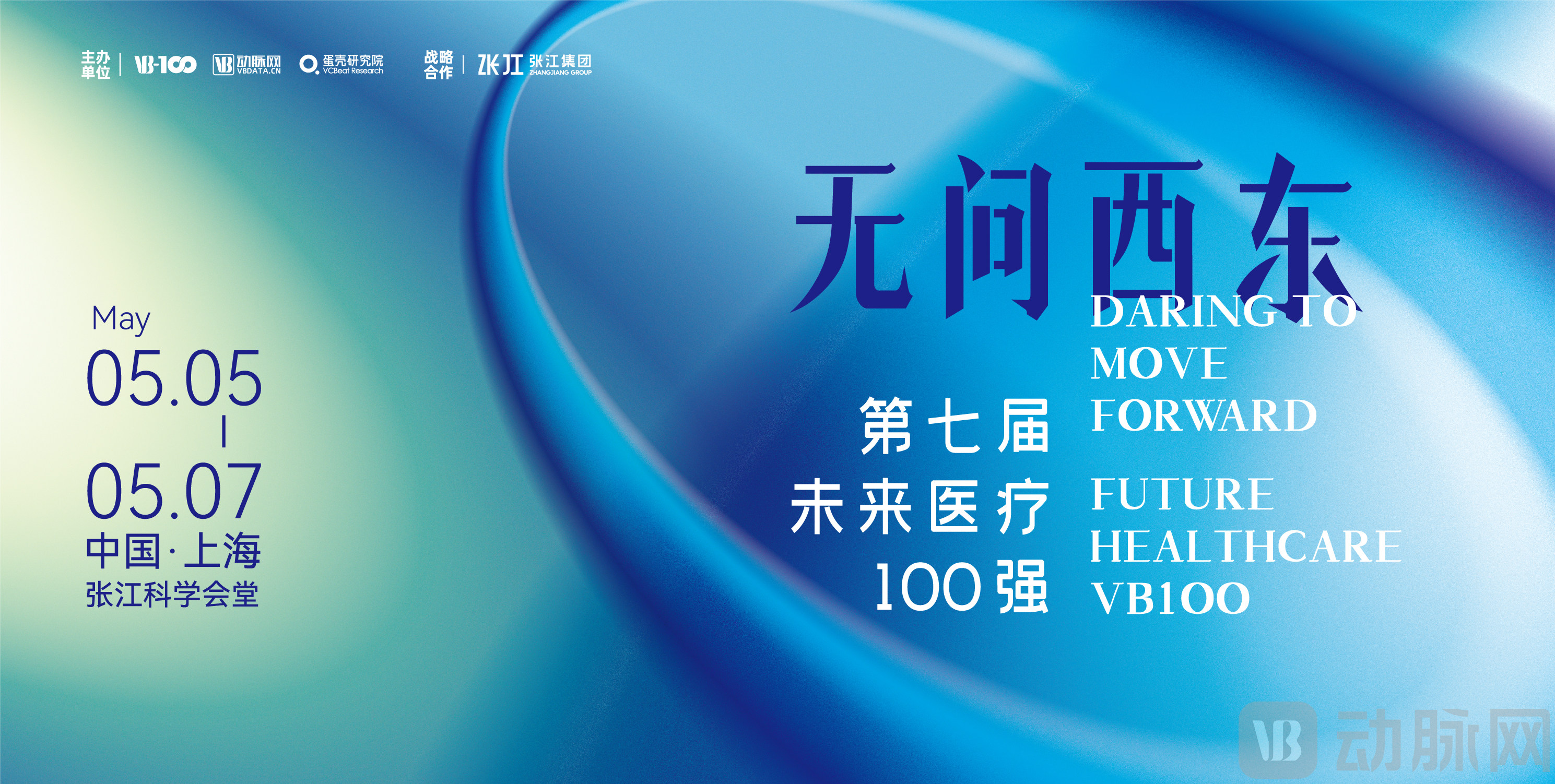
From May 5 to 7, 2023, the 7th Future Healthcare Top 100 Conference was hosted by VB100, VCBeat, and Eggshell Research Institute, in strategic partnership with Shanghai Zhangjiang Group. Themed “Beyond East and West,” the conference gathered outstanding global medical and health innovation projects, scientific research achievements, strategic announcements from listed companies, and industry innovation benchmarks. It outlined an era-specific map illustrating the close connection and positive interaction between China’s medical health research and the development of its healthcare system, recorded the historical strides of China’s medical health innovation, and showcased the confident, resilient, and forward-moving spirit of China’s medical and health sector, undeterred by geographical or cultural boundaries.
Wang Yutian, Academician of the Royal Society of Canada and Dean of the School of Life and Health Sciences at Shenzhen University of Advanced Technology (in preparation), has confirmed his attendance at the 7th Future Healthcare 100 Conference, where he will discuss the application of peptide-mediated degradation of endogenous proteins in drug development for brain diseases.
“Pioneering the ‘Final Frontier’ of Life Sciences” — Wang Yutian

Fellow of the Royal Society of Canada; Dean and Chair Professor of the School of Life and Health Sciences, Shenzhen University of Advanced Technology (in preparation); Chief Scientist at the Shenzhen Institute of Advanced Technology, Chinese Academy of Sciences; formerly Tenured Chair Professor at the Brain Research Centre, University of British Columbia, Canada.
For many years, Academician Wang Yutian’s team has published over 160 articles in the fields of medicine and neuroscience, accumulating more than 40,000 citations on Google Scholar and achieving an h-index of 77. Many of these articles have been published in prestigious scientific journals, and the team is widely recognized as one of the world’s leading research groups in brain and neuroscience. The team has received numerous accolades from both the Canadian federal and provincial governments. Furthermore, Academician Wang was awarded the Howard Hughes Medical Institute (HHMI) International Research Scholar distinction twice, in 2002 and 2006. In 2006, he was elected as a Fellow of the Royal Society of Canada.
My research primarily focuses on the molecular mechanisms underlying the intracellular trafficking and dynamic surface expression and regulation of neurotransmitter receptors in neurons, as well as their roles in the pathogenesis and progression of neurological disorders. I am also dedicated to elucidating the mechanisms of major neurological diseases and developing innovative therapeutics. Notably, I have achieved a series of internationally leading outcomes in the development of targeted drugs for central nervous system (CNS) disorders, particularly learning and memory impairments, stroke, epilepsy, and drug addiction. I hold multiple internationally protected drug patents and one novel technology patent applicable to drug development.
Academician Wang Yutian is also dedicated to applying breakthroughs in theoretical research to clinical medical practice, and has successively collaborated with colleagues to advance the development of several drugs from the laboratory stage to clinical trials. His years of experience in basic scientific research and corporate operations have endowed Academician Wang Yutian with extensive practical expertise in the translation of scientific achievements.
Wang Yutian primarily investigates the molecular mechanisms underlying the intracellular trafficking and dynamic surface expression and regulation of neurotransmitter receptors in neurons, as well as their roles in neurological disorders. He is also dedicated to elucidating the pathogenesis of major neurological diseases and developing related innovative therapeutics.
“Conducting innovative drug research in the field of neurology remains a major and urgent social healthcare need.”
Globally, the economic burden attributable to central nervous system (CNS) disorders reaches RMB 7 trillion annually and continues to rise. In China, the accelerating aging population is driving continuous expansion of the market for drugs targeting degenerative CNS diseases. Although CNS disorders are associated with low mortality rates, they cause extremely high disability rates, imposing a heavy burden on families and society. However, the human brain’s nervous system is extraordinarily complex: approximately 86 billion neurons form interconnected networks, with each neuron establishing synaptic connections with thousands of other neurons, thereby creating countless functional neural networks. This complexity has resulted in a lack of targeted and highly effective therapeutic options. Given the urgent societal healthcare needs and the considerable challenges in developing neurological drugs, there is a pressing need for innovative drug research in the field of neuroscience.
In this context, research has revealed a close correlation between the abnormal aggregation and misfolding of proteins in the human brain and the onset and progression of various neurodegenerative diseases. For instance, Parkinson’s disease is caused by the loss of dopaminergic neurons in the substantia nigra due to the gradual aggregation of α-synuclein, while amyotrophic lateral sclerosis (ALS) results from the death of spinal motor neurons triggered by the abnormal aggregation and misfolding of SOD1. Therefore, the development of rapid and reversible technologies for targeted knockdown of intracellular pathogenic proteins has become the research objective of Professor Wang Yutian’s team. Clinical trials of stroke therapeutic agents involving peptide interference, in which Professor Wang’s laboratory participated in 2002, demonstrated that peptides exhibit high safety profiles and excellent druggability. Furthermore, transmembrane peptide technology is maturing, peptide production has achieved industrialization, and peptide-mediated protein degradation is rapid and controllable, thereby facilitating clinical application.Peptide-mediated proteins are an increasingly mature solution.
“Based on the principle of peptide-mediated degradation of target proteins, we have designed a targeted peptide platform. Leveraging this design principle, we can develop sets of target-specific degradative peptides as etiologic therapeutic agents against various pathogenic proteins. For example, in Parkinson’s disease (PD), Wang Yutian and his team developed an innovative short peptide that selectively knocks down α-synuclein. This peptide effectively reduces α-synuclein levels in both the brain and blood in a dose-dependent manner in vitro and in vivo, thereby mitigating the death of dopaminergic neurons in the substantia nigra caused by the accumulation of pathological Lewy bodies within neurons. Importantly, it also alleviates both motor and non-motor deficits in PD mouse models. Currently, Wang Yutian and his research team are utilizing this platform to develop targeted peptide therapeutics for amyotrophic lateral sclerosis (ALS) and Huntington’s disease.”
Conference Name: The 7th Future Healthcare Top 100 Conference
Conference Dates: May 5–7, 2023
Venue: Zhangjiang Science Hall, Shanghai, China
Conference Format: Offline Summit
Conference Scale: Estimated 7,000 Attendees
Organizers: VB100, VCBeat, VCBeat
Strategic Partner: Shanghai Zhangjiang Group