

Medical Device CDMOs: Bridging the Trust Gap Amid Polarized Market Reception
joymed
Medical Device CDMO Technical Service and Productization Solution Platform Provider
Since the pilot launch of the Medical Device Registrant System in 2017, the medical device CDMO industry has developed for five years. During this period, not only have multiple medical device CDMO companies completed financing rounds at the hundred-million-yuan level, but Meihao Medical and Kaishi Biology have also listed on the ChiNext Board and passed the listing review, respectively.
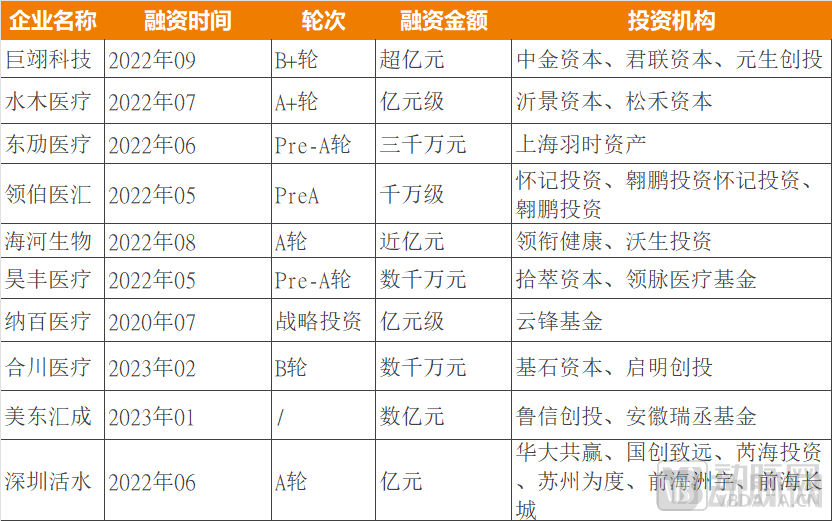
Although medical device CDMO companies have attracted significant attention in the capital markets,Yet its commercialization presents a striking dichotomy of extremes.。
On one hand, a number of medical device companies highly recognize the professionalism, value, and integrity of CDMOs in the medical device sector. They have quickly chosen to leverage CDMO platforms to assist with R&D, expand their product lines, and achieve scaled production, thereby driving multi-fold revenue growth for these CDMO enterprises.
On the other hand, a significant number of medical device companies remain skeptical about engaging with Contract Development and Manufacturing Organizations (CDMOs). Concerns regarding intellectual property and patent protection, leakage of proprietary technologies, and inter-company trust have deterred many from readily adopting CDMO platforms, ultimately resulting in a relatively low penetration rate for medical device CDMOs.
Some enthusiastically embrace it, while others resist it. What lies behind this divide for medical device companies? Through interviews with multiple founders of medical device firms and CDMO enterprises, VCBeat has compiled this article, aiming to provide industry insights through their reflections and case studies.
Medical device CDMO (Contract Development and Manufacturing Organization) provides services such as process development and preparation, process optimization, registration and validation, and mass production of innovative products for medical device companies.It can help medical device companies reduce overall costs, accelerate the technological translation of products, and shorten product time-to-market.。
To date, an increasing number of medical device companies have begun to outsource R&D to contract development and manufacturing organizations (CDMOs) for medical devices. For instance, in the in vitro diagnostics (IVD) sector, leading domestic enterprises such as Kemei Diagnostics, Tumor Vision, Autobio Diagnostics, Zhonghan Shengtai, WuXi Apptec’s diagnostic arm, and Guangzhou Anbiping have all opted for medical device CDMO services, becoming clients of Kaishi Biotech.
Kaishi Bio’s revenue also surged alongside its growing customer base: in 2020, its revenue reached RMB 259 million, a year-on-year increase of96.21%; In 2021, its revenue was RMB 573 million, a year-on-year increase of121.24%. Meanwhile, Kaishi Biotech expects its 2022 revenue to range from RMB 597 million to RMB 716 million, representing a year-on-year increase of 4.13% to 24.89%.
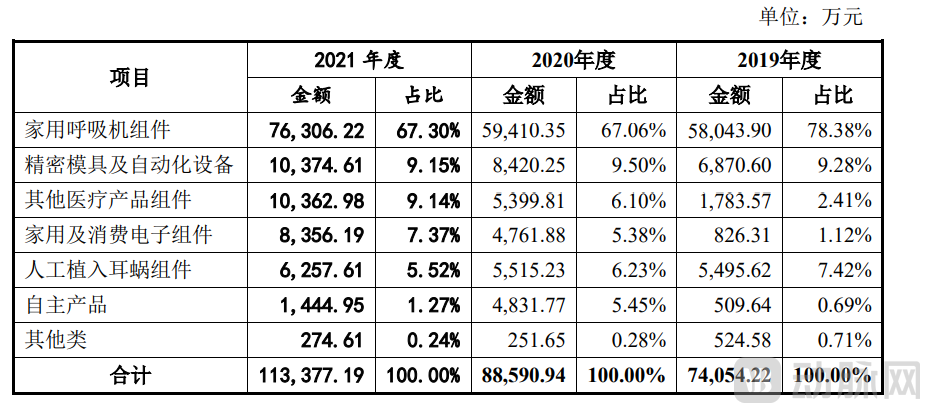
Meihao Medical, a CDMO enterprise specializing in ventilators and cochlear implants, has also seen steady revenue growth. From 2019 to 2021, its revenues were RMB 741 million, RMB 886 million, and RMB 1.134 billion, respectively.
It is worth noting that although the revenue from Meihao Medical’s core business, “Home Ventilator Components,” grew from RMB 580 million in 2019 to RMB 760 million in 2021, its proportion of total revenue has been gradually declining; meanwhile, the revenue from the “Other Medical Product Components” business achievedOver 6-Fold Growth in 3 Years, rising from RMB 17.83 million in 2019 to RMB 103 million in 2021, with its share of total revenue increasing from 2.41% to 9.14%, indicating substantial potential for future growth.
Meihao Medical’s revenue has surged as an increasing number of medical device companies have begun procuring its CDMO services. In recent years, Meihao Medical has not only providedMindray, Johnson & Johnson, Siemens, Abbott, Resound Hearing...and other medical device giants by providing product and component development and manufacturing services in specialized fields such as patient monitoring, drug delivery, interventional procedures, and hearing assistance. It also collaborates with numerous innovative companies worldwide on product and process technology development, as well as manufacturing, in areas including breath analysis, cardiovascular care, device sterilization, orthopedic surgical navigation, and ophthalmic instruments. With the acquisition of new customers and increased orders from existing clients, Meihao Medical’s revenue is expected to maintain steady growth.
In addition to Kaisi Biotech and Meihao Medical, multiple medical device CDMOs—including joymed, DONGMAI, Osmunda, Medicalstrong, Wuhan Tacro Technology Co., Ltd., Lingbo Yihui, and Haofeng Medical—have signed contracts with a large number of medical device companies and continue to fulfill contracted manufacturing orders.
For example, as of July 2022, Medicalstrong, a medical device CDMO, had signed and was executing more than 20 contract manufacturing orders; since its establishment in 2019, DONGMAI, another medical device CDMO, has signed and executed contracts for the contract manufacturing of over 60 Class II and Class III medical devices, with 14 products having obtained regulatory approval and launched on the market.
Weimai Medical, a client previously served by Medicalstrong, stated: “The company’s core team comprises clinical experts from renowned universities who are well-versed in clinical needs and hold multiple technical patents. However, they lack experience in regulatory affairs, quality management systems, and production management. If the traditional model of building their own manufacturing facilities and teams were adopted, it would not only divert R&D resources and increase the costs associated with learning regulatory requirements, but also be constrained by capital costs, limiting support to only one product entering the type testing or clinical trial stage. However,”By leveraging CDMO platforms, the company can focus exclusively on R&D and innovation. The substantial reduction in capital expenditure, achieved by eliminating the need to construct proprietary manufacturing facilities, enables the simultaneous regulatory filing of two to three products.。”
Another medical device manufacturer in the pan-vascular intervention field stated, “The greatest value of a device CDMO lies in compensating for areas where a company lacks expertise. Therefore, we aim to outsource manufacturing processes, excluding core technologies, to sufficiently professional CDMO platforms to achieve a strong alliance.”
Although the business of medical device CDMOs is booming, with steady growth in both customer base and revenue, a considerable number of domestic medical device companies still have reservations about utilizing medical device CDMO services.
VCBeat’s research reveals that medical device companies primarily have concerns regarding technology and intellectual property protection, trust issues, and policy implementation in the context of device CDMO.
First, the protection of core technologies, patents, and intellectual property rights is a key concern for medical device companies. Some device companies believe that while certain technologies can be protected through patents and intellectual property rights, others are not suitable for patent protection. If there are flaws in the confidentiality and internal control systems of a medical device CDMO platform, leading to the leakage of the company’s related technical secrets, it will have a significant adverse impact on the company’s production and operations.
Joymed, a medical device CDMO company, stated: “Intellectual property protection is a core element of the medical device CDMO model and one of the primary concerns for medical device companies. This is particularly true for overseas enterprises; when they enter the Chinese market by engaging CDMO platforms, their first concern is often whether their intellectual property rights will be infringed.”
Compared with the well-defined intellectual property (IP) protection strategies for pharmaceuticals, medical devices involve a multitude of disciplines and complex product categories, making IP protection significantly more challenging. Furthermore, given that the output value per individual medical device product cannot rival that of pharmaceuticals, the intensity of IP protection for medical devices inevitably falls short of the level afforded to drugs.
Second, inconsistent regulatory standards across local governments have caused medical device companies to hesitate when selecting contract development and manufacturing organization (CDMO) services. For instance, an in vitro diagnostics (IVD) company was interested in outsourcing to a CDMO but ultimately chose to build its own facilities and team due to discrepancies in how local governments implemented the Marketing Authorization Holder (MAH) system for medical devices.
Wuhan Tacro Technology Co.,LTD., a medical device CDMO company, stated: “The Marketing Authorization Holder (MAH) system for medical devices in China has only been fully implemented for a short period.,The medical device CDMO industry has a relatively short development history,“There are few supporting quality supervision cases, and the industry is still exploring the details of CDMO collaboration models. This has also led to inconsistencies in review and approval standards and criteria among functional departments across various provinces and municipalities when implementing policies, which may, to some extent, influence the choices of medical device companies.”
However, in 2022, the National Medical Products Administration (NMPA) issued the “Opinions on Strengthening Collaborative Supervision of Cross-Regional Entrusted Production of Medical Devices,” along with a schematic table outlining the division of responsibilities among provincial regulatory authorities. This initiative holds significant importance for clarifying the jurisdictional scope and review and approval standards of the drug regulatory departments in the locations of the registrants (medical device companies) and the entrusted parties (medical device CDMO companies).
In addition, the National Medical Products Administration (NMPA) has issued detailed regulations on contracted manufacturing under the Marketing Authorization Holder (MAH) system for medical devices. On March 11, 2022, the NMPA revised and released the Catalogue of Medical Devices Prohibited from Contracted Manufacturing, which came into effect on May 1, 2022. The original Announcement on Issuing the Catalogue of Medical Devices Prohibited from Contracted Manufacturing (No. 18 of 2014) was simultaneously repealed.
Compared with the 2014 version, the newly revised "Catalog" has removed products such as vena cava filters, cardiovascular embolization devices, and implantable insulin pumps, while adding and refining medical aesthetic implant materials: plastic surgery filling materials, injectable fillers for plastic surgery, breast implants, and tissue engineering scaffold materials.
The standardization and refinement of policies will gradually promote the widespread implementation of the Medical Device Registrant System. This is expected to encourage medical device companies to increasingly entrust their products to CDMO platforms with greater confidence.
In addition, we believe that medical device companies’ concerns when selecting a CDMO stem from the limited number of successful cases to date, which has led to a certain degree of distrust toward both the medical device CDMO industry and individual service providers.
Based on the above considerations, there are approximately 33,700 medical device manufacturers in China, among which a significant number still have reservations about device CDMO and have not yet opted for device CDMO services.
In fact, the CDMO model for medical devices is a highly mature business model internationally.。
Among them, global medical device giants such as Medtronic, Stryker, Johnson & Johnson, Boston Scientific, Abbott, GE HealthCare, Siemens, Philips, Roche, and Smith & Nephew all have products manufactured by contract device CDMOs.
Meanwhile, companies with market capitalizations in the tens of billions of dollars have emerged in the medical device CDMO sector. For instance, Flex Ltd. had a market cap of $9.707 billion, and Jabil Inc. reached $11.013 billion (note: data as of April 6). It should be noted that companies such as Flex and Jabil provide CDMO services not only in the medical device field but also in electronics, automotive, aerospace, and other industries.
Therefore, domestic medical device companies may consider engaging CDMOs to capitalize on industry and policy dividends during their early development stages, reduce cost inputs, accelerate product approval and market launch, and enhance both corporate core competitiveness and product market competitiveness.
On the other hand, domestic medical device CDMOs are also demonstrating their sincerity, building trust, and alleviating concerns through various initiatives.
Currently, China’s medical device CDMO industry is still in its early stages of development, with medical device companies, regulators, and CDMO firms all exploring solutions better suited to the current landscape.
Currently, medical device companies need to educate CDMO firms on how to respect and protect intellectual property rights; CDMO firms need to guide medical device companies in clarifying the primary entities responsible for product quality liability; and regulatory authorities must keep pace with the times by issuing guidelines or regulations that align with current industry needs. Through mutual adaptation and collaboration, a win-win outcome for all parties can ultimately be achieved.
For medical device companiesIntellectual Property Protection Issues, the medical device CDMO industry typically adopts the following measures to enhance device companies’ sense of security: strictly defining the scope of personnel with access to proprietary technology based on job responsibilities; dividing R&D and production technical staff according to technological processes and stages, while strictly controlling cross-functional interactions among personnel across different internal processes and stages; explicitly stipulating employees’ confidentiality obligations in the Confidentiality Agreements signed between device CDMO enterprises and R&D personnel; and employing IT technologies to encrypt company computers, ensuring that documents cannot be copied or leaked.
Some companies have gone a step further by proposing other solutions that meet the needs of medical device enterprises. For example, DONGMAI insists on never holding registration certificates, while joymed adheres to not establishing its own brand. Based on their CDMO platform positioning and the aforementioned commitments, the motivation for DONGMAI and joymed to leak customers' intellectual property is minimal.
Meanwhile, joymed has established a systematic intellectual property protection mechanism, which not only reduces the risk of clients’ intellectual property leakage but also helps them create new intellectual property. To date, joymed has helped clients secure approximately 40 invention patents.
In addition, CDMO companies such as Wuhan Tacro Technology Co., LTD. advocate that medical device enterprises apply for intellectual property rights at an early stage and incorporate their technologies into patent protection. On April 14, 2021, Kaishi Biology obtained the Information Security Management System Certification Certificate issued by TÜV SÜD Management Service Co., Ltd., certifying that Kaishi Biology has established and implemented an information security management system in accordance with the Statement of Applicability within the applicable scope of “design and production of in vitro diagnostic medical devices.”
# On Trust Issues, medical device CDMO companies have also proposed corresponding measures. To alleviate customer concerns, CDMOs such as Kaishi Biotechnology, Meihao Medical, DONGMAI, and joymed establish firewalls, or even implement physical isolation, when collaborating with multiple clients within specialized sectors.
Some medical device CDMO companies have also earned customer trust through professionalism and reputation. For instance, Wuhan Tacro Technology Co.,LTD holds strong advantages in in vitro diagnostic reagents and instruments, minimally invasive surgical devices, and ultrasound diagnostic equipment, supported by a comprehensive R&D team and manufacturing process system. Consequently, it primarily serves clients in these specialized segments. By conducting preliminary assessments and accepting orders based on its capabilities, Wuhan Tacro has established a solid commercial reputation. Most of its CDMO clients are former recipients of its CRO services, reflecting a strong foundation of trust.
After winning the recognition of a certain client through its professional capabilities, Meihao Medical not only saw year-over-year order growth from this client but also received referrals to new customers, including the Australian star company Ellume. According to Meihao Medical, “Recommended by the product design engineers of this client, we initiated business discussions with Ellume in 2019. Following an on-site assessment by Ellume’s management team, we formally commenced our partnership in 2020. Impacted by the pandemic, our revenue from sales of precision molds and components for COVID-19 testing products to Ellume grew rapidly in 2021.”
Furthermore, Meihao Medical enjoys high brand recognition and a strong reputation in the home ventilator and cochlear implant industries, holding a prominent market position. Leveraging its outstanding R&D and manufacturing capabilities along with its brand influence, Meihao Medical has progressively strengthened its partnerships with existing core clients, such as Philips and Mindray Medical, thereby expanding sales volume from these key accounts.
Overall, although a considerable number of medical device companies still harbor doubts and concerns regarding medical device CDMOs, an increasing number are opting to engage these services. By leveraging CDMOs to reduce capital costs, accelerate product translation, and shorten time-to-market, these companies aim to ultimately enhance their core competitiveness and product competitiveness.
In the future, as successful cases increase, industry compliance improves, and regulation becomes more scientific, device CDMOs are expected to experience exponential growth.