

Sona Nanotech Advances Non-Invasive, Low-Toxicity Colorectal Cancer Therapy Using Proprietary Non-Toxic Gold Nanorods

Sona Nanotech
Nanotechnology Developer
According to the “2022 National Cancer Report” issued by the National Cancer Center, there were 9.96 million cancer-related deaths worldwide in 2020, of which 3 million occurred in China, accounting for 30% of the global total and ranking first worldwide. Cancer (malignant tumors) has become one of the major diseases affecting the health of the Chinese population.
It is essential to implement appropriate and effective therapeutic interventions for tumors. Conventional cancer treatment modalities primarily include surgical resection, radiation therapy, and chemotherapy. However, these traditional approaches are limited by numerous contraindications and severe adverse effects. Consequently, medical experts and researchers worldwide are actively striving to explore novel methods for cancer treatment.
In recent years, thanks to the tireless efforts of researchers, photothermal therapy, a nanomedicine-based approach to tumor treatment, has gradually come into the spotlight.
Photothermal therapy is a novel, non-invasive approach to tumor treatment that utilizes core photothermal conversion agents to transform light energy into thermal energy under irradiation from external light sources, such as near-infrared light, thereby destroying tumor cells. This non-invasive therapeutic method offers advantages including minimal adverse effects, high specificity, and repeatability.
Currently, there is extensive research on photothermal conversion agents, with various novel materials emerging frequently; however, the focus remains primarily on nanoscale materials. Sona Nanotech is one such company that possesses similar nanoscale materials.
Sona Nanotech, founded in 2016 and headquartered in Canada, is primarily engaged in the research, development, and commercial application of gold nanorod technology. It was co-founded by Gerrard Marangoni, Mike McAlduff, and Kulbir Singh.
Dr. Gerrard is a tenured Professor of Chemistry at St. Francis Xavier University in Canada. He has 25 years of experience in surfactant and colloid chemistry, has published 75 research papers, and holds six applied patents.
“Sona” means “gold” in Hindi, and the story of Sona Nanotech also began in 2013 with a research project on gold nanorods initiated by Professor Gerrard.

Sona Nanotech Co-Founder: Gerrard Marangoni
Gold nanorods are rod-shaped gold nanoparticles with dimensions ranging from a few nanometers to several hundred nanometers. They possess a rich array of physicochemical properties and have garnered significant attention in the materials science community, with applications in medical diagnostics and therapeutics, sensors, and optical components.
Typically, the large-scale synthesis of gold nanorods generally requires the use of cetyltrimethylammonium bromide (CTAB), a cytotoxic cationic surfactant. However, CTAB cannot be completely removed from the synthesized gold nanorods, which significantly limits their applications, particularly for in vivo uses such as cancer photothermal therapy.
To address this issue, Gerrard proposed, “Why not fabricate gold nanorods without CTAB?” After months of research, Professor Gerrard, in collaboration with his research partners Dr. Kulbir and Dr. Mike, successfully developed a method for the cost-effective, large-scale production of non-toxic gold nanorods. These nanorods boast high sensitivity, excellent reproducibility, robust stability, low cost, and ease of use. This is the backstory and foundation behind the creation of Sona.
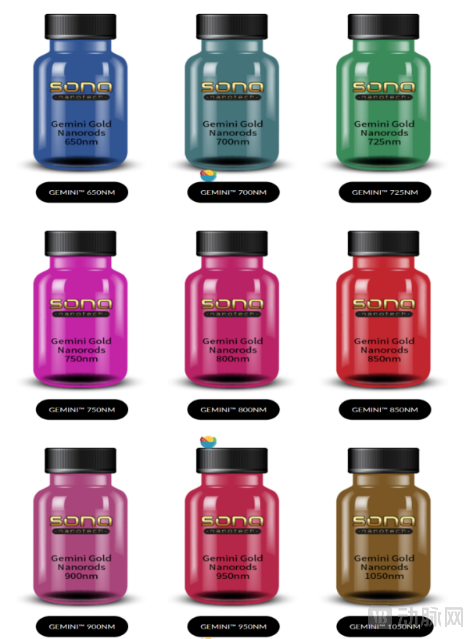
Gemini™ Gold Nanorods. Image source: Company official website
Currently, Sona’s flagship product is a series of gold nanorods named “Gemini™.” Gemini™ is available in various sizes and colors to meet the needs of diverse projects across multiple fields. The following are several application areas of Gemini™ gold nanorods for your reference.
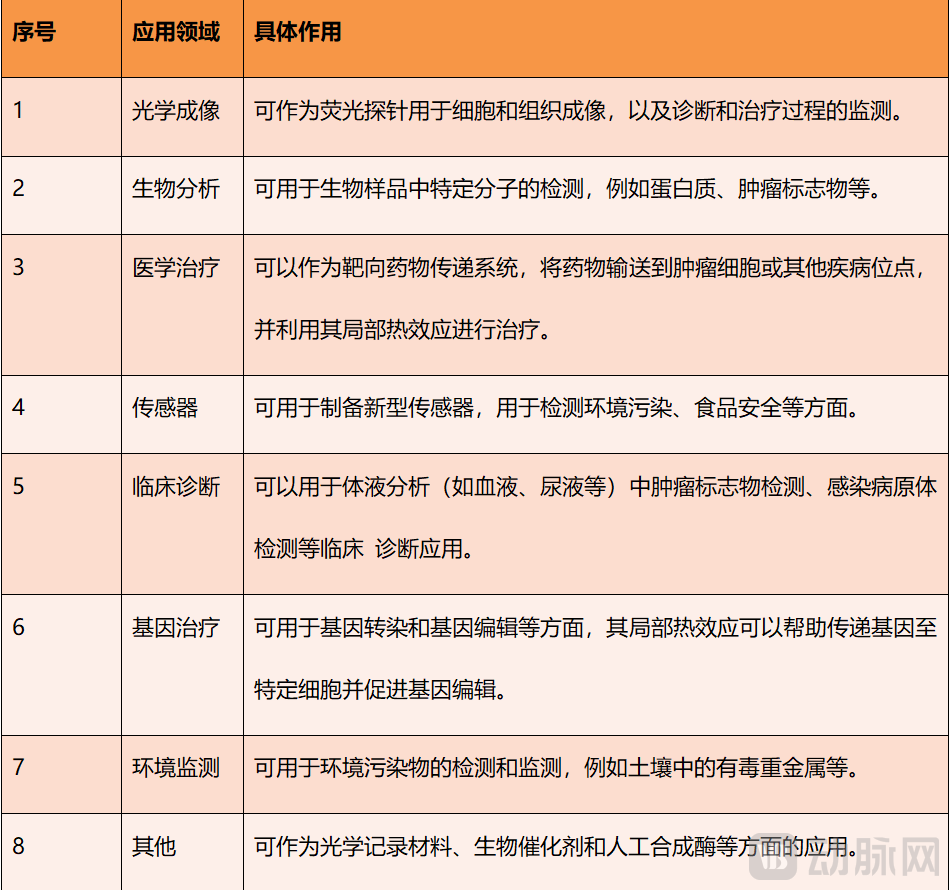
Since its inception, Sona has attracted significant investment and funding from numerous capital sources, thanks to its advanced proprietary technologies. In 2018, the company received a CAD 5 million grant from the Atlantic Canada Opportunities Agency (ACOA), successfully listed on the TSX Venture Exchange, and saw its stock price surge on the first day of trading. Subsequently, the company further expanded its capital base through multiple rounds of private placements. According to publicly available information on MarketWatch, Sona’s current market capitalization is approximately USD 11.73 million.
During the pandemic, Sona partnered with Arlington Scientific, Inc. (ASI) to develop a COVID-19 rapid test kit, which achieved significant success. This further solidified Sona’s strategic focus on continuing the development and application of its proprietary technologies. Currently, the company has set its sights on the photothermal therapy market and has undertaken a series of strategic initiatives.
Siva Therapeutics is a biotechnology company currently developing a cancer-targeted photothermal therapy technology called “Targeted Hyperthermia™ (THT).” This therapeutic approach achieves “targeted hyperthermia” by utilizing gold nanorods and infrared devices. The underlying principle is that gold nanorods absorb light energy and convert it into thermal energy upon exposure to infrared laser irradiation, thereby inducing thermal damage and necrosis in surrounding tumor cells and tissues.
Siva’s THT technology offers significant advantages in cancer treatment: it is more targeted than chemotherapy, less destructive than radiotherapy, and carries none of the risks associated with surgical intervention. Furthermore, this therapeutic approach holds promise for minimally invasive application, thereby reducing side effects.
Siva’s THT technology has garnered sustained attention from Sona. On March 23, 2023, Sona announced the completion of its acquisition of Siva Therapeutics. Pursuant to the share exchange agreement announced on January 26, 2023, Sona issued 15,107,457 shares of its common stock to Siva’s shareholders, priced at CAD 0.1824 per share based on the ten-day volume-weighted average price, for a total value of USD 2 million.
Meanwhile, in accordance with the prior agreement, Sona may issue additional performance-based shares to Siva’s shareholders in up to four tranches upon Siva’s achievement of four milestones, with a maximum aggregate value of $6.65 million in Sona common stock. The issuance will commence after Siva completes a large-animal study and achieves the first milestone by June 30, 2023.
Through the acquisition, Sona will now focus on leveraging its unique biocompatible gold nanorods to further advance Siva’s THT technology, with plans to apply it to the treatment of colorectal cancer patients as soon as possible.
Sona CEO David Regan stated, “Through the merger with Siva, Sona’s primary objective has shifted to developing THT to improve cure rates for colorectal cancer, which is projected to prevent 60,000 deaths annually in North America. Consequently, the market for THT services targeting colorectal cancer alone is estimated to reach $2.1 billion. Although achieving this goal will not happen quickly, it has the potential to save lives and enhance the quality of life for thousands of cancer patients.”
Meanwhile, Sive has also expressed strong confidence in the merger and plans to conduct further research and develop diverse application technologies using Sona’s gold nanorods.
“In Sona, we have identified the most stable gold nanorods that also offer biocompatibility and scalability. Recent analyses by the National Cancer Institute’s Nanotechnology Characterization Laboratory (‘NCL’) have further bolstered our confidence. We look forward to initially applying these gold nanorods in minimally invasive outpatient procedures for colorectal cancer using THT. If successful, we will proceed to address head and neck cancer, esophageal cancer, prostate cancer, and bladder cancer, each of which exhibits characteristics potentially amenable to THT therapy,” said Dr. Len Pagliaro, President and CEO of Siva.
Sona Nanotech’s acquisition of Sive is not the first application study of gold nanorods in cancer therapy. On the contrary, research on gold nanorods for photothermal therapy has been ongoing for many years.
Related research abroad started earlier, with relevant technological products already approved by the FDA or commercially deployed. For example:
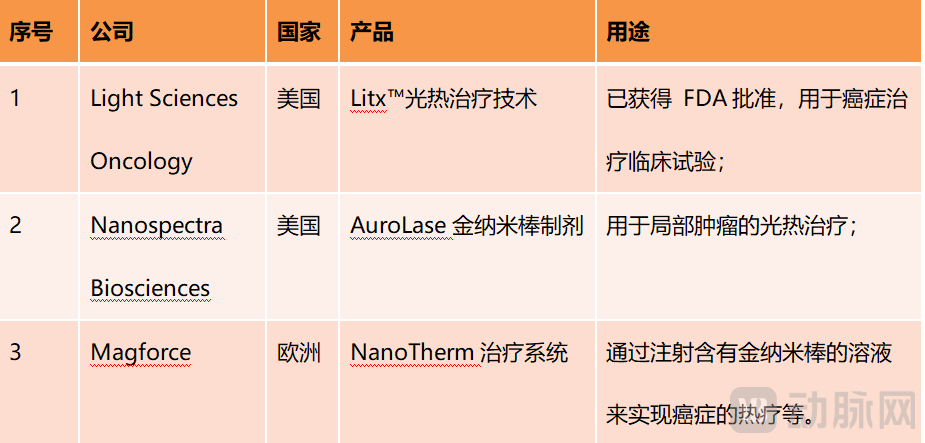
Domestic companies and institutions are also conducting research on gold nanorods in photothermal therapy.
![SES[@7$`0Q%W0A2WGN7]847.png](http://cdn.vcbeat.top/upload/image/08/04/07/10/1680855029517980.png/dmw)
Overall, the clinical application of domestic gold nanorods in photothermal therapy is currently still in the exploratory and research stages, and they have not yet been formally applied to clinical patients.