

China Innovation Instrument Breaks Through Direct Ionization Mass Spectrometry Technology, Developing Multi-Scenario Mass Spectrometers for Precision Medicine, Food Safety, and Public Security
In 2015, the newly revised Law of the People's Republic of China on Promoting the Transformation of Scientific and Technological Achievements was promulgated and implemented, encouraging faculty members at universities and research institutes to transform scientific and technological achievements through innovation and entrepreneurship. In the same year, Ningbo Huayi Ningchuang Intelligent Technology Co., Ltd. (hereinafter referred to as “Huayi Ningchuang”), the first enterprise established by Ningbo University to implement the transformation of scientific and technological achievements in accordance with the new Law on the Transformation of Scientific and Technological Achievements, was founded in Yinzhou District, Ningbo City.
“Mass spectrometers are sophisticated, cutting-edge scientific instruments, hailed as the ‘crown jewel of analytical instrumentation.’ Their caliber reflects a nation’s level of scientific and technological development as well as its advanced manufacturing capabilities. However, in recent years, China has faced a shortfall in independently developed high-end mass spectrometry instruments. With this in mind, we established Huayi Ningchuang—‘Chinese Instruments, Created in Ningbo,’” said Wen Luhong, CEO of Huayi Ningchuang.
Since its establishment, Huayi Ningchuang has relied on 15 major national and local science and technology projects,We have successfully developed 18 types of instruments and equipment for market applications in public safety, food and drug safety, and precision medicine, including six mass spectrometers.It can be said that Huayi Ningchuang has truly taken the lead in the research and development of mass spectrometers with independent intellectual property rights.
In 2006, Dr. Wen Luhong joined FPI, then a startup. Over the next six years, he rose from R&D Manager to Director, witnessing the company’s entire journey from a small venture to an industry leader and ultimately to its public listing.
“Not long after joining Focused Photonics Inc. (FPI), I was first exposed to high-end mass spectrometers while attending a major domestic summit on scientific instruments. Later, the company assigned me to lead a systematic survey of mass spectrometry technologies and instruments both in China and abroad. That year, I visited nearly every team in China developing mass spectrometers, connected with numerous domestic and international experts in the field, and thus began my lifelong engagement with mass spectrometry,” said Wen Luhong.
Since 2006, Wen Luhong has been deeply engaged in the field of mass spectrometry for over 15 years, emerging as a core force in the research and development of mass spectrometers in China. However, this career path was not his initial choice.
Back in 1999, Wen Luhong was admitted to the Shanghai Institute of Technical Physics of the Chinese Academy of Sciences, where he studied under Academician Chen Guilin and pursued consecutive master’s and doctoral degrees in optical engineering and physical electronics. In 2004, venturing to more distant horizons was the dream of most graduates, and Wen Luhong was no exception. Full of ambition, he joined the foreign-owned enterprise S3 Graphics, then known as a “chip giant,” during which time he visited Silicon Valley in the United States at the height of its “golden age” of development.
The transition from chip development to the R&D of instruments and equipment would not have been possible without the foundation Wen Luhong laid during his master’s and doctoral studies. “Inspired by my supervisor, I ventured out into the broader world, but ultimately, I wished to return to the field of instrumentation—where my expertise and passion lie—to pursue independent innovative R&D,” said Wen Luhong.
In 2011, Focused Photonics Inc. (FPI) was listed on the ChiNext Board of the Shenzhen Stock Exchange, placing Wen Luhong at a crossroads between steady progress and exploring the unknown. He keenly recognized that, looking to the future, the state would provide greater support for innovation and entrepreneurship, creating more significant entrepreneurial opportunities in testing instruments related to life, health, and safety. In 2012, one year after FPI’s IPO, Wen Luhong resolutely resigned from his position to embark on a new journey as a founding entrepreneur.
“Entrepreneurship has always been a high-risk endeavor. Relying solely on individual efforts or small platforms is far from sufficient; actively seeking in-depth collaboration with prestigious research institutes and universities represents a sound development path and successful model for innovation and entrepreneurship. ‘First, it provides access to robust talent recruitment platforms backed by these esteemed institutions. Second, during the early stages of startup development, universities can offer strong resource platforms and research conditions, while continuously supplying talent, funding, and resource support,’ said Wen Luhong.”
At this juncture, in response to the prevailing challenges of low efficiency and limited capacity in translating scientific research achievements into practical applications in China, a wave of Institutes of Advanced Technology were established at universities across the country, driven by national initiatives and robust support from local governments. With the backing of the Ningbo Municipal Government, Ningbo University promptly established its Institute of Advanced Technology. Wen Luhong joined as the academic leader and spearheaded the formation of the “Scientific Instrument Innovation Team,” which constituted the early prototype of the entrepreneurial team behind Huayi Ningchuang.
Leveraging Ningbo University, this innovative team has rapidly attracted a cohort of top-tier domestic and international talent in instrument innovation, including experts from the National Overseas High-Level Talent Recruitment Plan, leading and outstanding talents of Ningbo Municipality, and specialists with over a decade of experience in mass spectrometry. Meanwhile, it has engaged several academicians and renowned professors, such as Chen Guilin, Chen Hongyuan, and Zhang Xinrong, as advisory experts. In Wen Luhong’s view, ““The key to mastering the core technologies of mass spectrometry instruments still lies in talent.”Building a world-class, internationally competitive innovation team for mass spectrometers has been his clear vision from the outset.
In 2015, the newly revised “Law on Promoting the Transformation of Scientific and Technological Achievements” was implemented, encouraging faculty members at universities and research institutes to commercialize their scientific research achievements through innovation and entrepreneurship. Seizing this opportunity, Huayi Ningchuang, the first enterprise established for the transformation of scientific research achievements at Ningbo University, was founded.
As a cutting-edge instrument for measuring ion mass, the mass spectrometer is widely used in many fields, including public safety, medical diagnostics, food safety, and drug development, due to its high sensitivity, high resolution, and broad analytical range. For a long time, China has relied on imports for mass spectrometers, and the lack of original mass spectrometry technology is an important reason for the lag of domestically produced mass spectrometers.
“True innovation must stem from the technological pathway, achieving breakthroughs from 0 to 1,” said Wen Luhong. Guided by this philosophy, Huayi Ningchuang has focused on a novel mass spectrometry technique—direct ionization mass spectrometry—since its inception, conducting original research in this field. “At that time, internationally renowned mass spectrometry companies had not yet entered the arena. By starting early and strategically positioning ourselves in this new track, we could potentially achieve breakthroughs in mass spectrometers with independent intellectual property rights in China.”
Over the subsequent 1,500 days and nights, Wen Luhong led her team in collaboration with Professor Zhang Xinrong’s team at Tsinghua University to conduct research on China’s independently developed direct ionization technology—Dielectric Barrier Discharge Ionization (DBDI). They successfully developed China’s first direct ionization mass spectrometry ion source, resolving the critical bottleneck issue concerning core components. The related achievements were appraised as “a global first and at an internationally advanced level.”
The three internationally recognized open-air atmospheric pressure direct ionization techniques include DESI, DART, and DBDI. Compared with the DESI and DART direct ionization mass spectrometry techniques already applied internationally, DBDI, due toNo chemical solvents required, higher ionization efficiency, and fewer molecular ion fragments make it particularly suitable as an ion source for portable mass spectrometers used in on-site detection.R&DPoint-of-Care Rapid Detection Mass Spectrometer。
Compared with traditional mass spectrometry coupling techniques, direct ionization mass spectrometry offers three distinct advantages: rapid detection, low cost, and ease of use. It is particularly suitable for the rapid screening of drug concentrations, illicit drugs, toxins, and stimulants in biological samples such as blood, urine, and hair. Currently, based on its proprietary direct ionization mass spectrometry technology, Huayi Ningchuang has developed a range of direct ionization mass spectrometer products.
Targeting hair-based drug screening for individuals with substance use disorders, Huayi Ningchuang, leveraging the "National Major Project on Anti-Drug Science and Technology," has overcome technical challenges in sensitivity, anti-contamination, and spectral deconvolution algorithms. The company has developed the world’s most sensitive portable mass spectrometer for hair drug screening, which complies with the Ministry of Public Security’s specifications for drug screening in hair samples and has obtained police equipment certification. Additionally, it has established China’s most comprehensive drug screening database, and its products are now widely used across China for large-scale screening of individuals with substance use disorders.
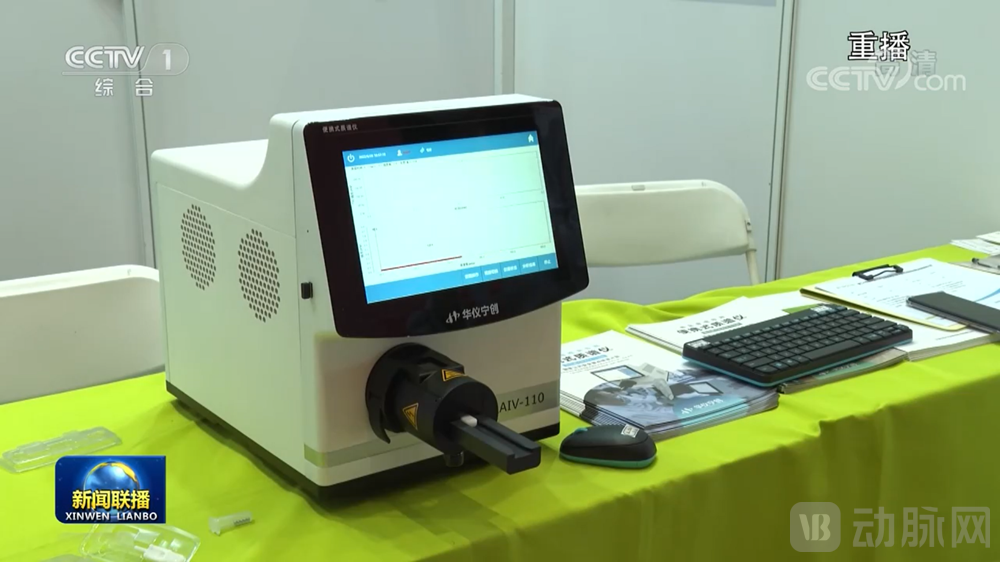
As reported by CCTV News BroadcastHuayi Ningchuang Hair Drug Screening Mass Spectrometer
Targeting the rapid screening of chemical hazards such as pesticides, veterinary drugs, and hormones in food, Huayi Ningchuang, leveraging the “National Major Project on Food Safety,” has overcome key technical challenges including matrix interference, sample pretreatment, and application method development. The company has developed a dedicated mass spectrometer for rapid food safety screening, which has been adopted by agricultural authorities, market regulation agencies, and public security departments specializing in food, drug, and environmental crime investigations for food and drug safety supervision.
Oriented toward precision medicine, Huayi Ningchuang relies on multiple major national, provincial, and municipal science and technology projects, in collaboration with Tsinghua University and other partners,Breakthroughs in key core technologies, including precise control of picoliter-level droplets, fully automated operation of the entire single-cell mass spectrometry analysis workflow, and ultra-long-term stable ionization of picoliter-level samples under atmospheric pressure conditions.,Successfully developed an automated single-cell mass spectrometry analyzer based on direct ionization mass spectrometry technology, achieving full-process automation of single-cell metabolite extraction, ionization, and mass spectrometric analysis.
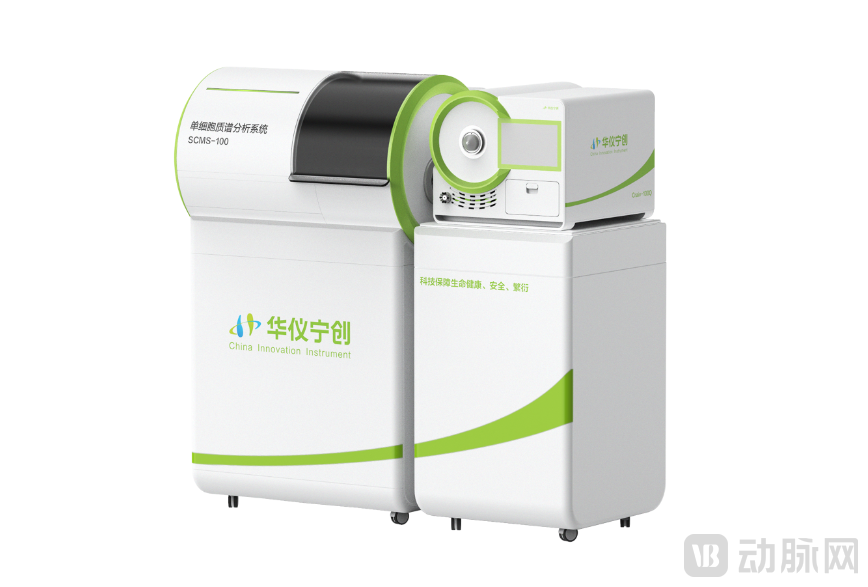 Automated Single-Cell Mass Spectrometry Analyzer
In the genomics era, gene sequencing technology is a hot topic. However, the onset and progression of diseases are complex, and single-omics approaches cannot address all issues, including proteomics, transcriptomics,MetabolomicsMulti-omics, among others, has become the foundation of precision medicine, holding immense potential in elucidating pathogenic mechanisms, screening for disease biomarkers and therapeutic targets, as well as enabling early diagnosis and treatment.
Metabolites are the end products of signaling pathways, where minor changes at the genetic and protein levels can be amplified at the metabolic level, providing information that is more closely aligned with biological phenotypes. Metabolic analysis of metabolites via mass spectrometry enablesUnveiling Critical Information Masked and Overlooked in Bulk Cell Sampling, which helps researchers or clinicians understand the pathogenic mechanisms of diseases, the pharmacological and toxicological effects of drugs, and drug resistance, thereby enabling more accurate and comprehensive diagnosis and treatment.
Currently, to address the clinical diagnosis and treatment needs of various high-incidence major diseases such as bladder cancer and gastric cancer, Huayi Ningchuang has collaborated with teams from multiple renowned hospital departments in China to conduct clinical application research.
“Opportunities always favor the prepared.” Huayi Ningchuang, which has strategically positioned itself using direct ionization mass spectrometry technology, has also encountered significant challenges. “Initially, we too harbored doubts: Would this technology ultimately find suitable application scenarios?” said Wen Luhong.
In 2017, Wen Luhong noted that the guidelines for the National Key R&D Program’s “Key Special Project on Public Safety Prevention and Control and Emergency Technology and Equipment” were publicly posted nationwide, outlining a requirement: to developRapid On-SiteEquipment for screening drugs in biological samples such as hair, urine, and saliva from drug users, with detection covering over 90% of the traditional and new psychoactive substances currently identified and controlled in China. This challenging feat was ultimately accomplished by Huayi Ningchuang.
After years of intensive research, the first suitable application scenario for direct ionization mass spectrometry has finally been identified.
In 2018, the Ministry of Public Security officially issued and implemented the "Specifications for Hair Sample Testing of Drug-Involved Individuals." The hair drug screening mass spectrometer developed by Huayi Ningchuang based on direct ionization mass spectrometry technology complies with the Ministry’s requirements for hair sample drug screening, has obtained certification for police equipment from the Ministry of Public Security, and has established the most comprehensive domestic drug screening database. Compared with colloidal gold assays or laboratory-based coupled mass spectrometry techniques, it offers significant advantages, including accurate qualitative and quantitative analysis, the ability to detect a wide variety of drugs, lower testing costs, and resistance to pharmaceutical interference.
Currently, the device has been successfully deployed in over 20 provinces and municipalities across China for drug screening in various scenarios, including public officials, military recruits, driving school students, bus and engineering vehicle drivers, individuals undergoing community-based rehabilitation or detoxification, and populations at high risk of drug involvement. It has emerged as the most competitive technological solution for drug user screening.
“One begets three, and three beget all things.” Having taken its first step, Huayi Ningchuang quickly identified a clear path to problem-solving. Leveraging government-backed initiatives such as the National Key R&D Program’s “Special Project on Key Technology R&D for National Food Safety,” the Ministry of Public Security’s “Double Ten Plan,” Zhejiang Province’s Major Projects under the Lingyan Plan, and Ningbo City’s Major Science and Technology Projects via the “Jiebang Guashuai” (Open Competition) mechanism, Huayi Ningchuang has successively developed specialized mass spectrometers for toxicant detection, food safety testing, and various applications in precision medicine.
“We have taken the most challenging path toward independent innovation in mass spectrometry, requiring our products, technologies, and markets to undergo a journey from zero to one. In developing direct ionization mass spectrometry technology, we encountered numerous difficulties, made many attempts, and experienced many failures, but ultimately achieved a breakthrough. We successfully realized the leap from zero to one, which best embodies our corporate culture of ‘making the impossible possible,’” said Wen Luhong with emotion.
HuaYi NingChuang, spun out of a university, carries the vision of “Chinese Instruments, Made in Ningbo.” It continues to deepen its efforts in the original research and development of high-end mass spectrometers, striving to maintain its leadership in pioneering mass spectrometry technologies through continuous innovation. “In the future, HuaYi NingChuang will seize opportunities to develop more mass spectrometers with independent intellectual property rights, building a well-known domestic brand and becoming an internationally competitive enterprise specializing in the development of direct ionization mass spectrometers,” said Wen Luhong.