

Shizhi Health Completes First-in-Class Animal Trial of Non-Invasive 3D Mapping System to Tackle the Challenge of Identifying the First Ectopic Focus in Atrial Fibrillation
Radiofrequency ablation guided by a three-dimensional mapping system is currently an advanced treatment for atrial fibrillation.
Three-dimensional mapping serves as the “GPS” for cardiac radiofrequency ablation procedures, enabling physicians to visualize the heart’s three-dimensional anatomy more clearly and intuitively, achieve accurate diagnosis in less time, precisely locate ablation targets, and thereby improve the success rate, efficacy, and safety of the procedure.
Multinational corporations represented by Johnson & Johnson and Abbott have swept the globe, becoming dominant players in the global electrophysiology field, thanks to their overwhelming advantage in 3D mapping systems, their core product.
According to a Frost & Sullivan report, the top three players in China’s electrophysiology device market in 2020 were all importers. Johnson & Johnson led with RMB 3.03 billion in sales, capturing a 58.8% market share; Abbott and Medtronic followed, accounting for 21.4% and 6.7%, respectively. Together, these three companies held over 85% of the market. During the same period, domestically produced electrophysiology medical devices accounted for only 9.6% of the market, indicating a localization rate of less than 10%.
Sdrin, founded in 2019, aims to change this situation.

Atrial fibrillation is the most common sustained arrhythmia. Its incidence increases with age, reaching up to 10% in individuals over 75 years old. Atrial fibrillation is a major risk factor for cardioembolic stroke and is closely associated with the development of conditions such as heart failure and hypertension, representing a pressing challenge currently facing the field of cardiology worldwide.
According to Frost & Sullivan analysis, the global patient population is approximately 30 million. In 2020, the number of patients with atrial fibrillation in China reached 11.596 million. Affected by population aging,EstimatedThe number of patients with atrial fibrillation is expected to increase further in the future. Radiofrequency catheter ablation, as an effective treatment for arrhythmias, has been widely adopted in more than 600 hospitals across China, with the annual procedure volume growing from 101,000 cases in 2014 to 152,000 cases in 2018, representing a compound annual growth rate (CAGR) of 10.7%.
The vast patient base and rapidly growing surgical volume have cultivated a broad electrophysiology market. According to Frost & Sullivan data, the market size of electrophysiology devices in China was RMB 5.15 billion in 2020 and is projected to reach RMB 21.11 billion by 2024.
According to Hu Shuming, founder of Sdrin, the current electrophysiology market faces three major pain points.
First, most domestic electrophysiology companies currently have a single-product structure, offering only ablation devices and catheters, and lack support from three-dimensional mapping systems.In complex arrhythmia procedures, the critical surgical steps performed by electrophysiologists are primarily conducted under the guidance of three-dimensional (3D) mapping systems. Information on cardiac anatomy and electrical activity, mapping and ablation catheter data, ablation energy delivery and tissue response, as well as procedural details, are all visualized within the 3D system. The absence of a 3D mapping system would significantly hinder the implementation and widespread adoption of atrial fibrillation ablation procedures.
Second, the current electrophysiology market is primarily dominated by minimally invasive catheter-based interventional therapies.Currently, the main types of 3D electroanatomical mapping systems include magnetic localization, electrical localization, and electromagnetic fusion localization. All three localization systems operate by having physicians insert sensor-equipped catheters into the patient’s heart for measurement. By manually maneuvering the sensor-equipped catheter around the cardiac chambers, the system collects pericatheter electroanatomical data, ultimately generating precise, CT-like ventricular images.
Third, the post-treatment recurrence rate among patients is relatively high, with some patients experiencing recurrence rates as high as 40%.One reason is the current lack of mapping systems on the market capable of identifying abnormal pacemaker sites, making it difficult for physicians to visually detect atrial fibrillation (AF) driver foci. This limits ablation to superficial manifestations, failing to address underlying pathological substrates. Additionally, the steep learning curve restricts the number of qualified electrophysiologists, thereby limiting patient access and hindering the dissemination of electrophysiology procedures to primary care settings. In China, there are approximately 20 million AF patients, yet only about 7% receive definitive treatment. Furthermore, patients experiencing recurrence are often ineligible for repeat ablation; the resulting expansion of cardiac scar tissue can lead to complications such as heart failure and stroke, posing life-threatening risks.
Proprietary biomechanical simulation algorithm,
Tackling the First Challenge in Atrial Fibrillation: Identifying Abnormal Pacemaker Sites
Sdrin's non-invasive 3D mapping system can effectively address the aforementioned issues.
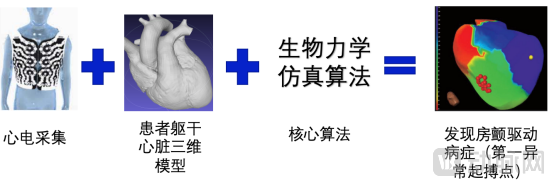
Sdrin’s Non-Invasive 3D Mapping System Solution. Image provided by Sdrin.
Sdrin’s non-invasive 3D mapping system combines “ECG acquisition + 3D models of the patient’s heart and torso + biomechanical simulation algorithms.” By wearing an ECG acquisition vest equipped with hundreds of sensor channels for a specified duration prior to surgery, patients can undergo precise, non-invasive mapping. This approach enables the identification of atrial fibrillation (AF) driving mechanisms and the analysis of the initial abnormal pacing site before the procedure.
Not only does it advance the timing of physicians’ diagnostic assessments to improve diagnostic efficiency, but by enabling the mapping system to identify the driving mechanisms of atrial fibrillation, it also allows physicians to perform precise ablation during surgery. This addresses the current limitation of point and linear ablation techniques, which can only treat superficial manifestations, thereby fundamentally reducing high recurrence rates and lowering the risk of thrombosis or stroke in patients. Furthermore, thanks to precise mapping, the duration of ablation procedures—originally requiring three to four hours—can be shortened to one and a half hours (or even less), making the surgery safer and more efficient.
In addition to the aforementioned highlights, its self-developed biomechanical simulation algorithm is also a major feature of this system. This biomechanical simulation algorithm differs from existing magnetic-electric positioning technology pathways.
Current electromagnetic localization systems require the use of both a mapping catheter (intracorporeal) and external patches, employing an internal-external approach for positioning. In contrast, Sdrin establishes a three-dimensional model of the patient’s torso and heart using CT imaging. By collecting electrical signals from various locations on the body surface, the system uses these two inputs to inversely deduce the location of the earliest abnormal pacemaker focus at different sites on the endocardial and epicardial surfaces.
On April 2, 2023, Sdrin successfully completed the first domestic animal trial of its self-developed non-invasive 3D mapping system.
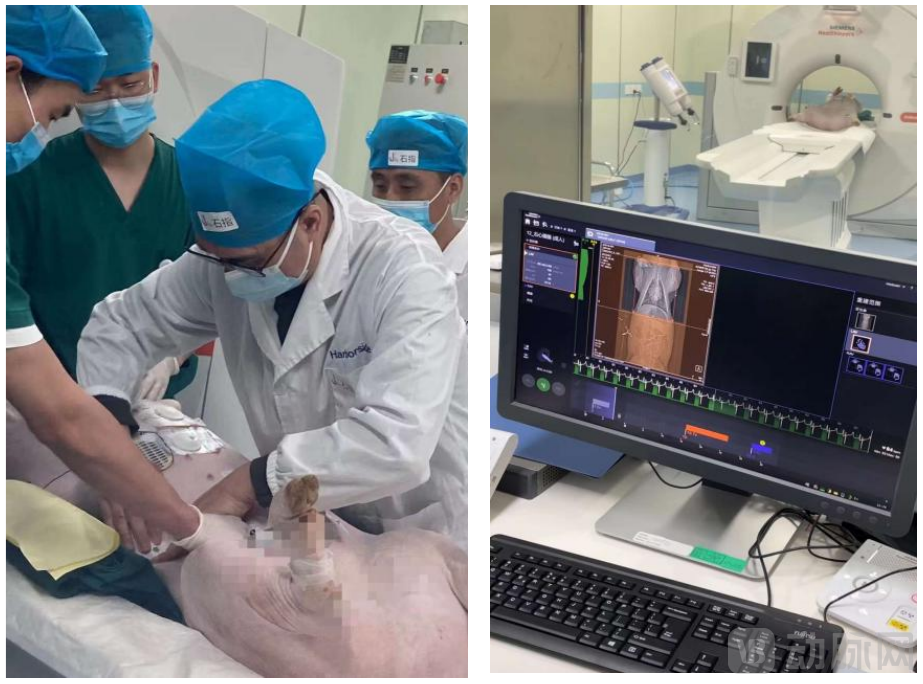
Animal Experiment Site
This experiment was conducted byChen Songwen, Electrophysiology Specialist at Shanghai General Hospital, Shanghai Jiao Tong University School of MedicineDirectorThe lead surgeon employed multi-site pacing to simulate atrial and ventricular tachycardias of varying origins, while simultaneously acquiring multi-lead surface ECGs and intracardiac activation mapping. This approach aimed to investigate the correlation between the two methods and validate the spatial accuracy of the initial pacing site derived by Sdrin’s 16-channel non-invasive algorithm against the pacemaker-induced site. In a single porcine model, data from over 30 initial abnormal pacing sites were collected. Calculations using our non-invasive 3D algorithm demonstrated that the average spatial deviation between the initial abnormal pacing site identified by Sdrin and the gold standard was 1.2 cm, indicating robust diagnostic localization performance for the initial abnormal pacing site.
Hu Shuming, founder of Sdrin, stated, “This experiment is undoubtedly of great significance to the development of non-invasive 3D coordinate systems in China. In the future, we will continue to enhance sensor accuracy, upgrading from 16 channels to 64 and then to 288 channels, achieving millimeter-level precision to benefit the 20 million atrial fibrillation patients in China!”
Moving forward, Sdrin will continue to optimize its non-invasive 3D mapping system, deepen its commitment to the field of cardiac diseases, and build a comprehensive product portfolio.
Currently, the company is seeking angel round financing.