

Tianrui Diagnostics Partners with Yangzhou University to Build GC-MS Platform for Clinical Breath VOC-Based Lung Nodule Risk Assessment
In 2023, the integration of industry and research continued to accelerate.
An increasing number of academic researchers are moving toward the industrial sector, striving to translate theoretical findings into practical applications; meanwhile, more enterprises are partnering with universities and research institutes to strategically position themselves for source innovation.
In the field of clinical diagnostics, a similar story is unfolding.
On April 10, Tianrui Diagnostics entered into a strategic partnership with Yangzhou University. The two parties will jointly establish a gas chromatography-mass spectrometry (GC-MS) detection platform to conduct applied research on key technologies for identifying pulmonary nodule risk and enabling early diagnosis based on volatile organic compounds (VOCs) in exhaled breath (“gas biopsy”). The collaboration aims to develop an indicator system and core technologies for assessing the malignancy risk of pulmonary nodules in high-risk populations and achieving precise early diagnosis, construct predictive models and screening score systems for the early detection of lung cancer, and ultimately formulate a clinical protocol for assessing the malignancy risk of pulmonary nodules tailored to the Chinese population, with application demonstrations implemented in the Yangzhou region.
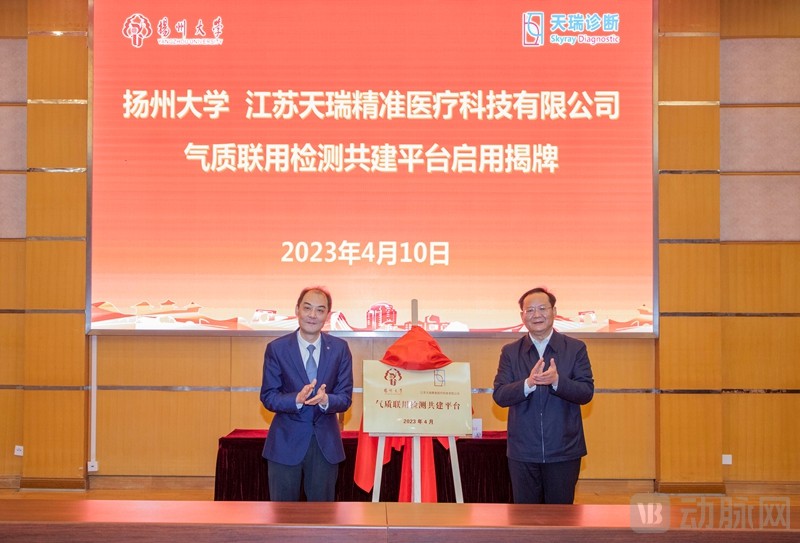
Yangzhou University President Ding Jianning and Yang Yi, Chairman of Jiangsu Tianrui Precision Medical Technology Co., Ltd., jointly unveiled the GC-MS Testing Joint Platform.
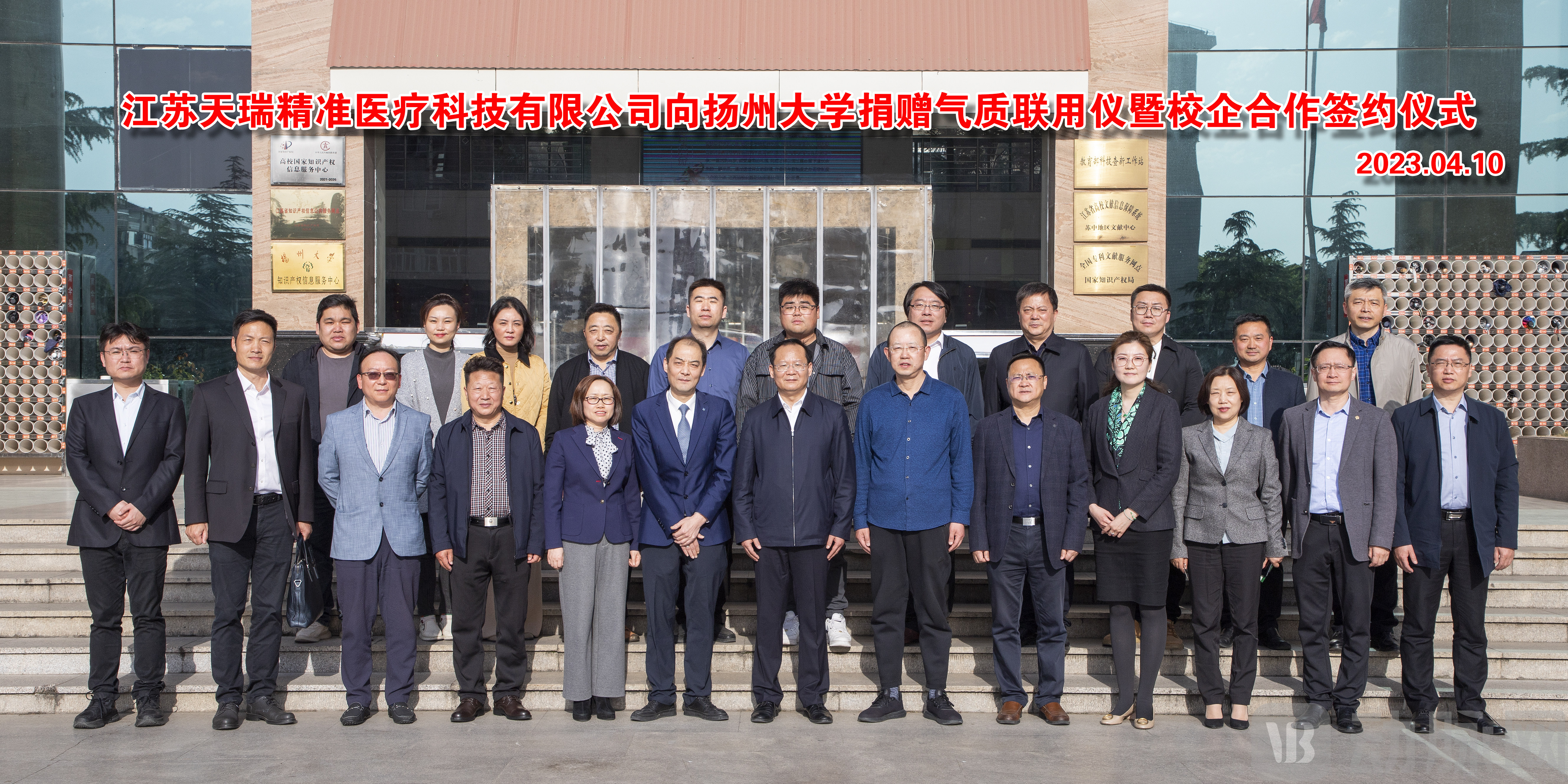
Attendees of the signing ceremony included: Ding Jianning, President of Yangzhou University; Gong Weijuan, Vice President of Yangzhou University; Jiang Lan, Director of the Science and Education Division of the Yangzhou Municipal Health Commission and a 1982 alumnus of Yangzhou University; Yang Yi, Chairman of Tianrui Diagnostics; and other leaders from the university and enterprises.
With technological breakthroughs and the widespread adoption of clinical applications, breath testing is poised to become a novel in vitro diagnostic (IVD) adjunctive modality, achieving prevalence comparable to imaging and blood-based diagnostics in fields such as oncology, infectious diseases, critical care, and chronic disease management. Over the past decade, global breath analysis technology has witnessed significant leaps, gradually revealing a promising new frontier in breath-based diagnosis.
Current in vitro diagnostic (IVD) methods struggle to achieve a triangular balance among precision, accessibility, and low cost. In contrast, breath testing offers advantages such as non-invasiveness, simple sampling, and rapid results, thereby enhancing patient compliance. Through technological innovation, if testing instruments can be miniaturized and their costs effectively controlled while ensuring accuracy, it will be possible to balance the precision, accessibility, and affordability required for widespread clinical application of breath testing. This will not only transform the existing diagnostics industry but also reshape the diagnostic and therapeutic ecosystem across the entire healthcare and health system.
In recent years, exhaled breath, as a novel medium for disease diagnosis, has witnessed rapid development. In 2022, the U.S. Food and Drug Administration (FDA) granted Emergency Use Authorization (EUA) to the first COVID-19 diagnostic product based on the analysis of volatile organic compounds (VOCs) in exhaled breath. This test can be deployed in diverse settings, including hospitals, physicians’ offices, public spaces, and mobile testing stations, delivering results in under three minutes. This milestone represents official endorsement of breath-based VOC testing, clearly demonstrating its practical clinical applications.
The medical program at Yangzhou University boasts a history of over 70 years. It offers a doctoral degree authorization point in the first-level discipline of Clinical Medicine, a professional doctoral degree category in Clinical Medicine, and two postdoctoral research stations in Integrated Traditional Chinese and Western Medicine and Clinical Medicine. Additionally, it provides master’s degree authorization points in seven first-level academic disciplines, five professional master’s degree categories, and seven undergraduate majors. In recent years, the university has undertaken more than 400 research projects at the provincial/ministerial level or above, including those funded by the National Key R&D Program and the National Natural Science Foundation of China. These efforts have yielded a substantial number of high-level scientific achievements, generating significant social and economic benefits.
Yangzhou University Testing Center, established in 1982, boasts 6,259 square meters of modern laboratory space and has assembled a high-caliber team of technical professionals, over 90% of whom hold master’s or doctoral degrees. The center offers a wide range of testing services, including inorganic analysis, organic analysis, micro-area and phase analysis of materials, biomaterial analysis, environmental monitoring, and mechanical product inspection. Among these, 196 items across 8 major categories and 29 subcategories have passed the accreditation review by the Certification and Accreditation Administration of the People's Republic of China (CNCA), obtaining the China Inspection Body and Laboratory Mandatory Approval (CMA) certificate. It is a first-class testing laboratory with advanced capabilities.
Tianrui Diagnostics is a leading domestic comprehensive service provider of integrated clinical mass spectrometry diagnostic solutions, offering end-to-end solutions from sample pre-processing to report generation. It operates four precision medicine laboratory platforms in Zhenjiang, Yangzhou, Yancheng, and Huai’an, providing over 1,000 testing items—including biochemistry, immunology, mass spectrometry, microbiology, molecular pathology, and scientific research services—as well as more than 100 specialized tests. Additionally, the company offers third-party testing, clinical research support, and collaborative establishment of precision medicine centers.
During the COVID-19 pandemic, Jiangsu Tianrui Precision Medical Technology Co., Ltd. (hereinafter referred to as “Tianrui Diagnostics”) collaborated with the Affiliated Hospital of Yangzhou University on relevant testing projects, leveraging the precision medicine laboratory platform it had established in the Yangzhou region. In June 2021, coinciding with the establishment of the School of Public Health at Yangzhou University—with disease prevention becoming one of the key focuses of the school’s clinical research—Yangzhou University and Tianrui Diagnostics reached a consensus on cooperation. Together, they established a “tripartite” gas chromatography–mass spectrometry (GC-MS) testing platform integrating the university, the hospital, and the company, thereby accelerating the development and clinical implementation of GC-MS-based volatile organic compound (VOC) products through industry–academia–research collaboration.
Common breath tests are widely used in clinical practice, primarily focusing on Helicobacter pylori detection, alcohol intoxication screening, carbon monoxide (CO) testing for neonatal jaundice, and nitric oxide (NO) testing for asthma. These breath tests are familiar to the general public, and their technologies are relatively mature. The fundamental difference between breath volatile organic compound (VOC) testing and conventional breath tests lies in the fact that the former detects organic molecules rather than inorganic ones.
The detection and diagnosis of diseases through exhaled volatile organic compounds (VOCs) rely heavily on high-precision chromatography and mass spectrometry analysis techniques, which impose stringent requirements on both the instrumentation itself and data analysis. The concentration of VOCs in exhaled breath is typically extremely low, reaching levels as low as parts per million (ppm~10-6) or even parts per billion (ppb ~10-9) levels, which require the application of specialized sample pretreatment techniques and highly sensitive instruments for detection.
Currently, VOC detection equipment mainly includes gas chromatographs (GC), gas chromatography-mass spectrometers (GC-MS), proton transfer reaction mass spectrometers (PTR-MS), ion mobility spectrometry, and gas sensors.
Among these detection instruments, the high-sensitivity gas chromatography–mass spectrometry (GC–MS) system is the most widely used in scientific research.GC–MS Analysis System: Combining the advantages of gas chromatography and mass spectrometry, this system enables simultaneous chromatographic separation and mass spectrometric data acquisition. It is sufficiently sensitive to quantify volatile organic compounds (VOCs) at parts-per-billion (ppb) levels, meeting the technical requirements for clinical use.
To utilize gas-phase VOC detection for the auxiliary diagnosis of clinical diseases, it is first necessary to identify biomarkers through scientific research. In this collaboration, Tianrui Diagnostics will leverage a comprehensive breath testing platform built on GC–MS (Gas Chromatography–Mass Spectrometry) technology, providing end-to-end coverage from gas collection, adsorption tubes, and thermal desorption systems for gas release, to data analysis.
Given that the detection objective is untargeted profiling of all biomarkers, artificial intelligence (AI)-based data analysis has become a critical approach for obtaining reliable results in scenarios involving large and complex sample sizes.By creating an integrated AI system for medical diagnostics, Tianrui Diagnostics has developed an intelligent diagnostic platform and big data visualization software., primarily through operations such as data cleaning and preprocessing, screening of characteristic VOCs, and model validation, to conduct intelligent analysis of massive VOC datasets for the effective discovery and validation of reliable biomarkers.
Currently, Tianrui Diagnostics has secured one invention patent through its preliminary exploration of data analysis methods. Meanwhile, Tianrui Diagnostics has proactively developed management software for population screening, enabling seamless integration with gas detection-related data.
Leveraging Tianrui Diagnostics’ mature exhaled breath VOC detection platform, Tianrui Diagnostics and Yangzhou University will collaborate closely to establish an indicator system and key technologies for malignant risk assessment and precise early diagnosis of pulmonary nodules in high-risk populations. This effort aims to develop a clinical protocol for assessing the malignancy risk of pulmonary nodules tailored to the Chinese population, thereby advancing the clinical application of gas-phase detection technology in China.
Tianrui Diagnostics, which provides comprehensive total solutions, possesses not only the capability to develop intelligent diagnostics using a gas chromatography-mass spectrometry (GC-MS) platform, but alsoTianrui Diagnostics also offers a comprehensive suite of solutions for liquid chromatography-tandem mass spectrometry (LC-MS/MS).
The comprehensive solutions provided by Tianrui Diagnostics include the construction/renovation of dedicated mass spectrometry laboratories, training for mass spectrometry technical personnel, pre-analytical processing equipment (fully automated intelligent sample preparation systems), liquid chromatography-tandem mass spectrometers, and reagents compatible with the fully automated intelligent sample preparation systems. Among these, the RZ-01 fully automated intelligent sample preparation system is the instrument with the most rapid development progress at Tianrui Diagnostics to date.Enables fully automated sample pretreatment without manual intervention.
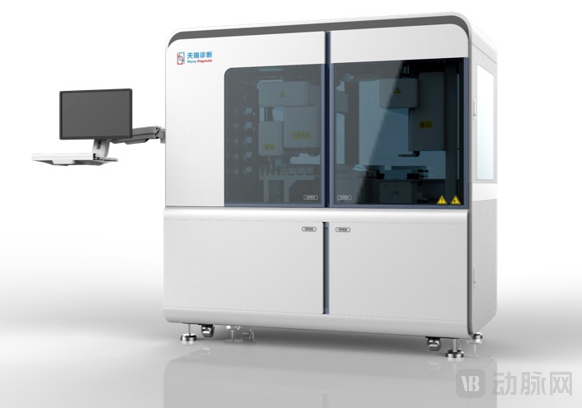
Tianrui Diagnostics RZ-01 Fully Automated Intelligent Sample Preparation System
RZ-01 is a sample pretreatment system developed to meet the automation needs of liquid chromatography-tandem mass spectrometry (LC-MS/MS) platforms, leveraging Jiangsu Tianrui Precision Medical Technology Co., Ltd.’s years of accumulated expertise in clinical mass spectrometry testing. Centered on automated handling and gripper mechanisms, and equipped with rail-based transport systems, the RZ-01 fully automates LC-MS sample pretreatment tasks that would otherwise require manual labor, including cap opening, sample transfer, centrifugation, shaking, pipetting, concentration, nitrogen blow-down, and solid-phase extraction (SPE). By fully automating the entire sample pretreatment process and replacing current manual methods, the system effectively addresses challenges encountered in the clinical application of mass spectrometry, thereby enhancing the standardization of clinical mass spectrometry practices.
Leveraging the comprehensive solutions provided by Tianrui Diagnostics, the company has established collaborative partnerships with numerous leading Chinese universities, including Zhejiang University, Southeast University, and Jiangnan University. Together, they are driving the further development of precision medicine in China through joint initiatives such as the discovery of biomarkers for various diseases and the establishment of advanced laboratories.
From May 5 to 7 this year, Tianrui Diagnostics will attend the Personalized Diagnosis and Treatment Forum at the 2023 7th Future Healthcare Top 100 Conference by invitation. During the event, Dr. Yang Caohua, Chief Technology Officer of Tianrui Diagnostics, will share the company’s comprehensive clinical mass spectrometry solutions through roundtable discussions and forum presentations.. The 7th Future Healthcare Top 100 Conference, co-hosted by VCBeat VB100 and Eggshell Institute, with strategic cooperation from Shanghai Zhangjiang Group, is"The Largest and Most Information-Rich Ecosystem Conference on Industry-Capital Integration in China's Medical and Health Innovation Sector."