

KELUBAO Files IPO Prospectus to Advance Domestic Deep Hydrolyzed Protein-Based Medical Foods with Academic Collaboration
As one of the few in the current domestic marketDomestic Deeply Hydrolyzed Protein Brands, Zhejiang Kelubao Food Co., Ltd. (hereinafter referred to as “Kelubao”) At the early stage of its establishment, the company identified the development of key enzyme preparations for whey protein hydrolysis and corresponding hydrolysis processes as a critical technological need, which is expected to achieve a breakthrough in China’s specialty medical foods by filling the gap in “extensively hydrolyzed formulas.”
From addressing the allergies of a single infant to assuming responsibility for resolving infant allergies across China, Kelubao has established comprehensive capabilities spanning raw materials, formulation, manufacturing processes, and commercialization teams. Prior to the advent of the “Age of Discovery” in the special medical purpose food industry, Kelubao had already secured registration acceptance from the State Administration for Market Regulation for multiple infant formulas for special medical purposes, among whichFour products have completed on-site inspections.
This “high-quality” advancement from raw materials to manufacturing processes is, in fact, aligned withResearch Collaborationinseparable.
The founding of Kelubao stems from the story of a father and his child with milk protein allergy.

Founder and CEO of KelubaoYang GuominA graduate of Xiangya School of Medicine, Central South University, he is the parent of a child with severe cow’s milk protein allergy (CMPA). As a caregiver, he recognizes that CMPA in infants and young children is a significant health issue affecting a substantial population. Due to individual variability, the severity of allergic symptoms differs among patients. Children with severe cases require amino acid-based formulas initially; once tolerance is established, they can gradually transition to extensively hydrolyzed formulas and then to partially hydrolyzed formulas.
In fact, the degree of protein hydrolysis can be divided into three levels, namelyAmino Acids, Extensively Hydrolyzed, and Partially Hydrolyzed. For cow's milk protein allergy in infants and young children, all solutions currently offered by domestic manufacturers of foods for special medical purposes (FSMPs) are partially hydrolyzed formulas; there are no extensively hydrolyzed formula products or amino acid-based formula products available. Among the 104 FSMP products actually approved, three are extensively hydrolyzed formulas and two are amino acid-based formulas, all five of which are imported products.
That is to say,In the extensively hydrolyzed formula sector, no Chinese brand has yet emerged in the domestic market.Current products are all researched and developed based on data from European and American populations, creating a significant gap between the absence of domestic brands and the rapidly growing population of individuals with allergies. It is precisely for this reason that Yang Guomin chose to pursue the path of foods for special medical purposes (FSMP). Focusing on health issues related to cow's milk protein allergy in children, he established Kelubao Group with the aim of launching "Chinese-branded" FSMP products.
First, based onProduct and Formula Development Based on Data from the Chinese Population, which also constitutes the first fundamental basis for deeply hydrolyzed protein in China’s Foods for Special Medical Purpose (FSMP). Since China’s FSMP industry started relatively late, most domestic manufacturers in this field have been drawing on the experience of foreign brands. For instance, in formula screening and validation, referencing existing overseas products and population data can accelerate product development from an R&D perspective, thereby providing greater assurance for both the success rate and the robustness of the data. On the other hand, ethnic differences may necessitate slight variations in formulas suitable for different populations. To better cater to individuals of Asian descent, physiological data specific to the Chinese population is particularly crucial.
Secondly,Developing extensively hydrolyzed products tailored to the Chinese market. To enter the market, hydrolyzed milk protein-based foods for special medical purposes must meet two regulatory standards. First, they must have a complete manufacturing process, including the types of hydrolytic enzymes used and whether the entire hydrolysis process complies with the standards for extensive hydrolysis. Second, they must provide evidence of safety, demonstrating that the product can be safely used by infants and toddlers with allergies. This is because foods for special medical purposes in the infant and toddler sector, given their high relevance to public welfare, are currently and will continue to face stringent access requirements and robust regulation throughout research and development, production, and marketing.
However, this presents a challenge: for any brand, the formulation and processing techniques involving hydrolytic enzymes are trade secrets that no overseas brand is willing to share. Precisely because of this, achieving a comprehensive understanding of extensively hydrolyzed formulas requires end-to-end innovation across the entire value chain—from raw materials to manufacturing processes—along with rigorous proof of the safety of both the formula and the final product.
“Brands like Nestlé and Danone each possess their own proprietary technologies and complete manufacturing processes. To build a Chinese brand that rivals international standards, we must make significant efforts in both these areas.” — Vice President of R&D, Kelubao GroupDr. Gao Yuyouindicates.
Market gaps represent breakthrough opportunities. However, the barriers to extensively hydrolyzed formulas are primarily twofold: formulation and manufacturing process. Regarding the manufacturing process, in addition to selecting appropriate enzymes to achieve extensive protein hydrolysis, it is essential to significantly reduce most allergens at the process level, while ensuring that the enzyme preparation process yields peptides with sufficiently low molecular weights. Therefore, beyond the considerable challenges in formulation, companies must also achieve substantial breakthroughs in their manufacturing processes.
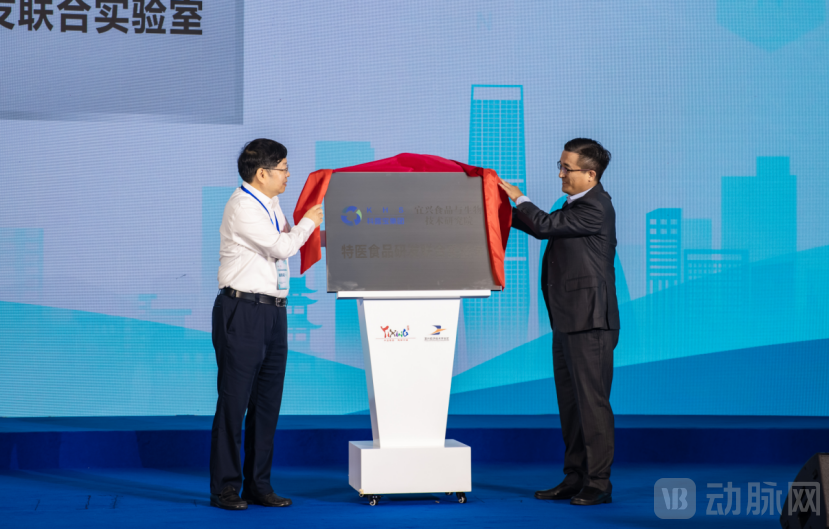
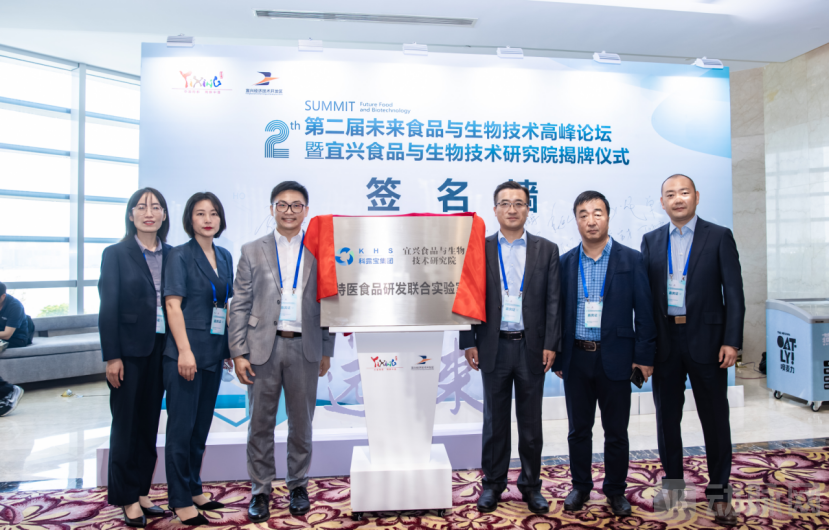
Photo: Unveiling ceremony of the Joint Laboratory for R&D of Foods for Special Medical Purposes. Photo provided by the interviewee.
Therefore, Kelubao has chosen to collaborate with one of the leading universities in this field—Jiangnan UniversityCollaborate, Join ForcesAcademician Chen Jian's TeamCo-constructionJoint Laboratory for the Research and Development of Foods for Special Medical PurposesConduct research on enzymatic hydrolysis technology, lay out source innovation, and accelerate the R&D of raw materials and processes for foods for special medical purposes.
This collaboration is destined to be a partnership between researchers and enterprisesBidirectional Empowerment. As the production side, enterprises can address issues in downstream manufacturing, while universities, as the R&D side, are often able to solve problems in upstream research and development. “Few companies can excel at both rapid R&D and efficient production,” said Dr. Gao Yuyou. He noted that industry-academia collaboration in R&D and manufacturing can accelerate the overall development of the R&D and production of foods for special medical purposes (FSMP).
For researchers, their profound accumulation in basic research can provide strong technical support for enterprises. As an enterprise, on the one hand, Kelubao’s R&D team has long been dedicated to the field of foods for special medical purposes (FSMP), enabling it to accurately grasp market demands and pain points, thereby facilitating research through a commercialization-oriented approach. On the other hand, Kelubao Group has assembled a team of professionals with years of experience in channel expansion within the pharmaceutical and professional nutrition sectors. Leveraging its familiarity with hospital and maternal-and-child channels, Kelubao Group is well-positioned to effectively bring relevant achievements to market.
“We leverage the extensive R&D experience of our scientific researchers to clearly define research directions and technical processes. This represents a convergence of goals between the enterprise and the researchers. During the R&D process, they develop an initial plan based on their own expertise, which is then integrated with our strategic insights. Through collaborative discussion, we arrive at an optimal solution by synthesizing both approaches,” stated Dr. Gao Yuyou. He emphasized that, facilitated by efficient communication, Kelubao not only delivers commercially viable finished products throughout the R&D journey but also secures valuable intellectual property rights.
Currently, the Joint Laboratory for Research and Development of Foods for Special Medical Purposes, co-established with Academician Chen Jian’s team, is primarily conductingResearch on the Production Process of Key Raw Materials for Foods for Special Medical Purposes, Preclinical Studies on the Efficacy of Major Active Ingredients, and Studies on the Rationality of Comprehensive Nutritional Composition and TasteCollaboration in three areas.
Following project initiation, the study of raw material production processes is the first critical step. As a prerequisite for the manufacturing of foods for special medical purposes (FSMP), raw materials serve as processed industrial food ingredients throughout various stages of the FSMP industry chain. This capability also determines, to a certain extent, whether an enterprise possesses the qualifications to produce such products.
Preclinical studies on the efficacy of major active ingredients focus more on monomeric compounds with medical utility or physiological activity, which serve as a crucial source for formulas of foods for special medical purposes (FSMP). Meanwhile, research into the rationality of comprehensive nutritional structures and palatability aims to meet the specific nutritional needs and taste preferences of Chinese infants and young children. Kelubao, in collaboration with the Joint Laboratory for FSMP Research and Development, conducts in-depth research across multiple dimensions, including raw material selection, formula optimization, and specialized processing techniques.
While laying out its portfolio of infant and young children's formula foods for special medical purposes, Kelubao has also launchedAdult Medical Foods for OncologyR&D. “Kelubao is not only focused on present-day endeavors but also committed to shaping the future,” stated Dr. Gao Yuyou.
In fact, Kelubao’s strategic positioning in the field of adult tumor-specific medical foods can be regarded as a proactive measure. In the FSMP (Foods for Special Medical Purposes) sector, stringent review processes and lengthy registration cycles often mean that approval takes several years. By establishing an early presence in adult oncology nutrition products and building proprietary technical barriers and process development capabilities, Kelubao is well-positioned to rapidly enter the adult FSMP market in the future.
Currently, leveraging the academic expertise of Dr. Guan Xin, a core member of Academician Chen Jian’s team, in areas such as the mechanisms and regulation of energy metabolism in human tumor cells, the energetic interplay between tumor cells and nutrients, and the development of specialized medical foods for cancer patients, Kelubao is rapidly advancing this product line.
Since its inception, Kelubao has undergone six years of development, accumulating certain advantages in research and production. However, relying solely on corporate innovation to achieve international standards entails prolonged R&D cycles and extreme difficulty. To break through the bottlenecks facing China’s market for Foods for Special Medical Purpose (FSMP), it is essential to collaborate with academician teams and university research groups to drive source-level innovation in FSMP, thereby achieving breakthroughs in raw materials and process development. This underscores the key reason why Kelubao has joined forces with academician research teams and leading domestic universities to facilitate the translation of scientific achievements into practical applications.