Top 100 Profiles | Academician Qimin Zhan of the Chinese Academy of Engineering: Biopharmaceutical Innovation and Development under the Healthy China Initiative
May 5–7, 2023, VB100, VCBeat, Eggshell Research InstituteHosted by,Strategic Cooperation with Shanghai Zhangjiang GroupCo-hosted the 7th Future Healthcare Top 100 Conference. Themed “Beyond East and West,” this year’s conference gathered outstanding global healthcare innovation projects, scientific research achievements, strategic announcements from listed companies, and benchmarks for industry innovation. It outlined an era-defining map illustrating the close connection and positive interaction between China’s medical health research and the development of its healthcare system, recorded the historical strides of China’s medical health innovation, and showcased the confident, resilient, and forward-moving spirit of China’s healthcare sector as it advances without boundaries.
Academician of the Chinese Academy of Engineering, Molecular Oncologist, Boya Distinguished Professor at Peking University, and Dean of the International Cancer Institute at Peking UniversityZhan Qimin, confirming attendance at the 7th Future Healthcare Top 100 Conference to explore innovative development in China's biopharmaceutical industry.
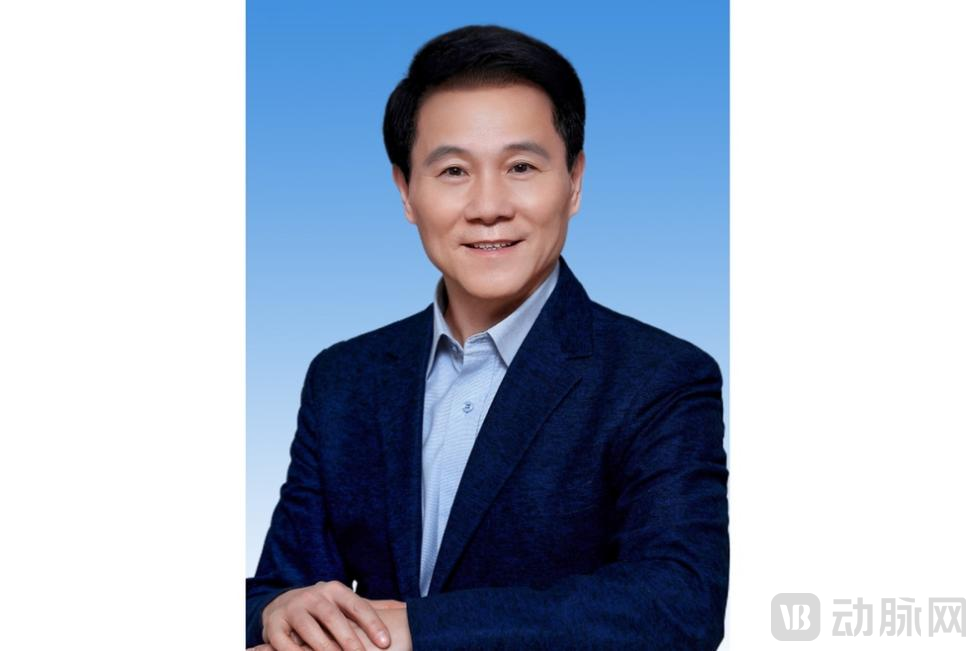
Zhan QiminAcademician of the Chinese Academy of Engineering, Chang Jiang Scholar of the Ministry of Education, recipient of the National Science Fund for Distinguished Young Scholars, national-level candidate of the New Century Hundred-Thousand-Ten Thousand Talents Project, principal investigator of an Innovation Research Group funded by the National Natural Science Foundation of China, and chief scientist of the National 973 Program for Major Basic Research Projects.
Dean of the Peking University International Cancer Institute, Dean of the National Institute of Health and Medical Big Data at Peking University, Director of the Molecular Oncology Laboratory at Peking University Cancer Hospital, and Director of the Frontier Science Center for “Cancer Integrative Omics” at Peking University. Dean of the Medical College of Soochow University. Vice President of the Chinese Medical Doctor Association, Supervisor General of the China Anti-Cancer Association, Vice President of the China International Exchange and Promotive Association for Medical and Health Care, Vice Chairman of the Chinese Society of Microcirculation, President of the Overseas Physicians Association of the Western Returned Scholars Association, and Chairman of the Medical Education Special Committee of the Chinese Society of Higher Education.
Dedicated to research in tumor molecular biology and translational medicine, this work has achieved original and systematic results in the study of cell cycle regulation, genomic stability, and mechanisms of cellular carcinogenesis. It pioneered the discovery and systematic elucidation of the roles and mechanisms of key proteins in cell cycle checkpoints, clarifying the functions of multiple important cell cycle regulatory proteins in cellular carcinogenesis, tumor diagnosis, and personalized therapy. The genetic variation characteristics of esophageal squamous cell carcinoma (ESCC) have been comprehensively and systematically revealed from the perspectives of genomics and the microenvironment. By focusing on precancerous lesions and the tumor microenvironment, the pathogenesis of ESCC has been clarified, providing crucial foundational data for identifying molecular biomarkers for ESCC diagnosis. Focusing on the scientific issue of tumor-host interactions, this research targets cachexia, a typical condition causing pan-tissue damage that affects 50–80% of cancer patients. By integrating multi-omics analysis techniques with novel molecular biology methods, it has systematically elucidated the key tumor-derived molecules responsible for tissue damage in cachexia and their mechanisms of action, thereby providing a theoretical basis for developing new therapeutic strategies for cachexia.
Published over 300 academic papers in international medical and biological journals, with more than 20,400 SCI citations. Authored 16 books. Delivered over 170 keynote addresses at domestic and international academic conferences, and served as chair for 16 international academic conferences.
“Medical science and technology represent another critical national asset, alongside aerospace, communications, and intelligent manufacturing. There is an urgent need to address bottleneck technologies in the biomedical sector, while increasing investment in health-related scientific and technological innovation to strengthen strategic scientific capabilities and strategic reserves for disease prevention and control as well as public health.”
The lack of commanding heights in basic medical research and core healthcare technologies, coupled with insufficient technological support for the development of the health industry, constitutes the primary challenge facing the progress of China’s health sector.
To overcome the “chokehold” challenges in the biopharmaceutical sector, a multifaceted approach is required. This includes enhancing independent innovation capabilities, expanding the scale of the biotechnology industry, breaking through key technologies for industrialization, linking scientific and technological innovation with social benefits, and improving industrial investment channels.
Addressing these challenges requires a focus on foundational biotechnologies. Currently, there are three major trends in the global biotechnology landscape. The first is cross-disciplinary integration, characterized by blurring boundaries between disciplines and frequent breakthroughs in interdisciplinary research. The second is non-linear innovation, wherein basic research, technological innovation, and industrial development exhibit a cyclical, spiral pattern of mutual reinforcement. The third is data- and intelligence-driven advancement, with data-intensive analysis made possible by big data and high-performance computing.
Building on this foundation, the next phase of biomedicine will unfold across nine key directions: early warning, early diagnosis, and early treatment of major diseases; immunotherapy; gene therapy; cell therapy; tissue and organ engineering; precision medicine; biomedical materials; and biotechnological drugs and vaccines.
Conference Name: The 7th Future Healthcare 100 Conference
Conference Dates: May 5–7, 2023
Venue: Zhangjiang Science Hall, Shanghai, China
Conference Format: In-Person Summit
Conference Scale: Expected 7,000 Attendees
Organizers: VB100, VCBeat, VCBeat
Strategic Partner: Shanghai Zhangjiang Group