

Biotech CEO Compensation Report: Significant Pay Gaps Across Company Stages and Sectors
Among startups across all industries, CEO compensation in the biopharmaceutical sector appears to have remained the highest.
According to an industry report on CEO compensation at U.S. startups released by Kruze Consulting, the average annual salary for CEOs of seed-stage biotech companies had already reached $158,000 in 2018. By 2022, although the average CEO compensation at startups in other sectors had declined, that for biotech firms continued to rise, with the average salary for CEOs at seed-stage companies reaching $161,000. This figure was higher than those for CEOs in other fields such as e-commerce, hardware manufacturing, fintech, and SaaS, exceeding them by $20,000 to $50,000.
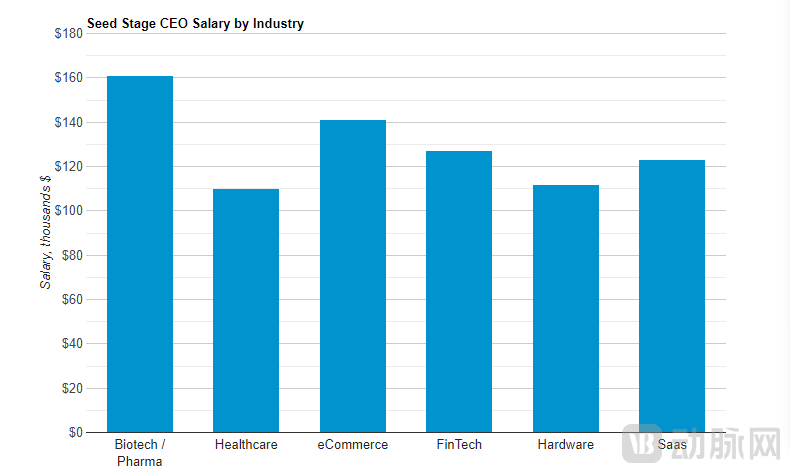
Average CEO Salaries at Seed-Stage Companies Across Industries in 2022, Source: Kruze Consulting
The underlying reason is that the biopharmaceutical industry is a field characterized by a high concentration of top-tier talent, where a doctoral degree is essentially a standard credential for founders. This has enabled healthcare-focused investment institutions to accept higher compensation packages for CEOs.
In China, the compensation of biotech CEOs has also drawn significant attention. People are concerned about how the compensation system for CEOs in the biopharmaceutical industry is established and how their high pay is linked to corporate performance.
Kruze Consulting once analyzed the CEO compensation packages of 250 startups, while BioPharma Dive, a biopharmaceutical media outlet, examined total compensation data submitted to regulators by 230 pharmaceutical companies. Together, these analyses may provide a comprehensive understanding of CEO compensation structures.
How Does CEO Compensation Vary Across Companies at Different Stages of Development?
An interesting trend is emerging among startups: the overall average compensation for CEOs of emerging companies is diverging based on the amount of funding raised.
In 2022, CEO compensation at companies that raised over $5 million and those that raised over $10 million increased by 7.5% and 13%, respectively. However, CEOs at startups with more limited funding saw their incomes decrease by approximately 7% compared to 2021. These figures indicate that companies securing greater amounts of capital offer higher CEO compensation, while those with less funding set lower compensation levels.
The same holds true in the field of biopharmaceuticals.The more mature a company’s development, the higher the CEO’s compensation.The chart below illustrates the compensation of CEOs at U.S. biopharmaceutical companies. It can be seen that CEO salaries at small companies are primarily concentrated between $300,000 and $5 million, with very few CEOs earning $10 million or even $20 million. The gap in CEO compensation between mid-sized and small companies is not significant; however, a greater number of CEOs at mid-sized firms earn between $8 million and $10 million. In contrast, CEO salaries at large pharmaceutical companies are mainly in the range of $10 million to $20 million. For pharmaceutical giants such as Roche, AbbVie, Takeda, and Novartis, CEO compensation is approximately $20 million, with some CEOs nearing $30 million. It is relatively rare for CEOs at these major firms to earn less than $10 million.
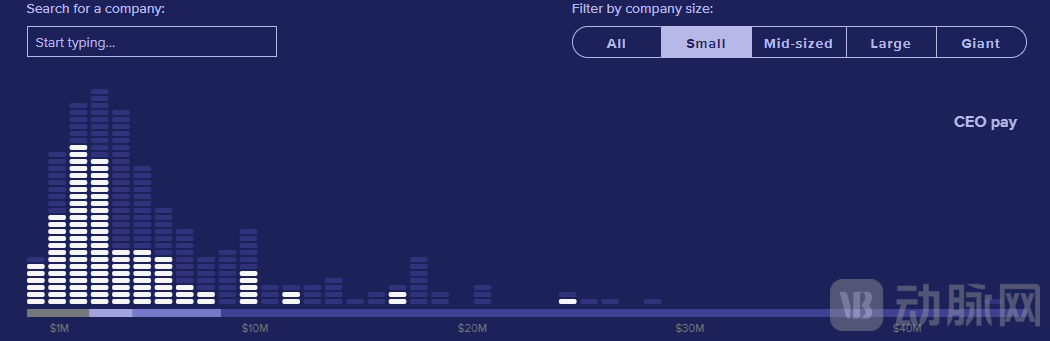
Small Biotech CEO Salaries, Source: BioPharma Dive
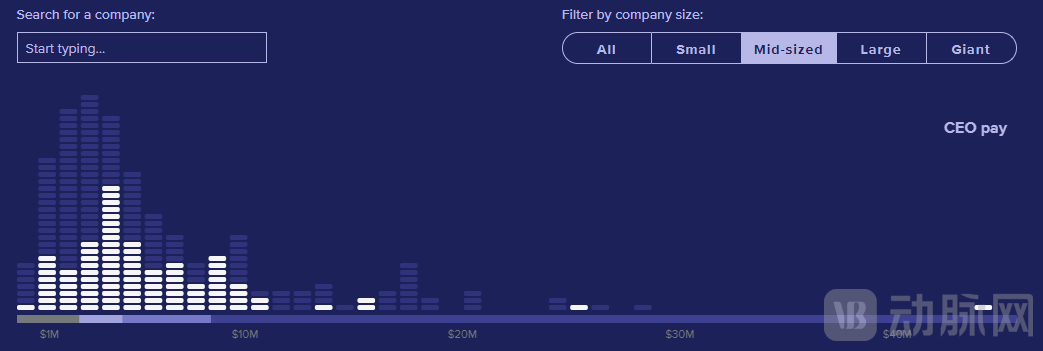
CEO Compensation at Mid-Sized Pharmaceutical Companies, Source: BioPharma Dive
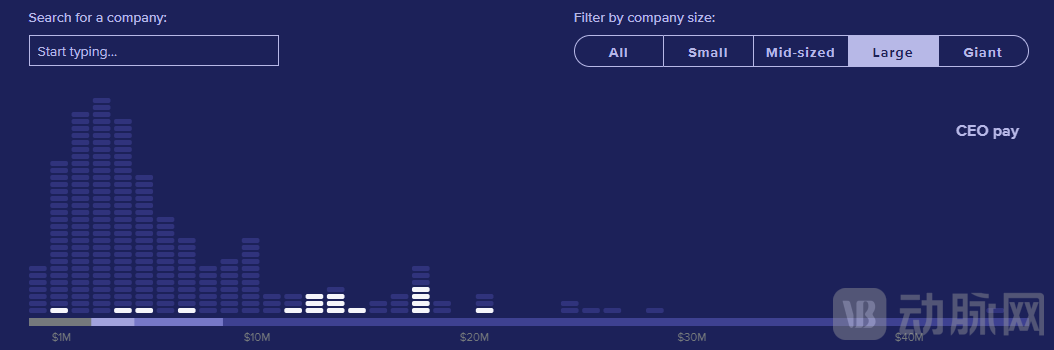
CEO Compensation at Major Pharmaceutical Companies, Source: BioPharma Dive
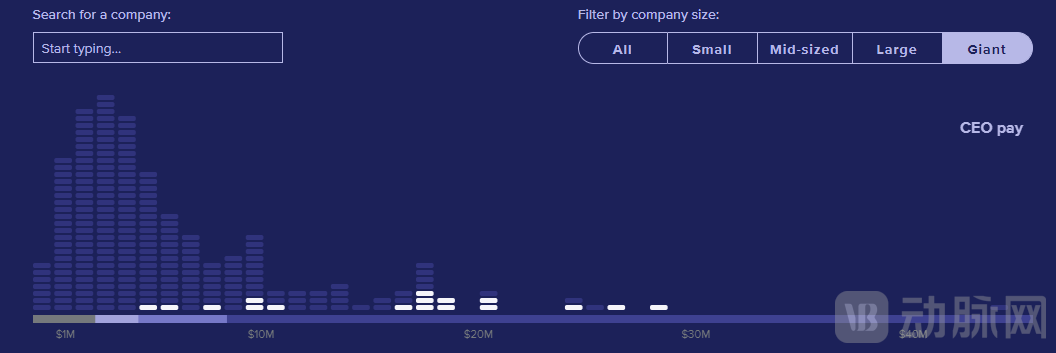
CEO Compensation at Mega Pharma Companies, Source: BioPharma Dive
Compared with large pharmaceutical companies, the salaries of Biotech CEOs are dwarfed.In 2022, Gilead Sciences CEO Daniel O’Day earned $21.62 million, Johnson & Johnson’s new CEO Joaquin Duato earned $13.1 million, and Novartis CEO Vas Narasimhan earned as much as $8.98 million despite a 25% pay cut.
These provide us with a glimpse into the drivers of CEO compensation systems. First,Companies with greater financial resources are better positioned to compensate their CEOs.If financing is not accessible to startup CEOs, they will opt to reduce salaries to maintain a lower cash burn rate; secondly,If a company’s CEO compensation continues to rise, it demonstrates that these CEOs are more efficient in fundraising, much like how CEOs of mature companies can generate greater profits for their firms.
Likewise,Entrepreneurial culture exerts pressure on CEOs, leading them to forgo or reduce their salaries—a phenomenon also observed in large pharmaceutical companies.Executive compensation is primarily composed of stock grants. Taking Regeneron as an example, CEO Leonard Schleifer received exceptionally high compensation in 2020 because he exercised previously granted options to purchase approximately 313,000 shares of the company’s stock, valued at around $111 million.
How Large Is the Gap Between CEO Compensation and Employee Pay?
The gap between CEO compensation and employee pay is also a matter of concern.Large pharmaceutical companies often exhibit a wider gap in this regard, whereas the median employee compensation is relatively higher at smaller biotech firms.According to a survey by BioPharma Dive, nearly half of the 124 companies reported median employee compensation exceeding $200,000, indicating that the pay gap between CEOs and employees is not substantial. This is because the majority of their workforce consists of scientists and researchers with extensive academic and industry backgrounds, necessitating higher salary packages.
Large pharmaceutical companies with vast workforces often exhibit a significant disparity between CEO compensation and employee pay. Moreover, CEOs of large pharmaceutical firms typically earn more than their counterparts in other biotech companies within the industry, sometimes substantially so. Therefore, in comparison,The median compensation for employees at large pharmaceutical companies is relatively lower than that at other biotech firms.For example, Johnson & Johnson’s CEO Alex Gorsky received total compensation of $25 million last year, while the company’s average employee compensation was $76,000.
Let us now examine the ratio of CEO compensation to employee compensation. The larger the pharmaceutical company, the higher the ratio. A survey of 124 companies revealed a median compensation ratio of 31:1. In other words, CEOs earn approximately 31 times as much as the average employee.
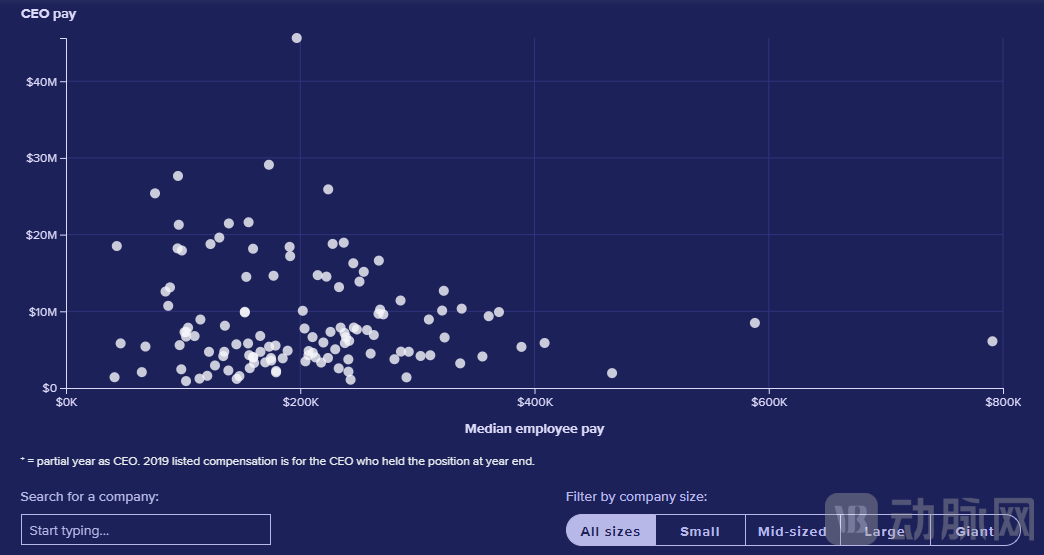
CEO-to-Employee Pay Ratio in the U.S. Biopharmaceutical Industry, Source: BioPharma Dive
The companies with lower ratios are primarily start-up biotechs, where some CEOs earn less than 10 times the compensation of their employees.For example, Esperion Therapeutics, a company dedicated to the diagnosis of cardiovascular diseases, maintains a CEO-to-employee pay ratio of 4:1. Sarepta Therapeutics, a gene-editing company focused on the development of new drugs for rare diseases, saw its CEO-to-employee pay ratio drop from 225:1 in 2017 to just 5:1 in 2019.
In companies with higher ratios, CEO compensation can be hundreds of times that of employees. For example, Mylan, a U.S. pharmaceutical company founded in 1961, merged with Pfizer’s off-patent medicine division, Upjohn, in 2020 to form Viatris. Prior to this merger, in 2019, Mylan’s CEO, Heather Bresch, received total compensation of $18.5 million, nearly 430 times the average employee pay at the pharmaceutical company.
Is the CEO the highest-paid person in the company?
When establishing a brand-new biotechnology company, in addition to the founders, it is necessary to attract more top-tier talent to join and assume key positions by offering competitive compensation packages.
A report released by Fierce Biotech shows that the company’s top management commands the highest compensation, with a median of $256,000. However, upon closer examination, it is the Chief Medical Officer (CMO), rather than the CEO, who emerges as the highest-paid executive.According to the report, the average annual salary for a Chief Medical Officer (CMO) is $450,000, with starting salaries ranging from $225,000 to $459,000. In comparison, the average compensation for a Chief Executive Officer (CEO) is $195,000, ranging from $145,000 to $350,000.
This phenomenon has also sparked heated discussion in China. With the rapid development of China’s biotech industry, drug candidates that advance to clinical stages are considered core assets, and innovative pharmaceutical companies are eagerly seeking top talent. As a result, Chief Medical Officers (CMOs) have become a highly sought-after resource, driving their compensation significantly upward. The average total annual compensation for CMOs with overseas backgrounds can reach RMB 5 million, while for those who have grown within local enterprises, it averages RMB 3 million.
Among other executive positions, the average compensation for Chief Scientific Officers (CSOs) is $250,000, and for Chief Technology Officers (CTOs), it is $225,000. Excluding the C-suite, the highest compensation within enterprises is found in the legal department, with a median of $201,000.
Of course, compensation for employees at these companies also varies by specialty. For instance, graduates in genetics and genomics can earn salaries of approximately $237,000, while those with degrees in biology command around $183,000. Chemistry follows, with salaries roughly at $160,000. In contrast, the expected income for professionals in molecular and cellular biology is approximately $69,000.
Is There a Gender Gap in CEO Compensation?
In the biopharmaceutical industry, the majority of CEOs remain male, with female CEOs being exceedingly rare. In 2019, among the 231 companies analyzed by BioPharma Dive, only 21 were led by women.
In terms of compensation, there is a significant disparity among the 21 female CEOs. Some receive substantial pay packages; for instance, Martine Rothblatt, CEO of United Therapeutics—founded in 1996 and specializing in drug development for pulmonary arterial hypertension—tops the list with $45.63 million, exceeding the compensation of many male CEOs. Similarly, Elizabeth Barrett, CEO of Urogen Pharma, which focuses on treating specialty cancers and urological diseases, earns $25.90 million, also surpassing other CEOs. HoweverThey are merely outliers; the compensation for most female CEOs remains concentrated below $10 million.
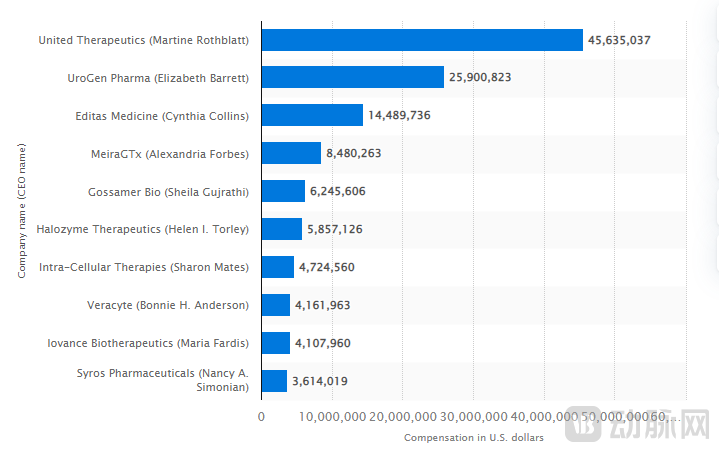
Top 10 Highest-Paid Female CEOs in the U.S. Biopharmaceutical Industry in 2019, Source: Statista
In fact,The pay gap for female CEOs persists across all industries, with their compensation generally lagging behind that of their male counterparts—a disparity particularly pronounced in startups.According to a survey report by Kruze Consulting, the average compensation for female CEOs peaked in 2019. In 2020, their average salary decreased by 3.7% compared to 2019. In 2021, the average salary for female CEOs dropped by 30%, falling from $138,000 to $101,000, with no signs of recovery. In 2022, female CEOs earned $20,000 less than their male counterparts.
In interviews conducted by VBInsight with female founders in China’s healthcare sector, these trends have been partially corroborated. Even senior female executives at multinational corporations (MNCs) often receive significantly lower compensation than their male counterparts, although this disparity is less pronounced in China.
In response to this situation, organizations have begun to advocate for women in the biopharmaceutical industry. Michelle McMurry-Heath, CEO of the Biotechnology Innovation Organization (BIO), has stated that the biopharmaceutical sector should be inclusive, breaking down barriers and divisions based on gender and race, thereby ensuring openness across all areas of bioscience and technology.
References:
1. What Salaries Will Starup CEOs Earn In 2023?
2. How biotech and pharma companies pay their CEOs, and their workers
3. How much does a biotech pay? Community-generated data tool gives a peek at industry's salaries