

ClearSky Medical Diagnostics Launches Commercialization in China with AI-Powered Digital Tools for Alzheimer’s and Parkinson’s Diagnosis

ClearSky Medical Diagnostics
Developer and Manufacturer of Medical Devices for the Diagnosis and Monitoring of Neurodegenerative Diseases
Parkinson’s disease (PD) is the second most common neurodegenerative disorder after Alzheimer’s disease (AD), and ranks as the “third leading health threat among middle-aged and older adults,” following cardiovascular/cerebrovascular diseases and cancer. According to World Health Organization (WHO) statistics, there are currently more than 50 million people worldwide living with Alzheimer’s disease and other dementias, and approximately 6 million individuals with Parkinson’s disease. The global number of Parkinson’s patients is projected to reach 12 million by 2030.
Traditional diagnostic methods for neurodegenerative diseases include blood tests, medical imaging, and other laboratory examinations, which assess physiological abnormalities by measuring biological markers. Although effective, these approaches require patients to visit healthcare facilities, and the costs associated with invasive testing equipment and personnel are relatively high. In light of these considerations, the medical community has leveraged artificial intelligence and machine learning to develop new diagnostic tools utilizing low-cost, non-invasive sensors.
ClearSky Medical Diagnostics is such a company that diagnoses a range of neurodegenerative diseases, including Parkinson’s and Alzheimer’s, based on sensors and digital evolutionary algorithms. Its clinically validated medical devices are now used in medical centers and clinical research institutions around the world.
In February 2023, ClearSky was selected as a Life Sciences Innovator in the Digital Solutions category by the UK Department for Business and Trade.
ClearSky’s devices assess three critical cognitive functions—visuospatial ability, memory, and executive function—and analyze the data using biology-inspired computational algorithms to diagnose whether patients have neurodegenerative diseases and to determine disease severity. ClearSky primarily offers four diagnostic devices: LID-Monitor, PD-Monitor, CF-Monitor, and ND-Monitor.
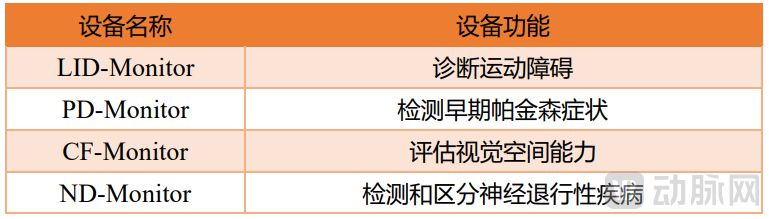
ClearSky Medical Diagnostics' Diagnostic Equipment
LID-Monitor offers a non-invasive, convenient method for diagnosing levodopa-induced dyskinesia (LID), a side effect that occurs in Parkinson’s disease patients taking levodopa. Patients wear six small wireless sensors on their limbs for 24 hours at home to measure movement across all extremities. The system operates without an internet connection and automatically identifies symptoms associated with dyskinesia and Parkinson’s disease.
According to data from the ClearSky website, the annual cost of Parkinson’s disease in the UK is estimated at £1.5 billion, with a rising trend year on year as the patient population grows. The York Health Economics Consortium estimates that the introduction of LID-Monitor could save the UK’s National Health Service (NHS) up to £84 million annually in consultation and hospitalization costs.
LID-Monitor received the Medipex NHS Innovation Award in 2015 and obtained CE marking certification in 2017. It is currently in use within the NHS, at hospitals in Leeds, Harrogate, York, and Scarborough, as well as at partner hospitals in Shanghai, China.
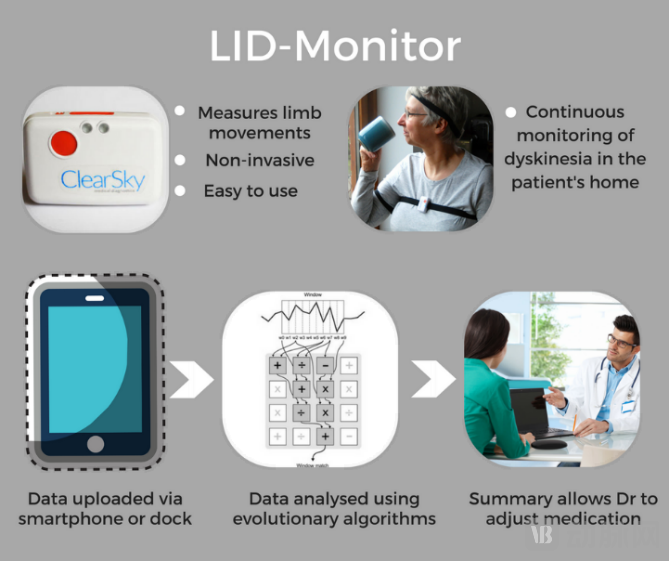
LID-Monitor Detection Process Image Source: ClearSky Official Website
ClearSky’s PD-Monitor is a device for diagnosing early-stage Parkinson’s disease. Diagnosing Parkinson’s disease is difficult to confirm through routine clinical assessments alone. The PD-Monitor utilizes small, non-invasive sensors placed on the index finger and thumb; patients are instructed to repeatedly tap their index finger against their thumb on each hand for 10–30 seconds.
PD-Monitor transmits the collected data to a tablet, where specialized software algorithms analyze the rate or amplitude of finger-tapping tests to assess the severity of bradykinesia. These algorithms have been trained and validated to identify two key symptoms of Parkinson’s disease: resting tremor and bradykinesia. PD-Monitor received CE marking certification in the European Union in 2019.
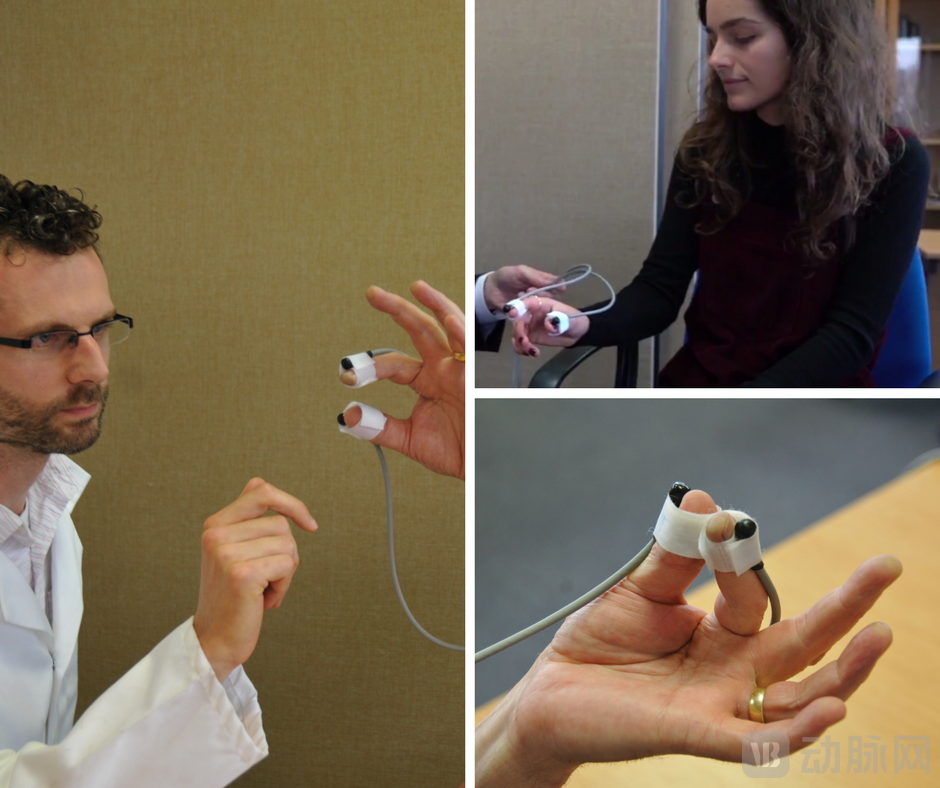
PD-Monitor Image source: ClearSky official website
CF-Monitor is used to assess declines in visuospatial abilities by having patients draw on a tablet with a ballpoint pen for graphical testing. It employs algorithms to analyze their pause patterns and movement variations, thereby diagnosing whether patients suffer from Alzheimer’s disease and other forms of dementia.
ND-Monitor is designed for the detection and differentiation of neurodegenerative diseases, such as Parkinson’s disease, Alzheimer’s disease, dementia with Lewy bodies, and Parkinson’s disease dementia. It can be deployed in hospitals and clinics to provide real-time feedback to physicians and specialists. During grasping task tests, patients wear data gloves equipped with positioning sensors. The information collected by the gloves is transmitted to a tablet and processed by biology-inspired algorithms, which can identify symptom differences associated with various neurodegenerative diseases.
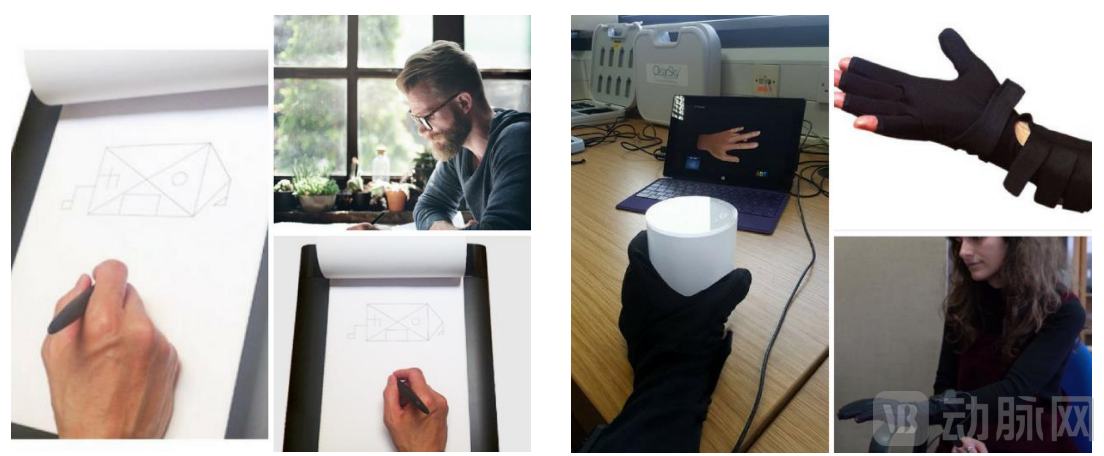
Left: Graphical Test; Right: ND-Monitor
Image source: ClearSky official website
Following the successful launch of two CE-marked intelligent detection devices for Parkinson’s disease, they are developing a new product, MCI-Monitor.
MCI-Monitor is a device for diagnosing mild cognitive impairment (MCI) that leverages AI technology to assess motor characteristics of patients’ grasping movements and visual attention during task execution. Preliminary studies by ClearSky Medical Diagnostics indicate that MCI-Monitor can differentiate between cognitively normal Parkinson’s disease, Parkinson’s disease with mild cognitive impairment, and Parkinson’s disease dementia.
Currently, the ClearSky team is seeking collaborative partners to accelerate the development, testing, and launch of MCI-Monitor.
In 2013, Dr. Stephen Smith and his research team co-founded ClearSky Medical Diagnostics, integrating patented, biomimetic principle-based artificial intelligence algorithms with wearable device technology to develop a series of non-invasive medical devices capable of diagnosing patient symptoms. These devices are applied in the field of neurodegenerative diseases such as Parkinson’s disease and Alzheimer’s disease, representing decades of interdisciplinary research achievements.
Dr. Stephen Smith is a Professor in the Department of Electronics Engineering at the University of York, UK. He has been dedicated to applying computer science to solve medical problems, with prior work in cardiology and mammography. For the past fifteen years, he has shifted his focus to the diagnosis and detection of neurodegenerative diseases such as Parkinson’s disease, Alzheimer’s disease, and myasthenia gravis. He has filed 12 patents related to the development and application of “white-box” machine learning, nine of which have been granted to date.
In 2018, two key executives, Marta Vallejo and Amir Dehsarvi, joined ClearSky.
Marta holds a master’s degree in Artificial Intelligence and dual doctoral degrees in Artificial Intelligence and Predictive Modeling. As a tenured researcher in the field of biomedical signal and image processing, she joined ClearSky as the Head of the newly established AI and Machine R&D Department, overseeing the development of the company’s core intellectual property and digital core algorithms. Amir earned his Ph.D. from the Department of Electronic Engineering at the University of York, with a research focus on chronic diseases. Serving as ClearSky’s Chief Technology Officer, he is responsible for the deployment, operation, and management of the company’s foundational technology products.
Marta and Amir both bring extensive experience in clinical data management and technology development. Their arrival has driven the expansion of the ClearSky team, accelerating algorithm research and device development.
As early as 2017, Shanghai Ruijin Hospital in China launched the world’s largest clinical research project on Parkinson’s disease diagnosis. Ruijin Hospital is a network center of the ClearSky global collaboration. In 2018, led by neurology experts at Ruijin Hospital, a validation study of PD-Monitor was completed, demonstrating that PD-Monitor can not only accurately detect varying degrees of bradykinesia in Parkinson’s patients but also diagnose early-stage Parkinson’s symptoms. In 2019, Shanghai Ruijin Hospital conducted a study introducing LID-Monitor into its healthcare system.
In 2021, ClearSky secured a licensing agreement for the commercialization of PD-Monitor in China and entered into a strategic partnership with Shanghai Accurture Diagnostics, with Accurture responsible for incubating PD-Monitor in the Chinese market. This marked the official launch of ClearSky’s commercialization efforts in China.
The "Chinese Guidelines for the Treatment of Parkinson's Disease (Fourth Edition)" points out that by 2030, China will have 4.9 million Parkinson's patients, accounting for nearly half of the global patient population. The introduction of PD-Monitor and LID-Monitor can detect whether patients are affected by the disease and the severity of their condition, thereby improving the diagnostic coverage rate of Parkinson's disease in China. This is crucial for ensuring that Parkinson's patients in rural and remote areas of China receive better and sustainable medical care.
In 2019, ClearSky also established a partnership with Shimmer Research, a provider of wearable wireless sensors that delivers technology and services to 75 leading companies, universities, and research institutions across more than 90 countries.
By integrating Shimmer’s Verisense wearable sensor platform with ClearSky’s digital evolution algorithms, the Verisense platform provides the continuous raw data required by the algorithms, while ClearSky transforms this raw data into information that physicians and researchers can directly interpret for the diagnosis of central nervous system (CNS) disorders, such as epilepsy and dystonia, thereby introducing new capabilities for wearable sensors in clinical research.
As artificial intelligence, wearable devices, and mobile health technologies continue to mature, numerous companies are entering the field of digital diagnosis for Parkinson’s disease. The current landscape of global Parkinson’s diagnostics has shifted, ushering in a new era of precision diagnosis for the condition.
Overseas, Rune Labs developed StrivePD, a Parkinson’s disease monitoring software that leverages the Apple Watch and invasive deep brain stimulation (DBS), and received FDA 510(k) clearance in June 2022. H2O Therapeutics’ Parkinson’s disease monitoring system, Parky, obtained FDA 510(k) clearance in late 2022.
Tencent’s Medical AI Laboratory in China has developed an intelligent assessment system for motor function in Parkinson’s disease, enabling AI-assisted diagnosis through video motion analysis technology. Ningdong Medical has developed an assessment software (MoDAS) that provides objective quantitative evaluation for movement disorders such as Parkinson’s disease; it has already received market approval from the National Medical Products Administration. Zhenluo Science focuses on the diagnosis of Parkinson’s disease, and its independently developed “RuiPing” device, which offers quantitative assessment for neurodegenerative diseases including Parkinson’s, was approved for market launch on October 12, 2022.