

Altos Labs Files IPO Prospectus: Aiming to 'Cure Aging Within 20 Years' with Cellular Reprogramming and Nobel Laureate-Backed Science
What is the hottest trend in the biomedical field right now?Regenerative MedicineWell-deserved.
Whether it is reversing aging, repairing tissues and organs, or curing diseases, every subfield of regenerative medicine has attracted significant attention. Driven by immense market potential, medical technology companies worldwide are entering the field, leading to an explosive growth in market size. According to a report by Grand View Research, the global regenerative medicine market size in 2020 was$27.29 billionyuan, expected to grow from 2021 to 2027 at a11.27% CAGR(CAGR) growth.
The number of companies in the regenerative medicine sector is countless, butAltos LabIt is truly in a league of its own. Whether in terms of research pathways, talent resources, or even financial support, Altos Labs’ strength is far beyond the reach of other companies.
How Impressive Is This “Ceiling” Company in Regenerative Medicine?
Companies Built in the "Land of Giants"
Technological innovation cannot be achieved without talent support. We often say that standing on the shoulders of giants allows us to see a broader landscape. If researchers are likened to the giants who uphold enterprises, then Altos Labs is undoubtedly a company built upon a “kingdom of giants.”
In 2021, Altos Labs was incorporated in the United States and the United Kingdom,Aimed at developing longevity therapies capable of halting or reversing the human aging process, with a primary focus on cell therapies based on induced pluripotent stem cells.
Evidently, this ambitious goal has sent shockwaves through the scientific research community. Within less than a year, numerous top scientists from relevant fields around the world have chosen to join Altos Labs, including4 Nobel Laureates: Professor Frances Arnold, winner of the 2018 Nobel Prize in Chemistry; Professor David Baltimore, winner of the 1975 Nobel Prize in Physiology or Medicine; Professor Jennifer Doudna, winner of the 2020 Nobel Prize in Chemistry; and Professor Shinya Yamanaka, winner of the 2012 Nobel Prize in Physiology or Medicine.
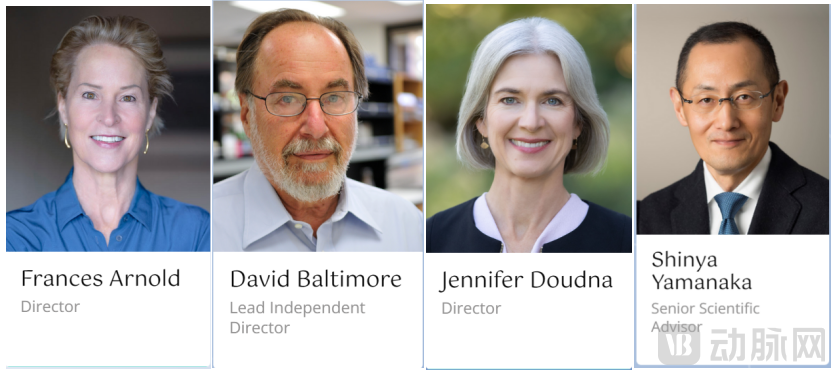
The fact that Altos Labs has gathered so many luminaries here suggests that its founders are certainly no ordinary individuals. A closer look at the foundersHal BarronThrough his experiences, we can see that he is associated with many “labels.”
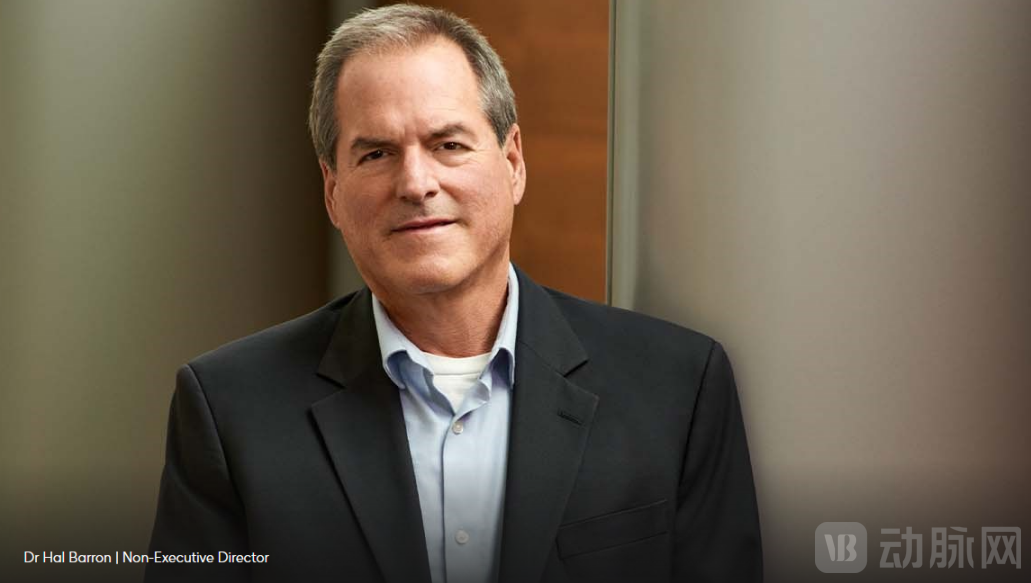
First, Hal Barron is an outstandingResearcher, holding a Bachelor of Science in Physics from Washington University in St. Louis and a Doctor of Medicine degree from Yale University. He has been granted multiple patents for his work on thrombosis and angiogenesis, published more than 90 papers in peer-reviewed scientific journals, and enjoys a prominent academic standing.
However, Hal Barron has not confined himself to the role of a researcher; he remains passionate about entrepreneurship. Thus, Hal Barron is also an outstandingEntrepreneurHe previously served as Executive Vice President, Head of Global Product Development, and Chief Medical Officer at Roche, overseeing all products within the combined portfolio of Roche and Genentech. He has also served as President of R&D at several prominent healthcare companies.
Therefore, composite talents like Hal Barron, who possess both technical expertise and market acumen, have naturally become the leaders of Altos Labs. Relying on a robust team of scientists and keen market insights, Altos Labs has become the focus of the world.Former World's Richest Person and Amazon Founder Jeff BezosAs the world’s top billionaires have opened their wallets, Altos Labs has secured its inaugural angel round of financing.$3 billion, becoming a legend among startups.
“Curing Aging Within 20 Years”
Altos Labs has been dedicated to developing longevity therapies capable of halting or reversing the human aging process,"Cellular Reprogramming Technology"This represents their primary technological pathway. The so-called “cellular reprogramming technology” involves introducing proteins into cells to rejuvenate mature cells, thereby achieving the effects of delaying aging and extending lifespan.
And the one who proposed this technology is the current scientific advisor of Altos Labs,Shinya Yamanaka。
In 2006, Japanese scientist Shinya Yamanaka first introduced the “Yamanaka factors” into somatic cells through experiments on mice, reprogramming them to obtain a cell type similar to embryonic stem cells. Based on this groundbreaking research, Shinya Yamanaka, then a professor at Kyoto University, and British scientist John Gurdon jointly received the Nobel Prize in Physiology or Medicine that year.
The addition of “technology pioneers” has also given Altos Labs the confidence to proclaim“Curing Aging Within 20 Years”Declaration.
Now, Altos Labs is continuing to innovate based on Shinya Yamanaka’s research. In just two years, Altos Labs has published papers in top-tier journals such as *Aging Cell*, *Nature Aging*, *eLife*, and *Cell Reports*.4 articlesSeminal papers on reprogramming and aging have reignited the scientific community’s interest in “anti-aging” research.
Notably, the “anti-aging” research being pursued by Altos Labs is not merely about superficial improvements such as wrinkle reduction or the absence of gray hair, but ratherReversing Aging Markers in OrgansBased on the publicly available research findings from Altos Labs, reprogramming technology has demonstrated broad anti-aging effects in mouse models, reversing aging biomarkers across multiple organs. Furthermore, reprogramming interventions in the liver can counteract liver failure and enhance hepatic regenerative capacity.
Currently, in addition to its existing laboratories in the San Francisco Bay Area and San Diego in the United States, as well as in Cambridge, UK, Altos Labs has established research institutes and teams in Japan. Given the distinct research focuses across these three regions, Altos Labs integrates the findings to achieve a comprehensive understanding of cellular health and the programming principles underlying the development of transformative therapeutics.
Founder Hal Barron stated, “I believe that within twenty years, we will have tools capable not only of treating symptoms but also of predicting, preventing, and treating diseases and aging through cellular regeneration. Our ultimate goal is to discover new approaches to help everyone slow down or even reverse the processes that lead to disease.”
Some people like it, some oppose it?
Judging from Altos Labs’ future roadmap, this technology is indeed promising and exciting. Humanity’s pursuit of health and longevity has never ceased, and reprogramming technology has brought a glimmer of hope to the field of “anti-aging.” However, the emergence of new technologies inevitably invites criticism, with some still arguing that accelerating the development of reprogramming technology is inappropriate.
Following Shinya Yamanaka’s proposal of reprogramming technology, numerous scientists have followed in his footsteps to conduct related experiments. Researchers have discovered that this technique indeed restores aged mouse cells to their initial state and extends the lifespan of mice to varying degrees.However, due to the difficulty in precisely controlling reprogramming techniques, some mice also developed tumors.
Currently, reprogramming technology is a double-edged sword: on one hand, the promise of longevity and health is tempting people to try this technology; on the other hand, the risk of tumors caused by its immaturity is deterring many.
Meanwhile, “copycats” of Altos Labs have emerged in the industry. With excessive investment flooding into the field of biological reprogramming, concerns have arisen that reprogramming technology could become a tool for “profit-mongering.” Alejandro Ocampo, a professor at the University of Lausanne in Switzerland, stated bluntlyHype has emerged in this field., he worried that some investors were moving too aggressively. “I don’t know if we need five to eight biological reprogramming companies. How many relevant papers have been published so far? Roughly as many as the number of such companies.”
However, the development of any innovative technology is accompanied by both risks and hopes. Whether it is reprogramming technology or other emerging technologies, they can only be truly refined and proven through practice. Therefore, we look forward to more new technologies in the future that will provide humanity with greater choices for health.