Jiva.ai Files IPO Prospectus: Low-Code AI Platform Aims to Revolutionize Healthcare Development with 70% Cost Reduction

Jiva.ai
Low-Code AI Developer

Wealth Club
Venture Capital Brokerage Provider
AI+Healthcare refers to the application of AI technologies and big data services in the healthcare industry through infrastructure development and data collection, aiming to improve diagnostic efficiency and service quality, and better address challenges such as shortages of medical resources and population aging.
According to data released by IDC (International Data Corporation), the global artificial intelligence application market is projected to reach $127 billion in 2025, with the global AI healthcare sector in a period of rapid growth, accounting for one-fifth of the AI market. The development trends in AI healthcare are highly promising.
In practice, leveraging AI technologies to address specific real-world medical needs presents significant technical challenges and is often far from easy to achieve.
As is well known, the development of AI products is inherently a high-tech, capital-intensive, and time-consuming endeavor. In the medically rigorous domain, this process faces even greater complexities. Due to the knowledge barrier between IT developers and medical professionals, discrepancies in evaluation methodologies arise, leading to unresolved questions such as who should take the lead and who should set the standards. Furthermore, there is a severe shortage of interdisciplinary talent proficient in both medicine and AI. These constitute the current challenges and difficulties facing the integration of AI in healthcare.
In response, Jiva.ai (hereinafter referred to as “Jiva”) offers a low-code/no-code alternative for developing AI products, designed to empower healthcare professionals and other users with little or no programming background to build their own AI solutions.
Jiva.ai was founded in 2019 and is headquartered in London, United Kingdom. It was co-founded and is led by Dr. Manish Patel (CEO), Dr. Chetan Kaher (CIO), and Dr. Sarah D’Souza (COO). The three co-founders met at university and share a common interest in developing solutions for critical challenges and pain points in healthcare.
Manish holds a Ph.D. in Mathematical Modelling from Birkbeck, University of London, and is adept at handling large, complex datasets. As Jiva’s Technical Architect, he is responsible for building the machine learning algorithm framework for its next-generation AI. Chetan holds a Doctor of Dental Surgery (DDS) degree and a Bachelor of Science in Immunology and Oncology, and is responsible for promoting the application of Jiva within healthcare systems. Sarah is a professional with a legal background and extensive experience in bank management, overseeing Jiva’s project management, operations, as well as legal and data security matters.

“We are witnessing the global trend of AI. In the near future, AI and machine learning will permeate every aspect of our lives, from mobile gaming to education and healthcare. AI will serve our society much like the internet did when it emerged more than 30 years ago,” mentioned Dr. Manish in an interview.
To this end, Jiva has developed a low-code, multimodal AI platform for the effortless creation, evaluation, and deployment of AI solutions. It is designed to enable users without coding experience, such as healthcare professionals, to build their own AI products using any type of data. This low-code platform does not rely on programming knowledge; instead, it guides users through visual interfaces, such as drag-and-drop functionality.
Jiva provides a detailed overview of the advantages of developing AI through low-code platforms. According to data from the technology consulting firm TechRepublic, teams of any size can boost productivity tenfold while reducing resource consumption by 70% through low-code platforms, thereby saving significant development costs.
The low-code plus AI approach better demonstrates this benefit, as shown in the data provided by Jiva below: for the same project, the total development cost using Jiva is $330,000, compared to $890,000 for in-house development by small and medium-sized enterprises, and $2.355 million for in-house development by large multinational corporations.
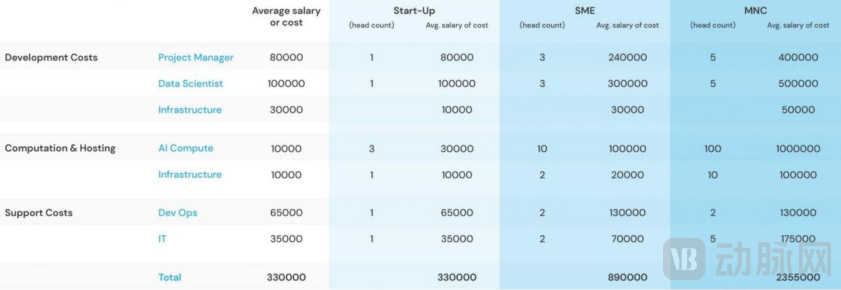
Cost Comparison Chart: Jiva Development vs. In-House Enterprise Development Source: Company Official Website
The Jiva platform leverages advanced AI and machine learning technologies to analyze and process large volumes of data, supporting the creation of “explainable” AI products. This ensures that users can track and understand the operational mechanisms and predictive outcomes of both current single-modal AI products and future multi-modal AI solutions with integrated capabilities. In summary, the Jiva platform is characterized by high personalization, intelligence, support for multi-modal integration, explainability, and applicability across multiple domains.
Jiva’s goal for the next five years is to build a more accessible low-code AI platform, much like how Microsoft transformed document processing with Office. In the future, users will only need to describe their desired AI products in natural language, and the platform will proactively guide them through the creation process, truly liberating AI product development.
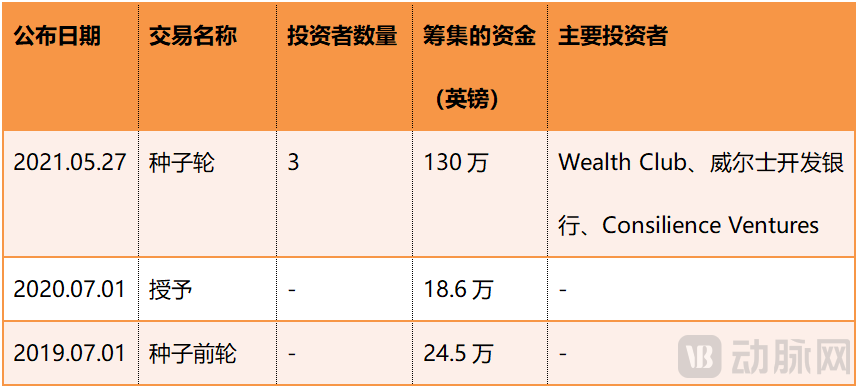
To date, Jiva has raised over £1.7 million through financing and grants. Its most recent funding round occurred in May 2021, when Jiva announced a £1.3 million seed investment to support the research and development of its prostate diagnostic tools and the expansion of its multimodal AI platform. In February 2023, Jiva was recognized by the UK Department for Business and Trade as one of the Life Sciences Innovators in the “Digital Solutions” category for 2023.
Jiva aims to enable healthcare professionals without AI expertise to rapidly analyze complex medical data. Leveraging the founder’s background in oncology, Jiva initially entered the market through the healthcare sector, intending to validate its concept of improving patient treatment through AI-assisted diagnosis within this traditional field.
In 2019, Dr. Manish participated in the NHS Clinical Entrepreneur Programme, an initiative designed to provide entrepreneurial guidance to clinicians, NHS staff, and other healthcare professionals. More than four years later, the Jiva platform has been successfully implemented in numerous medical applications.
1) In 2019, Jiva developed an AI-led prostate cancer diagnostic tool (JivaRDX) to assist radiologists in identifying clinically significant tumors from MRI scans, achieving both sensitivity and specificity exceeding 90%. The tool is currently undergoing clinical trials with the aim of obtaining FDA and UKCA (UK Conformity Assessed) certification as soon as possible.
2) To alleviate the workload of emergency room physicians, Jiva, with funding from the Small Business Research Initiative (SBRI), partnered with Robert Gordon University in 2020 to develop an automated tool for the rapid and effective diagnosis of fractures.
3) In 2020, Jiva collaborated with the University of Manchester, Roche, and GE Healthcare on the ID-liver project funded by Innovate UK, achieving positive results in the early diagnosis of liver disease and liver cancer. Data showed that Jiva’s AI-based early diagnostic model achieved a 6% higher accuracy rate than current manual diagnosis.
Currently, Jiva is seeking to establish partnerships with medtech companies that have just completed their seed or Series A funding rounds, integrating AI into their products to achieve a win-win outcome. By providing easy-to-use AI tools for everyone, Jiva aspires to become the world’s first multimodal fusion AI platform, creating superior diagnostic and automation solutions for healthcare and other sectors.
Based on the current distribution of startups and products in China’s AI healthcare sector, “AI + Healthcare” is primarily concentrated in eight major application scenarios: disease risk prediction, medical imaging, assisted diagnosis and treatment, drug discovery, health management, hospital management, platforms for assisted medical research, and virtual assistants.
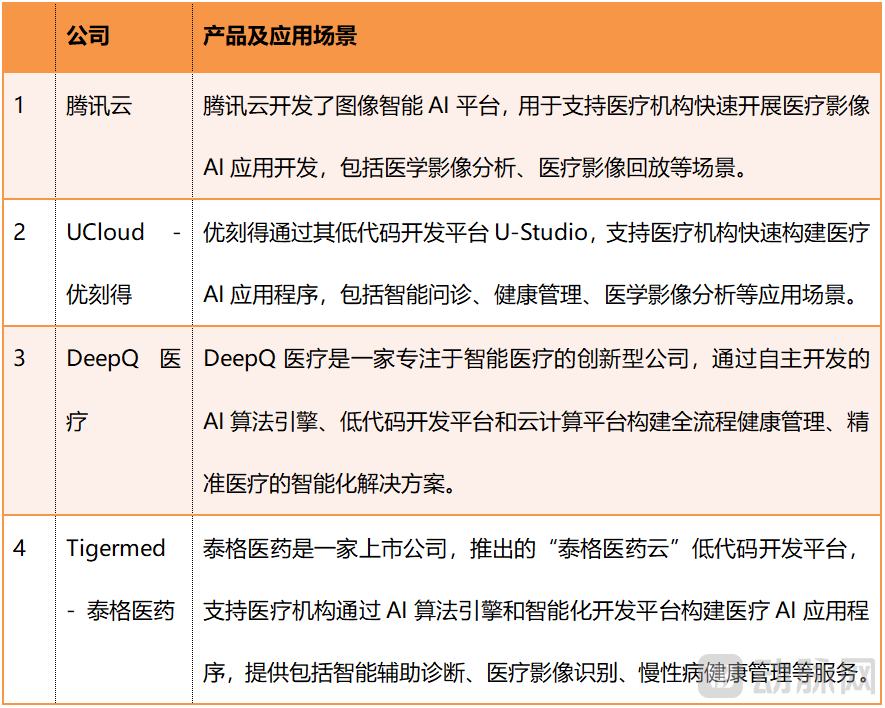
The widespread implementation of AI in healthcare still faces numerous challenges, such as difficulties in achieving profitability, insufficient structured medical data, and a shortage of interdisciplinary talent combining medical and AI expertise. To address these issues, several companies in China have adopted low-code platforms to facilitate the development of AI products and advance the growth of AI-driven healthcare, with some already launching relevant solutions.