

Glyconics Files Prospectus for Revolutionary Handheld Spectrometer Enabling Non-Invasive, Nail-Scanning Glucose Monitoring

Wealth Club
Venture Capital Brokerage Provider

Boundary Capital
Venture Capital Firm

Deepbridge Capital
Venture Capital Firm
You are certainly familiar with diabetes, but you may not have heard that blood glucose levels can be detected through nail scanning.
Diabetes is a global epidemic and a major challenge for public health. The number of deaths caused by diabetes each year exceeds the combined total of those from breast cancer and prostate cancer. The World Health Organization (WHO) projects that diabetes will become the seventh leading cause of death worldwide by 2030.
Although experts advocate for the early detection of diabetes, current diagnosis and monitoring primarily rely on blood sampling, which is complex and invasive. Non-invasive blood glucose monitoring has long been a major pain point in the industry.
Glyconics, a UK-based diagnostics company founded in 2013, aims to change this landscape. It has launched a handheld spectrometer for diabetes that enables instant blood glucose monitoring by scanning the fingernails.
Dr. Berwyn Clarke is the founder and Chairman of the Board of Glyconics, with over thirty years of extensive experience in the pharmaceutical and diagnostics industries. Dr. Clarke has held executive positions at companies such as Glaxo Wellcome (which merged with SmithKline Beecham in 2000 to form GlaxoSmithKline) and Bayer. He also serves as an Entrepreneur in Residence at Cardiff University and as a Non-Executive Director of NALIA Systems. In addition, Dr. Clarke founded the diagnostics company Lab21 and co-founded PBD Biotech, a company dedicated to diagnosing tuberculosis infections using novel technologies.

Founder Dr. Berwyn Clarke. Image source: Glyconics official website
Dr. Kam Pooni serves as the CEO of Glyconics. He is an executive with 20 years of successful leadership experience in the life sciences industry. Previously, Kam held executive positions at Astellas Europe, Thomson Reuters, and Eli Lilly. He also serves as a mentor for the Cambridge Judge Business School, Henley Business School at the University of Reading, and the Imperial Venture Mentoring Service (IVMS) at Imperial College London.

CEO Dr. Kam Pooni | Image source: Glyconics official website
Glyconics has also appointed Dr. Päivi Paldánius, an internationally renowned diabetes expert, as its first Chief Medical Officer. Dr. Paldánius is a recognized medical expert in the fields of diabetes, metabolism, and cardiovascular disease. She holds a Doctor of Medicine (MD) degree in Pediatric Endocrinology from the Children’s Hospital, University of Helsinki, and a Master of Medicine degree from the Karolinska Institutet. Her clinical research has influenced global practices and clinical guidelines in diabetes medicine.
Prior to joining Glyconics, Dr. Paldánius had more than two decades of experience in academia and the pharmaceutical industry, including over thirteen years at Novartis Pharmaceuticals’ Medical Department, where she held senior executive roles such as Global Executive Medical Director for Diabetes.

Dr. Päivi Maria Paldánius | Image source: Glyconics official website
In addition to the initial diagnosis of diabetes, subsequent treatment requires patients to frequently monitor their blood glucose levels. Healthcare professionals typically use venous blood for testing, while home monitoring primarily relies on finger-prick blood glucose meters. Although intelligent blood glucose monitoring technology is relatively mature and there is a wide variety of continuous glucose monitoring (CGM) products available, their high cost and invasive nature have limited their widespread adoption.
Therefore, convenient and non-invasive blood glucose testing has long remained a global challenge plaguing the medical community.
Research has found that infrared spectroscopy can be used for non-invasive blood glucose monitoring. Infrared spectroscopy is a type of molecular absorption spectrum and serves as a precise analytical method for identifying the components of organic compounds and biological samples, enabling both qualitative and quantitative detection of organic substances. Nails are composed of keratin, a protein that can bind with glucose. This glycated protein exhibits a linear relationship with blood glucose levels over time; therefore, glycated keratin can be used to monitor average glucose levels from the preceding weeks.
Early methods for detecting glycation of nail keratin were based on wet chemistry or mid-infrared (MIR) spectroscopy, requiring nails to be clipped, ground, and mixed with reagents prior to analysis. However, due to the poor permeability of nails to reagents, sample preparation was time-consuming. Although this approach is minimally invasive, it requires professional personnel for sample preparation, thus limiting its use to hospitals and laboratories and making it unsuitable for home blood glucose monitoring.
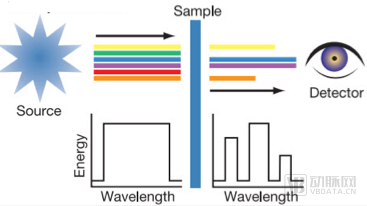
Infrared Spectroscopy. Image source: Glyconics official website
The handheld device developed by Glyconics employs Fourier Transform Infrared Spectroscopy (FTIR) technology to monitor blood glucose levels by analyzing the amount of glycated keratin in human fingernails. This process requires no sample preparation, nor does it need blood, reagents, or disposable plastic consumables. The instrument can directly identify spectral waves in the nails and deliver blood glucose test results within seconds. Glyconics claims that this is the world’s first handheld spectrometer for point-of-care testing and marks the first miniaturization of infrared spectrometers for diagnostic use.
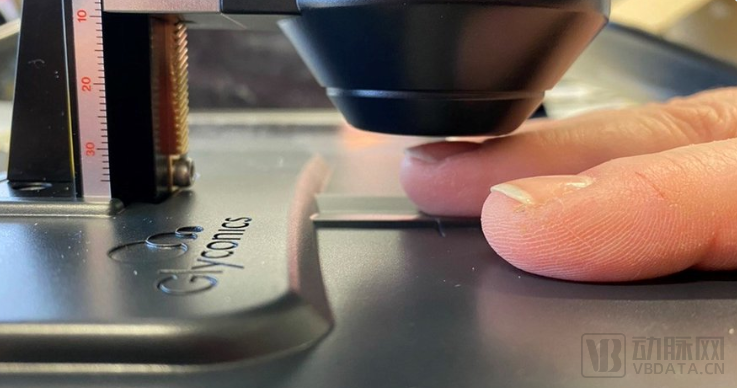
Glyconics-SX Appearance | Image Source: Glyconics’ Twitter Account
Infrared spectroscopy has also been proven effective in diagnosing chronic obstructive pulmonary disease (COPD), although its prior use outside clinical settings was limited by the bulky size of the equipment. Glyconics has partnered with Spectrolytic, a developer of infrared spectrometers, to create compact infrared spectroscopy devices capable of providing early warnings for acute COPD exacerbations.
Following an audit by BSI (British Standards Institution), Glyconics’ quality management system has been certified to ISO 13485:2016. ISO 13485 is a standard specifically developed for medical devices, regulating their design, development, production, installation, and servicing. The United States, Canada, and Europe commonly adopt ISO 13485, ISO 9001, or EN 46001 as requirements for quality assurance systems for medical devices. The scope of Glyconics’ certification covers the design and development of medical devices used for the diagnosis and monitoring of chronic obstructive pulmonary disease (COPD) and for diabetes screening.
However, Glyconics was not content to rest on its laurels and turned its attention to the field of novel coronavirus detection. In 2022, Glyconics collaborated with Lancaster University and University Hospitals of Morecambe Bay to jointly develop point-of-care testing devices for the novel coronavirus (COVID-19).
Since its establishment in 2013, Glyconics has successfully completed four rounds of financing, raising a total of £1.7 million.
In 2021, Glyconics raised £850,000 in its Series A financing round, led by the investment platform Wealth Club and existing investors Deepbridge Capital and Boundary Capital. Contributions from private and angel investors via Wealth Club further increased the total amount to £1.5 million. This funding helped Glyconics conduct large-scale trials for its instant diabetes screening tool, Glyconics-SX, prior to applying for CE marking.
The trial was scheduled to run from July to November 2022, evaluating the safety and accuracy of infrared spectroscopy in two independent studies, ANODE01 and ANODE02, conducted in Leicester and Barcelona, respectively. According to Glyconics, each study enrolled 100 participants with or without type 2 diabetes. The Glyconics glucose meter assessed their diabetes risk and status by performing a total of 12,000 infrared spectroscopic scans on the middle fingers of both hands of each subject.
Currently, these two independent clinical studies have been completed. The results of the ANODE01 and ANODE02 diabetes programs will be officially announced at the 2023 American Diabetes Association (ADA) Annual Scientific Sessions in June. Glyconics stated that the third large-scale clinical study, ANODE03, is scheduled to take place later in 2023.
Furthermore, Glyconics has received the European Union Seal of Excellence Certificate, been named by Sifted—an innovation platform backed by the Financial Times—as one of the “80 Outstanding European Startup Pioneers Driving Seismic Change in the Post-Pandemic World,” and was honored as the 2023 UK Life Sciences Innovator.
In the past, diabetes was considered a “disease of affluence” exclusive to Western countries. However, according to projections by WHO experts, three-quarters of all diabetes patients will be concentrated in developing countries by 2025. Glyconics is clearly unwilling to forgo this enormous market opportunity, with Africa serving as a typical example.
At a press conference held on World Diabetes Day, the WHO African Region stated that the proportion of premature deaths (defined as death before age 70) due to diabetes in the African region is 58%, higher than the global average of 48%. In the African region, limited public awareness of diabetes, coupled with a shortage of specialized testing equipment and healthcare professionals, hinders early diagnosis for patients. Current diagnostic tests are prohibitively expensive, and patients may need one to two days to reach a clinic. There is a lack of low-cost point-of-care testing options in both rural and urban areas.
At the end of 2020, Glyconics received a grant of £85,000 from the Global Challenges Research Fund (GCRF) to explore the feasibility of implementing point-of-care diagnostic platforms for diabetes screening in developing countries. The six-month project was conducted in collaboration with the African Diabetes Association and the Catholic University of Bukavu, starting in the Democratic Republic of the Congo, which has the fifth-highest diabetes prevalence rate in Africa.
Greg Tracz, CEO of the Diabetes Africa Association, stated, “Innovation requires information. It is crucial to ensure that the design of new devices with the potential to reduce the cost of diabetes care aligns with local needs and helps individuals address their daily challenges.”
Glyconics is also actively seeking partners in China, aiming to establish cross-border business relationships with Chinese enterprises to address localization needs. In September 2021, Glyconics connected with MicroPort Scientific Corporation through the National Technology Transfer Eastern Center. “Currently, we are following up and evaluating Glyconics, expecting its equipment to achieve higher levels of detection efficiency and accuracy, thereby striking a balance between speed and precision,” said Zhang Lihong, Vice President of the Intellectual Property and Legal Department at MicroPort Scientific Corporation, in a public statement.