

Da Vinci Surgical Robots Surge into Tier-3/4 Cities as Market Competition Heats Up in China's Lower-Tier Medical Sector

Intuitive Fosun
Medical Device Developer
Laparoscopic surgical robots priced in the tens of millions are increasingly being adopted by tertiary hospitals in third- and fourth-tier cities.
VCBeat (WeChat ID: vcbeat) recently observed that multiple prefecture-level cities across China have announced the introduction of laparoscopic surgical robots. Hospitals in prefecture-level cities, including Chongqing Dazu, Shaanxi Baoji, Hubei Huanggang, Jiangxi Ganzhou, Sichuan Nanchong, Jiangxi Pingxiang, Sichuan Panzhihua, Shaanxi Xianyang, Gansu Wuwei, Hebei Cangzhou, and Hebei Qinhuangdao, have all introduced surgical robots for the first time in the recent period. Moreover, the majority of these hospitals have adopted the da Vinci Surgical System.
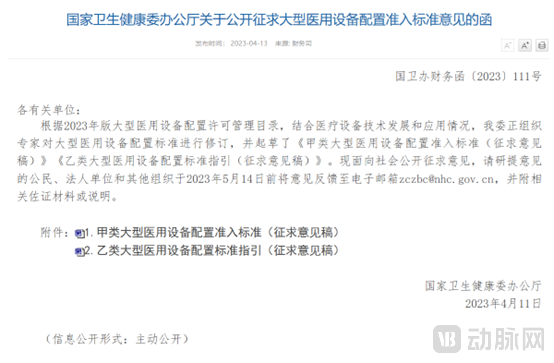
Meanwhile, on April 13, the National Health Commission released a draft for public comment on the new standards for the allocation of large-scale medical equipment. The requirement for hospitals to configure laparoscopic surgical robots has been relaxed from being provincial-level leading institutions to those with relatively strong comprehensive surgical capabilities, significantly lowering the threshold for configuration.
Driven by the dual tailwinds of gradually releasing demand and policy liberalization, laparoscopic surgical robots may witness a wave of procurement. Market share in lower-tier cities will become the key battleground for competition among laparoscopic surgical robot manufacturers.
In terms of volume, the potential of lower-tier markets is no less than that of top-tier Grade 3A hospitals in first-tier cities. Third- and fourth-tier cities boast a substantial number of hospitals and extensive catchment areas. By the end of 2019, out of China’s 23,735 hospitals, 4,400 were capable of performing minimally invasive surgeries, including 1,400 Grade 3A hospitals; prefecture-level cities also have their share of Grade 3A hospitals. However, the more than 300 da Vinci surgical robots currently installed in China are primarily concentrated in provincial-level hospitals, leaving vast unmet demand in lower-tier markets.
As the market structure of laparoscopic surgical robots evolves, so too does its competitive landscape. Whereas Intuitive Surgical’s da Vinci system once stood alone, three domestic manufacturers—MicroPort MedBot, Edge Medical, and Sizherui Medical—have now received regulatory approval for their products. The vast tiered markets in lower-tier regions can accommodate multiple players, offering Chinese domestic companies a promising opportunity to break through and gain significant market share.
What Factors Are Driving the Growth of the Laparoscopic Surgical Robot Market in Third- and Fourth-Tier Cities? What Are the Characteristics of This Niche Segment? VCBeat Conducted Interviews and Analysis.
Why Have Tier-3 and Tier-4 Cities in China Begun to Intensively Adopt Laparoscopic Surgical Robots in Recent Years?
First, driven by the implementation of the 14th Five-Year Plan for the Allocation of Large-Scale Medical Equipment, various regions are witnessing a new wave of equipment procurement.
The allocation of large-scale medical equipment requires applying for a license from the National Health Commission, and laparoscopic surgical robot systems are classified as Class B large-scale medical equipment. The allocation and management of Class B large-scale medical equipment are the responsibility of provincial-level health commissions. In the past, when configuration licenses were limited, only large tertiary Grade A hospitals with strong specialized capabilities and teaching responsibilities could obtain these licenses.
Following the Two Sessions, the 14th Five-Year Plan for the Allocation of Large-Scale Medical Equipment has been progressively implemented, with new quotas being rolled out and a fresh wave of large-scale equipment procurement initiatives launched across various regions.
Taking Chongqing as an example, two prefecture-level city hospitals in Chongqing—Dazu and Wanzhou—have currently installed surgical robots. According to industry insiders, Chongqing has planned for the installation of more than 40 surgical robots under the 14th Five-Year Plan for large medical equipment; therefore, prefecture-level city hospitals with sufficient strength also have the opportunity to install surgical robots.
Beyond the impact of licensing policies, the deployment of laparoscopic surgical robots in lower-tier markets relies heavily on the leadership of department heads and key experts. Prefecture-level city hospitals that have installed such systems typically possess core competitive specialties or renowned specialists.
At its core, the fundamental reason for hospitals in third- and fourth-tier cities to install surgical robots lies in the ongoing healthcare reforms that continue to drive the decentralization of medical resources.. The deployment of laparoscopic surgical robots in third- and fourth-tier cities also reflects the downward distribution of high-quality medical resources.
Ruilong Nuofu, which focuses on developing and expanding multi-specialty surgical robots, was cited by its founder, Dr. Ma Changzheng, who told VCBeat: “The 2023 Government Work Report explicitly proposed promoting the expansion and downward distribution of high-quality medical resources, as well as their balanced regional allocation. Under this healthcare reform guideline, more Level 3 and Level 4 surgeries will be performed at lower-tier hospitals, driving the adoption of new technologies and advanced equipment in these settings.”
The National Health Commission has released a document soliciting public comments on the access standards for the allocation of large-scale medical equipment, which relaxes requirements in areas such as hospital capabilities for configuring laparoscopic surgical robots, years of experience in performing laparoscopic surgeries, clinical application criteria, and physician qualifications.
In terms of changes, the requirement for clinical application of laparoscopic surgical robots has been removed. There is no longer an emphasis on their use in delicate surgeries involving the urinary system, thoracic cavity, heart, abdomen, or pelvis.
Regarding hospitals’ overall strength, the previous requirement was that “specialties such as urology, thoracic surgery, cardiac surgery, general surgery, or gynecology must demonstrate strong comprehensive capabilities and hold a leading position within the province. The relevant specialties must have performed laparoscopic surgeries for more than five years, with laparoscopic procedures accounting for more than one-third of total surgical volume.” This has been revised to: “Hospitals with strong overall surgical capabilities may be equipped if their relevant specialties have performed laparoscopic surgeries for no less than three years, with laparoscopic procedures accounting for more than one-third of total surgical volume.”
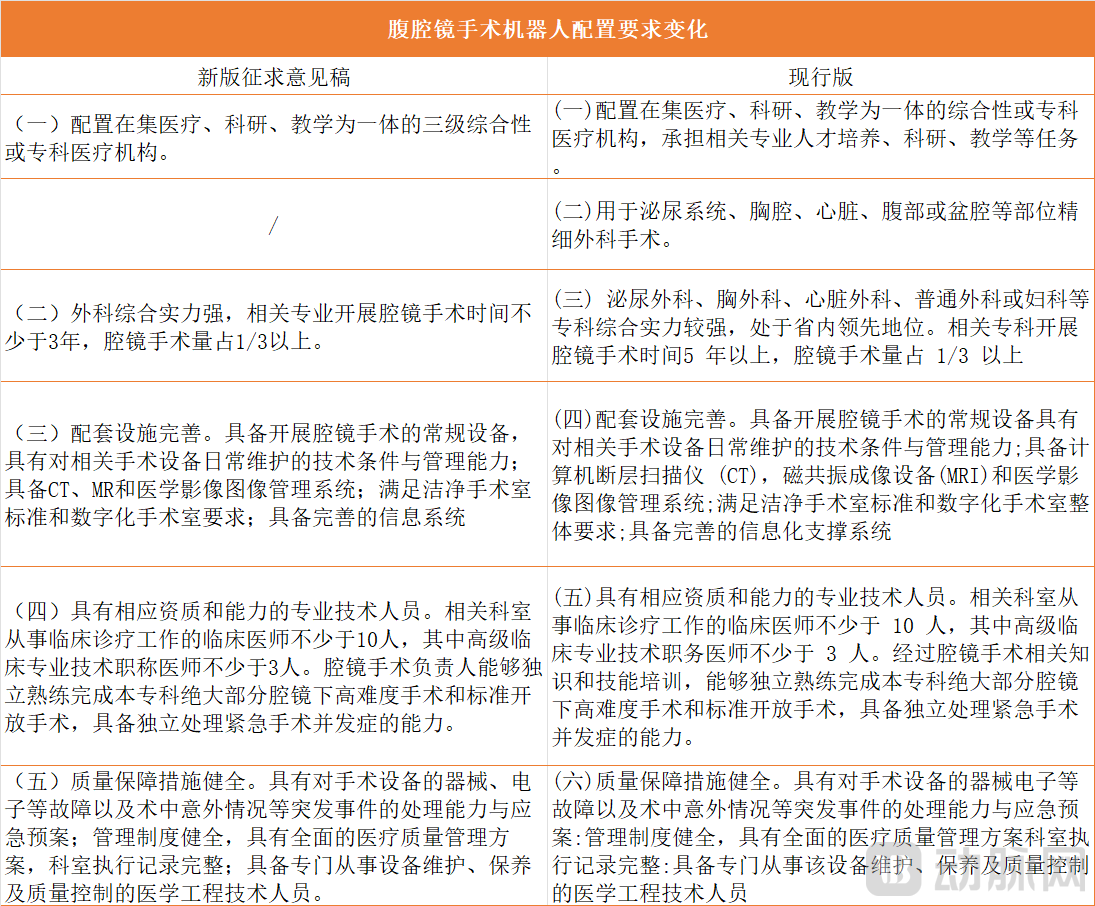
Changes in Access Standards for the Configuration of Laparoscopic Surgical Robots
From the perspective of adjustments to equipment allocation permits, tertiary hospitals in third- and fourth-tier cities basically meet the configuration requirements, and the market penetration of surgical robots into lower-tier markets will accelerate expansion.
The growth of laparoscopic surgical robots in lower-tier markets has been influenced by the wave of equipment procurement driven by the implementation of China’s 14th Five-Year Plan. In the long run, more than two-thirds of the Da Vinci Surgical System’s revenue comes from consumables. Can tier-3 and tier-4 cities generate sufficient surgical volume to maintain a viable utilization rate for laparoscopic surgical robots?
From the perspective of market size, surgical volume in lower-tier markets is growing rapidly.Previously, minimally invasive surgeries in China were highly concentrated in the market of tertiary hospitals. Over 60% of laparoscopic procedures were performed in these institutions, with the top 200 hospitals nationwide accounting for more than 70% of the national market usage of surgical staplers and ultrasonic scalpels in minimally invasive procedures.
In recent years, laparoscopic surgery has seen significant penetration into lower-tier markets.According to IQVIA data, surgical volume in lower-tier markets (cities at the third tier and below) is growing rapidly. In 2022, less complex procedures—such as lithotripsy for urinary stones, cholecystectomy, and appendectomy—accounted for approximately 60% of surgical volume in these lower-tier markets. This share is projected to expand further over the next five years.
The continuously growing surgical volume has provided a certain foundation for the expansion of laparoscopic surgical robots.Taking Chongqing University Three Gorges Hospital in Wanzhou, Chongqing, as an example, this prefecture-level city hospital installed the da Vinci Surgical System in June 2019. As of February 2023, it had completed 1,213 da Vinci robotic surgeries. It is foreseeable that capable hospitals in lower-tier markets will not leave their purchased laparoscopic surgical robots idle.
Will the affordability of patients in lower-tier markets become a factor limiting the utilization rate of laparoscopic surgical robots?
VCBeat has learned that pricing standards for laparoscopic robotic surgery vary across regions. Some areas, such as Guangdong, Zhejiang, Shanghai, and Beijing, charge by disease type, while other provinces and cities bill based on the actual consumables used.
Overall, the additional surgical costs borne by patients undergoing procedures with the da Vinci Surgical System currently amount to approximately RMB 20,000–30,000. Against the backdrop of rising consumption power in third- and fourth-tier cities, the decentralization of laparoscopic surgical robots is expected to enable more patients to receive diagnosis and treatment locally, thereby improving access to high-quality medical resources.
For a long period, the only approved product in China’s surgical robot market was the da Vinci Surgical System, with its primary market presence concentrated in provincial-level hospitals in first-tier cities, resulting in a relatively homogeneous market structure and limited participant diversity.
As the lower-tier market continues to grow, broader and multi-dimensional markets are exhibiting differentiated demands. What kind of laparoscopic surgical robot solutions are needed for the lower-tier market?
Tier-3 and tier-4 lower-tier markets are often perceived as price-sensitive. However, when it comes to surgical robot products involving high risks and technical complexity, hospitals in tier-3 and tier-4 cities, just like provincial-level hospitals,Product safety, stability, and operational experience remain the core factors in hospital purchasing decisions.
Based on currently available public information, hospitals in third- and fourth-tier cities that have installed laparoscopic surgical robots primarily procure imported brands. Domestic brands are also beginning to establish sales in these lower-tier markets.
However, unlike tertiary hospitals in first-tier cities, hospitals in lower-tier markets have differentiated needs.
“Surgical robots entering the lower-tier markets require R&D and design considerations regarding their adaptability to the current conditions of operating rooms in grassroots hospitals in China.” Dr. Mao Ying, CTO of Ruilong Nuofu, with over a decade of practical experience in the R&D and design of surgical robots, stated, “Most hospital operating rooms in China are only around 30 square meters, featuring limited space. From the perspective of the surgeon’s learning curve, products for the lower-tier markets need to sustain and enhance surgeons’ operative experience, enabling flexible performance of various surgical procedures and promoting balanced development across multiple clinical departments. For hospitals in these lower-tier markets, controlling initial investment and per-procedure costs when procuring laparoscopic surgical robots must also be taken into account. Furthermore, there is a higher demand for stable, reliable maintenance and support services in these markets.”
Currently, both domestic and international players have developed corresponding promotional strategies targeting the markets in third- and fourth-tier cities.
To address the educational challenges in lower-tier markets, Intuitive Fosun has launched a mobile demonstration system and initiated the "Surgical Robot China Tour" series. This initiative brings laparoscopic surgical robots from operating rooms in first-tier city hospitals to medical professionals in prefecture-level cities across China, allowing them to directly experience the value of these systems. As most physicians in lower-tier markets lack opportunities to interact with surgical robots, this mobile platform enables broader access, thereby enhancing market awareness.
Powered by the da Vinci surgical system, Intuitive Fosun’s “test drive” campaign has reached 54 cities, covering numerous prefecture-level city hospitals across China.
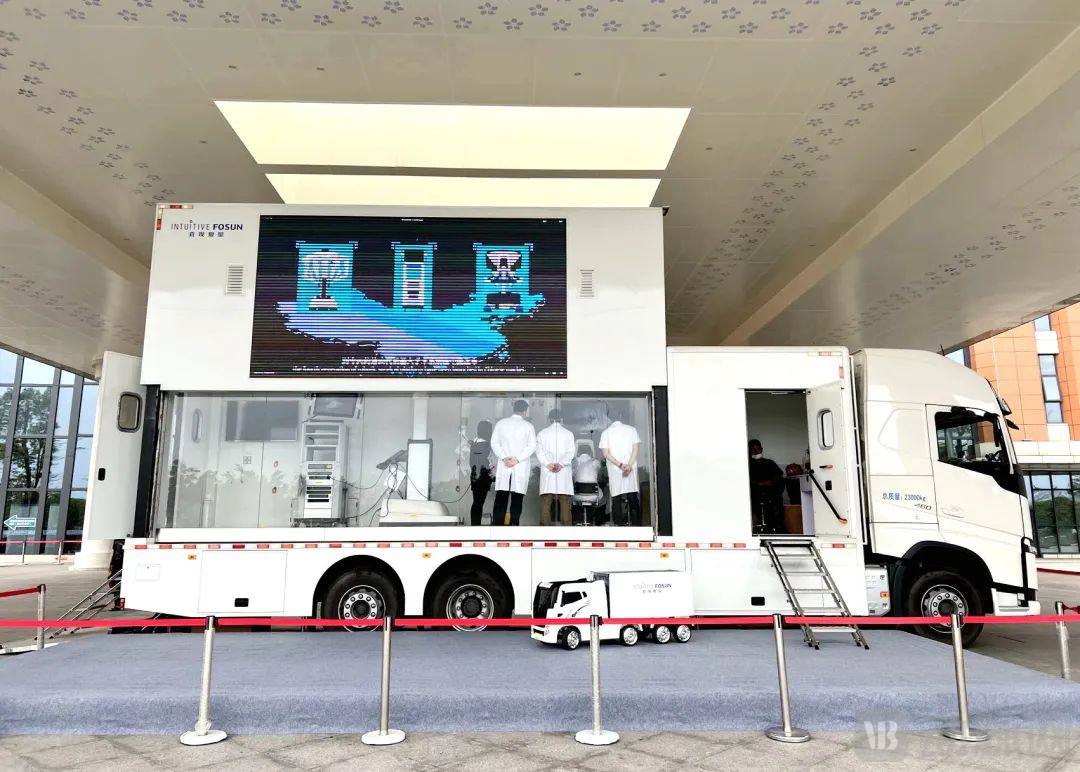
Intuitive Fosun Da Vinci Surgical Robot “Test Drive” Vehicle
Domestically produced laparoscopic surgical robots from three companies—MicroPort MedBot, Jingfeng Medical, and Sizhe Rui—have also received regulatory approval. For the tier-three and tier-four lower-tier markets, domestic enterprises have developed their own strategies.
MicroPort’s Toumai laparoscopic surgical robot secured five successful bids in 2022, with the first commercialized Toumai surgical robot from MicroPort Robotics installed at Wuwei Tumor Hospital in Gansu Province.
From a commercialization strategy perspective, MicroPort MedBot has enhanced market trust and driven sales in lower-tier markets by collaborating with major tertiary hospitals to undergo extensive clinical validation. The Toumai laparoscopic surgical robot from MicroPort MedBot has established more than 40 clinical application and training centers across China.
Jingfeng Medical has also launched a mobile exhibition system for laparoscopic surgical robots, aiming to cover more than 1,000 hospitals across China and train over 10,000 robotic surgery surgeons.
Among companies that have not yet achieved commercialization, some are pursuing differentiated strategies by fully considering the demands of lower-tier markets from the initial product design stage, thereby developing laparoscopic surgical robots with designs distinct from the integrated architecture of the da Vinci Surgical System.
Represented by Raynoo, its Hai Shan Yi laparoscopic surgical robotTMFeaturing China’s first modular design, the single-arm surgical cart is positioned beside the operating table, occupying a smaller footprint and enabling more efficient use of space, thereby providing surgeons and assistants with greater flexibility and ample room. The modular cart can also be easily moved between different operating rooms, better adapting to the existing operating room environments in Chinese tertiary hospitals.
As configuration license policies continue to be relaxed, the lower-tier market remains a blue ocean characterized by low penetration rates and high demand. Currently, market confidence in domestically produced surgical robots is still on the rise; these systems must continually enhance their safety, stability, and reliability to earn market acceptance.
With further advancements in the core technologies of surgical robots, the manufacturing and procurement costs are expected to decline, enabling their adoption to expand to primary care hospitals. In the future, as remote technology continues to evolve, specialists in first-tier cities may be able to perform surgeries remotely.