

Flex Ltd. Files IPO Prospectus Highlighting 13 Years of Medical Device CDMO Leadership Across 30 Countries

Flex
Electronics Product Manufacturer
“The greatest improvement in the productive powers of labor, and the greater part of the skill, dexterity, and judgment with which it is anywhere directed, or applied, seem to have been the effects of the division of labor.”
This is the opening sentence of The Wealth of Nations by Adam Smith, the father of economics, which underscores the economic efficiency brought to the world by the division of labor. This principle is equally reflected in the medical device CDMO industry.
Amid the global surge in innovative R&D, industry competition has become increasingly fierce. Medical device companies often face mounting challenges, including rising raw material costs, inflation, supply chain management, and safety concerns. How to reduce costs, improve efficiency, and accelerate product commercialization has become a growing priority for medical device companies.
By accepting commissions through contractual agreements, CDMO companies, as service providers, leverage their technical advantages and manufacturing capabilities to help medical device companies reduce resource investment and accelerate progress in product R&D and design, regulatory registration and filing, and manufacturing.
Compared with CROs and OEMs, CDMOs emphasize “Development” and “Manufacture,” highlighting the deep integration of high-barrier process development capabilities with large-scale manufacturing capacity. The device CDMO model, characterized by its specialized, platform-based, and integrated business approach, has reached a relatively mature stage in developed countries such as those in Europe and the United States. CDMOs have become an indispensable part of the medical device industry and value chains, with several leading companies already capturing significant market share.
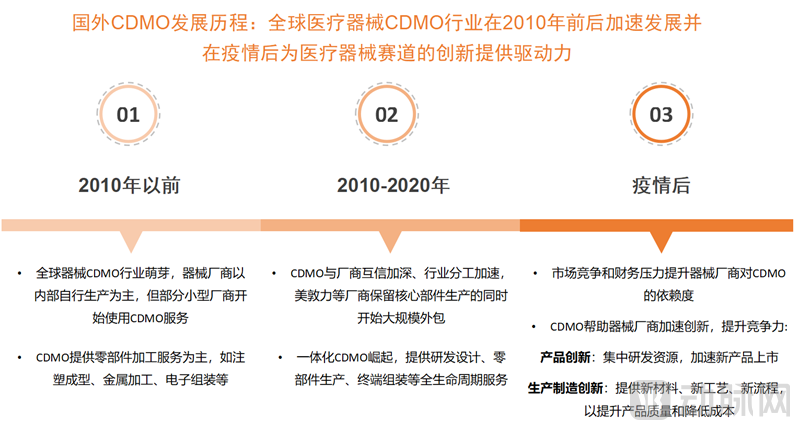
Global Development of Medical Device CDMOs
Source: BCG; Chart by VCBeat
In contrast to the “flourishing diversity” seen abroad, although domestic medical device CDMO players started later, they have experienced rapid development in recent years. However, according to a report released by Zhongyan Puhua Industry Research Institute, the proportion of medical device companies in developed countries that outsource to CDMOs reaches 70%, whereas in China this figure stands at only 1%.
With the introduction of China’s Medical Device Registrant System in 2019, domestic medical device CDMO companies, which started relatively late, are facing numerous challenges despite favorable policy support. The main challenges are as follows:
· The service sector is limited to a single domain. With small-batch medical device manufacturing, relying solely on medical device CDMO services makes it difficult to maintain profitability and competitiveness;
· Lack of mid-to-high-end technologies. The high technical barriers in medical devices, coupled with the absence of mid-to-high-end technologies, prevent companies from establishing a virtuous cycle of development;
· Insufficient supply chain incubation and inadequate specialization. This hinders companies from leveraging their core competencies, leaving them constrained by rigid processes;
· Insufficient intellectual property protection. This has caused a large number of medical device companies to remain on the sidelines, making collaboration difficult to achieve.
The world is currently experiencing a wave of accelerated development in integrated CDMO services, and solutions to these challenges have already been established in the more mature overseas medical device CDMO markets. The successful strategic transformation of Flex Ltd., a veteran OEM giant, into a CDMO may offer valuable insights.
Flex once faced two paths: one was to double down on contract manufacturing, akin to Foxconn’s tight integration with Apple by continuously expanding production capacity for the client; the other was to pursue a strategic transformation into a CDMO (Contract Development and Manufacturing Organization), a route characterized by high industry barriers, significant operational complexities, and stringent management safety requirements.
Flex is a global manufacturing enterprise operating across multiple industries. Founded in Silicon Valley, United States, in 1969, the company was renamed and reincorporated in Singapore in 1990 under the stock ticker FLEX, and went public the following year. Currently, its corporate headquarters is located in Singapore, while its executive headquarters is in the United States.
With over 50 years of deep expertise in the manufacturing industry, Flex operates in more than 30 countries, boasting over 130 manufacturing sites, innovation centers, and industrial parks. However, having started out as an electronics manufacturing services (EMS) provider in Silicon Valley, Flex has not chosen to go “all in” on a single path; instead, it pursues a “win-win” strategy that fosters diverse and flourishing growth.
Flex has established its business presence across 12 major industries, including healthcare, automotive, industrial, lifestyle, communications, enterprise computing, cloud services, and consumer goods. In particular, the medical device sector, which is closely tied to life and health, exhibits strong inelastic demand. As a result, the industry shows no pronounced cyclical characteristics, and economic downturns have limited impact on it.
Currently, Flex operates its business across twelve major industries globally through three segments: FAS (Flex Agility Solutions), FRS (Flex Reliability Solutions), and Nextracker.
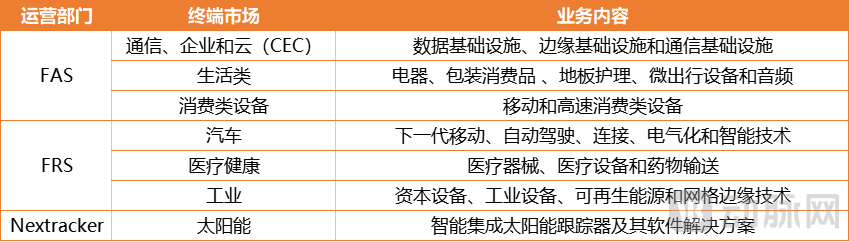
Flex Operations Department
VCBeat Compilation
Flex’s medical business unit was established in 2010, initially operating under an OEM model. Its contract manufacturing clients have included well-known companies such as Johnson & Johnson, Abbott, Smith & Nephew, Medtronic, and Insulet.
However, OEMs do not possess the core technologies of their products and lack bargaining power, often relying on compressing procurement costs and enhancing operational capabilities to improve profit margins. Even in the medical sector, OEM profits are becoming increasingly thin due to objective factors such as rising costs and tightening policies. Transitioning to a CDMO model has become an inevitable path for OEMs to cope with the rapid growth and intensifying competition in the healthcare industry.
As early as 2010, Flex began its gradual transition toward a CDMO model, particularly in the medical device industry, where the supply chain offers high value-added. According to Flex’s 2022 financial report, the company’s total revenue exceeded $26 billion, with its Flex Reliability Solutions (FRS) business unit—focused on the healthcare sector—generating over $10.6 billion, accounting for 40.7% of the total.
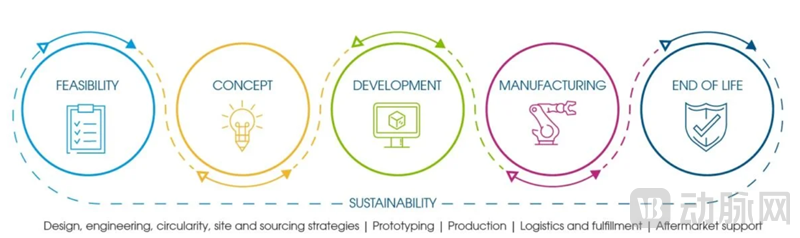
Flex Service Process
Image source: Flex official website
So, how did Flex achieve a strategic breakthrough in its transformation into a CDMO?
As a service industry, the primary entry point for converting commercial value is always the customer; customer demand is the fundamental driving force behind corporate development. The core value of medical device CDMOs lies in helping customers enhance R&D efficiency and reduce R&D costs. Flex has gradually emerged as a major player in the medical device CDMO sector from its OEM contract manufacturing roots, primarily through the following four strategies.
The COVID-19 pandemic has unleashed a “storm” upon the global medical device supply chain, laying bare its fragility more thoroughly than ever. This followed earlier disruptions such as the blockage of the Suez Canal by a cargo ship and the sudden shutdowns of the Ports of Los Angeles and Long Beach, the largest container ports in the United States. Shortages and supply interruptions have indirectly driven medical device companies to partner with CDMOs that emphasize “self-sufficiency.”
Numerous “black swan” events have deepened medical device companies’ reliance on nearshore CDMOs, prompting them to partner with these CDMOs that offer supply chain advantages in the medical device industry. According to a McKinsey report released in July 2020, 40%–60% of supply chain managers plan to adopt nearshoring strategies to mitigate global supply chain crises.
Flex has established a faster, smaller, and more tightly integrated supply chain. According to Flex’s official website,Currently, Flex has established 87 regional manufacturing centers, 12 innovation centers, and 8 industrial parks worldwide., covering Europe, the Americas, Africa, and the Asia-Pacific region, and partnering with 85% of the world’s leading medical device manufacturers.
Advanced innovation centers can provide differentiated products and services for specific industries and markets.Leveraging its 12 innovation centers distributed globally, Flex expands its design service scope by radiating outward from each center as a geographic hub. Through this worldwide network of innovation centers, Flex can rapidly transition products from conceptual design to mass production, thereby shortening critical time-to-market and bringing commercialized products to market in an efficient, cost-effective, and low-risk manner.
Flex has established eight industrial parks in low-cost areas within each of its commercial layout regions., including Mexico, Brazil, Hungary, China, Poland, the Czech Republic, and others. By bringing suppliers on-site, communication and quality have been improved, while logistics costs and time-to-market have been reduced.
Flex has also established more specialized subsidiaries to refine its division of labor.
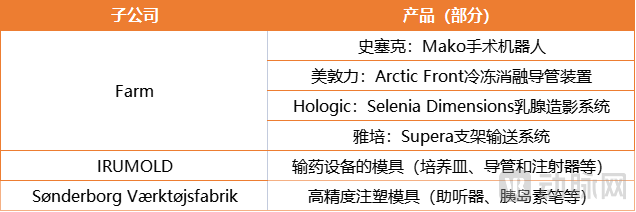
Flex’s Medical Device Subsidiary
Compiled by VCBeat
These advantages are evident throughout its customer service process. In 2020, Flex collaborated with Smith & Nephew to develop a 4K orthopedic endoscopic camera system (LENS 4K). Manufactured at Flex’s medical device production line in Gaoqiao, Shanghai, the endoscope underwent phased development by Flex across its entire product lifecycle, from metal components and system integration to the final finished product.
This orthopedic endoscope is also part of Smith & Nephew’s localization strategy in the Chinese market, with Flex supporting the company in completing the entire process—from design and regulatory registration to manufacturing and sales—within China.
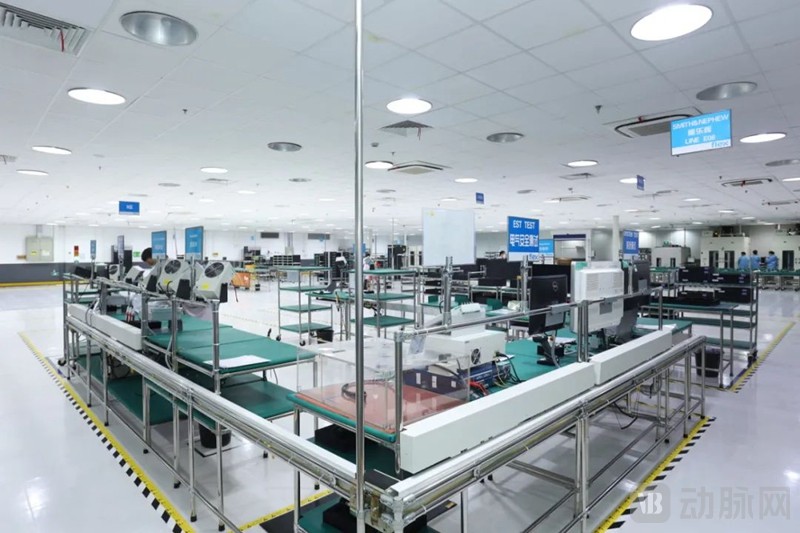
Flex's Production Line in Shanghai Gaoqiao
Image source: Flex official website
The medical device industry is a high-tech sector characterized by multidisciplinary integration, knowledge intensity, and capital intensity, featuring “high investment, high risk, and high returns.” Technical expertise is a prerequisite for medical device companies when selecting CDMO partners. However, cutting-edge technologies are not readily available.
CDMOs require years of sustained research and statistical analysis of large-scale clinical data to develop products that guarantee quality and meet customer demands. Consequently, it is difficult for new entrants to rapidly establish reliable product technology platforms and accumulate extensive clinical data. Mergers and acquisitions (M&A), however, enable companies to quickly gain a firm foothold in new fields, pivot to higher-margin sectors, and expand their commercial footprint.
Flex continuously expands its business scope through M&A transactions, enhances its products and services, avoids homogenization of offerings, and thereby increases profit margins.
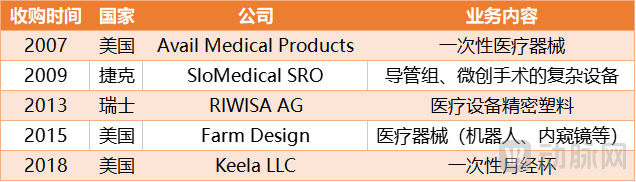
Flex’s M&A Activity in the Healthcare Sector
VCBeat
Through M&A transactions, Flex has further strengthened its capabilities in product R&D, engineering technology development, and manufacturing, achieving a product portfolio that expands “from presence to diversity,” primarily categorized into three major segments:
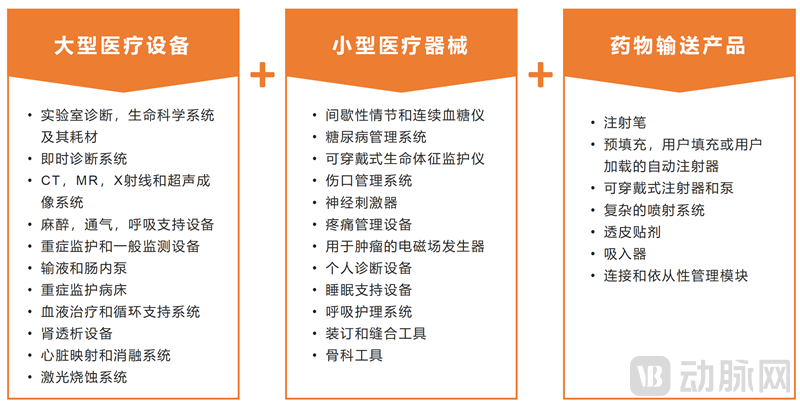
Flex’s Product Portfolio in the Medical Device Sector
Produced by VCBeat
Leveraging its technological footprint in precision medical devices, Flex has entered into a collaboration with Novocure, an innovative medical device company specializing in oncology. Novocure’s Optune is a non-invasive therapeutic innovation for treating glioblastoma that works by delivering specific electric fields to targeted tumor regions to disrupt cancer cell mitosis.
Flex designed and developed new molds for the key components of NovoTTF, reducing the size and weight of the new device to just half that of the original. In terms of regulatory submissions, Flex assisted Novocure in obtaining FDA approval for the new device as a Class III medical device. For manufacturing, Flex specifically acquired a factory dedicated to producing the new NovoTTF device.
Following the market launch of the new Optune, Novocure’s patient base grew by approximately 20%–30% year over year.
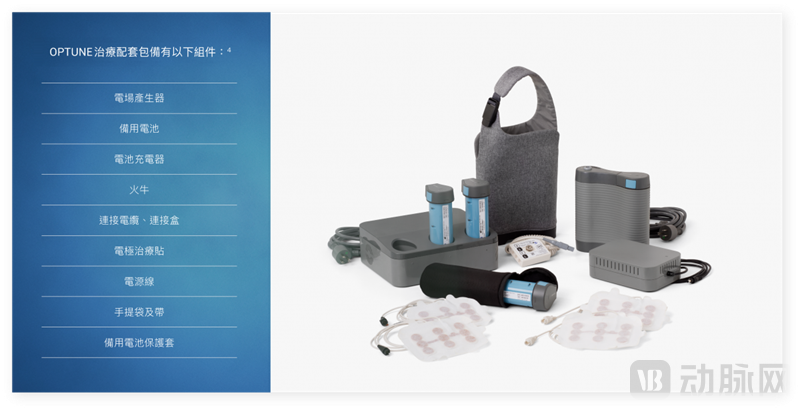
Optune
Image source: Novocure official website
As cutting-edge technologies continue to be integrated and applied across various products and services, technological innovations have driven transformative changes in numerous industries, with the medical device sector being no exception. For instance, the iterative upgrades of semiconductor chips have not only enhanced the performance of devices such as smartphones but also impacted medical equipment including ventilators, defibrillators, CT scanners, and MRI machines. However, amid the shortage of semiconductor chips, medical device companies have been forced to confront reduced production or even complete halts in manufacturing, thereby ceding market share to competitors.
The development of medical device technology will no longer be confined to the sector itself; instead, it will mutually support and co-develop with other related industries on a higher dimension and broader scale.
When selecting a CDMO partner, clients should evaluate not only robust technical expertise and mature manufacturing capabilities but also the company’s portfolio of successfully commercialized products. Key considerations include whether the partner can facilitate business networking among diverse clients and collaborate with experienced suppliers on specific projects. This represents one of Flex’s advantages as a multinational corporation—cross-industry synergies.
According to Flex’s official website, Flex currently collaborates with over 16,000 suppliers.By vertically integrating and streamlining its existing supply chain, Flex can apply a single technology across different businesses within the same industry or achieve cross-industry applications, such as in high-performance computing, human-machine interfaces, and the Internet of Things (IoT). This CDMO model, grounded in convergent thinking, enables the company to provide customers with broader and more advanced technologies, thereby expanding both its service scope and customer base.
CDMOs leverage their end-to-end service capabilities to integrate and converge all segments of the supply chain and even the value chain. They deliver diverse services not only to medical device manufacturers but also to suppliers. By consolidating and streamlining numerous supply chain processes, they reduce costs while benefiting customers, and further enhance profitability by extracting additional value from customer relationships through sustainable services.
In 2020, Flex received a contractual commission from a leading medical device company to manufacture its Class II diabetes product. The client’s identity has not been disclosed due to confidentiality clauses. This product is classified as a Class II medical device in the United States. Establishing a compliant manufacturing process for such devices typically takes several years, and any modification requires re-validation and resubmission of regulatory filings. Consequently, such engagements are often time-consuming, labor-intensive, and costly for CDMO companies.
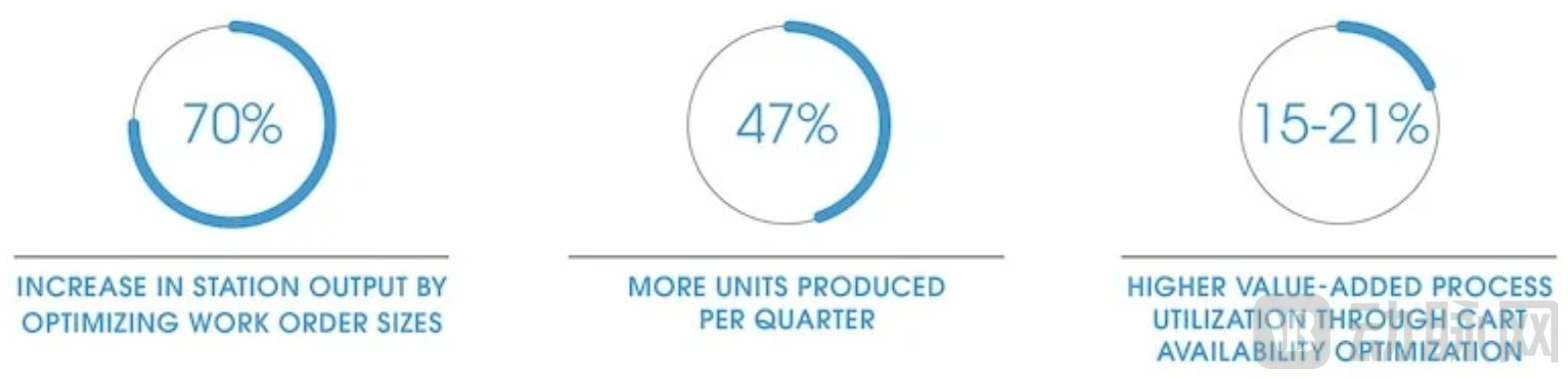
Leveraging its strategic advantages in the high-end computing sector, Flex employed Digital Twins technology to create a virtual model of its factory. By importing production assets—such as equipment, layout, and personnel—into Discrete Event Simulation (DES) software, the company established a digital twin of the factory. It then simulated hundreds of thousands of “twin” scenarios to test product reliability, a critical success factor for Class II medical devices.
Leveraging digital twin technology, Flex’s customers have designed efficient workflows for personnel and material flow, more accurately forecasted production volumes to reduce inventory, and completed optimization analyses in three weeks that previously took three months, thereby accelerating time-to-market for their products.
Efficiency Improvement
Image source: Flex official website
Medical device CDMO is a knowledge-intensive industry, where clients’ core technologies constitute their critical vulnerabilities. However, unlike pharmaceutical CDMOs, which enjoy an inherent advantage by securing intellectual property (IP) rights through locking in new chemical entities, medical device CDMOs face a diverse and complex IP landscape. This encompasses both hardware and software configurations, including the device’s working principles, operational mechanisms, and procedural workflows. Consequently, enforcing IP rights often presents significant challenges, such as difficulties in providing evidence, prolonged legal processes, and high costs.
Therefore, CDMOs must address how to establish a foundation of mutual trust and contractual constraints with marketing authorization holders (MAHs) to prevent breach of contract claims arising from infringement allegations by clients or third parties.
As a leading medical device CDMO, Flex formulated its Code of Business Conduct and Ethics as early as 1998 in accordance with the Digital Millennium Copyright Act (DMCA) and intellectual property protection laws in other countries and regions, to safeguard partners’ confidential information and intellectual property rights. Additionally, Flex established an Ethics Hotline to receive reports and complaints from all parties.
Flex was named one of the “World’s Most Admired Companies” by Fortune in 2023, named one of the “2023 World’s Most Ethical Companies” in the industrial manufacturing sector by Ethisphere.
In addition, Flex has separated the operations of its manufacturing centers, innovation centers, and industrial parks to ensure regional isolation and security management for R&D personnel and projects, while encrypting supply chain channels to provide comprehensive protection for customers’ intellectual property.
Under the influence of the Matthew Effect, in addition to considerations of quality and price, Flex, with its robust intellectual property protection mechanisms, is better positioned to attract high-profile clients and products with higher profit margins. Similarly, clients can achieve superior returns, thereby enhancing the brand value of both parties. According to Flex’s 2022 financial report,The company's top ten customers accounted for approximately 34% of net sales.
As the world’s second-largest medical device market, China boasts enormous market potential. Flex entered the Chinese market in 1987, and by 2022, its total revenue from the China region reached USD 6.146 billion, accounting for approximately 23% of its global total revenue.