

Navenio Files for IPO: Amazon-Backed 'Indoor GPS' Boosts Hospital Logistics Efficiency by 94%
Navenio
Intelligent Positioning Technology Developer
Nowadays, people can travel freely using various map navigation apps, but in “8D” cities like Chongqing, they still often find themselves disoriented. For some individuals, navigating hospitals for medical consultations and examinations can be equally confusing.
Navenio, a software company based in Oxford, UK, has launched an indoor positioning service. Its mobile application enables real-time indoor location tracking and facilitates the coordination and deployment of hospital staff, ensuring that the right personnel are at the right place at the right time, thereby enhancing the operational efficiency of in-hospital logistics teams.
Niki Trigoni is the founder and Chief Technology Officer of Navenio, a Professor in the Department of Computer Science at the University of Oxford, a Fellow of Kellogg College, and the cornerstone of the University of Oxford’s Sensor Networks Research Group. She has over 15 years of experience in cyber-physical systems and has received multiple awards for her team’s work on indoor and underground positioning. In 2022, Niki TrigoniElected as a Fellow of the Royal Academy of Engineering, UK.

Navenio Co-founder and Chief Technology Officer Niki Trigoni. Image source: University of Oxford official website
All of Niki’s achievements can be traced back to 1994, when she was choosing her university major. Attracted by the immense potential of computer science to transform the way people live and work, she ultimately decided to study computer science at the Athens University of Economics and Business.
At the age of 19, while still pursuing her undergraduate studies, Niki embarked on her first career at the National Bank of Greece. She was responsible for issuing corporate loans, analyzing investment portfolios, and assessing credit risk. A year later, leveraging her background in computer science, Niki transferred to the bank’s IT department, where she served as an analyst and developer for banking applications. For Niki, this role provided an opportunity to apply her academic knowledge to large-scale IT systems while honing her time management skills.
Later, Niki went to the University of Cambridge to pursue her Ph.D., focusing on query optimization for object-oriented database systems, which allowed her to expand her expertise into distributed information systems. At that time, Niki was fascinated by the emerging field of wireless sensor networks. She subsequently conducted postdoctoral research at Cornell University, where she delved deeper into this area for another two years.
In 2007, Niki established her own research group at the University of Oxford, conducting research on communication, localization, and in-network processing algorithms for sensor networks. She was also appointed as the Director of the Doctoral Training Centre in Autonomous Intelligent Machines and Systems, funded by the Engineering and Physical Sciences Research Council (EPSRC) at the University of Oxford.
Niki is considering the development of intelligent and autonomous sensor systems for healthcare, positioning, and environmental monitoring. In particular, she pioneered the development of positioning systems for indoor spaces where GPS is unavailable.Conventional infrastructure typically exhibits poor signal penetration, which hinders the use of high-frequency electromagnetic waves; consequently, previous positioning systems have struggled to perform effectively in emergency situations.Niki attempts to enhance the reliability of indoor positioning by integrating multiple technologies, including visual odometry, inertial tracking, and magnetic induction positioning.
In 2015, Niki founded Navenio. The company now has over sixty employees, with approximately half dedicated to operations and development, forming a diverse team comprising individuals from technical, non-technical, healthcare, and academic backgrounds.
In the healthcare sector, many people expect clinical teams to work more efficiently, but few focus on optimizing the logistics teams that support patient flow throughout the hospital, such as porters, cleaners, and allied health professionals. Most hospital staff work indoors, where GPS is ineffective, making it difficult for hospitals to track the real-time location of their employees and assets.
Navenio has identified this significant opportunity and developed intelligent indoor positioning applications to improve the workflows and efficiency of hospital staff and teams. Moreover,No investment in new infrastructure is required; it can be achieved solely by leveraging the sensors in smartphones.
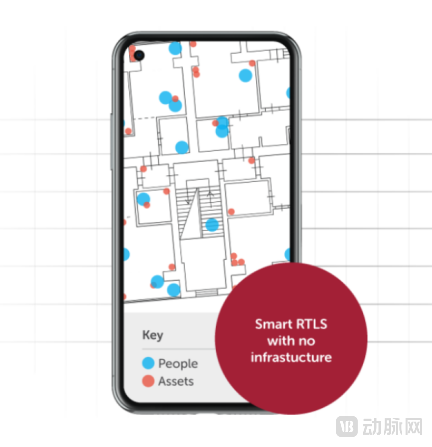
Navenio Smart Positioning Mobile Interface | Image Source: Navenio Official Website
Integrating five world-class technologies: motion tracking, sensor fusion algorithms, crowdsourced automated mapping, advanced scheduling algorithms, and self-learning environmental signal maps.Navenio’s positioning technology not only works in GPS-denied environments with an accuracy of a few meters, but is also highly scalable.
Navenio’s positioning system can also identify floor changes by analyzing data such as pressure, inertia, and signal patterns, enabling the generation of 3D experience maps across multiple floors and staff localization without prior knowledge of the hospital’s architectural layout.
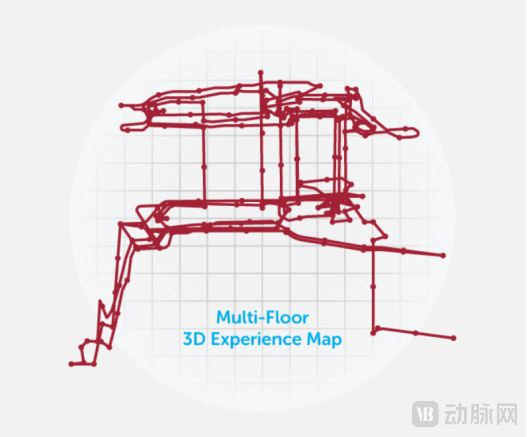
Navenio Multi-Floor 3D Experience Map | Image Source: Navenio Official Website
In addition to intelligent positioning, the Navenio team has also proposed an automated “Smart Workforce Solution” system. Hospitals can assign tasks to medical staff based on location, prioritize workloads in real time according to the principle of “the right person, at the right time, in the right place,” and streamline workflows, thereby improving the work efficiency and service quality of hospital personnel.
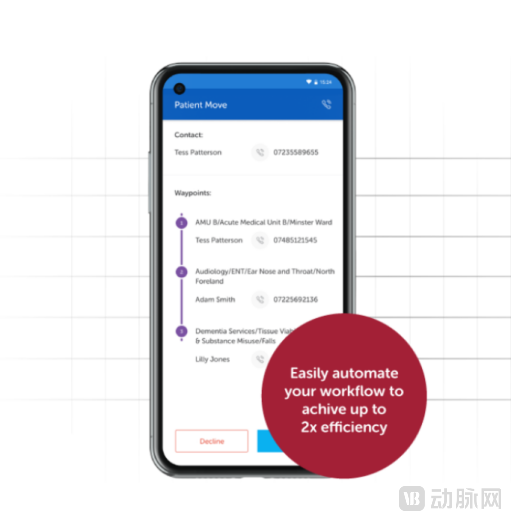
Navenio Workflow Mobile Interface. Image source: Navenio official website
In 2017, Navenio partnered with Tameside and Glossop Integrated Care, an NHS hospital trust, to deploy its solution for ward and transport staff.
The final results show that Navenio's intelligent workforce solution has enabled the hospital toLogistics task completion increased by 94%, processing capacity improved by 31%, and response time accelerated by 40%,Reduce patient wait times and improve their outcomes. During the COVID-19 pandemic, Navenio’s positioning system and intelligent workforce solutions effectively alleviated hospital pressure.
Such automated systems are also applicable to a variety of work groups, including cleaning, food service, and waste management. In the future,Navenio also plans to deploy its smart positioning services for B2B and consumer applications., including integrated healthcare, logistics applications, shopping malls, smart cities, and the hospitality industry.
Since its establishment in 2015, Navenio has completed 12 rounds of financing, totaling £31.4 million. The most recent round was closed on March 27.Investor: Amazon (AWS Healthcare), but the amount was not disclosed. To date, Navenio has deployed more than two million indoor positioning systems across various hospitals, with each hospital able to increase revenue by $3 million merely by optimizing its radiology department.
Regarding indoor positioning, there are also multiple players in the Chinese market.
Founded in 2017, DaoYiXun is the first company in China to achieve real-time, high-precision indoor navigation on smartphones. Prior to its establishment, DaoYiXun’s technical team already had eight years of R&D experience in indoor positioning technologies.
By comparison, Dao Yixun’s indoor positioning system is more focused on hospitals, covering three scenarios: location finding, person tracking, and vehicle locating. It primarily serves non-hospital staff, such as patients and their families.
In addition, there are MapGather Intelligence and Hummingbird View, which specialize in indoor mapping; Maote IoT and U-Frequency Technology, which develop positioning products such as Bluetooth wristbands; Zhenqu Technology and Weiken Technology, which provide digital solutions; and Xunxi Technology and Zhishi Technology, which research positioning and navigation systems.
Most enterprises position themselves based on Bluetooth or WLAN; some use Radio Frequency Identification (RFID), while others leverage Ultra-Wideband (UWB) technology, such as Shanghai Renwei Technology and Beijing Huaxing Zhikong.