

BuRay Technology Secures China's First NMPA Approval for Breath-Based Diagnostics, Publishes Seven High-Impact Studies, and Establishes GMP-Compliant Manufacturing Facility Ahead of IPO
On April 10, Professor Shen Lu’s team from the Department of Neurology at Xiangya Hospital of Central South University published in *Alzheimer's & Dementia*, a top-tier journal in the field of neurology.(Alzheimer's & Dementia) (IF=16.655)Published online as an original article under the title “A Detection Model for Cognitive Dysfunction Based on Volatile Organic Compounds from a Large Chinese Community Cohort”(A Cognitive Impairment Detection Model Based on Volatile Organic Compounds in a Large-Scale Chinese Community Cohort)latest research findings.
This study is the first to discover that by detecting volatile organic compounds in human exhaled breath(volatile organic compounds,VOCs)It enables early identification of patients with cognitive impairment, holding promise for providing a more objective and simple screening tool for cognitive disorders in the elderly population. Reportedly, this technological platform is supported by Burui Technology, a leading domestic enterprise in breath analysis technology.
Following infectious diseases, metabolic disorders, and cancer, the diagnostic capabilities of breath metabolomics have now extended to neurological diseases, garnering significant interest from both academic and industrial sectors. Furthermore, current early screening and assessment methods for Alzheimer’s disease (AD) are influenced by factors such as educational level and dialects. The publication of this paper highlights the potential for AD early screening to become more “objective,” “standardized,” and “universally applicable.”
Biomarkers generated by the metabolism of organs throughout the body partially enter the bloodstream and reach the alveoli, where certain metabolites (or their secondary products) can be exhaled through gas exchange. This process means that exhaled breath contains not only well-known components such as nitrogen, oxygen, carbon dioxide, and water vapor, but also up to 1,500 types of trace bioactive small molecules—VOCs—that may reflect the physiological status of various organs. More than 200 of these VOCs have been extensively studied and confirmed to be associated with a variety of human diseases.
Breath testing offers distinct advantages over conventional bodily fluid and imaging examinations due to its simplicity, non-invasiveness, and low cost, making it particularly suitable for routine health check-ups and large-scale disease screening. In the future, it can meet the needs for point-of-care testing (POCT) health assessments and continuous monitoring in settings such as homes, communities, and specific institutions, where ultra-high precision is not critical. Meanwhile, as the gold standard for qualitative analysis of chemical substances, mass spectrometry demonstrates unique advantages in the rapid qualitative and quantitative detection of small-molecule compounds, rendering it more suitable for the detection and analysis of volatile organic compounds (VOCs) in human exhaled breath.
Therefore, breath mass spectrometry has become a more reliable, precise, and sustainable ideal approach for elucidating disease profiles.
Currently, the spectrum of diseases identified through exhaled breath mass spectrometry research is relatively broad, encompassing dozens of conditions. These include tumors, infectious diseases, respiratory and gastrointestinal disorders, as well as other major diseases characterized by significant metabolic alterations, such as chronic metabolic, cardiovascular, and neurological/psychiatric disorders.
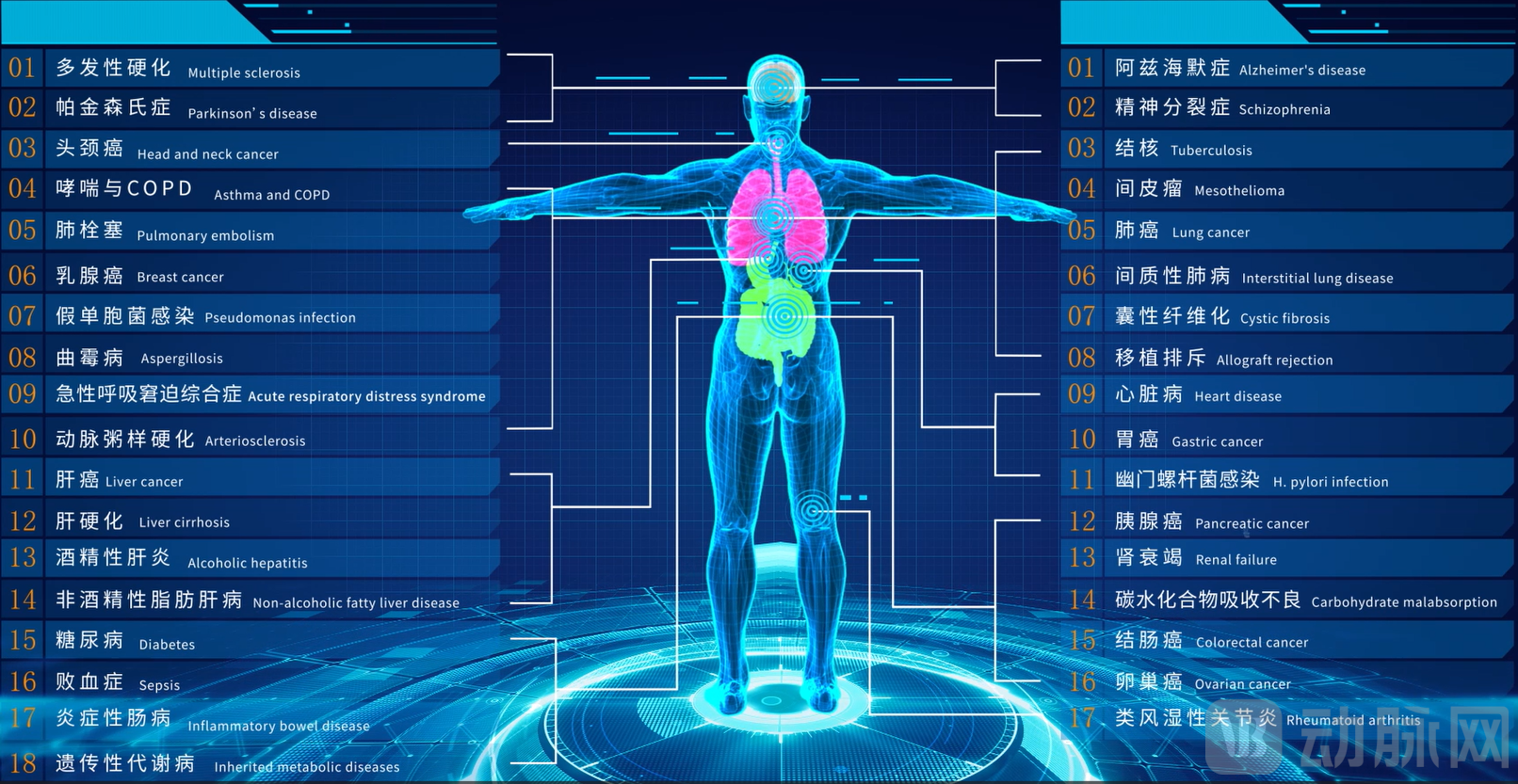
Disease Spectrum Identified by Breath Mass Spectrometry Testing (Image source: BreatheTech)
In fact, in addition to the recently published studies on breath testing for cognitive impairment, Burui Technology’s “Human Exhaled Breath Mass Spectrometer” has consistently appeared as a supporting technical platform in numerous journal articles on clinical basic research involving breath testing in recent years.
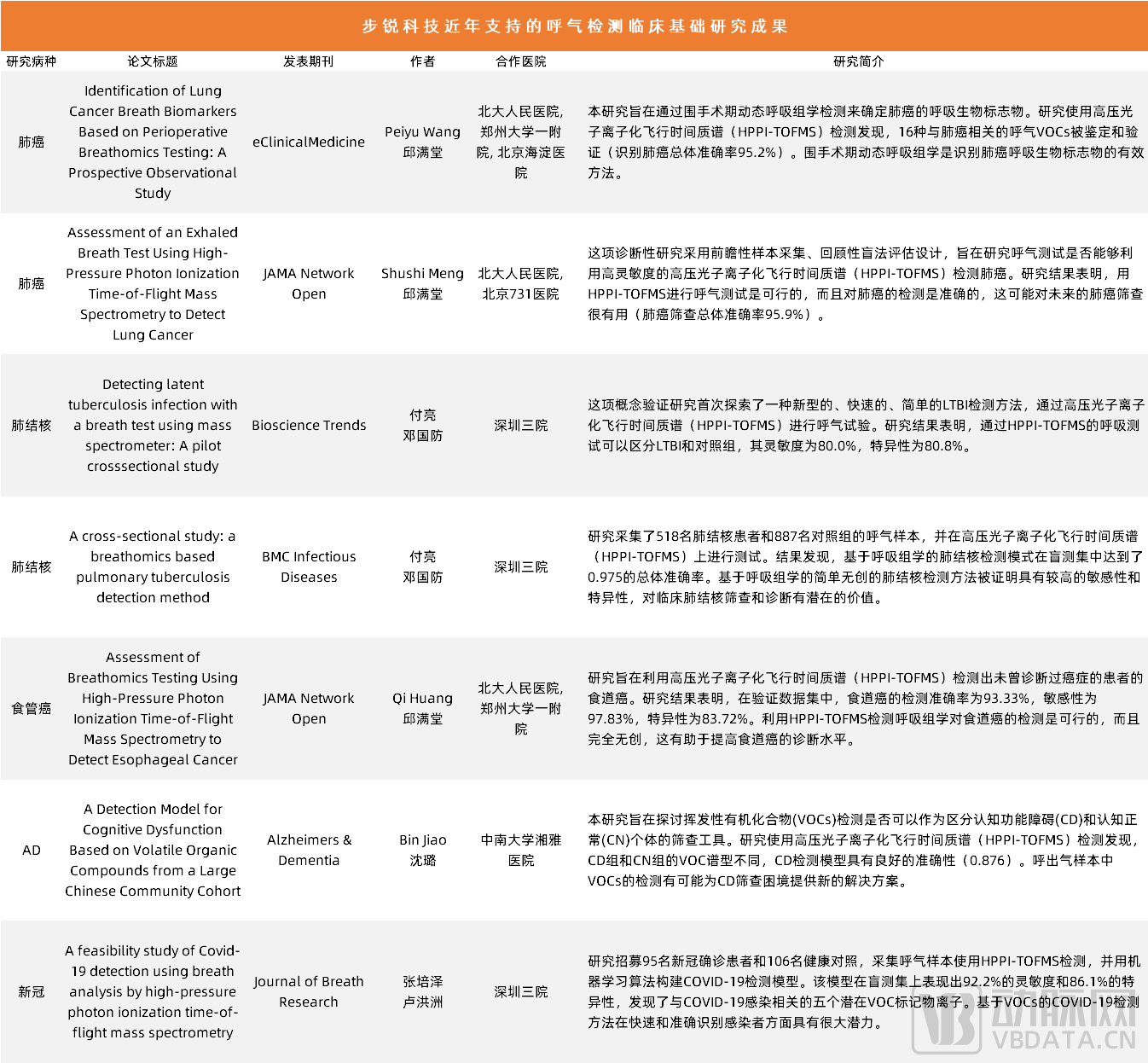 Clinical Basic Research Achievements Supported by Burui Technology in Recent Years (Source: Burui Technology)
Since 2020, Burui Technology has collaborated with department directors at major Grade-A tertiary hospitals, including Peking University People’s Hospital, Beijing 731 Hospital, Beijing Haidian Hospital, Xiangya Hospital of Central South University, Shenzhen Third People’s Hospital, and the First Affiliated Hospital of Zhengzhou University. They have conducted clinical foundational research on breath testing for various diseases, such as lung cancer, pulmonary tuberculosis, esophageal cancer, Alzheimer’s disease (AD), and COVID-19, achieving positive progress and publishing their findings in prominent journals.
Among these, Burui Technology’s “Human Exhaled Breath Detection Mass Spectrometer,” which employs “High-Pressure Photoionization Time-of-Flight Mass Spectrometry,” has demonstrated promising performance across various studies. In sample testing and validation for a wide range of diseases, it has exhibited exceptionally high sensitivity, specificity, and accuracy. The relevant clinical basic research data obtained have corroborated the instrument’s pivotal role and market potential in the diagnosis and early screening of various diseases.
On July 23, 2021, Burui Technology’s independently developed “Mass Spectrometer for Human Exhaled Breath Analysis” obtained the Class II medical device registration certification from the National Medical Products Administration (NMPA), marking the issuance of China’s first NMPA certificate for breath testing. To date, this remains the only exhaled breath mass spectrometer to have received such certification in China.
In the face of such an absolute competitive advantage in the market, Burui Technology has not merely focused its development efforts on product sales and market expansion; instead, it has remained committed to in-depth academic research, with the fruits of these endeavors increasingly coming to light in recent years.
Burui Technology has established a comprehensive layout in clinical and basic research,Enable continuous validation of the mass spectrometer's sensitivity and specificity to facilitate product updates and iterations., and simultaneouslyExpanding Diagnostic Applications to More Indications. Secondly, the precise and standardized collection of exhaled breath samples from subjects remains an unresolved practical challenge in disease diagnosis. Through repeated testing and adjustments of sampling time, exhalation methods, sample storage, and collection devices during clinical basic research,This will help Burui Technology explore more suitable sample collection methods, thereby establishing standardized operating procedures to ensure consistency in testing operations and improve the accuracy of results.。
More importantly, in the discovery of disease-related exhaled metabolic biomarkers, endogenous VOCs influenced by factors such as age, sex, diet, smoking history, medication use, comorbidities, and microbiota can also affect the results to some extent, in addition to VOC changes caused by the disease itself. Therefore, multicenter, large-scale clinical cohort studies on exhaled breath that organically integrate clinical research with basic research areIdentifying Disease-Specific Biomarkersfoundation.
Stable detection and the reliability of breath samples form the foundation for the clinical application of this technology. The accumulation of large-scale breath sample data, the discovery and identification of breath biomarkers for target diseases, multi-center clinical validation with large sample sizes, and even the elucidation of metabolic pathways associated with these biomarkers are all essential steps in developing clinically viable breath-based diagnostic products or enhancing their performance.
Therefore, Burui Technology integrates clinical research throughout the entire lifecycle of its breath-testing products. This approach not only enhances product performance and solution quality but also facilitates future expansion into overseas markets by overcoming numerous barriers through publications in international academic journals.
As of now, BuruiIn collaboration with the Chinese Academy of Sciences, the Chinese Center for Disease Control and Prevention, the National Clinical Research Center for Infectious Diseases, the Chinese PLA General Hospital, Southwest Hospital of Army Medical University, the Cancer Hospital of the Chinese Academy of Medical Sciences, Peking University People’s Hospital, Peking University Cancer Hospital, Beijing Chest Hospital affiliated to Capital Medical University, Jiangsu Cancer Hospital, Sun Yat-sen University Cancer Center, and the Second Xiangya Hospital of Central South University, among nearly 40 major hospitals and institutions across China, we have jointly conducted research on breath-based diagnosis and assessment for multiple diseases.
After years of accumulation from large-sample, multicenter studies,Burui Technology has established a spectral library of breath samples comprising over 80,000 cases.,Covering more than ten disease areas, including tumors, infections, and other conditions such as pulmonary tuberculosis, lung cancer, breast cancer, esophageal cancer, prostate cancer, colorectal cancer, gastric cancer, gastric ulcer, liver cancer, cirrhosis, hepatitis, COVID-19, asthma, chronic obstructive pulmonary disease (COPD), bloodstream infections, Alzheimer’s disease, and Parkinson’s disease.。
Compared with the conventional laboratory method of gas chromatography-mass spectrometry,Burui Technology’s independently developed High-Pressure Photoionization Time-of-Flight Mass Spectrometry (HPPI-TOFMS) overcomes the current limitations of mass spectrometry technology, such as cumbersome operation, the need for pretreatment, and significant sample loss. Unaffected by background gases, it offers simpler operation while maintaining high sensitivity and specificity, enablingThe original single-sample detection, which took 2–5 hours, now requires only 3 minutes, achieving a high throughput of 600 samples per day., leading to an exponential increase in both clinical and commercial value. In screening validation for diseases such as tuberculosis, lung cancer, and esophageal cancer, this method canSensitivity and specificity remained stable at over 90%, demonstrating absolute advantages in multi-disease, full-cycle clinical testing and research across medical and scientific institutions.
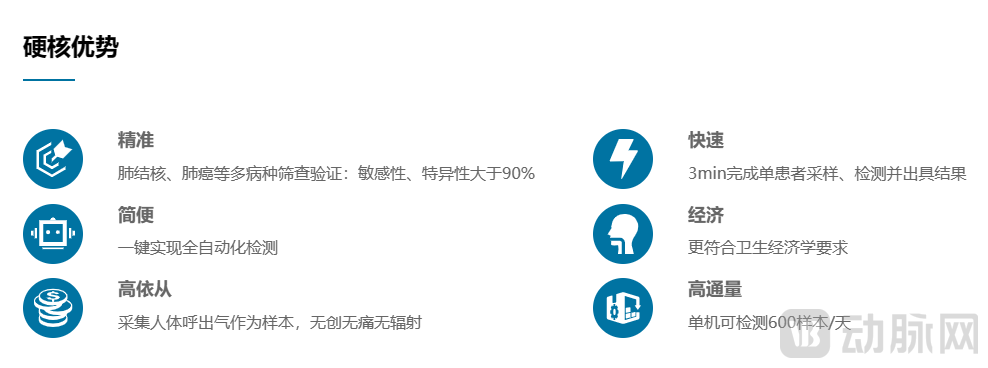 Six Major Advantages of Burui Technology’s “Mass Spectrometer for Human Exhaled Breath Analysis” (Image source: Burui Technology)
Following the upgrade and optimization of its testing technology platform through clinical studies, Buirui Technology will prioritize R&D efforts on the miniaturization and stabilization of the testing platform, as well as the development and accumulation of other reserve technologies.
In the future, Burui Technology will vigorously advance research and applications in full-cycle management, encompassing multi-disease screening and diagnosis, treatment efficacy assessment, dynamic disease monitoring, and recurrence prediction. It will also extensively expand collaborations with medical service institutions, including hospitals, research organizations, and third-party clinical laboratories.ObtainedYiyu Testing Platform has obtained medical device registration approval from the National Medical Products Administration (NMPA). This allows Burui Technology to develop the clinical research market prior to the commercial launch of its clinical diagnostic products, thereby generating initial sales revenue while establishing a robust network of key opinion leaders (KOLs), laying the foundation for subsequent price filing and market promotion.
Backed by authoritative academic theories and a prominent first-mover advantage, market demand for Burui Technology’s products is expected to grow rapidly in the future. To this end,Over the past two years, Burui Technology has also made strategic plans and investments in product portfolio layout and production.。
Currently, Burui Technology’s core product pipeline includes:Products for the diagnosis of tuberculosis, the diagnosis of breast cancer, and lung cancer screening are expected to be launched within the next 3–5 years.. In the second phase, Burui Technology considers expanding its product from two aspects.in the appropriateIndication Expansion, the extensive clinical studies currently conducted by the company can provide relatively robust data for reference. Based on preliminary research, infectious pulmonary diseases, elderly chronic conditions that are difficult to detect and characterize (such as mild cognitive impairment, Parkinson’s disease, and Alzheimer’s disease), and esophageal cancer would be ideal candidates for the diagnostic product pipeline. On the other hand, it is aimed atExpansion of Product Application ScenariosIn fact, Burui Technology has already conducted research on therapeutic efficacy assessment, disease progression monitoring, and correlation with other clinical testing indicators across a variety of diseases. Therefore, future applications in scenarios such as therapeutic efficacy assessment for pulmonary tuberculosis, pan-disease gaseous biomarker detection, and treatment response prediction are also within the company’s strategic plans.
To meet the manufacturing requirements of its products and in light of the current absolute technological barriers within the industry, Burui Technology has strictly adhered to Good Manufacturing Practice (GMP) standards for medical devices and has established a facility of approximately 1,000 m² in Yuelu District, Changsha City, Hunan Province.2a manufacturing facility compliant with the ISO 13485 quality management system.The factory is equipped with production workshops, warehouses, and independent inspection rooms. It has established standardized management processes and implemented a comprehensive 5S system. Additionally, a professional material management system has been introduced to achieve warehouse visualization and material traceability management. The factory has passed the inspection conducted by the medical device regulatory authorities.The annual production capacity of its "mass spectrometer for human exhaled breath analysis" is expected to exceed 200 units.。
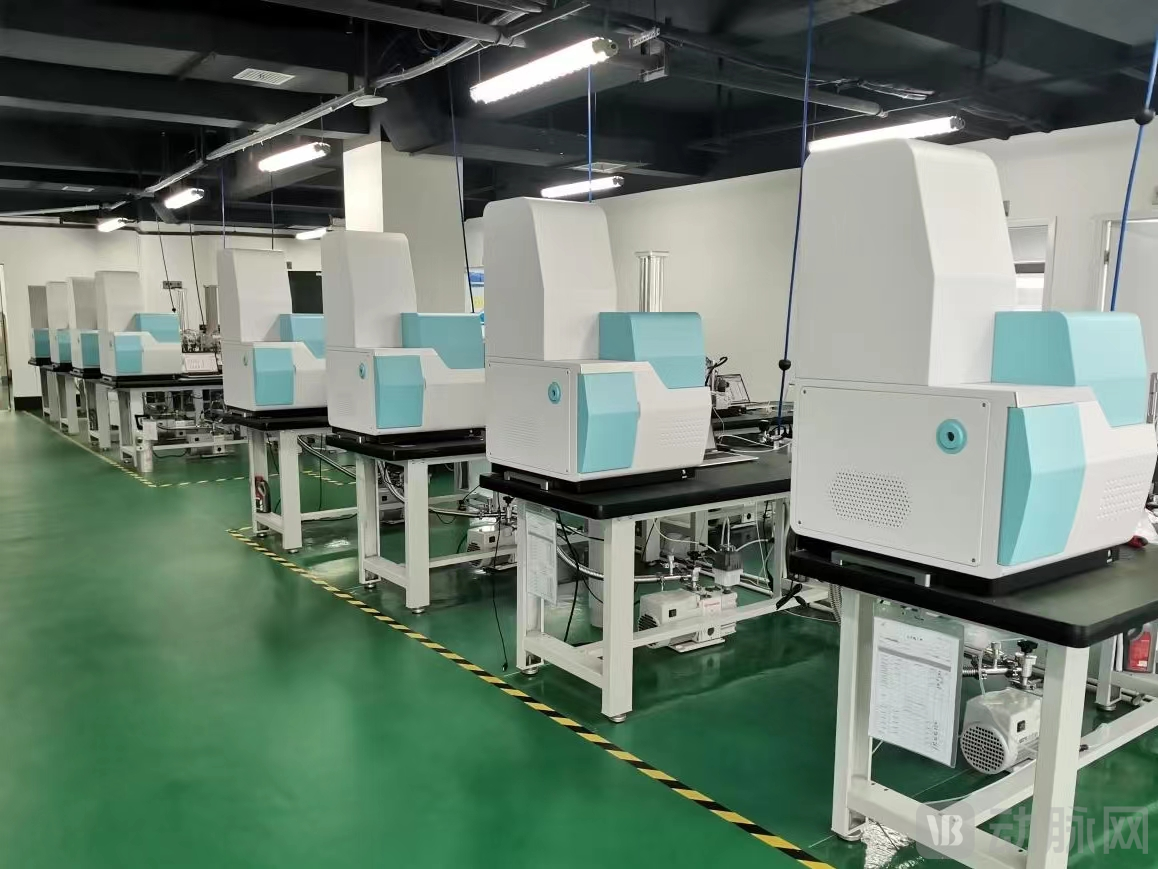
Burui Technology’s GMP-Compliant Manufacturing Facility (Image source: Burui Technology)
As the foundation of emerging breath metabolomics, mass spectrometry-based breath analysis has made significant progress in disease diagnosis in recent years, with related breath-based diagnostic technologies on the verge of clinical emergence.
China’s breath test market is characterized by rapid global development, extensive coverage, and high inclusivity, bringing together the majority of breath testing products from both domestic and international sources. Domestically produced devices, offering high cost-performance ratios and superior service, account for over 90% of the domestic market. Consequently, overseas brands are not formidable competitors in this sector.
From the earliest enterprise specializing in the research, development, production, and sales of urea breath test products, to companies that have adopted sensor technology to cover other emerging breath analysis fields, all have achieved remarkable success.Overall, the clinical application of breath testing is on the verge of an industry boom. The use of breath testing technology in respiratory infectious diseases such as tuberculosis and COVID-19 has been widely validated, while its application in early cancer screening for breast and lung cancers is also garnering significant attention.
Leading exhaled breath mass spectrometry companies, both domestic and international—represented by Burui Technology and Owlstone Medical—are leveraging their proprietary exhaled breath metabolomics research platforms and collaborating with over 100 top-tier medical institutions across multiple disease areas to continuously unlock the potential of exhaled breath mass spectrometry as a routine clinical diagnostic tool.Burui Technology’s Breath-Based TB Diagnostic Aid Is Set to Complete Pre-Registration Clinical Studies; Interim Results Meet Expectations, with Clinical Application Imminent.
The fundamental driver behind the continuous advancement of disease diagnosis and screening technologies is the innovation and refinement of foundational technical platforms.Burui Technology’s breath analysis mass spectrometry platform provides an accurate, rapid, low-cost, high-throughput, and user-friendly technical solution for breath metabolomics and its clinical applications. The company currently operates in the single market of infectious disease screening and diagnosis, which is valued at hundreds of billions of RMB—a “fertile ground” for early-stage startups. Furthermore, with ongoing scientific collaborations and development plans that integrate basic clinical research on multiple diseases such as cancer and expand indications across the full care continuum, Burui Technology’s accessibility and immense potential in China’s breath testing market are truly exciting.