

Exclusive Interview with Professor Hu Wen of West China Hospital: Innovating Clinical Nutrition to Transition from 'Eating Enough' to 'Eating Well'
"Big Health" is an unavoidable topic of our time. As public health awareness strengthens and health demands rise, people's concept of maintaining health has shifted from“Treating Illness” Shifts to “Health Maintenance and Prevention”, the emphasis on nutrition has also risen significantly. According to data from the National Bureau of Statistics, in recent years, the proportion of per capita healthcare consumption expenditure in China's total consumer spending has shown a fluctuating upward trend.
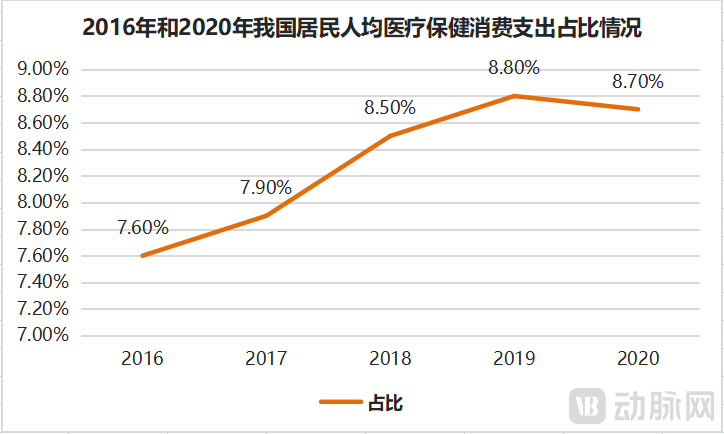
Data source: National Bureau of Statistics data
Young people account for the majority of the health and wellness consumer demographic. As the pace of life accelerates, many young individuals experience prolonged physical suboptimal conditions due to excessive stress, unhealthy lifestyle habits, and other factors.Sub-healthcondition. Although this is not a specific disease, it does pose potential risks to health.
“Suboptimal health has become a major societal pain point.” Based on over 30 years of clinical experience,Hu Wen, Director of the Department of Clinical Nutrition, West China Hospital, Sichuan UniversityAware of this issue, Dr. Hu Wen, Director of the Department of Clinical Nutrition, is attempting to address it through nutritional interventions.
Dietary Formulation for Optimal Nutrition: The Collision of Tradition and Technology
According to survey data from the World Health Organization, in 2017, the sub-healthy population in China accounted for70%, and this figure continues to increase year by year."“Breaking Free from Sub-Health” Has Become a Cliché Social Topic.
Approaches to this issue vary. However, for the majority of office workers who lead fast-paced lives and have limited leisure time, health supplements have undoubtedly become the preferred choice. Nevertheless, excessive or improper use of these supplements can lead to liver damage, nutritional imbalances, and other health issues. How can one effectively and conveniently address suboptimal health status? The most direct approach is through dietary management. In response to this clinical need, Director Hu Wen has distilled her years of clinical nutrition experience intoDietary Formulation for the Adaptation Groupconcept.
Therapeutic meal planning refers to specially processed or formulated diets designed to improve syndromes associated with various medical conditions and physiological states, ensuring nutritional value, safety, and scientific rigor. This concept aligns closely with China’s traditional “medicinal diet” (Yao Shan), yet it is inextricably linked to modern medicine. As Director Hu Wen puts it:“Solving Western Medicine’s Challenges with Traditional Chinese Medicine Approaches.”
First, sub-health is itself a concept derived from the diagnostic framework of Western medicine.In 1994, the International Chronic Fatigue Syndrome Study Group, led by the United States and comprising researchers from Australia, the United Kingdom, and other countries, revised the diagnostic criteria for chronic fatigue syndrome. Chronic fatigue syndrome is what we now refer to as suboptimal health status. Although Traditional Chinese Medicine has also provided a definition for suboptimal health status, clinical practice currently relies more heavily on the criteria for chronic fatigue syndrome to assess this condition.
Secondly, regarding therapeutic approaches, Traditional Chinese Medicine (TCM) and Western medicine differ in both their methods and underlying concepts.Western medicine focuses on the balance of nutrients, providing a more generalized treatment approach for the general public. In contrast, Traditional Chinese Medicine (TCM) emphasizes individual patient differences and tailors treatments accordingly.
Thus, the dietary formulation of the Shiyang Group is a product that strikes a balance between Western medicine and Traditional Chinese Medicine.
Director Hu Wen has designed a tailored nutritional regimen based on evidence-based medicine and is actively developing related food products. Through innovations in formulation and processing, these tailored nutritional foods enable individuals with suboptimal health to conveniently and quickly manage their condition.
Thorns on the Path to Commercialization: Regulatory Review and Market Standardization
The concept of condition-specific dietary formulation provided theoretical support for the specialized dietary foods designed by Director Hu Wen, but the actual productization process was not without its challenges.“How to Qualify the Outcomes” puzzled Professor Hu Wen’s team for a long time.
Currently, there are numerous classifications for nutritional products, with the most common being health supplements, foods for special dietary uses, and foods for special medical purposes. The regulatory approval standards and required testing protocols for these three categories vary significantly. Therefore, accurately determining the product classification at the outset is of paramount importance.
The regulatory review standards for foods for special medical purposes (FSMPs) are the most complex, requiring multiple stages such as clinical trials and regulatory approval, a process nearly identical to that for pharmaceuticals. In contrast, health supplements and foods for special dietary uses do not face such stringent approval requirements. Consequently, FSMPs appear to be at a disadvantage in terms of R&D cycle length. However, from a market perspective, FSMPs seem more favorable than other nutritional products due to advantages such as hospital access and limited competition.
Secondly, the research team's unfamiliarity with the approval process also delayed the market entry of their findings.This phenomenon is not unique to Director Hu Wen’s team. Current market conditions indicate that many nutrition researchers lack a clear understanding of the trials required for regulatory approval, standards for trial data, and the procedures and requirements for submission and approval. It is difficult for researchers to fully master this cumbersome and complex regulatory process.
Consequently, the interplay of various factors has made regulatory approval a major bottleneck for bringing nutrition-related projects to market. Director Hu Wen is currently collaborating actively with technology transfer institutions to expedite the commercialization of these achievements. Meanwhile, she has identified deeper underlying causes behind the “approval difficulties”: “At present, there is a lack of a unified and standardized management system in the field of food formulations, and establishing such a regulatory framework for food products is exceedingly challenging. For instance, even when the same raw material is used, its nutrient profile may vary depending on the region of origin, necessitating adjustments in formulation ratios. This variability makes standardization difficult to achieve.”
Establishing Industry Standards: Joint Efforts by Societies and Enterprises
Director Hu Wen believes that we should not limit our focus to a narrow scope; to establish industry standards as early as possible, she is also actively promoting the establishment of nutrition organizations outside the hospital.
Director Hu Wen participated in and ledBranch of Nutrition and Food Safety, Chinese Society of Geriatricsits establishment. As a prestigious institution in the field of nutrition in Sichuan Province, it brings together a group of nationally renowned nutrition experts from the province and wields significant influence within the industry. Motivated by the vision of promoting the establishment of a management system in the field of nutrition, she joined the society. Leveraging the society’s social resources, Director Hu Wen participated in the development of healthy community canteens and helped establish standards for them.Starting from individual community canteens, Director Hu Wen is preparing to advance the formulation of industry-wide regulations step by step.
However, researchers are not the only key players in the market; the participation of enterprises is also crucial. Director Hu Wen told VCBeat’s Orange Fruit Bureau, “Conducting research in isolation will not yield good results, and no single individual can drive industry progress. Therefore, we are actively seeking partners to collaborate with us on translating scientific achievements into practical applications while jointly promoting the establishment of industry standards.”
Selection of Partners,Alignment of Vision Is More Important Than CapitalDirector Hu Wen is not looking for financial support, but rather whether both parties share the same philosophy. She prefers to collaborate with enterprises that are willing to calm down and delve deeply into research.
“At present, my plan is to first establish industry standards before considering commercialization. Of course, I am well aware that this process will be lengthy, so it is crucial to find partner companies that share our vision. I believe that as long as our partners align with our philosophy, they will certainly be willing to work with us to overcome the challenges involved in standard-setting,” stated Director Hu Wen.
Market standards are the prerequisite for industry development. Only when every participant in the market works toward a common goal can the industry thrive. With the deepening adoption of the “holistic health” concept, China’s nutrition industry is poised to embrace new opportunities in the near future.