

R&D ROI Drops to 1.2%: How Can Clinical Research Achieve Cost Reduction and Efficiency Gains?
As innovation enters uncharted territory, innovative pharmaceutical companies, along with CROs and SMOs within the industrial ecosystem, are each offering their own solutions to the challenge of improving the return on investment (ROI) in R&D for innovative drugs.
“For Chinese pharmaceutical companies to have a future, they must go global rather than engage in involution and low-level repetition; they should not pin all their hopes on a single, flawed strategy,” stated Professor Li Jin from Shanghai East Hospital, Tongji University, at the “2023 China Innovative Drugs (Devices) Medical Conference and CMAC Annual Meeting,” which concluded last week.
In his keynote address, Professor Li Jin offered profound philosophical insights: “While multinational corporations are driving innovation, domestic companies are trapped in involution. Entrepreneurs at Chinese innovative pharmaceutical companies must possess the determination, confidence, and capability to scale up and strengthen their enterprises. Involution is inevitable; it is a necessary path toward success. To develop China’s own First-in-Class drugs, entrepreneurs must have a strong sense of mission, the industry requires a world-class ecosystem, and clinical value remains the ultimate criterion for evaluation.”
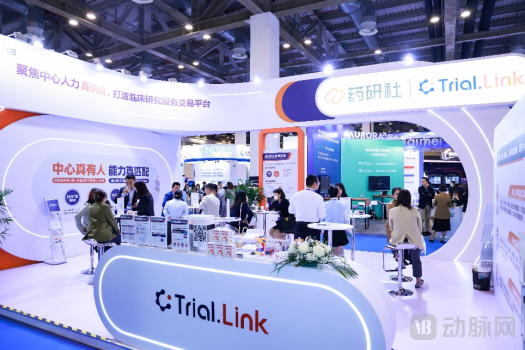
As key players in the clinical research ecosystem, Contract Research Organizations (CROs) and Site Management Organizations (SMOs) have also begun to strategically position themselves with a focus on genuinely enhancing R&D efficiency. At the CMAC venue, the company occupying the largest exhibition booth was Yaoyanshe, an innovative clinical research technology firm that has been deeply engaged in China’s digital landscape for seven years. Yaoyanshe introduced its clinical research service platform, Trial.Link, to attendees, introducing further innovations to the CRO/SMO service model. By empowering the drug clinical research ecosystem and directly addressing industry pain points, the platform attracted significant attention and sparked extensive discussion among participants.
Declining R&D Efficiency: Where Should Pharmaceutical Companies Go from Here?
In 2022, multinational pharmaceutical companies, Biopharma firms, and Biotech startups alike faced the ongoing challenge of “rising costs and declining returns.”
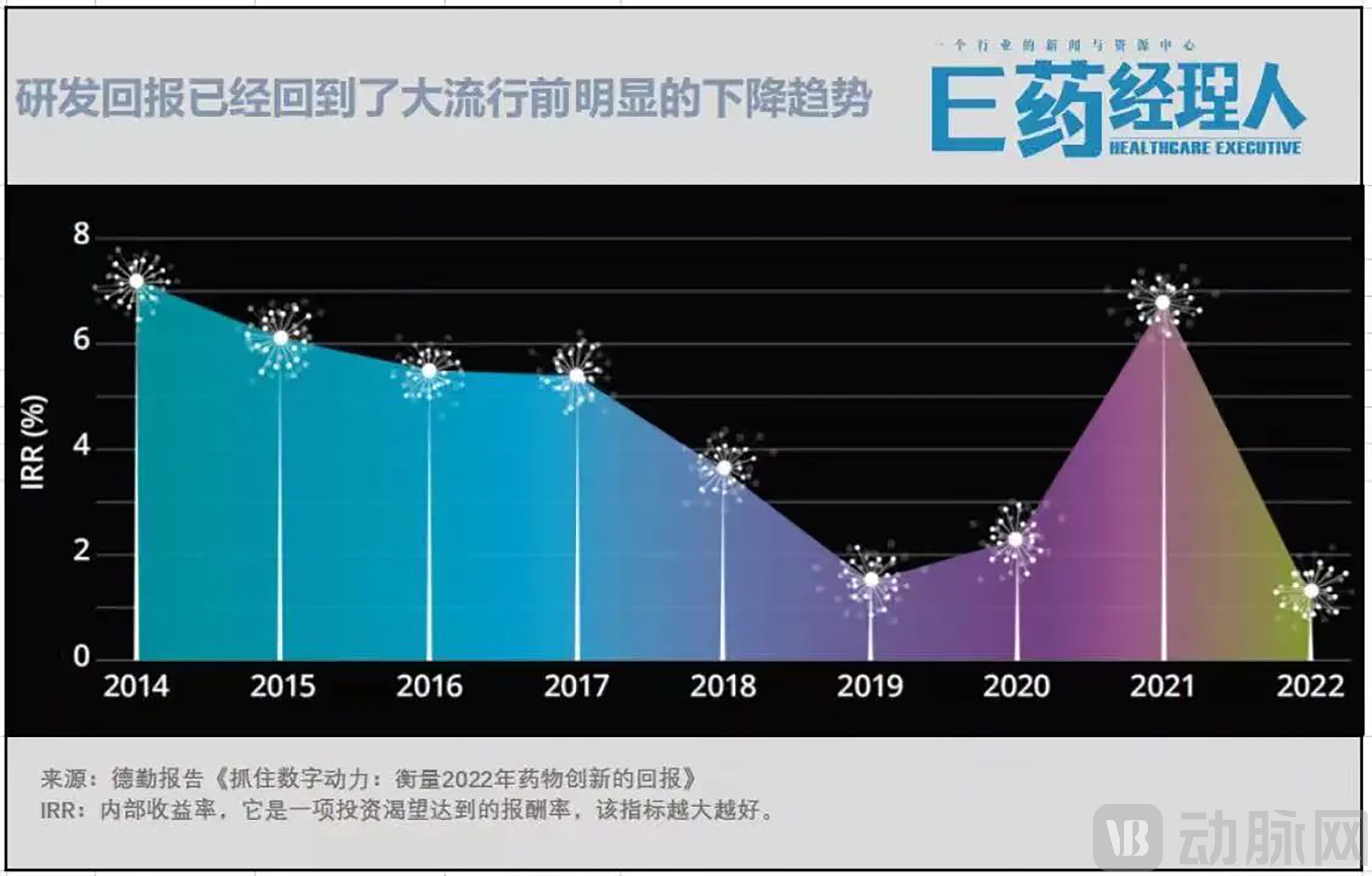
According to Deloitte’s statistics, the R&D return on investment for the global top 20 pharmaceutical companies fell to 1.2% last year, hitting a ten-year low. The average cost of developing a new drug rose to $2.284 billion, an increase of $300 million from the previous year; meanwhile, the average forecasted peak sales for these new drugs declined to $389 million.
For pharmaceutical companies, the “Double Ten Law” (ten years and one billion dollars) already represents a high barrier to entry. With this threshold continuing to rise, drug development has become increasingly challenging. Consequently, improving R&D efficiency has become a top priority for all pharmaceutical firms. Since clinical trials typically account for approximately 80% of total R&D costs, enhancing efficiency in the clinical phase has emerged as the primary focus.
Observing current practices, a small number of domestic pharmaceutical companies have chosen to bring operations in-house and are undergoing the process of “in-sourcing CRO services.” However, for the majority of biotech firms, reliance on clinical CRO/SMO providers remains necessary, making the selection and management of these vendors a significant challenge.
During the capital winter, biotech companies strive to allocate every dollar with precision. Generally, clinical trials involve numerous considerations, ultimately aiming for an optimal balance among quality, cost, and efficiency. Nowadays, when selecting CRO/SMO partners, they place greater emphasis on cost-effectiveness and delivery quality.; furthermore, there is a greater tendency to select the most suitable professional service providers in specialized niches, rather than blindly pursuing large, comprehensive CROs/SMOs.”Tang Anbang, Co-founder of Yanyaoshe and Head of the Platform Business Development Department, stated.
Taking the SMO industry as an example, statistics show that over 90% of small and medium-sized enterprises (SMEs) in China have fewer than 300 employees, and more than 70% of these companies cover fewer than 50 research centers. This implies that the site coverage capability of a single SMO company often fails to meet the project requirements of most pharmaceutical sponsors. On the other hand, small and medium-sized SMO companies exhibit strong regional characteristics, possessing distinct features and advantages at local sites, while offering highly competitive service prices—factors that are crucial in clinical research.
To resolve this contradiction,In May 2022, Drug Research Society upgraded its Trial.Link clinical research service trading platform. This platform has curated and aggregated more than 350 high-quality Site Management Organizations (SMOs) in China, aiming to integrate complementary strengths, match supply with demand, and build a robust clinical research ecosystem. It helps pharmaceutical companies identify suitable SMO partners more efficiently and with less effort, ultimately enabling earlier health benefits for patients.
Cost Reduction and Efficiency Improvement: New Requirements for the Development of the Clinical Research Ecosystem
Trial.Link leverages a digital platform model to connect “three key stakeholders and two ends,” providing end-to-end, full-chain services for the three primary parties involved in conducting research—investigators, practitioners, and patients—as well as for the two ends comprising sponsors and research institutions, thereby integrating core stakeholders within the ecosystem. Nevertheless, the industry still lacks sufficient empowerment and innovation for Clinical Research Coordinators (CRCs).
It is widely acknowledged that high-quality clinical studies are not achieved through administrative oversight, but rather through the efforts of frontline investigators and Clinical Research Coordinators (CRCs). With the continuous development of China’s pharmaceutical industry, intensifying competition within the sector, and a rapid increase in the number of clinical trials, it has become commonplace for CRCs to participate as investigator assistants. Consequently, it is now standard practice for pharmaceutical companies to assign CRCs to support investigators when conducting clinical trials.
As CRC has rapidly transitioned from an optional feature to a standard configuration within a short period, this has resulted inThe low proportion of high-quality CRC talent is a bottleneck limiting the delivery quality of clinical studies and represents the primary concern for pharmaceutical companies during clinical trial implementation.
“Our preliminary research has revealed an actual gap between the supply and demand for Clinical Research Coordinators (CRCs), with a particularly strong demand for high-caliber CRC talent,” said Tang Anbang. “Efficiently allocating top-tier CRCs is precisely the core issue that the Trial.Link platform aims to address during its development, serving as one of the fundamental principles to genuinely help pharmaceutical companies reduce R&D costs and improve the efficiency of R&D resource allocation.”
Dual Improvement in Talent Supply and Quality in Clinical Research
Beyond addressing basic needs, another key feature of the Trial.Link platform is its commitment to providing “genuine staffing resources.” In clinical research, one of the pharmaceutical industry’s greatest concerns has been the frequent turnover of Clinical Research Coordinators (CRCs) at study sites, or even the complete absence of dedicated CRCs, with personnel being assigned on an ad hoc basis wherever a project arises. This practice results in CRCs having limited familiarity with the study sites, compromising the quality of deliverables, and naturally hindering the training and development of clinical research talent.
Trial.Link offers a CRC selection mechanism, underpinned by the business guarantee of “verified on-site presence and genuine competency match.” By collaborating with over 350 premium SMO partners on its platform, Trial.Link currently covers more than 2,500 research sites. At most sites, the Trial.Link platform provides an average of over five CRC candidates for selection. These CRCs are generally more familiar with the research sites and investigators, possess richer work experience, and help ensure the smoother conduct of clinical trials. This ecosystem model breaks down the information barriers regarding talent between pharmaceutical R&D companies and research sites, enabling the selection of the best CRCs from a pool of top-tier candidates, ultimately improving delivery quality and accelerating the completion of clinical studies.
Digital Innovation Enables Holistic Enhancement of the Clinical Research Ecosystem
“The quality management system is the foundation and critical support of the Trial.Link platform, and constitutes the very essence of its operational model,” emphasized Tang Anbang.““Every stage of clinical research projects on the Trial.Link platform is supervised and managed by dedicated project managers from Yaoyanshe, ensuring high-quality project execution and final deliverable outcomes through mechanisms such as supplier qualification management, professional training and assessment systems, a three-tier quality control system, and risk management protocols.”
It is understood that, overall, contemporary clinical drug research continues to evolve along the logic of higher efficiency and lower costs. The Trial.Link platform model has already provided pharmaceutical companies with a novel clinical research solution for cost reduction and efficiency enhancement. Having been validated through nearly 400 projects spanning therapeutic areas such as oncology, cardiology, endocrinology, respiratory medicine, gastroenterology, and neurology, it has become a new ecological model of choice for clinical drug research.
Tang Anbang, Co-founder of Drug Research Society and Head of the Platform Business Development Department