

Tianjin's Digital Health Community Offers a New Solution to the Challenges of Implementing Tiered Diagnosis and Treatment
Mr. Li from Tianjin requires long-term use of immunosuppressive drugs and regular monitoring of blood drug concentrations following his lung transplant. However, due to his compromised immune system post-surgery, each hospital visit for blood tests posed a risk of fever and other complications. Since the launch of home-based medical services at his local community health center, Mr. Li can now schedule an appointment via his mobile phone in just a few minutes and wait at home for a phlebotomist to collect his blood sample. This patient-friendly initiative is part of Tianjin’s Primary Care Digital Health Consortium’s efforts to enhance primary healthcare services through the implementation of “cloud-based services.”
Addressing the imbalance in medical resources and alleviating the difficulties and high costs of healthcare access for the public through the development of Medical Consortia has long been a focal point of China’s healthcare reform. It is reported that in recent years, Tianjin Municipality has actively explored new approaches by leveraging digital hospitals to implement tightly integrated digital medical consortia. Its remarkable achievements have provided new insights for the reform of tiered diagnosis and treatment systems across various regions.
On April 7, at the 2023 National Health Work Conference, the National Health Commission once again emphasized the need to highlight key areas and critical links in healthcare reform, advance the improvement of operational mechanisms for close-knit medical consortia, and promote the expansion, decentralization, and balanced distribution of high-quality medical resources. On the 15th, the 2023 Tianjin Health Work Conference was held, stressing the need to strengthen the supply of medical services, including expanding high-quality resources, solidifying the grassroots healthcare network foundation, advancing informatization construction, and implementing people-centered benefit measures, while deepening reform practices such as the “three-medical linkage.” Digitally enabled “medical consortium development” is being prioritized on the 2023 healthcare reform agendas across various regions.
Having withstood the test of the pandemic, China’s healthcare service system has made significant progress; however, certain stubborn “bottleneck” issues remain, most notably the uneven distribution of medical resources, particularly high-quality medical resources.
The “2021 Statistical Bulletin on the Development of China’s Health and Health Services” shows that among approximately 37,000 hospitals in China, tertiary hospitals—accounting for only 9% of the total—bear 60% of the diagnosis and treatment burden. Many chronic disease patients like Mr. Li often need to queue up at large hospitals for long-term consultations and medication prescriptions, which is not only costly and inconvenient but also makes it difficult to achieve efficient health monitoring and management.
During this year’s Two Sessions, Zhang Wenhong, a member of the National Committee of the Chinese People’s Political Consultative Conference (CPPCC), Director of the National Center for Infectious Diseases, and Director of the Department of Infectious Diseases at Huashan Hospital Affiliated to Fudan University, called for continued strengthening of China’s primary healthcare system. He expressed hope that tertiary hospitals would both empower primary healthcare institutions and establish a structured relationship involving tiered diagnosis and treatment, stratified care, and patient分流 (diversion), thereby building a healthcare system characterized by vertical integration, seamless transition between routine and emergency operations, flexibility, and resilience.
In March 2023, the General Office of the Central Committee of the Communist Party of China and the General Office of the State Council issued the “Opinions on Further Improving the Healthcare Service System.” As a key roadmap for healthcare system reform over the next decade, the document calls for expanding high-quality medical resources and promoting their balanced regional distribution, building a high-quality and efficient integrated healthcare service system, explicitly supporting social-run medical institutions to lead or participate in medical consortiums, and encouraging the supportive role of digital technologies.
The latest National Health Conference has once again placed “the development of medical consortia” high on the priority agenda for China’s 2023 healthcare reform.
At the meeting, Ma Xiaowei, Secretary of the Party Leadership Group and Director of the National Health Commission, stated that efforts should focus on key areas and critical links of healthcare reform, advance the improvement of operational mechanisms for close-knit medical consortia, and enhance the coordinated development and governance mechanisms among medical care, health insurance, and pharmaceutical sectors. Emphasis should be placed on improving the quality of healthcare services, continuing to expand the capacity of high-quality medical resources while promoting their downward deployment and balanced distribution, fostering the healthy development of rural healthcare service systems, comprehensively strengthening primary-level health management, and improving the supply guarantee system for shortage medicines, among other measures.
With favorable policies gaining momentum, the region-specific development of integrated medical consortiums has clearly become a key focus for local implementation of healthcare reform. This approach aims to expand and decentralize high-quality medical resources, promote their balanced regional distribution, and enable more patients to conveniently access equitable healthcare services, thereby creating new growth opportunities for industries such as digital health.
Under the guidance of national policies, various regions have actively applied new technologies and concepts to explore the development of close-knit medical consortia, aiming to build a high-quality and efficient integrated healthcare service system. In particular, after the National Development and Reform Commission and four other departments issued the "Key Points for Digital Rural Development in 2022" in April 2022, which proposed "guiding localities to explore the construction of grassroots digital health communities," new models such as digital medical consortia have accelerated their promotion.
Recently, CCTV News conducted an in-depth report on Tianjin’s digital medical consortium practices—
It is reported that, under the guidance of the Tianjin Municipal Health Commission and the Tianjin Municipal Healthcare Security Administration, Digital Hospital (Tianjin Weiyi Internet Hospital) has taken the lead in collaborating with 266 primary healthcare institutions across the city to establish the “Tianjin Primary Care Digital Health Community.” This initiative involves building four unified cloud platforms—“Cloud Management,” “Cloud Services,” “Cloud Pharmacy,” and “Cloud Diagnostics”—and jointly developing standardized chronic disease management centers to provide residents with integrated online and offline medical and health services. Meanwhile, this innovative medical consortium uses chronic disease management as an entry point to explore and implement payment reforms based on diagnosis-related groups (DRGs) and capitation models, establishing a “pay-for-performance” system for medical services and implementing a health accountability mechanism.
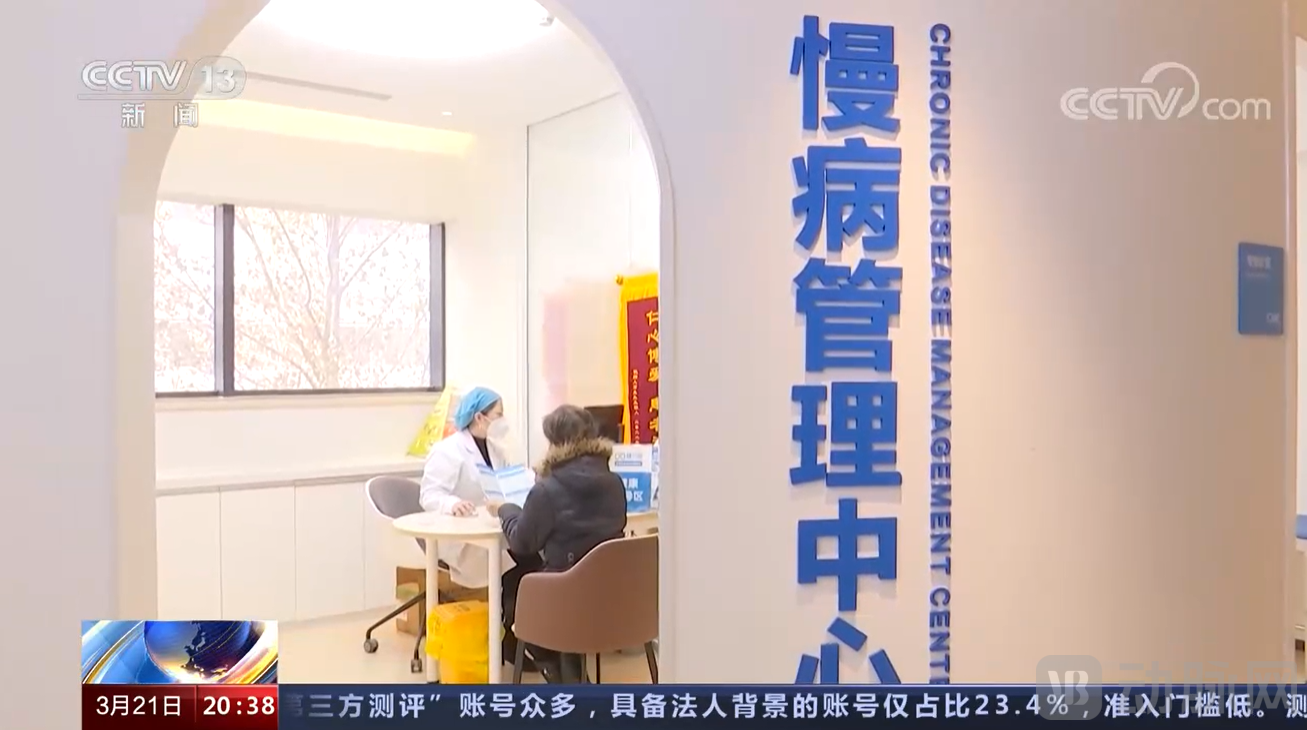 CCTV News In-Depth Report on the Practice of Tianjin’s Grassroots Digital Health Consortium
According to reports, as of March 2023, more than 220,000 diabetic patients in Tianjin had been enrolled and incorporated into the health stewardship responsibility system for special outpatient diabetes care. Among them, patients signed up with member institutions of the Digital Health Consortium accounted for approximately 50% of the total. Furthermore, by the end of November 2022, the standardized management rate for diabetic patients who had received continuous care for more than three months at pilot primary healthcare institutions reached 81.5%, while the blood glucose control rate improved by over 12.1%.
“After the doctor’s management, I’m taking fewer medications, my costs have gone down, and I feel better and more energetic than before!” said Mr. Wang, a patient with diabetes, at the Zhongbei Town Community Health Service Center in Xiqing District, Tianjin, a member unit of the healthcare consortium. He made these remarks after receiving comprehensive health guidance from his physician and health manager on diet, medication, lifestyle, and other aspects.
With patient satisfaction improved, primary healthcare institutions have gained greater confidence and assurance. After joining Tianjin’s Primary Care Digital Health Consortium and establishing a Chronic Disease Management Center, Jinghai Town Health Center leveraged the consortium’s digital platform to address shortcomings in chronic disease management capabilities. In December last year, within just one month, the center enrolled over 500 diabetic patients under signed contracts to fully implement the health manager responsibility system for diabetes outpatient special care, thereby retaining more patients with common and chronic diseases at the primary care level.
Han Qide, former Vice Chairman of the National Committee of the Chinese People's Political Consultative Conference and an academician of the Chinese Academy of Sciences, evaluated the effectiveness of Tianjin’s grassroots Digital Health Community after conducting a field survey. He stated that Tianjin’s practice in building a Digital Health Community demonstrates the government’s strong determination to advance healthcare reform, focuses on addressing the critical needs of primary care and disadvantaged populations, balances efficiency with equity, and sets a benchmark for healthcare system reform.