Bota Bio Files for IPO: Charting the Next Phase of Synthetic Biology through Strategic Product Selection, Scale-up, and Market Positioning

HongShan
Business Consulting, Enterprise Management Consulting Investment Institutions

Bota
Synthetic Biology Technology Platform Provider
MPCi
Venture Capital Institutions in High-Tech Startup Fields
In early 2020, Bota Bio was seeking financing. At that time, however, synthetic biology remained a relatively unfamiliar concept within the industry. As co-founder and CEO, Cheryl Cui had to repeatedly explain to investors what synthetic biology entailed and the value it could bring to the sector.
In 2021, Bota Biosciences completed two rounds of financing, garnering favor from top-tier investors such as MPCi and HongShan. However, unlike the previous year, Cheryl Cui no longer limited herself to providing a comprehensive overview of the industry during discussions with investors; instead, she focused primarily on the company’s own technologies and products.
This shift in perception stems from two industrial transformation logics within synthetic biology: first, the successive IPOs of synthetic biology unicorns Zymergen and Ginkgo this year, which have set a benchmark for future public offerings; second, the phased changes occurring in the healthcare industry,The “low-hanging fruits” of domestic substitution have largely been harvested, compelling healthcare investors to turn their attention to technology-driven, interdisciplinary innovative fields, with synthetic biology emerging as a particularly promising option.。

Figure 1. Financing Trends in the Synthetic Biology Sector (Data Source: VCBeat)
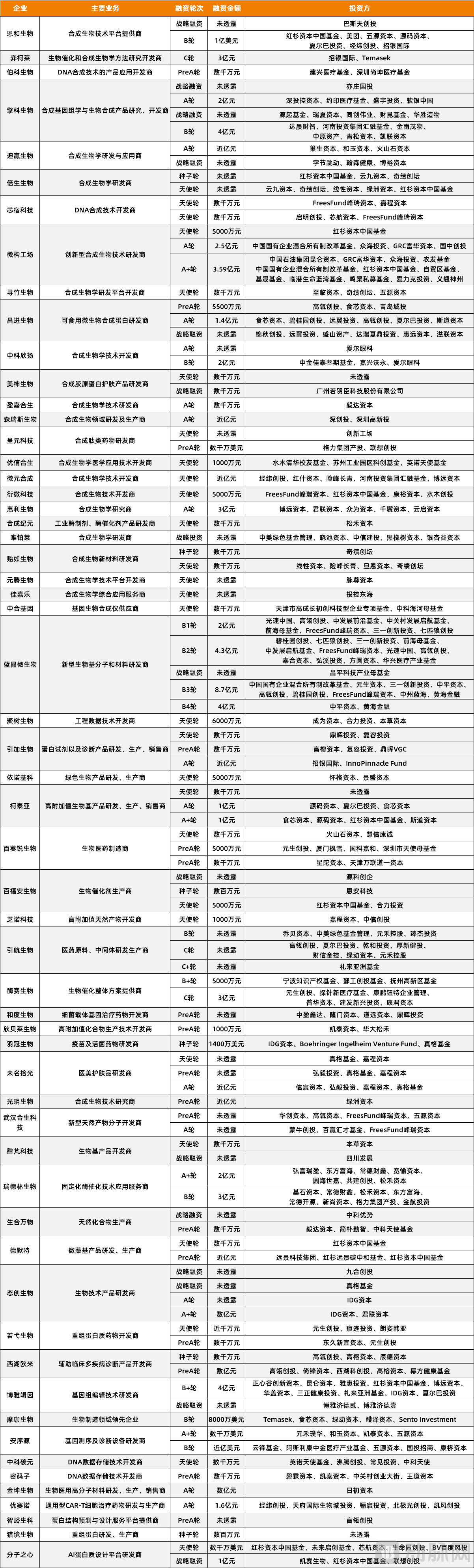
Therefore, since 2021, synthetic biology has remained at the forefront of the industry. Even in 2022, when the primary market was quite sluggish, interest in synthetic biology continued to run high.According to incomplete statistics from the Orange Database of VCBeat, China’s synthetic biology sector completed a total of 54 financing rounds in 2022, making it one of the sub-sectors with the highest number of financing deals within the healthcare segment.. But this is only the beginning. In a survey conducted by VCBeat at the beginning of this year, which interviewed 13 top-tier venture capital firms, it was found that they all basically identified synthetic biology as a key investment focus in the healthcare sector for 2023. Additionally, if we take 2021 as the starting point,To date, China’s synthetic biology sector has completed a total of 103 financing rounds, with as many as 300 investment institutions participating in additional investments.
But today, we will no longer discuss the reasons behind the industry’s surge in popularity, nor delve into the development histories of the three synthetic biology giants—Amyris, Zymergen, and Ginkgo Bioworks—as these topics have been extensively covered over the past two years. At this current juncture, VCBeat seeks to find answers to three key aspects in this field:First, what tangible advancements has synthetic biology achieved in the healthcare sector over the past two years? Second, from a technological development perspective, what stage has synthetic biology currently reached, and how far is it from the industry’s inflection point? Third, after the market consolidation, what type of synthetic biology companies will ultimately prevail in the future?
To this end, VCBeat engaged in in-depth discussions with researchers, company founders, and frontline investors in the field of synthetic biology.
Over 100 Financing Rounds in Two Years: Have the Key Themes of Synthetic Biology Been Defined?
Throughout this interview, VCBeat has been seeking specific answers, such as the primary medical scenarios where synthetic biology is currently being applied and the progress made to date. However, based on the actual feedback received, there is not yet a consensus on the understanding of this field.
This is primarily due to two reasons. First, as a foundational technology, synthetic biology has extremely broad application scenarios. In the biomedical sector alone, it encompasses numerous areas, including cellular immunotherapy, RNA therapeutics, microbiome-based therapies, gene editing applications, in vitro diagnostics, medical consumables, production of pharmaceutical ingredients, and pharmaceutical enzymes. Second, synthetic biology is still in its early stages of development, requiring continuous exploration and refinement through practical applications.
How this exploration unfolds is reflected in investors’ selection of portfolio companies. According to incomplete statistics from the VCBeat Orange Database,In the past two years, a total of 58 companies in China's synthetic biology sector have secured financing for medical applications., broadly categorized into three major types based on their underlying logic,The first category comprises upstream synthetic biology enabler companies, also known as tool-based enterprises., primarily focusing on DNA-related areas and offering services such as sequencing, synthesis, and gene editing. Typical companies includeXinsu Technology、Anxuyuan、Zhongke TanyuanandZhiyu Biosciences。
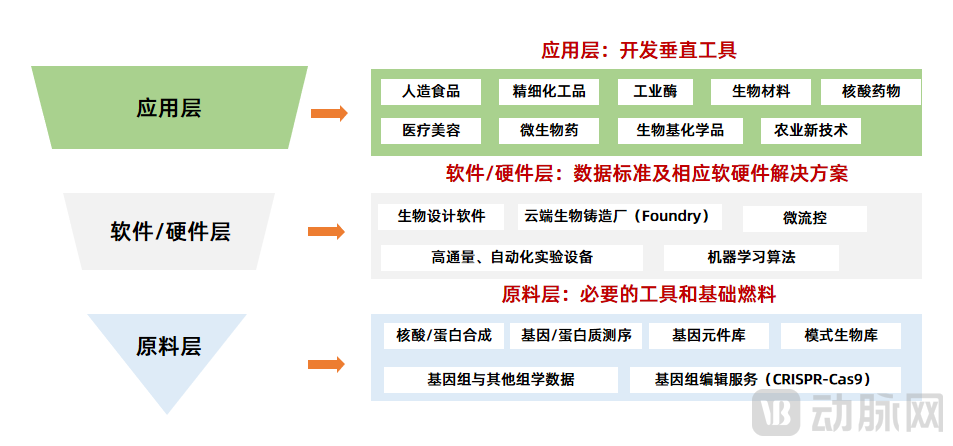
Figure 2. Schematic diagram of the upstream and downstream distribution of synthetic biology
The second category comprises synthetic biology platform companies focused on the midstream segment., primarily focusing on strain screening and engineering, as well as the development of culture media components, with the aim of providing synthetic biology platforms for organism design and software development. Representative enterprises include those mentioned earlier,Bota, it develops efficient, green, low-cost industrial biotechnologies suitable for large-scale production by creating a standardized, automated, high-throughput experimental platform and combining machine learning and artificial intelligence to perform systematic and engineering-based editing of organisms, thereby providing solutions for industries such as pharmaceuticals. In addition, representative companies in this category includeYuanteng Biotech、Xunzhu BioandSynres Biologics。
The third category is downstream, i.e., on the product side., this represents the largest category of enterprises in China's synthetic biology sector. The reason is that, compared to upstream tool-oriented companies and midstream platform-based companies, product-oriented companies are better able to integrate the entire industry chain—from biological engineering and fermentation purification to product modification—thus achieving stronger profitability. However, product-oriented companies also have their limitations, with the greatest challenge being product selection.
By reviewing synthetic biology companies that completed financing in the past two years, VCBeat has found that product-oriented enterprises are primarily divided into three major sectors—pharmaceuticals, chemicals, and food/consumer goods—based on their application scenarios. In the pharmaceutical sector, a representative company is Bakui Rui Biology. Leveraging technologies for precise protein design and protein molecular machines, it focuses on developing phage-like solutions to address antibiotic resistance. Currently, its main product pipelines include the biosynthesis of 7-ADCA, an intermediate for cephalosporin antibiotics, and the biosynthesis of phage-like particle alternatives to antibiotics.
Next is the chemical industry, with typical enterprises being those that have garnered significant attention within the sector.BluephaIt is reported that Bluepha Microbiology has completed five rounds of financing over the past two years, with the total amount approaching RMB 2 billion. The company is dedicated to the design, development, manufacturing, and sales of novel bio-based molecules and materials. Currently, it has amassed substantial technical reserves and intellectual property portfolios across all segments of the PHA-related technology chain, including strain development, biotransformation, separation and purification, and material modification. In March this year, its first innovative product—the marine-degradable biopolymer Bluepha PHA—was officially launched on the market.
Finally, the food and digestive health category, with representative companies includingDemetandChangjin Biotech, among which Demeter's R&D and production products include functional lipids and proteins, mainly applied in the fields of food, dietary supplements, cosmetics, and animal nutrition; while Changjin Bio focuses on the production of edible microbially synthesized protein.
Overall,Synthetic biology currently does not have a particularly focused direction in medical applications., In addition, many companies are currently unable to fully define their roles, as the industry has not yet developed more specialized divisions of labor. Many enterprises are continuously experimenting and breaking through their own business boundaries, which are typical manifestations of the current lack of industry consensus in synthetic biology.
Yet this is precisely the tremendous opportunity in this field, as an investor remarked in an interview,If a niche sector already has many definitive answers and industry consensus is gradually forming, it indicates that the field is saturated and on the verge of entering a phase of involution, with extremely limited room for future growth and imagination.。
Will Synthetic Biology Continue to Heat Up or Face a Bubble? How Far Is It from the Tipping Point?
Every technology has its development curve, but when an industry is in a period of rapid commercialization, we tend to overlook some less positive information, such as:
· In the primary market, although the synthetic biology sector has completed over 100 financing rounds in the past two years, these are predominantly concentrated at pre-Series A stages; there have been only 11 financing rounds at Series A and beyond, with merely four rounds occurring after Series B.
· In the secondary market, although the synthetic biology sector has seen the emergence of listed companies such as Cathay Biotech and Huaheng Biotechnology, the overall number remains relatively small. Furthermore, in late 2022, the prominent enterprise Abiochem Biotechnology terminated its initial public offering (IPO) on the STAR Market;
· Finally, turning to the companies themselves, VCBeat has observed that many synthetic biology firms are currently reducing their investments in the pharmaceutical sector. For instance, although pharmaceuticals were the cornerstone of Abiochem Biotechnology Co., Ltd.’s initial success, its share in the pharmaceutical domain has gradually declined as the company has increased its investments in agriculture, nutrition, and health.
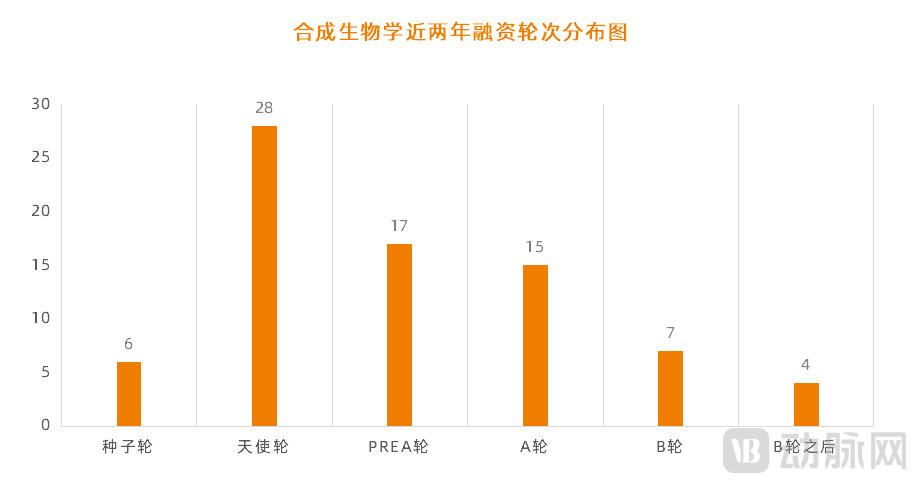
Figure 3. Distribution of Financing Rounds in Synthetic Biology Over the Past Two Years (Data Source: VCBeat)
Does this mean that the inflection point for the synthetic biology industry has arrived? The answer is clearly no. In the view of many professionals, the inflection point for synthetic biology is still quite some time away—perhaps three to five years, or even on a ten-year cycle. Regardless, the industry has not yet reached its peak momentum and remains in its takeoff phase.
The basis for this judgment certainly includes the inherent characteristics of synthetic biology technology itself, as well as the introduction of numerous related policies in recent years; however, this is only the tip of the iceberg. Looking at the current landscape, we also observe new developments that corroborate the fact that synthetic biology remains in a period of rapid ascent.
First, from the R&D perspective, withTsinghua University, Westlake University, Institute of Microbiology, Chinese Academy of Sciences, Shenzhen Institutes of Advanced TechnologyLeading domestic research universities and institutions are currently prioritizing strategic investments in the field of synthetic biology, establishing dedicated laboratories and continuously recruiting top-tier talent from overseas, including Professor Zeng Anping, a prominent synthetic biologist.
The return of these top-tier talents has not only provided significant momentum to scientific research; currently, China ranks second only to the United States in the number of articles published in leading global academic journals in the field of synthetic biology, with overall quality continuing to rise. Furthermore, a substantial proportion of these talents have now entered the industry sector. According to compiled data, most synthetic biology companies that secured financing over the past two years originated from four research institutions: Tsinghua University, Westlake University, the Institute of Microbiology of the Chinese Academy of Sciences, and the Shenzhen Institutes of Advanced Technology. This indicates that many domestic research institutions have already developed mature experience in facilitating the translation of cutting-edge synthetic biology achievements from the laboratory to industrial application.
Secondly, from the industry perspectiveOn one hand, a large number of leading enterprises are entering the field of synthetic biology, rapidly integrating their industrial advantages into the synthetic biology ecosystem. On the other hand, numerous top-tier investors are continuously focusing on synthetic biology. These include venture capital funds such as HongShan, Matrix Partners China, and Hillhouse Capital, as well as alumni funds incubated by research universities and institutes, and many local industrial guidance funds supported by the government. These funds not only possess mature investment logic for the synthetic biology industry but also provide corresponding post-investment services, offering diversified support to startups.
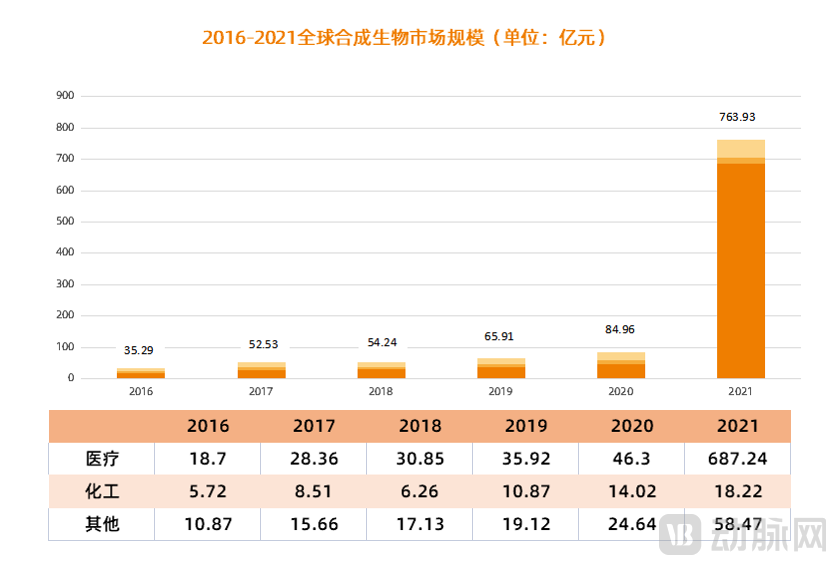
Figure 4. Global Synthetic Biology Market Size, 2016–2021 (Source: CB Insights)
Finally, from the perspective of market space, according to CB Insights data,In 2021, the global synthetic biology market size reached USD 73.693 billion, a year-on-year increase of 767.5%. From the perspective of sub-sectors, the life and health market size reached USD 68.724 billion, accounting for over 93%.. Additionally, according to McKinsey’s forecasts, synthetic biology is projected to have an annual potential impact of $0.5–1.2 trillion on life and health between 2030 and 2040, with the ultimate prospect of addressing 45% of the global burden of disease.
Therefore, although synthetic biology currently faces considerable uncertainties, its future market value in the healthcare sector is highly certain, representing a niche segment with both high growth potential and strong predictability. As for how long it will take to reach the inflection point of the technology growth curve, no definitive conclusion can be drawn at present; however, there are certain reference criteria for judging the arrival of this inflection point. In an interview, Xue Mingyu, Vice President of Investment at MPCi, discussed this matter.“If a certain number of synthetic biology companies that have been in operation for three to five years bring products to market and achieve profits exceeding RMB 100 million within a short period, while articulating their industrial logic in a manner that is clear and transparent to all, this will signal that the industry has reached its inflection point.”。
But before that, both entrepreneurs and investors inevitably have to become “friends of time” when facing synthetic biology—a sector characterized by high barriers to entry, numerous niche segments, and significant variations in R&D cycles.
What Kind of Companies Does the Future of Synthetic Biology Belong To?
Perhaps it is a case of “popularity breeds controversy.” Currently, many companies are labeling themselves as players in synthetic biology. This trend is driven partly by the current hype surrounding the concept of synthetic biology and partly by its interdisciplinary nature, which allows nearly any biology-related field to claim some connection. As a result, there is no shortage of companies engaging in synthetic biology for the sake of appearing to do so.
Perhaps it is precisely for this reason that many industry professionals sighed during this interview,Ten years ago, China’s strategic layout for synthetic biology was nearly a blank slate; today, it has become so densely populated that it can no longer be fully captured on the map.。
According to incomplete statistics from the VCBeat Orange Database, over 100 synthetic biology companies in China have completed financing rounds. However, the industry landscape cannot accommodate such a large number of players, and the synthetic biology sector is inevitably destined to undergo a rigorous process of consolidation and survival of the fittest. Currently, some companies are already falling behind. As the industry matures, what types of synthetic biology enterprises will ultimately emerge as leaders?
In the view of Xue Mingyu, Vice President of Investment at MPCi,“Although synthetic biology-based biomanufacturing is at the technological frontier, it is in fact a highly practical industry. Therefore, its evaluation criteria are straightforward: the ability to produce products that are both cost-effective and high-quality, and ultimately commercially viable.”。
Following this logic, synthetic biology companies need to focus on addressing two key issues: product selection and the transition from laboratory research to large-scale production. First, regarding product selection, Dr. Zhang Haoqian, Co-founder and CEO of Bluepha, has noted that the lifecycle of consumer products is typically three to four years, whereas the development of new synthetic biology products takes approximately five years and requires an investment of around $50 million. If the wrong product is chosen—such as one with strong cyclicality or one that becomes obsolete after a three- to four-year trend—the resulting losses can be substantial. Therefore,From the outset, the entire founding team must fully take into account technology, market dynamics, and economic viability.。
So, how should product selection be approached? For enterprises, it is helpful to consider questions from two perspectives:First, what are the competitive advantages of synthetic biology compared to traditional chemical products, and does it meet the substitution logic of cost reduction and efficiency improvement? Second, from the perspective of the enterprise itself, can it form a complete closed loop in this product field and avoid homogeneous competition?
In response, Dr. Lin Qiubin, Founder and CEO of YG Biologics, offered his recommendations, namelyTackling challenges that are unfeasible or particularly difficult to address with conventional biomedical approaches. Cheryl Cui, Co-founder and CEO of Bota, shares the same view, believing that startups canPrioritize selecting product categories that are better suited for development using biotechnology for initial trials.。
Having discussed product selection, we now turn our attention to scaled-up production, specifically the challenges of process scale-up. Howard Chou, a Senior Engineer at the Shenzhen Institute of Advanced Technology, Chinese Academy of Sciences, once candidly stated,Process development is the area with the least accumulated experience across the synthetic biology industry and currently represents a significant barrier to entry. This is primarily because synthetic biology is an emerging, highly interdisciplinary field, offering few off-the-shelf templates for reference in manufacturing.。
An industry expert revealed to VCBeat that while the engineering and design of microbes generally pose no significant challenges in small-scale laboratory culture environments, scaling up to industrial production in fermentation facilities with capacities of hundreds of tons introduces exceptionally complex environmental conditions, making it difficult to ensure microbial stability. This challenge is not unique to China; it is equally prevalent in the United States. Currently, few companies have successfully scaled synthetic biology processes from bench-scale trials to large-scale manufacturing.
Finally, beyond product selection and scaled production, a company’s position within the broader industry is also critically important. In an interview with VCBeat, Deng Zixin, an academician of the Chinese Academy of Sciences, stated that synthetic biology is interconnected, convergent, and integrative. While leveraging their own strengths, companies must also take an industry-wide perspective; only through coordinated development across the entire industry can more opportunities and possibilities be created.Whether it is a "purpose"-oriented engineering design approach or product development aimed at "application," the emphasis is on the "integration" between upstream and downstream sectors.. Therefore, accurately identifying one's position within the industry value chain is equally critical for synthetic biology companies.
# Closing Remarks
In fact, during the industry’s peak hype cycle, everyone could spin a narrative and find an eager audience. However, stories eventually run their course, and industry bubbles will gradually deflate in the future. Therefore, companies with currently inflated valuations risk finding themselves at a disadvantage if they fail to adjust promptly to market changes, ultimately losing their competitive edge.
Therefore, as the synthetic biology field seeks answers to its current stage of development and future strategic directions, it is worth recalling the famous quote by Churchill cited by Xue Mingyu, Vice President of Investment at MPCi:“This is not the end. It is not even the beginning of the end. But it is, perhaps, the end of the beginning.”
We are in an indefinable stage of industry development, perhaps as revealed by the Hype Cycle,We may have overestimated the immediate breakthroughs of this technology, while simultaneously underestimating its long-term momentum., but regardless, the standard for standing out in this industry is simple, namelyR&D, Commercialization, and Sales。
·References:
1. “Leading Synthetic Biology Companies See Sharp Stock Price Drops: What Does This Reveal?” — VCBeat;
2. “Synthetic Biology: The New Favorite in Pharmaceutical Investment After Innovative Drugs” – Shenlan Guan;
3. “MIT PhDs Flood In, Company Valuations Soar Tenfold Annually: Another Hidden Sector Explodes” — Cyzone;
4. “Why Is Synthetic Biology, Which ‘Creates All Things from Biology,’ a Certain Future?” — Hillhouse Insight;
5. “Synthetic Biology: Engineering Life for Practical Use, The Future Is Here” — GTJA Special Research Report.
· Appendix: Overview of Synthetic Biology Companies Securing Financing in the Past Two Years