

Babylon Health: The Digital Health Pioneer That Raked in Over $1.1 Billion in 2022 with 246% Revenue Growth

Babylon
Digital Health Service Provider
For various reasons, digital health has underperformed in the recent past. However, there is one notable exception. Babylon Health (hereinafter referred to as “Babylon”), which once billed itself as “the world’s fastest-growing digital health company,” once again sparked envy across the industry after releasing its annual report for fiscal year 2022—It is incredibly profitable, with 2022 revenue exceeding $1.1 billion (RMB 7.6 billion) and a growth rate as high as 246%!
How Babylon Leverages Technology to Empower Healthcare: What Underpins Its Exponential Growth? VCBeat (WeChat ID: Vcbeat) Offers an Analysis for Industry Reference.
In the press release announcing its 2022 annual report, Babylon used the phrase “Another Strong Year.” Judging by its annual report, this description is not an exaggeration in the slightest.
According to Babylon’s annual report, the company achieved $1.11 billion in revenue in 2022, joining the “$1 Billion Club”—just months after going public through a merger with the SPAC Alkuri Global Acquisition Corp. (“Alkuri”) in October 2021.
In other words, it took Babylon just over a year to go from its IPO to surpassing $1 billion in revenue!
It is worth noting that even Teladoc, a leading player in internet healthcare renowned for its sustained high-speed growth, took a full five years—from its IPO in 2015 to surpassing $1 billion in revenue in 2020. This demonstrates that the claim of being “the world’s fastest-growing digital health company” is indeed well-founded.
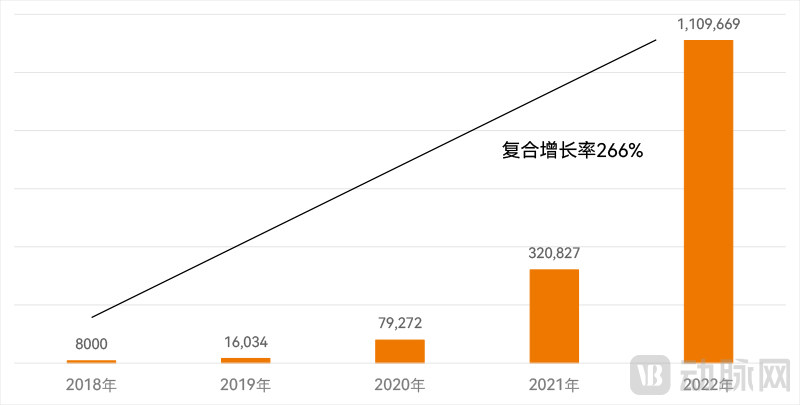
Since commencing revenue generation, Babylon has achieved exceptionally high growth every year. In 2018, Babylon recorded $8 million in revenue. Subsequently, it increased its revenue by 102% in 2019, reaching $16 million. Frankly speaking, this represents a quite impressive growth rate.
According to the usual script, as the base grows larger, Babylon’s growth rate would decline year by year. However, astonishingly, Babylon’s script is somewhat different—this was actually its slowest year for revenue growth.
In 2020, Babylon’s revenue reached $79.27 million, representing a staggering year-over-year growth rate of 394%. In 2021, revenue surged by another 305%, reaching $321 million for the full year. Compared with 2021, Babylon’s growth rate in 2022 stood at 264%.Although the growth rate fell below 300% for the first time, this is undoubtedly a remarkable achievement given its base of over 100 million from the previous year.
Ali Parsa, founder and CEO of Babylon, once “humbly” stated that Babylon’s sustained growth in the healthcare sector may seem extraordinary, but it is no different from the rapid growth rates seen in the early stages of many well-known disruptive digital innovators such as Amazon, Netflix, Tesla, or Airbnb.
Based on the comparative data, the four-year compound annual growth rates (CAGR) of revenue for Amazon, Netflix, Tesla, and Airbnb, measured over the four years following their initial revenue generation, were 59%, 74%, 126%, and 146%, respectively. In comparison,Babylon’s four-year compound annual growth rate (CAGR) in revenue reached as high as 266%, far surpassing those of these widely recognized high-growth companies.
Babylon’s Revenue Growth Is Extremely Exaggerated (Chart by VCBeat)
Compared with its industry peers, Babylon’s growth rate is even more astonishing. Its compound annual growth rate (CAGR) of revenue from 2020 to 2022 reached as high as 199.3%, which is 4.6 times the median of 43% among the major companies in the industry.
However, Babylon’s revenue has reached the billion-dollar mark, with its current annual revenue approaching half that of Teladoc, the internet healthcare giant. It is clearly unrealistic to expect such exponential growth to continue; in its 2023 forecast, Babylon indicated that its revenue would remain roughly flat compared to 2022, at approximately $1.1 billion.
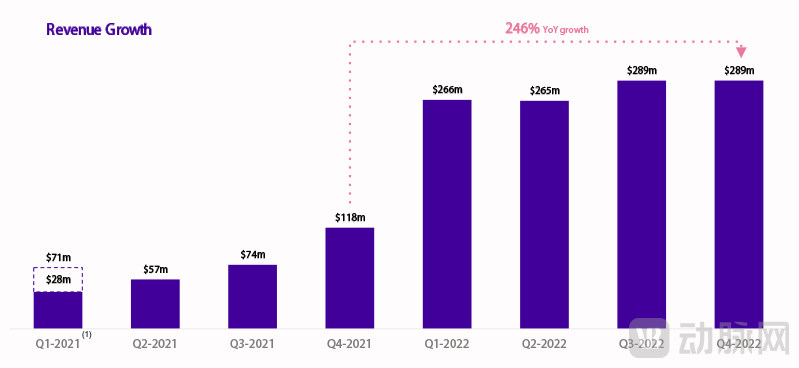
This trend is also quite evident from the quarterly performance over two consecutive years. Babylon experienced significant growth for four consecutive quarters in 2021, driving its quarterly revenue up sharply from $43 million in Q1 2021 to $226 million in Q1 2023. However, starting in 2022, its quarterly revenue began to stabilize, remaining consistently at the $290 million level over the most recent two quarters.
Babylon’s Quarterly Revenue Gradually Stabilizes (Screenshot from Babylon’s Annual Report)
Even so, this is a level that many digital health companies find difficult to reach.
So, why has this veteran of the UK’s digital health sector delivered such remarkable performance?
Changes in Babylon's Revenue
According to the annual report,Babylon’s revenue is primarily derived from three main sources: medical service income, clinical service income, and software licensing revenue.Among these, clinical service revenue and software licensing revenue were Babylon's primary sources of income in its early stages.
Clinical services primarily refer to access by enterprise and individual users to the Babylon digital health platform, which includes a comprehensive suite of digital care tools, mobile app-based digital health kits, and consultations with licensed physicians. Revenue from this segment is mainly generated through fee-for-service models or a combination of fee-for-service and capitation payments. Additionally, this revenue stream includes fixed monthly membership fees for internet-based healthcare services.
This portion of revenue is primarily derived from Babylon’s home market, the United Kingdom. Currently, this segment has already achieved profitability after accounting for service costs.
Software licensing refers to the process by which Babylon licenses its digital platform to customers via cloud services, including AI-powered symptom checkers and knowledge graph tools, digital health kits, and bundled offerings that combine these digital health kits with internet-based chronic disease management for target populations.
Underpinning this is Babylon’s artificial intelligence technology, accumulated over many years. According to tests, Babylon’s AI approaches the performance of average-level general practitioners in clinical assessment, and 48% of all its operations can be handled by AI assistants.
Babylon believes that its artificial intelligence has two core features. The first is that its models possess strong interpretability and explanatory power. This enables clinicians to understand the sources of data and parameters within the AI system and, on this basis, independently evaluate the AI’s conclusions. The second is the ability to quantify prediction uncertainty. Babylon holds that, compared with traditional “black box” AI, this feature allows for better quantification and assessment of the additional information required to make predictions at a specified confidence level.
Furthermore, Babylon’s AI can flexibly process data, enabling rapid model adaptation to new populations. This allows Babylon’s AI to leverage electronic health records from multiple sources and, where requirements are met, incorporate additional data sources such as clinicians’ insights, research findings, and diverse medical knowledge.
Relatively speaking, the growth of clinical service revenue has been stable and sustained, whereas software licensing revenue has fluctuated significantly. However, both pale in comparison to the subsequently emerging value-based care services—starting in 2020, the proportion of value-based care services in its revenue rapidly increased, delivering “phenomenal growth.”
In 2020, revenue from value-based care services stood at only $26.04 million, lower than that from clinical services. Just one year later, this figure surged to $219 million, twice the combined total of clinical service revenue and software licensing revenue. By 2022, revenue from value-based care services had shifted another decimal place to the right, reaching $1.026 billion and accounting for a substantial 92.5% of total revenue.
Babylon’s Historical Revenue Composition (Chart by VCBeat)

From “tens of millions” to “hundreds of millions” and then to “billions,” Babylon took only three short years.Any analyst, upon first witnessing this scene, would inevitably doubt their own eyes, then question whether they had misread the units, and only after exhausting all possible explanations would they finally accept the facts and express their admiration.
Value-Based Healthcare Is Big Business
Value-based healthcare is a new health management model that has gradually emerged worldwide in recent years. This model focuses on overall population health outcomes and emphasizes maximizing the utility of limited resources. At its core, it establishes risk-sharing and incentive mechanisms wherein payers and providers agree on payment based on actual medical effectiveness and population health outcomes.
Babylon centrally manages the healthcare needs of its members and negotiates corresponding service fees with payers based on applicable premiums or the medical loss ratio (medical loss ratio = medical costs / annual premium income), either through a fixed monthly fee per member or on a capitated basis.
During the service period, Babylon will cover the costs incurred for members' medical services. If the actual medical expenses incurred by a member are less than the agreed-upon amount, Babylon will retain all or part of the savings; however, if the actual medical expenses exceed the agreed-upon amount, Babylon will also be responsible for all or part of the excess costs.
In most cases, these services should be sufficient to ensure that Babylon does not incur losses, although individual unexpected scenarios cannot be ruled out. Therefore, Babylon also purchases “stop-loss” insurance for all value-based healthcare services. These insurance policies come into effect when the expenditure on any single patient exceeds expectations and reaches a predefined threshold. Typically, the cost of such stop-loss insurance accounts for only a few percentage points of its revenue.
Under this model, Babylon is strongly committed to enhancing chronic disease management for its members through proactive and preventive care, thereby keeping them healthy, avoiding unnecessary emergency room visits and hospitalizations, and ultimately reducing healthcare costs incurred by members to achieve profitability. To further lower costs and improve service quality, Babylon has also been acquiring independent physician associations (IPAs) while continuously leveraging digital technologies to reduce expenses.
According to the annual report, claims expenses constitute Babylon’s largest cost outlay. These expenses primarily represent payments made by Babylon to third-party providers for medical services, essentially reflecting the actual costs incurred in value-based healthcare delivery.
According to the annual report, its $221 million in claims expenses in 2021 even exceeded its $219 million in value-based care service revenue, resulting in losses despite high visibility. The good news is that in 2022, claims expenses reached $1.017 billion, falling below its $1.026 billion in value-based care service revenue, thereby achieving break-even.
Babylon’s Historical Revenue and Expenses (Chart by VCBeat)

Clearly, this is a major deal, regardless of profit or loss.
At present, although value-based healthcare services generate substantial revenue, the actual costs incurred remain high. This is because Babylon’s value-based care model requires upfront investment and transition efforts to onboard new members into its “digital-first framework.” For instance, this process involves establishing local physical healthcare service networks and promoting Babylon’s digital health services to achieve proactive health management. Depending on the circumstances, this transition can take several months.
One phased objective is to encourage members to complete an initial online consultation, enabling Babylon’s team to maintain regular follow-up. Babylon revealed that in Missouri, USA, more than half of the patients who completed their first online consultation continued with subsequent communications, thereby increasing the likelihood of successful chronic disease management.
Over time, members will increasingly embrace Babylon’s “digital-first framework,” thereby achieving effective management and gradually reducing claims costs in specific regions. Currently, Babylon remains unprofitable, but it is projected to reach profitability by mid-2024.
Currently, Babylon has built one of the largest value-based healthcare service networks in the United States, and its coverage is expanding rapidly. According to the annual report,At the end of 2020, its value-based care service had only 66,000 members. By the end of 2021, the membership had reached 167,000. By the end of 2022, this service network had grown to 261,000 members.
When categorized by payer, Babylon’s value-based care services primarily serve three payer groups: Medicare, Medicaid, and commercial insurance. Among these, the expansion of service coverage for Medicare and Medicaid was the key driver behind its surge in revenue in 2022.In Q4 2022, Medicare and Medicaid accounted for as high as 45% and 50%, respectively, of their value-based care service revenue.
Primary Revenue Sources Attributable to Value-Based Healthcare (Screenshot from Babylon’s Annual Report)
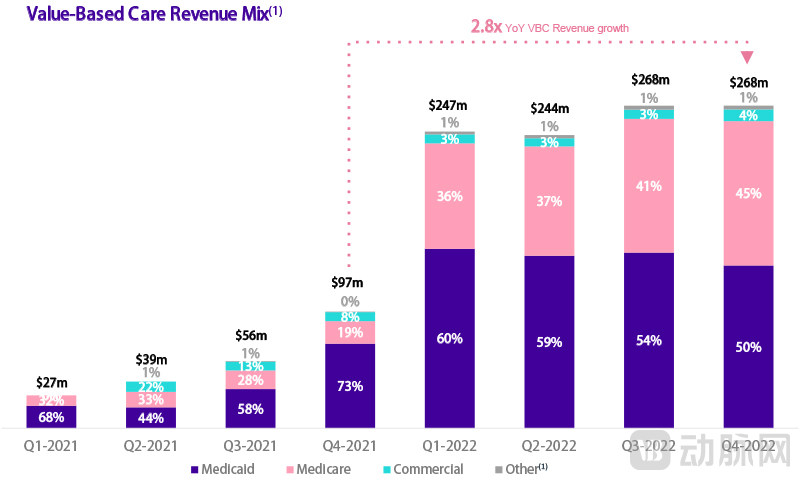
On the one hand, it is not difficult to see from the number of members that,Babylon’s Value-Based Healthcare Services Still Have Significant Room for Expansion in the United States; on the other hand, commercial health insurance, which holds a dominant market position in the United States, accounts for less than 5% of its revenue. These factors indicate that Babylon’s value-based healthcare services still have substantial room for growth in the future.
In Q1 2023, Babylon partnered with Ambetter to launch digital-first services in six U.S. states, increasing the proportion of commercial insurance participants in value-based care to 17% and adding 34,000 members within just one quarter.
As previously mentioned, the success of Babylon’s value-based healthcare services largely depends on its ability to effectively manage members’ health and reduce service costs. It is for this reason thatBabylon has built a digital-first “pyramid” system.
Babylon’s “Digital Pyramid” Tiered System (Screenshot from Babylon’s Annual Report)
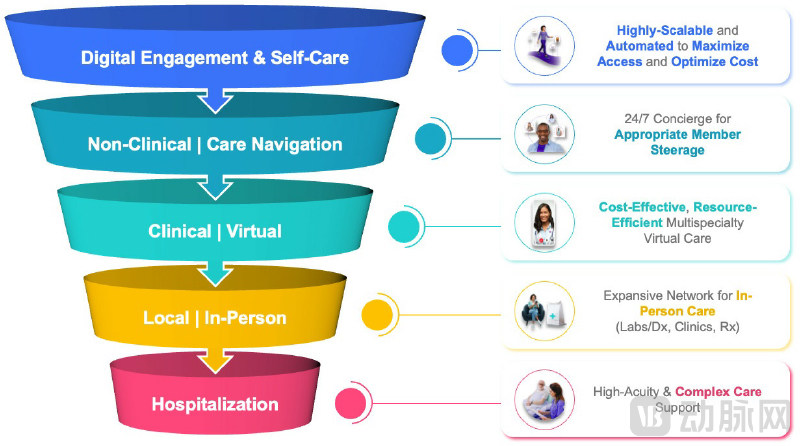
“Digital Engagement and Self-Care” is a mobile app-based solution designed to enable users to self-manage their health. At this level, users can address the majority of their needs, including symptom checking, tracking their health status, managing prescriptions, and accessing clinically relevant guidance.
This tier is critical for Babylon. Through digital tool assessments, Babylon helps members understand their current health metrics and trends; most importantly, it enables risk stratification of the served population. Subsequently, Babylon can provide proactive intervention alerts or establish health goals for members to maintain their well-being and prevent deterioration of their health status.
Non-clinical care assistance and navigation constitute the second tier, helping members meet their healthcare needs by providing non-physician support through chatbots or online human interactions. Leveraging Babylon’s artificial intelligence capabilities, the team can evaluate member data from multiple inputs to identify critical events and potential health anomalies that require proactive outreach.
These two layers of automated operations are crucial for Babylon to reduce service costs. In practice, this model reduced the number of appointments by 21% within one year in the UK.
If user needs remain unmet and require professional medical personnel, Babylon will introduce clinical services provided by qualified healthcare professionals. It first provides 24/7 remote clinical consultations, enabling members to communicate online with professional healthcare providers to address their urgent or chronic needs—this constitutes the third tier of its system.
Most members’ healthcare needs can be addressed through the aforementioned methods; however, when members genuinely require in-person medical services, Babylon also provides face-to-face consultations with healthcare professionals at the fourth tier. If in-person medical services still fail to resolve the member’s issues, Babylon will refer them to third-party partner medical institutions, which provide comprehensive medical care—constituting the fifth tier of the system.
Once users have fully recovered, Babylon leverages its digital service capabilities to provide extensive follow-up care, including medication management, nursing, and rehabilitation advice, thereby ensuring that members maintain their health at an optimal level—after all, as long as members remain healthy, their membership fees translate into profits for Babylon.
These digital-first tiered diagnosis and treatment services can significantly enhance the accessibility, affordability, and quality of healthcare.
It goes without saying that digital health improves the accessibility of medical services. Babylon’s services reduce costs and enhance efficiency by reallocating clinicians’ tasks to lower-cost personnel and automating a significant portion of back-office operations. Meanwhile, through proactive health management for members, the need for costly secondary and tertiary care is reduced, as targeted preventive and primary care suffice in most cases.
This will significantly reduce medical costs. Babylon has published peer-reviewed research in the Journal of Medical Internet Research. The study analyzed emergency care services in Northwest London from April 1, 2018, to March 31, 2019, and found that Babylon’s services saved its members up to 35% on emergency care costs.
In terms of quality, Babylon’s digital platform can provide standardized treatment protocols, thereby reducing variations in internal medical services and ensuring consistent service quality. In the UK, it achieved a quality score of 87% from the NHS for 2021–2022.
Although Babylon is not yet profitable, strong revenue growth has led it to issue more optimistic forecasts than ever before.In the original forecast, Babylon was projected to achieve EBITDA profitability in 2025. However, this timeline has now been accelerated to mid-2024.
If there is any underlying concern, it is clearly the company’s excessively low stock price. Affected by its listing via a SPAC, Babylon’s share price has remained depressed, standing at only $7.60 as of April 20. Furthermore, the specific restrictions associated with SPACs will also impair its ability to raise capital.
In a recent interview, Ali Parsa, CEO and founder of Babylon, candidly admitted that going public via a SPAC was a clear mistake. As a result, Babylon may sell off certain assets in the future to secure sufficient cash reserves.
For digital health, Babylon’s underlying logic and long-term technological investments offer valuable lessons. Its established “digital pyramid” tiered system complements its value-based services, presenting significant growth potential. Although it is premature to assert that Babylon’s success will be sustainable in the long term, its revenue growth, driven by a three-stage rocket model, at least demonstrates that digital health can also achieve robust development.
Perhaps it won’t be long before China also sees its own “Babylon.”
References:
Jessica Hagen,mobihealthnews.com:Q&A: Babylon foresees profitability after SPAC 'mistake'