

Yingkang Life: Precision Cancer Prevention and Full Lifecycle Oncology Management

Incaier
IoT-Based Comprehensive Health Service Platform
3 million! This is the number of cancer deaths in China in 2020. Behind these figures lie countless families left helpless in the face of this disease.
Cancer poses a serious threat to the life and health of China’s residents. China has also incorporated the prevention and control of chronic diseases, including cancer, into its national strategy, making the reduction of premature mortality from major chronic diseases such as cancer a key objective of the Outline of the “Healthy China 2030” Plan.“The requirement to increase the overall five-year cancer survival rate by 15% by 2030 was proposed.”
Encouragingly, after ten years of sustained efforts from all sectors of society, the overall five-year survival rate for malignant tumors in China has increased from 30.9% to 40.5%.
As overall cancer survival rates improve, cancer prevention and control are gradually entering an era of “chronic disease management”: while continuously enhancing treatment standards, attention must also be paid to early prevention and diagnosis, as well as later-stage rehabilitation management, thereby advancing cancer prevention and control efforts through a holistic approach.
Based on this, the concept of “whole-lifecycle cancer management” is being increasingly cited. This also marks the 29th NationalThis is one of the reasons why the Cancer Prevention and Control Awareness Week has adopted the theme “Cancer Prevention and Control: Comprehensive Action—For All Populations, Across the Full Life Cycle, and Involving the Whole Society.” Effective cancer prevention and control require coverage of all populations, management across the full life cycle, and participation from the entire society.
Before understanding how to implement “whole-lifecycle cancer management,” we need to identify the pain points and challenges in China’s oncology healthcare services market.
Amid factors such as accelerating population aging and a volatile social environment, China sees over 4 million new cancer cases annually. Given the substantial room for improvement in the five-year survival rate of cancer patients in China, the number of existing patients is increasing. The continuous rise in both new and prevalent cases further strains the already scarce oncology medical resources.
According to data from the National Health Commission Yearbook, in 2021, China had approximately 272,500 beds in oncology-related departments, with an average of 42.2 discharges per bed and a bed occupancy rate of 92.71%. The bed utilization rate in oncology hospitals has long remained at a high operational load. Additionally, approximately 70% of cancer patients require radiotherapy at various stages of disease progression, resulting in a significant supply-demand gap for related radiotherapy equipment.
From the perspective of the types of oncology medical service supply, the current healthcare system is predominantly focused on cancer treatment, with a prevalent tendency to "prioritize treatment over screening" and "prioritize treatment over rehabilitation." Furthermore, challenges hindering the development of the oncology healthcare industry include the uneven regional distribution of oncology medical resources and the high cost of care resulting from prolonged treatment cycles for cancer patients.
Pain Points Create Opportunities. With active participation from the industry, we are fortunate to see that some sustainable development paths for oncology medical services have gained market recognition. For example, promoting the construction and development of multidisciplinary treatment, improving the capability and efficiency of medical services; implementing differentiated regional layouts, expanding into second- and third-tier cities, and supplementing oncology medical resources in grassroots markets, among others.
Based on these pain points,YK HEALTHCARE believes that the diagnosis and treatment of tumors should transition from disease-focused therapy to full-lifecycle management, covering the entire chain of prevention, diagnosis, treatment, and rehabilitation. These stages are not isolated but interconnected, requiring the establishment of a comprehensive ecosystem. After comprehensively considering market demands and its own resource advantages, YK HEALTHCARE proposes a user-centric approach to build a people-oriented tumor “prevention-diagnosis-treatment-rehabilitation””Full Lifecycle Management System, to achieve precise cancer prevention.

Plan Before You Act. After extensive exploration and practice, YK HEALTHCARE has centered its efforts around oncologyPath to Sustainable DevelopmentIt can be simply summarized as“Endogenous Growth and External Expansion.” Internally, YK HEALTHCARE strengthens the development of major medical disciplines, enhances its core competencies in medical technology, services, and innovation in medical devices. Externally, it actively engages with the ecosystem and reinforces resource integration capabilities to improve access to high-quality medical resources.
First, in terms of its own development,YK HEALTHCARE is rooted in oncology specialization and focused on user experience. By continuously strengthening technological and service innovation across early-stage prevention, mid-stage diagnosis and treatment, and late-stage rehabilitation, the company is progressively advancing capability building and extending its reach into the pre- and post-treatment phases of cancer prevention and control, thereby providing patients with systematic, standardized, and innovative solutions.
In the prevention phase,YK HEALTHCARE has deployed a range of services, including health check-ups, health education, and early disease screening, to achieve early intervention, prevention, and detection of cancer.。
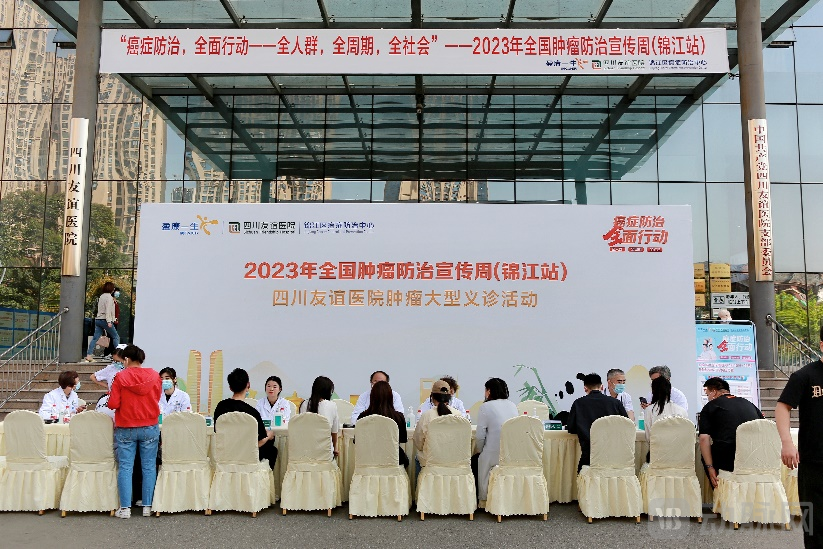
For instance, Sichuan Friendship Hospital, under YK HEALTHCARE and serving as the Cancer Prevention and Control Center of Jinjiang District in Chengdu, centers on the goal of “early screening, early diagnosis, and early treatment.” By innovating cancer prevention publicity, implementing cancer screening models, and strengthening its capabilities in cancer diagnosis and treatment, the hospital provides users with a comprehensive, end-to-end prevention and control service that encompasses health education on cancer prevention, screening and assessment, early diagnosis and treatment, standardized clinical care, and follow-up management. The hospital also offers customized “1+X” early cancer screening packages, which combine “one routine health checkup item + X specialized examinations for specific cancer types,” thereby enabling more targeted early cancer screening.
For another example, YK HEALTHCARE has established a Colorectal Cancer Screening Science Education Base at Changsha Yinkang Tumor Hospital. This base shifts the focus of tumor prevention upstream, guiding the public to adopt healthy concepts of cancer prevention through diverse forms of health education and scientific popularization. By doing so, it aims to control the onset and progression of tumors at the source, thereby reducing or even eliminating instances where high-risk individuals remain unscreened, those screened do not undergo further examination, and those diagnosed do not receive treatment.
At the Diagnostic Stage, YK HEALTHCARE first builds upon the establishment of multidisciplinary centers to integrate high-quality medical resources within its system. Through its “1+N+n+H” ecosystem network, these resources are enabled to flow freely among major regional medical centers across China, as well as hospitals, communities, and households within those regions. The advantage of this model lies in its ability to break down geographical barriers to medical resources, thereby providing diagnostic services to more residents in remote areas.
Meanwhile, digital capability is also a hallmark of YK HEALTHCARE. The company applies digital technologies to cancer diagnosis, actively establishes a multidisciplinary team (MDT) model for oncology, and customizes personalized diagnosis and treatment plans for patients to achieve precise cancer diagnosis. Taking Sichuan Youyi Hospital as an example, the hospital has established an MDT-based cancer treatment system, in which more than 30 renowned experts from within and outside the hospital regularly conduct multidisciplinary consultations both online and offline. Based on each patient’s disease characteristics, financial circumstances, and prognosis expectations, the team formulates and implements tailored, personalized diagnosis and treatment plans.
In the oncology treatment processUpInnovation and iterative advancement of treatment technologies, coupled with a high-quality, end-to-end service experience, constitute the differentiated competitive advantages of YK HEALTHCARE. Currently, its subsidiary, Suzhou Guangci Tumor Hospital, offers comprehensive oncology care encompassing radiation therapy, interventional therapy, chemotherapy, immunotherapy, targeted therapy, and subspecialty surgical procedures. As the most distinctive cancer hospital in the region, it was recently accredited as a Grade II Class A cancer hospital. According to publicly available data, the hospital performed nearly 5,000 surgeries in 2022, representing a 19% year-on-year increase. The proportion of Level III and IV surgeries accounted for 71%, marking a 44% year-on-year rise. Diagnostic and therapeutic capabilities continue to strengthen.
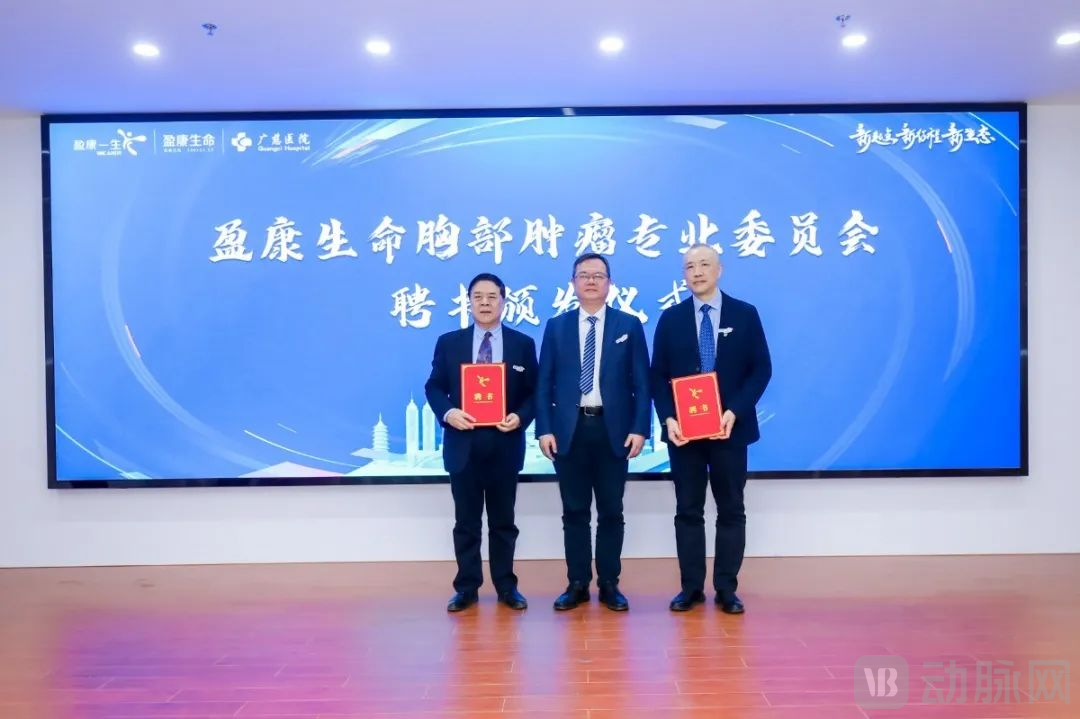
YK HEALTHCARE will further drive the broad oncology discipline toward specialized, disease-specific domains. Leveraging the integrated solutions in surgical oncology, radiotherapy, and chemotherapy, along with the expert resource team of the Department of Thoracic Surgery at Suzhou Guangci Tumor Hospital, YK Life has established the Thoracic Oncology Professional Committee to enhance the overall capabilities of its affiliated hospitals in the prevention, diagnosis, treatment, and rehabilitation of thoracic cancers.
While continuously strengthening its disciplinary capabilities, YK HEALTHCARE is also enhancing its capabilities in innovative medical devices.For instance, the Gamma Knife, a large-scale radiotherapy device independently developed by Masep, an ecosystem brand under YK HEALTHCARE, demonstrates leading advantages in treating brain metastases, small-to-medium-sized benign intracranial tumors, cerebrovascular malformations (particularly cerebral arteriovenous malformations), and trigeminal neuralgia, among other neurological functional disorders. Focusing on women’s health, YK HEALTHCARE has established an integrated solution encompassing equipment and consumables for breast disease screening, diagnosis, pathology, surgery, treatment, and rehabilitation, thereby enabling early detection, diagnosis, and intervention, and enhancing the precision of early breast cancer screening.
Next are external links,YK HEALTHCARE is actively expanding various ecological resources, fostering ecosystem integration and co-creation to enhance its comprehensive service capabilities. Notably, oncology rehabilitation serves as a prime example of YK HEALTHCARE’s “ecosystem co-creation” model.
The aforementioned Thoracic Oncology Professional Committee aims to strengthen clinical service capabilities in the field of thoracic oncology. Another objective of this committee is to enhance collaboration with ecosystem resource partners to practice “collaborative co-creation.” Currently, Suzhou Guangci Tumor Hospital has deeply integrated resources from its ecosystem partners, including genetics, traditional Chinese medicine (TCM), nutrition, new technologies, supply chain, and commercial insurance, to provide patients with diverse rehabilitation services such as health monitoring, disease course management, TCM consultations, nutritional support, home-based care, and postoperative insurance.
Not limited to hospital settings, YK HEALTHCARE focuses on patients' pre- and post-hospital health service needs, such as prevention and rehabilitation, by linking ecological resources to build value-added service capabilities for specific disease populations, thereby achievingH2H (Hospital to Home) Closed-Loop Service Network. For instance, Sichuan Friendship Hospital has established a follow-up team for oncology patients, providing a range of pre-hospital, in-hospital, and post-discharge services—including follow-up care, health examinations, home nursing, nutritional management, and targeted screening—to continuously enhance patient satisfaction.
Furthermore, drawing on exploratory practices across major hospitals and iterative technological innovations, YK HEALTHCARE has developed an integrated online-offline cloud platform for cancer treatment and rehabilitation experiences. Leveraging internet-based medical services as an entry point, the platform breaks down temporal and spatial barriers in patient experience. By employing 5G, AI, and the Internet of Things (IoT), it delivers ecosystem resources to various regions, providing patients with follow-up interactions, health diagnostics, and other services with “zero-distance” accessibility.
Amid the prevailing trend of whole-cycle cancer management, YK HEALTHCARE’s “prevention, diagnosis, treatment, and rehabilitation” full-lifecycle management model is gradually taking shape.
Over the past decade, joint efforts by the government, industry, hospitals, and the general public have increased the overall cancer survival rate in China by nearly 10%. As Haier’s health ecosystem brand, YK HEALTHCARE has always adhered to the philosophy of “integrating medical care with patient needs.”,Collaborate with ecosystem partners to co-create, with technological innovation, digital-intelligence integration, and scenario customization as the core.Contribute to “Healthy China”.