

Ousheng Technology Secures RMB 50 Million Strategic Financing to Advance Industrial Upgrading with Continuous Flow Technology
Long Hill Capital
Venture Capital Institution
Recently, Oushisheng (Beijing) Technology Co., Ltd. (“Oushisheng Technology”), a leading domestic manufacturer of intelligent continuous production systems for flow chemistry, completed a RMB 50 million strategic financing round, with Long Hill Capital as the investor.
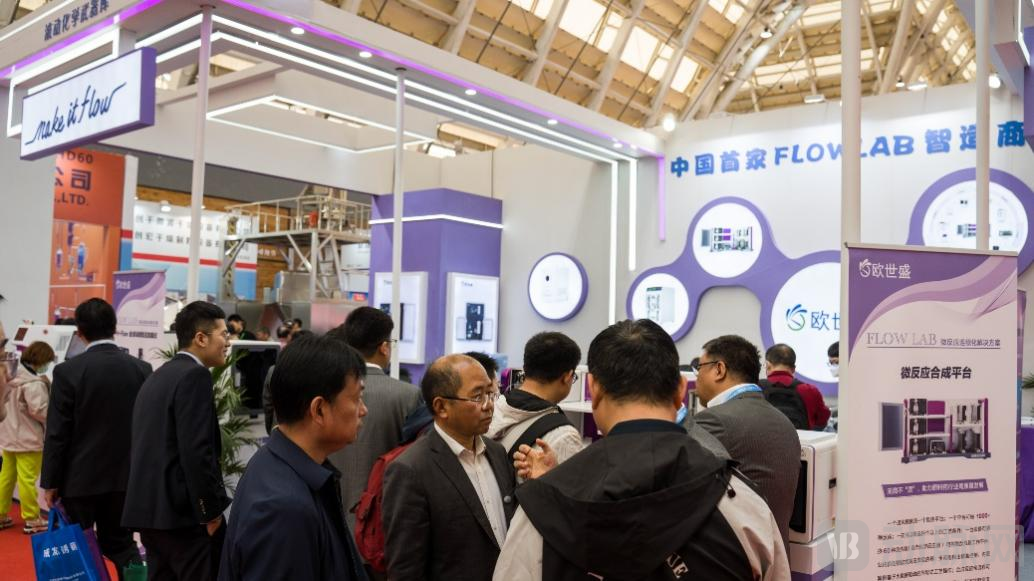
Oushisheng (Beijing) Technology Co., Ltd. was founded in January 2015 and is headquartered in Beijing. As a National High-Tech Enterprise, the company aims to provide integrated continuous-flow microreaction solutions for clients across various industries. It has served nearly 500 customers to date, primarily industry leaders such as WuXi AppTec, Lonza, and Asymchem. According to reports, Oushisheng has sustained rapid growth, with its annual performance doubling on average during the three-year pandemic period. The customer repurchase rate exceeds 40%, fully demonstrating the business’s growth potential and sustainability. Multiple investment institutions have expressed interest in participating in the company’s new round of financing.
When discussing “flow chemistry,” it is essential to first understand the rationale behind continuous manufacturing. Traditional chemical production has long relied on the “one-pot” method, a batch processing approach that has persisted for two centuries and predominantly employs reactor-based synthesis. Due to the large volume of reactors and significant heat release, this method is inherently hazardous. In recent years, frequent safety incidents in the chemical industry, coupled with advancements in industrial automation, have made the improvement of traditional chemical synthesis methods a key focus for stakeholders across the sector, with continuous manufacturing emerging as a central topic of discussion.
Continuous Manufacturing (CM) primarily refers to a production mode in which each unit of intermediate product generated by the preceding process step is immediately transferred to the next. It typically involves several key aspects, such as process intensification, Process Analytical Technology (PAT), and automated control. Flow chemistry generally denotes the continuous synthesis carried out by pumping one or more reactants at predetermined flow rates into microreactors, thereby enabling rapid mass and heat transfer; this approach aligns closely with and integrates seamlessly into the concept of continuous manufacturing. Flow chemistry better addresses the synthetic application needs of chemists, not only ensuring intrinsic safety of reactions but also facilitating rapid process screening and seamless scale-up.
*According to a research report by Southwest Securities, microreactors possess geometric characteristics entirely distinct from those of large-scale reactors—namely, narrow and uniform microchannels, extremely small reaction volumes, and very large specific surface areas—thereby offering significant advantages for continuous-flow reactions over traditional batch tank reactions.
Compared with traditional batch production, continuous manufacturing based on flow chemistry offers multiple advantages, enabling comprehensive improvements in safety, efficiency, cost, and environmental sustainability across the entire R&D and production system:
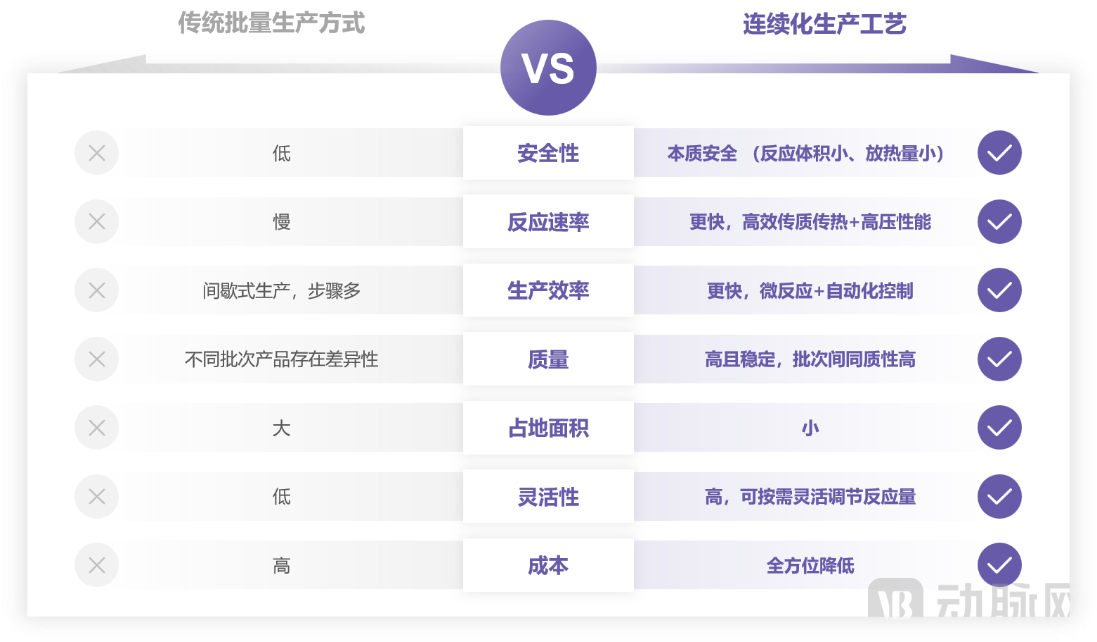
Public data indicate that continuous manufacturing technology can reduce costs by an average of 10%–50%, shorten production cycles by more than half, and significantly cut waste emissions and carbon footprint. Given these substantial benefits, multinational pharmaceutical companies such as Pfizer, GSK, Novartis, and Eli Lilly have actively invested in this area, and the U.S. Food and Drug Administration (FDA) has already approved more than 10 new drug applications utilizing continuous manufacturing processes. Leading Chinese CXO companies, including WuXi AppTec, Porton Pharma Solutions, and Asymchem, have also identified continuous flow technology platforms as a key strategic direction for future development.
As one of the top ten sustainable development technologies for the future, continuous flow reaction technology originated in the 1990s. China and foreign countries started at roughly the same time, with no significant gap in their development. In the early 21st century, research was primarily led by government and academic institutions. During the second decade of the 21st century, industry players began to rapidly engage, achieving excellent application results. In recent years, as the technology has matured and policy regulation and guidance have become clearer, continuous flow technology is approaching a market inflection point:
1. Technical Guidance
● In 2019, the FDA solicited public comments twice on the draft guidance “Quality Considerations for Continuous Manufacturing.”
● In 2021, the ICH officially released the Q13 guideline, "Continuous Manufacturing of Drug Substances and Drug Products," for public consultation, and formally issued it in early 2023.
● On September 9, 2022, the CDE released the “Technical Guidelines for Continuous Manufacturing of Oral Solid Dosage Forms of Chemical Drugs (Draft for Comment)” for public consultation.
2. Safety Standards
● Guidelines for Safety Risk Assessment of Reactions in Fine Chemical Industry, issued by the State Administration of Work Safety: For process operations with a reaction process hazard level of 4 or 5, particularly high-risk projects that must undergo industrialization, priority should be given to process optimization or modification of process methods to mitigate risks, such as employing microreactors or continuous flow technology to carry out the reactions.
● In May 2022, Article 69 of the Regulations for the Implementation of the Drug Administration Law of the People's Republic of China, issued by the National Medical Products Administration (NMPA), stipulated that segmented manufacturing of drugs is prohibited in principle, except in a limited number of circumstances.
3. Industry Support
● National Development and Reform Commission: Issued the "Guidance Catalog for Industrial Structure Adjustment (2019 Edition)," encouraging the application of continuous hydrogenation reduction technology in the pharmaceutical and chemical industries, and promoting the development of continuous production technologies and equipment.
● On March 24, 2021, the Ministry of Industry and Information Technology included “New Microchannel Reactor Equipment and Continuous Flow Process Technology” in the Catalogue of Technologies and Products Encouraged for Promotion and Application in the Petrochemical and Chemical Industry, ranking it first among the 32 selected technologies.
Jin Yingze, Founder of OushishengHe stated, “Our team has historically focused on the research and development of analytical instruments and testing equipment. In 2017, we not only perceived tangible demands from industrial clients but also observed that policymakers worldwide began to engage in top-level design for continuous manufacturing. Consequently, we shifted our strategic focus toward flow chemistry, a decision validated by the policies introduced in subsequent years. Whether viewed from the perspective of economic development or national supply security, the overarching theme of ‘Made in China’ remains unchanged. Industries such as pharmaceuticals and fine chemicals boast substantial existing markets while also presenting extensive incremental demand for transformation and upgrading, making them well worth deep cultivation.”
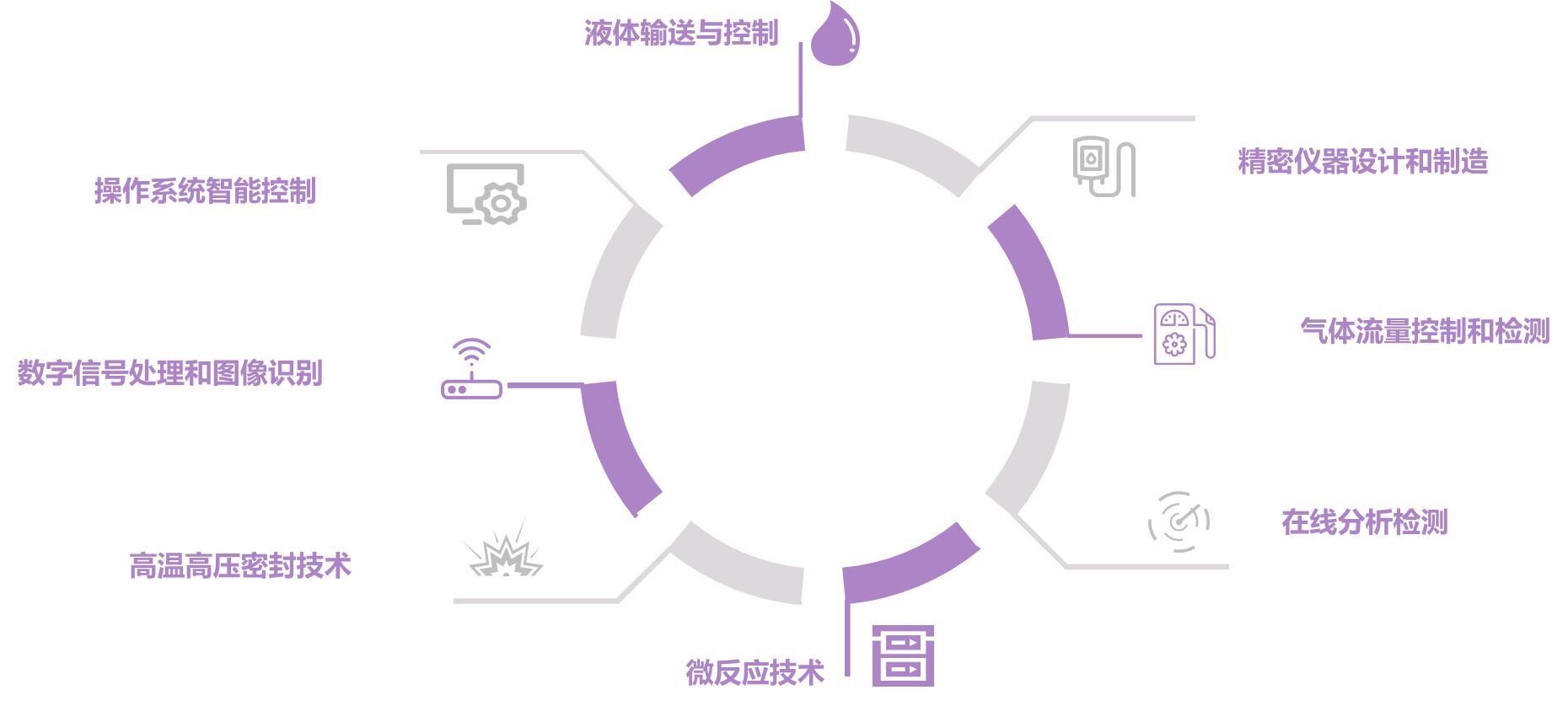
Continuous flow technology is a typical interdisciplinary, application-oriented technology that integrates hardware and software, offering numerous innovation opportunities and significant potential for technological iteration. Oushisheng has assembled a team of experienced engineers specializing in optics, mechanics, electronics, and software, along with experts in chemistry and chemical engineering. The company has also established flow chemistry application development laboratories at prestigious institutions such as Tsinghua University, Fuzhou University, and Shenyang Pharmaceutical University, while engaging in deep collaboration with several leading scientists from the Department of Chemical Engineering at Tsinghua University. Leveraging robust technical application capabilities and the academic expertise of university specialists, the company has already developed a complete set of foundational technology modules.
Jin Yingze stated, “Our product development is guided by three principles: we do not create me-too products; we build products with broad technological moats; and we develop products that can genuinely drive industry upgrading and progress. Addressing customers’ application pain points, we have fully leveraged our team’s original R&D capabilities through day-and-night collaborative efforts, achieving breakthrough advancements both domestically and internationally across multiple product categories.”
1. From 0 to 1: Innovative Modular Products
Continuous flow devices are complex multi-module systems. From the initial material input module and automatic temperature and pressure control module, to in-process reaction control and adjustment, liquid level control, and online analysis modules, as well as subsequent separation and purification modules, each stage presents significant technical challenges. With no comparable products or case studies available in the industry, Oushisheng has achieved a zero-to-one breakthrough.
Taking infusion pumps as an example, there was once a prevailing view in the industry that “infusion pumps have constrained the development of flow chemistry.” The industry urgently needed a versatile infusion pump capable of delivering precise, smooth, pulse-free flow at high rates, while withstanding high pressure, corrosion, high temperatures, and viscous particles. The core technology of such a pump lies in its switching valve. After more than a year of intensive research and development, Oushisheng successfully developed a mechanical high-pressure, corrosion-resistant, high-flow-rate switching valve and filed four invention patents for this technology. Leveraging this component, the company launched a dual-syringe injection pump, filling a gap in the industry and solving the global challenge of stably delivering multiple liquid materials with a single pump. This innovation has been applied across numerous industrial fields, addressing critical pain points and meeting demanding application requirements.
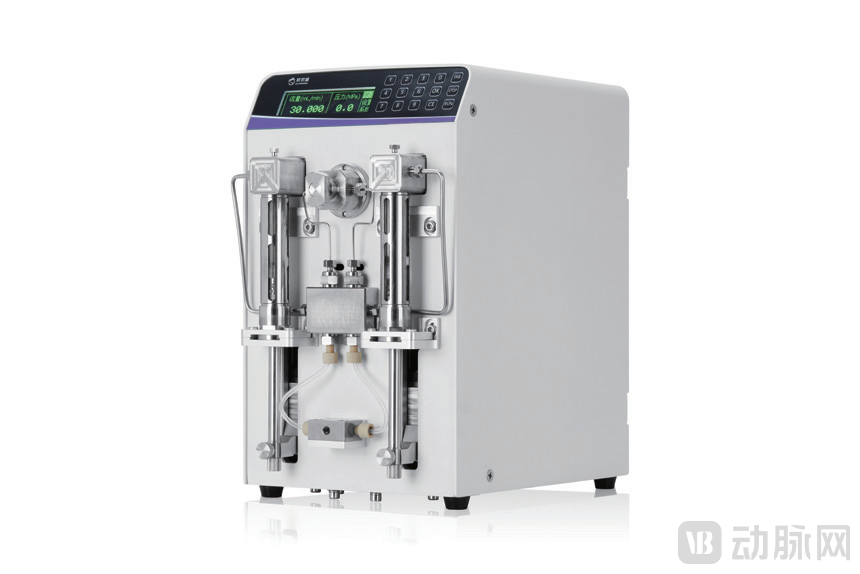 Dual-Syringe High-Pressure Constant-Flow Infusion Pump
2. Identify Pain Points and Provide Systematic Solutions
Modular underlying product units represent the first step, while the second involves systematically addressing application challenges in customers’ R&D and production processes. In chemical synthesis, hydrogenation reduction and ozonolysis are among the most challenging and representative reactions. To address these needs, Oushisheng has launched the H-Flow Fully Automated Microreactor Hydrogenation System and the O-Flow Fully Automated Ozonolysis Reactor, covering all stages from small-scale testing to scaled-up production. Hydrogenation is a widespread requirement in pharmaceutical manufacturing, accounting for approximately 14% of all reaction types in drug production processes, with 60% of pharmaceutical companies involved in such reactions. Since its launch, the product has received extensive customer acclaim and procurement orders. For instance, a leading CXO client reported a 20-fold increase in hydrogenation efficiency and cost savings of 50%–80% across various metrics.
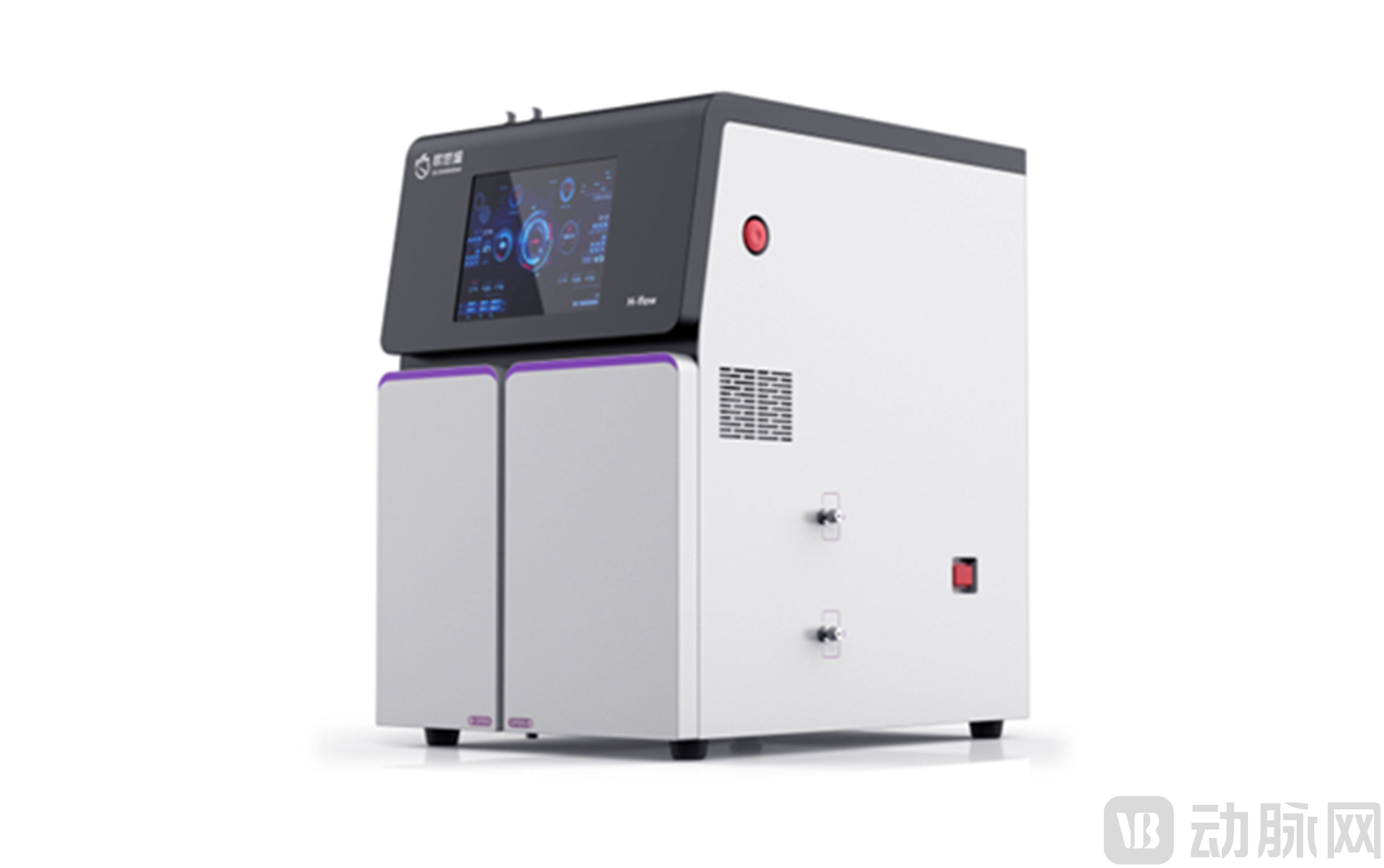 Fully Automated Hydrogenation Reactor
3. Pioneering Layout: End-to-End AI Chemical Synthesis Solution
Integrating underlying modules into a continuous manufacturing system relies on an end-to-end IoT environment, which generates substantial data to support data model analysis. The next industry trend is to combine data models and operational instructions with AI-guided pathways, thereby achieving a closed-loop process for intelligent R&D and production in chemical pharmaceuticals and truly realizing industrial upgrading. While AI-driven synthesis is currently gaining significant momentum, its practical implementation remains unresolved due to the lack of support from underlying validation modules. Continuous flow hardware and software products can provide a comprehensive solution.
The company aims to build a comprehensive “arsenal” of flow chemistry solutions for the entire industry, positioning itself as a provider of infrastructure for industrial upgrading. Guided by the principles of “originality,” “standardization,” “modularity,” and “intelligence,” its product design has established a relatively complete product portfolio.
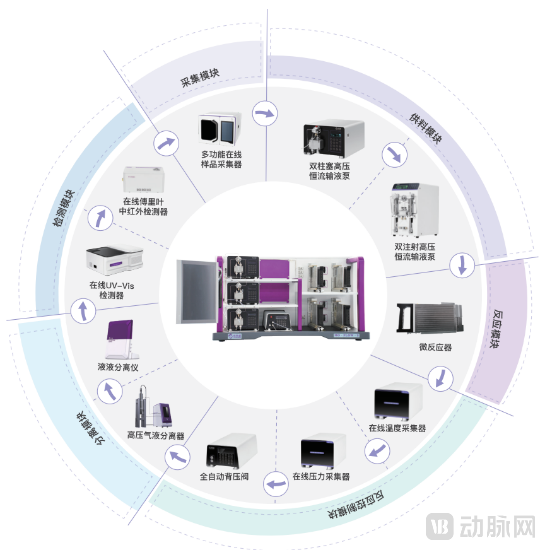
Manufacturing has always been a central theme in economic development, and continuous flow processes are injecting new vitality into the converging industries of pharmaceutical manufacturing, fine chemicals, and advanced technology manufacturing. With over two decades of deep expertise in instrument and equipment manufacturing, the Oushisheng team fully understands the challenges and difficulties faced by the development of domestically produced instruments in China.
Jin YingzeHe stated, “We believe that persisting in the manufacturing of high-end domestic instruments is a difficult yet correct endeavor. Application-oriented equipment differs significantly from traditional laboratory instruments; it is akin to a car with four wheels, each indispensable. The first wheel is a mature instrument development team with strong capabilities in optics, mechanics, electronics, and software. The second wheel is a practical technology platform, which in the field of flow chemistry refers to microchemical technology. The third wheel is an expert team focused on applications, representing a more accurate understanding of customer needs. The fourth wheel is a technical sales force capable of rapidly aligning customer needs with products. Only when all four wheels are present and efficiently integrated can a company achieve long-term sustainability and competitiveness in this direction, thereby securing a place in the global market.”
Jiang Xiaodong, Managing Partner at Long Hill CapitalIt stated: “The inevitable future trend in the pharmaceutical and chemical industries is the continuous pursuit of significant improvements in safety, efficiency, and cost, and continuous manufacturing has been proven to be one of the most promising technologies to achieve this goal.”
“Oushisheng is among the earliest companies in China to focus on continuous manufacturing, and one of the few that offer a comprehensive solution encompassing pumps, reactors, reaction monitoring, and automation systems. The company has already successfully served hundreds of leading clients in the pharmaceutical and fine chemical industries. As the lead institutional investor in its first funding round, we look forward to Oushisheng’s ‘continuous,’ ‘digital,’ and ‘automated’ solutions helping more industry clients reduce costs and improve efficiency.”