

Willingsford Healthcare Files Prospectus Highlighting Amicapsil’s 60% Faster Infection Clearance and 42% Cost Reduction in Wound Care

Willingsford Healthcare
Healthcare Product Provider
The skin and mucous membranes constitute the first line of defense in the human immune system. When individuals sustain abrasions or cuts in daily life, they often worry about wound infection, as infections can lead to swelling, suppuration, and even more severe symptoms, thereby incurring additional medical expenses.
According to statistics from TIP (The Insight Partners), the global market size for anti-infective drugs was approximately USD 135.96 billion in 2022 and is projected to reach USD 164.19 billion by 2028, representing a compound annual growth rate (CAGR) of 3.19%.
Willingsford Healthcare (hereinafter referred to as “Willingsford”) is a UK-based healthcare company that has developed Amicapsil, a wound care agent leveraging microporous particle technology based on the principles of wound infection management. Amicapsil eliminates infection and promotes the healing of complex wounds, such as pressure ulcers, and has received regulatory approval in both the United Kingdom and the European Union (CE marked).
Our skin microbiome ecosystem harbors more than 1,000 distinct microbial species. These microbial communities cover the entire skin surface, making it difficult for pathogenic microorganisms to gain a foothold. The microbiome continuously interacts with and modulates the immune system. In turn, the immune system helps maintain microbiome homeostasis, ensuring high diversity and preventing the dominance of one or a few species.
If a single species becomes overabundant in the wound microbiome, dominating the microbial community, it predisposes the wound to infection, thereby delaying spontaneous healing. In other words,Infection is caused by an imbalance in the microbiome.

Microbiome Dysbiosis Leads to Infection. Image source: Willingsford official website
In 2016, the U.S. FDA concluded after research that:The use of antibiotics and antiseptics in wound care does not help prevent wound infection, nor does it promote wound healing.
Antimicrobial agents, such as antibiotics and antiseptics (e.g., silver, chlorhexidine, and PHMB), can kill microorganisms but fail to distinguish between those that are overabundant and those whose presence is essential. Moreover, many bacteria have now developed resistance to antibiotics and antiseptics (disinfectants), a process that is rapid, targeted, and permanent.
Since the skin microbiome of every individual may harbor at least one strain of antibiotic-resistant bacteria, the use of antimicrobial agents in clinical practice cannot eradicate all microorganisms within a wound; what remains are bacteria that are both drug-resistant and highly virulent. Consequently,Individuals with immunity may remain unaffected, whereas those without immunity may suffer severe harm.
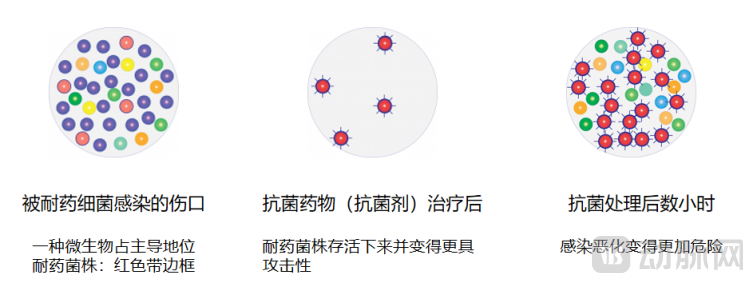
Conventional antimicrobial treatments are often ineffective. Image source: Willingsford official website
Therefore, an effective method for controlling wound infection is to restore the balance among microorganisms within the skin microbiome,Typically, our immune system functions to maintain homeostasis. However, bacteria causing infections can hide within biofilms, secreting toxins and enzymes to kill immune cells and other types of bacteria.
Biofilms are the “houses” that these microbes previously constructed and shared with other microorganisms. Immune cells struggle to penetrate biofilms, and when certain highly aggressive bacteria take over the construction of these biofilm structures and transform them into fortresses, eradicating them becomes even more difficult.
Amicapsil, a drug developed by Willingsford, can help the body’s immune system regain control over these areas as much as possible.It can remove toxins and help create pores in biofilms to allow immune cells to enter. Once inside the biofilm, immune cells can selectively clear infection-causing bacteria, restore the diversity and balance of the microbiome, and promote wound healing.
In 2016, Amicapsil was approved for professional use, and in 2017 it was approved for personal use. Extensive testing has shown that Amicapsil has no side effects, does not lead to new antimicrobial resistance, and does not reduce microbial diversity.
The development of Amicapsil is based on Micropore Particle Technology (MPPT). This is a passive immunotherapy that acts through the microbiome of the skin and wounds without using antimicrobial agents. A randomized trial conducted by Willingsford Healthcare involving 266 patients with primary venous ulcers demonstrated that, compared with topical antibiotics (gentamicin) and povidone-iodine antiseptic,MPPT clears wound infections 60% faster, reduces patients’ hospital stays by 31%, and saves 42% of the estimated costs for acute wounds.
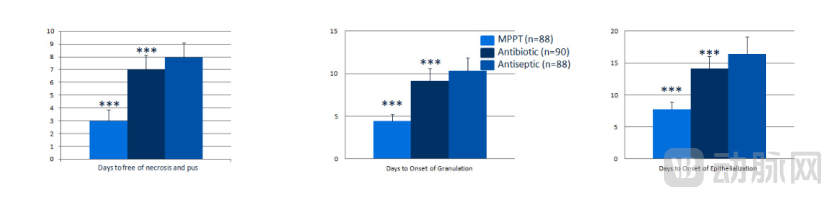
Days to wound healing after application of MPPT, antibiotics, and antiseptics (mean ± standard deviation)
Image source: Willingsford official website
Since its launch, MPPT has been adopted by numerous hospitals and community care facilities, facilitating the healing of various complex wounds, such as ulcers, burns, and furuncles.
Willingsford’s drug portfolio includes Amicapsil and SertaSil, with the former indicated for human use and the latter for veterinary use. These agents do not cause wound irritation or contact allergy, have no identified toxic components, are not absorbed by the human body, and can be easily removed with a simple water rinse.
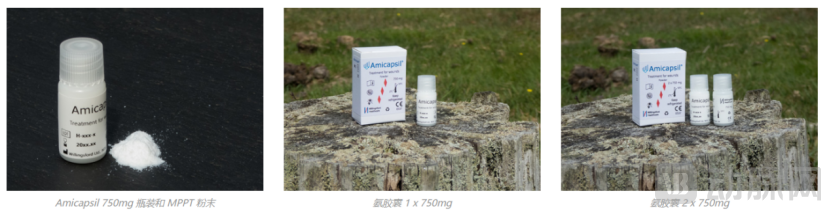
Willingsford’s R&D Drugs. Image source: Willingsford official website
Amicapsil is used similarly to SertaSil. Thoroughly clean the wound with water and pat it dry with sterile gauze, then sprinkle the powder onto the wound surface and cover it with a secondary dressing that has good permeability. Repeat this process daily until there are no signs of infection or necrosis. For non-chronic wounds, the average required time is 3 days.
Jeanette Sams-Dodd is the founder of Willingsford. She holds a degree in Business Administration from Copenhagen Business School, is fluent in six languages including Danish, English, German, and Spanish, and later earned a degree in Veterinary Medicine from the Royal Veterinary and Agricultural University in Copenhagen.

Willingsford Founder Jeanette Sams-Dodd. Image source: Canix official website
In 1986, Jeanette served as CEO of Ecu-Carn, a meat and processed food company, where she was responsible for establishing a customer base for bulk meat sales and building a network of European suppliers in Spain. Historically, meat wholesaling at slaughterhouses was a male-dominated sector, making Jeanette one of the few women granted access to the Barcelona Meat Exchange, which she insisted on visiting weekly.
Jeanette has had a strong interest in dogs since childhood, improved methods for training service dogs and seizure-alert dogs for epilepsy patients, and authored books on dogs based on scientific research.
Perhaps driven by her love for animals, Jeanette stepped down as CEO in 1991 to pursue a degree in veterinary medicine, and in 1997 she founded Canix, a non-profit organization dedicated to dog training.
Later, Jeanette co-founded Sams-Dodd with Frank Sams-Dodd, M.D., as a preclinical CRO to assist university laboratories worldwide in conducting contracted research for the pharmaceutical industry, support licensing and business development activities, and provide consulting services to the pharmaceutical sector.
It was precisely the establishment of Sams-Dodd’s professional network that facilitated the formal founding of Willingsford in 2010.
Dr. Frank Sams-Dodd, a co-founder of Willingsford, holds a Master’s degree in Zoology from the University of Copenhagen, a Ph.D. in Neuroscience from Cornell University in the United States, and an honorary Doctor of Medicine degree from the University of Copenhagen. With over 25 years of experience in the pharmaceutical and medical device industries, he has overseen all stages of drug discovery and development, from early-stage research to clinical trials and regulatory affairs, complemented by extensive international management and business administration expertise.

Willingsford Founder Frank Sams-Dodd. Image source: Canix official website
Willingsford received a £250,000 grant from the UK government during its establishment and R&D phase. Its inclusion this year in the 2023 Life Sciences Innovator list, published by the Department for Business and Trade, may represent further recognition from the UK government.
According to the Frost & Sullivan report, the market size of antibiotics in China is expected to reach RMB 138 billion by 2025, with a compound annual growth rate (CAGR) of 2.1% from 2020 to 2025.
Currently, numerous domestic pharmaceutical and drug manufacturing companies are participating in the race to develop anti-infective drugs, including Linsida, Dino Pharma, Baiyu Pharmaceutical, Hansoh Pharmaceutical, Zhiheng Pharma, Baili Tianheng, Wanlong Pharmaceutical, and Huipusen Pharma, among others. Among them, Baiyu Pharmaceutical is listed on the National Equities Exchange and Quotations (NEEQ), while Hansoh Pharmaceutical, Baili Tianheng, and Huipusen Pharma have successfully gone public.