

Mursla Bio Files IPO Prospectus: Pioneering Exosome-Based Liquid Biopsy Platform Backed by Roche Diagnostics

Mursla
Clinical Insights Solution Provider

The London Fund
Provider of Investment Banking Services for Emerging Technologies
Compared with traditional tissue biopsy, liquid biopsy, by virtue of its non-invasiveness, high sensitivity, and capacity for dynamic monitoring, has demonstrated substantial potential in early cancer screening, early diagnosis, treatment, and prognosis, and is highly anticipated to address diagnostic and therapeutic challenges across the entire cancer care continuum.
Liquid biopsy is an in vitro diagnostic technology that uses body fluids such as blood for sampling and analysis. It facilitates tumor screening and assists in treatment by quantifying four major biomarkers released by tumors into the bloodstream: circulating tumor cells (CTCs), circulating tumor DNA (ctDNA), extracellular vesicles (EVs, primarily exosomes), and cell-free RNA (cfRNA).
Exosomes are small vesicles secreted by living cells into the extracellular environment, with a diameter of approximately 30–140 nm. They are rich in multi-omics “cargo” (including DNA, RNA, proteins, lipids, and metabolites) that reflects the characteristics of their parent cells. In vivo, exosomes participate in physiological processes such as cell communication, cell migration, angiogenesis, and anti-tumor immunity, and are closely associated with the onset and progression of various diseases. The various components of exosomes can serve both as biomarkers for disease diagnosis and as specific targets for disease therapy.
Today, we will explore Mursla Ltd., an overseas rising star in the field of liquid biopsy. Its unique technology, which analyzes specific bioactive substances in blood exosomes in real time, offers a less invasive and more responsive approach to cancer diagnosis, treatment, and prognosis.
Exosomes applied in disease diagnosis can facilitate liquid biopsy of their tissue of origin through blood sampling, demonstrating significant potential for clinical application. However, due to the lack of sensitivePreparation Techniques and Analytical Techniques, obstacles remain in clinical translation.
In the Preparation of ExosomesMursla has developed a novel method for isolating exosomes from plasma by combining density cushioning and size-exclusion chromatography (SEC), resulting in exosome preparations with minimal lipoprotein particle contamination. Meanwhile, distinct exosome subpopulations can be extracted from blood.
In Exosome AnalysisMursla has developed a technological platform tool called ExoPheno™, which integrates dry and wet lab analyses through machine learning to detect and analyze the multi-omics “cargo” of tissue-specific exosomes in blood for various biomedical applications.
For example, the platform can be used for early cancer detection and improve the low positive predictive value (PPV) of tumors, specifically as follows:
1) Capture tissue-specific exosomes in blood using tissue-origin markers
2) Detection of specific multi-omics disease biomarkers (including DNA, RNA, proteins, lipids, and metabolites) contained in exosomes, corresponding to tumor cells
3) Focus on studying the dynamic information of tumor live cell release in exosomes, which is more sensitive in early cancer screening
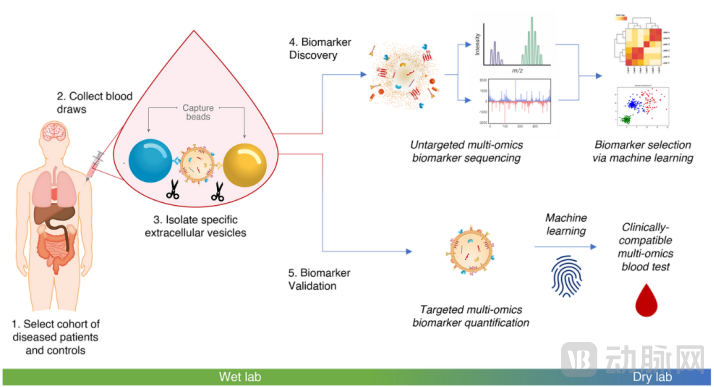
ExoPheno™ Platform Workflow Source: Company Website
The ExoPheno™ platform features multiple patented technologies for the detection, labeling, and capture of exosomes, demonstrating unique advantages in exosome analysis.
For example: On October 20, 2021, Mursla announced theirNovel Exosome-Sensitive Detection Method Based on Nano-ElectronicsTwo patents have been granted. This method is part of the ExoPheno™ platform, designed to detect disease-associated exosomes in liquid biopsies. The assay offers several distinct advantages:No chemical surface modification is required.(other methods typically require), avoiding the costly and time-consuming process of chemical optimization;High Signal-to-Noise Ratio Between NanosensorsEnsures high compatibility with the latest MOSFET transistor systems; can be easily integrated into a hybrid optoelectronic 96-well plate high-throughput format,Suitable for experiments or tests involving the processing of large numbers of samples.
On April 13, 2022, Mursla showcased its“Electro-Optical Bead Nanochip Technology for Ultra-Sensitive and Multidimensional Detection of Exosomes and Their Biomarkers”, known as NEXOS, is also part of the ExoPheno™ platform, designed to accelerate the clinical translation of exosome-based diagnostics. It comprises two approaches: the first is E-NEXOS, a novel and scalable nanoelectronic method; the second is O-NEXOS, a high-throughput optical detection method. Both share identical steps in the immunocapture and antibody labeling of exosomes, andCan be combined to obtain different detection parameters。
Currently, Mursla has additional patents pending, with the aim of further enhancing the ExoPheno™ platform through its proprietary portfolio of exosome technology patents. Founder Pierre Arsène stated, “With the right, precise tools, we can detect diseases non-invasively, offering a new approach to prognosis, diagnosis, patient stratification, and treatment monitoring. This approach enables not only the treatment of cancer but also neurodegenerative diseases such as Alzheimer’s disease, as well as conditions in immunology and cardiovascular medicine.”
In 2022, Mursla received mentorship from Roche Diagnostics Ltd. and conducted a prospective pilot study of a novel liquid biopsy for liver cancer monitoring through MedCity’s “Collaborative Innovation: London Diagnostics” program.
Mursla aims to develop a hepatocellular carcinoma (HCC) detection method that surpasses current standardsFaster, More Effective Blood Testing MethodsBased on this approach, the primary objective of this prospective pilot study is to select and validate novel biomarkers associated with hepatocellular carcinoma (HCC), thereby laying the groundwork for larger-scale longitudinal studies to demonstrate robust clinical performance in more personalized biopsy applications. The secondary objective is to evaluate the tissue specificity of Mursla’s multi-omics exosome platform, providing proof-of-concept for the development of liquid biopsy assays for other related cancers.
Roche Diagnostics Ltd. is responsible for supporting and assisting Mursla in introducing its developed methods into clinical practice, while also helping Mursla expand its market size.
In addition to Roche Diagnostics, Mursla has established close collaborations with other companies and renowned universities worldwide to jointly advance research in the field of exosomes.
Partners. Image source: Company official website
In March 2019, Pierre Arsène established Mursla Ltd. in the UK, dedicated to leveraging exosome biology to deliver next-generation multi-omics liquid biopsy solutions. After more than three years of development, Mursla now boasts a team of advisors with extensive research experience in the field of liquid biopsy, as well as an outstanding R&D team.
Pierre is not only the founder and CEO of the company but also a biotechnology entrepreneur with sharp business acumen. He earned a Master’s degree in Management from HEC Paris early in his career and served as an M&A investment banker at J.P. Morgan for ten years, where he led a team of 30 investment bankers. Under his leadership, the team completed more than 20 transactions through mergers and acquisitions, IPOs, or licensing deals, with a total value reaching $70 billion. Pierre also received training in biophysics at the University of Cambridge’s Cavendish Laboratory and is a co-inventor of six exosome-related patents. His achievements have been widely recognized: in 2016, he was named the “Most Impressive Vice President” in investment banking by eFinancialCareers, and in 2018, he received the “Young Leader of France and Germany” award.

Mursla’s current products have not yet entered the clinical stage, but its unique and advanced technologies have garnered significant attention in the field of liquid biopsy. In 2019, the company received the One to Watch award, recognizing it as one of the most innovative companies in Cambridgeshire and the East of England. In January 2023, Mursla was named by the UK Department for Business and Trade as one of the life science innovators in the field of “Diagnostics and Precision Medicine” in the UK for 2023.
Regarding Mursla’s funding status, a review indicates that the company has experienced only two funding events to date: one in September 2020, when it raised $750,000 through its initial financing round, and another in March 2022, when it received an undisclosed amount of grant funding from the Greater London Authority.
In recent years, the number and scale of startups in the exosome field have continued to grow, with nearly 50 companies worldwide “competing on the same stage.” Foreign countries have been engaged in industrial translation research in the exosome field for many years, and there are now some companies with breakthrough achievements and relatively mature technologies.
Compared with foreign countries, the development of the exosome field in China started relatively late. However, in recent years, the number of newly published papers on exosomes in China has been increasing year by year, with an average of more than 3,000 exosome-related papers published annually. These studies are characterized by their depth, breadth, and high impact factors. Consequently, an increasing number of companies in China are entering this field.
However, due to factors such as the lack of well-defined exosome biomarkers, the field of exosome-based diagnostics has developed relatively slowly. According to incomplete statistics from VCBeat, there are currently 12 companies in China focused on exosomes, with four specializing in exosome diagnostics. These companies are: Tanma Technology (which has established an AI-powered early cancer screening system based on exosomes), Mima Technology (which is advancing exosome-based disease screening and diagnosis), Berger Biology (which focuses on neurodegenerative diseases), and Yiwei Microbiology (which is expanding applications in early cancer screening).