

Deconstructing 'Healthy Aging': Building Specialized Capacity for Cognitive Disorders in the Digital Era

BrainAurora
Cognitive Rehabilitation Cloud Platform Provider
Amid the accelerating aging of the population, cognitive disorders—exemplified by Alzheimer’s disease and vascular cognitive impairment—are exhibiting a trend of increasing prevalence and rapid growth. Therefore, driven actively by policies such as the “Healthy China 2030” Planning Outline, some innovators are beginning to break free from entrenched mindsets in search of optimal medical solutions for cognitive disorders.
In September 2021, the Center for Capacity Building and Continuing Education of the National Health Commission officially launched the Specialized Capacity Building Project for Cognitive Disorders. This initiative aims to establish cognitive centers at various levels across China and promote a robust, multi-tiered system for the prevention and intervention of cognitive disorders, featuring effective coordination among hospitals, communities, families, and patients.
As the project is implemented across multiple locations in China, this innovative model is benefiting a growing number of individuals with cognitive impairments. To better serve the public and support the “Healthy China” strategy, the First National Conference on Building Specialty Capacity for Cognitive Disorders was successfully held in Shaoxing on April 22, 2023.
This conference is organized byHosted by the Capacity Building and Continuing Education Center of the National Health Commission; Shaoxing Binhai New Area Administrative Committee; Zhejiang BrainAurora Medical Technology Co., Ltd.Hosted and InvitedAcademician Duan Shumin, Chinese Academy of SciencesExperts from top-tier tertiary hospitals, leading universities, and research institutions across China engaged in in-depth discussions centered on the theme of “Healthy Aging, Innovation-Driven Empowerment.” The event attracted participation from 196 cognitive disorder centers and affiliated construction units at various levels nationwide, as well as numerous professionals from the healthcare industry, to jointly explore new models for the diagnosis and treatment of cognitive disorders in China.

Ma Guocan, Deputy Director of the Standing Committee of the Shaoxing Municipal People's CongressIn his address, he emphasized that Shaoxing City, aligning with the strategic layout of the “China Brain Project,” has improved the mechanism for cultivating innovative leading enterprises. Driven by flagship companies such as BrainAurora, the city has enhanced its capacity to tackle key core technologies in healthcare and has achieved a series of significant original breakthroughs in brain science in recent years.
Duan Shumin, Academician of the Chinese Academy of Sciences, Professor at Zhejiang University, and Director of the Department of MedicineIt was pointed out that brain science is currently a hotspot at the forefront of international science and technology, encompassing numerous major scientific questions and exerting a significant driving force on the development of human society. He proposed that as scientists’ research into the functional mechanisms of the human brain continues to deepen, it will become a reality in the future to alleviate or even cure these stubborn diseases plaguing humanity through precise and effective neuromodulation.
Zhou Jing, Secretary-General of the China Entrepreneur Health Projectstated that the China Enterprise Confederation will strive to enhance comprehensive health literacy from a supply-side perspective, aligned with societal needs, and will support the development of specialized capabilities for cognitive disorders to the best of its ability through initiatives such as the “Healthy Family Support Program” and the “Digital Health Office.”
Currently, China is already the global cognitiveIn the country with the largest number of patients, both society and families bear immense economic pressure. Among them,The challenges in the diagnosis and treatment of cognitive disorders can be summarized as “four lows and two shortages”: low public awareness and consultation rates, low diagnosis and cure rates, and a shortage of specialists and memory clinics.
Against this backdrop, the Cognitive Disorders Specialty Capacity Building Project, initiated by the Center for Capacity Building and Continuing Education under the National Health Commission, has been launched. This initiative will facilitate the standardized and规范化 development of cognitive disorder departments in hospitals at all levels, promote unified management across lower-tier and primary care hospitals, and achieve effective integration across screening, assessment, treatment, and management processes.
Yang Aiping, Director of the Capacity Building and Continuing Education Center, National Health CommissionIt was stated that the Specialized Capacity Building Project for Cognitive Disorders has pioneered a new model of innovative medical services for the diagnosis and treatment of cognitive disorders in China, established and improved a specialized talent training system for cognitive disorders, and provided talent support to actively address population aging.
Tang Yi, Executive Deputy Director of the National Center for Neurological Disorders and Secretary of the Commission for Discipline Inspection at Xuanwu Hospital, Capital Medical UniversityThis article outlines the planning and progress made in the year since the project's launch.After more than a year of practical implementation, the Center has successively formulated talent training standards for specialists in cognitive disorders, cognitive rehabilitation therapists, and neuropsychological assessors; completed the selection of the first batch of Core Advanced Cognitive Centers, Advanced Cognitive Centers, and Memory Disorder Prevention and Treatment Centers; and initially explored and established a diagnostic and treatment model characterized by multidisciplinary integration, collaboration, and efficient operation among geriatrics, rehabilitation medicine, and neurology.
It is understood that the project will continue to refine its standardized, regulated, and meticulous talent development system and personnel training mechanism, striving to5within a year, annually train 5000cognitive impairment disease specialists, establish and improve the “hospital-Community-Home-"An Effective Multi-Level Intervention System for the Prevention of Cognitive Impairment in Patients."
Talent is the core of discipline construction.Chen Xiaochun, Party Secretary of Fujian Medical UniversityA summary and plan were developed for the training of specialized personnel in cognitive impairment disorders.
2022In the year, through the Cognitive Disorder Specialty Capacity Building Project, the Continuing Education Center selected cognitive centers at various levels196Home, Establish Training Bases30Home, Organizations4482Medical professionals participated in online training courses and organized and implemented nationwide public welfare activities for Alzheimer's disease, providing services to over2010,000 person-visits.
2023Year3In [Month], the Continuing Education Center launched the second round of selection for Cognitive Centers. Moving forward, it will continue to strengthen clinical foundational work, gradually establish systematic management, and continuously enhance research capabilities. Meanwhile, Cognitive Centers are encouraged to actively participate in the prevention and control of Alzheimer’s disease promoted by the Municipal Health Commission or the Healthcare Security Administration, carrying out early screening and intervention for cognitive disorders.
As an important part of this conference,The National Comprehensive Index System for the Prevention and Control of Cognitive Disorders—“China Brain Cognitive Health Index (2023)”—was prominently released at the conference.

“The Index” was jointly initiated by three institutions: Xuanwu Hospital of Capital Medical University (National Clinical Research Center for Neurological Diseases), the National Center for Chronic and Non-communicable Disease Control and Prevention of the Chinese Center for Disease Control and Prevention, and the Capacity Building and Continuing Education Center of the National Health Commission, starting fromFour Key Dimensions: Epidemiology and Disease Burden of Cognitive Disorders, Exposure to Risk Factors, Prevention and Control of Risk Factors, and Diagnosis and Treatment of Cognitive DisordersThrough analysis and integration of multi-source data, this study comprehensively, objectively, and scientifically reflects the integrated capacity for prevention and control of cognitive impairment disorders among populations across China’s 31 provinces (autonomous regions and municipalities directly under the Central Government), using a quantitative scoring approach.
The value of the Index is further reflected in its establishment, for the first time, of a comprehensive evaluation index system for the prevention and control of cognitive disorders in China. Leveraging national-level big data, it maps out the landscape of brain cognitive health in China, comprehensively presenting brain cognition-related indicators and provincial composite rankings. This provides clear direction for provinces to carry out brain cognitive prevention and control efforts and injects strong momentum into China’s prevention and control of cognitive disorders.
As the primary proponent,Zhou Maigeng, Deputy Director of the National Center for Chronic and Non-communicable Disease Control and Prevention, Chinese Center for Disease Control and PreventionIt is pointed out that the introduction and calculation of the China Brain Cognitive Health Index help health administrative departments and healthcare systems at all levels to comprehensively understand the overall status of cognitive disorder prevention and control in each province. This provides a powerful tool for optimizing the allocation of medical and health resources and advancing cognitive disorder prevention and control efforts in the next phase. Experience with composite indices in other disease areas has fully demonstrated this advantage.
To maximize the depth, breadth, and cutting-edge nature of the discussions, the conference featured the “Forum on Innovative Translation in Brain Cognitive Health” in the afternoon. The forum brought together more than 20 renowned industry experts and comprised two main segments: keynote speeches and an executive roundtable discussion. Participants engaged in in-depth discussions on topics such as innovative research and the integration of digital technologies in the field of brain cognitive health.
Prof. Tang Yi: Cognitive digital therapeutics can be applied to the assessment, prevention, treatment, and management of patients with cognitive impairment
Professor Tang Yi believes that cognitive disorders undergo a dynamic developmental process, with certain abnormal physiological and behavioral features emerging during the preclinical stage. However, traditional neuropsychological assessments are no longer sufficient for the early screening and diagnosis of cognitive disorders. Digital cognitive therapeutics offer a new research direction for the diagnosis and treatment of these conditions.
Professor Tang Yi introduced that cognitive digital therapeutics can provide evidence-based digital assessment, prevention, treatment, and management measures for patients with cognitive impairment. In the future, it will also be possible to integrate diagnostic and therapeutic resources across different levels through multi-tiered cognitive centers, thereby establishing an integrated hospital-community-home disease management model and achieving efficient and rational allocation of medical resources. Meanwhile, Professor Tang Yi also pointed out that the development of cognitive digital therapeutics requires strengthened data security and clinical safety supervision.
Professor Zhang Jianjun: AI Can Make Significant Contributions to the Early Diagnosis and Prediction of VCI
Professor Zhang Junjian stated that the early diagnosis of dementia currently relies on the assessment of biomarkers, a process that is complex and difficult to accomplish using traditional statistical methods. In contrast, artificial intelligence (AI) technology offers an effective solution for the early identification and precise diagnosis of dementia. Professor Zhang’s team has employed AI algorithms to develop a multivariate quantitative assessment system for cognitive function in vascular cognitive impairment (VCI), primarily based on the fusion of MRI and PET imaging biomarkers.
Professor Zhang Jianjun concluded that vascular cognitive impairment (VCI) is the second most common type of dementia after Alzheimer’s disease (AD), characterized by significant pathological heterogeneity. Leveraging AI technologies to conduct broader research based on VCI-related biomarkers combined with clinical assessment data may make substantial contributions to its early diagnosis and prediction.
Professor Wang Daifa: Near-infrared brain imaging technology has become an important tool in rehabilitation research
According to Professor Wang Daifa, rehabilitation medicine is closely linked to neuroscience, and brain functional imaging has become a key tool in rehabilitation research. Among these techniques, near-infrared brain imaging is playing an increasingly important role in rehabilitation medicine and cognitive neuroscience research.
Assessment of brain function is a prerequisite for the diagnosis and treatment of brain functional disorders. Professor Wang Daifa’s team has developed a functional near-infrared spectroscopy (fNIRS) device that detects changes in hemoglobin concentration by measuring the intensity of diffuse light transmitted through the cerebral cortex, providing a simple and accurate quantitative assessment tool for both clinical applications and basic research in brain science. This device enables monitoring during movement and speech, significantly addressing existing gaps in the clinical diagnosis of brain science.
Zhang Jiewen, Director of the Department of Neurology, Henan Provincial People's HospitalFrom the perspective of clinicians, this article shares insights on how digital technologies, represented by artificial intelligence, serve clinical practitioners.
Professor Fan Xiangmin: Multimodal Human-Computer Interaction Technology Innovates Diagnostic and Therapeutic Approaches for Neurological Disorders
Amid the global trend of population aging, neurological disorders are becoming increasingly prevalent. In this context, research on human-computer interaction provides new support and possibilities for innovating diagnostic and therapeutic approaches to neurological diseases.
Professor Fan’s team has proposed key technologies for intelligent human-computer interaction aimed at early warning of neurological disorders, achieving robust perception of interaction signals, precise analysis of neural functions, standardized quantitative evaluation of neurological function, and early disease warning. This initiative establishes an innovative examination and evaluation system for neurological disorders, halts disease progression, benefits public health, ultimately reduces medical expenditures, and advances the Healthy China initiative.
Dr. Wang Xiaoyi, CEO of BrainAurora: Cognitive Digital Therapeutics Enable Cross-Disease, Multi-Cognitive Domain Collaborative, and Multi-Modal Integrated Cognitive Assessment, Intervention, and Management
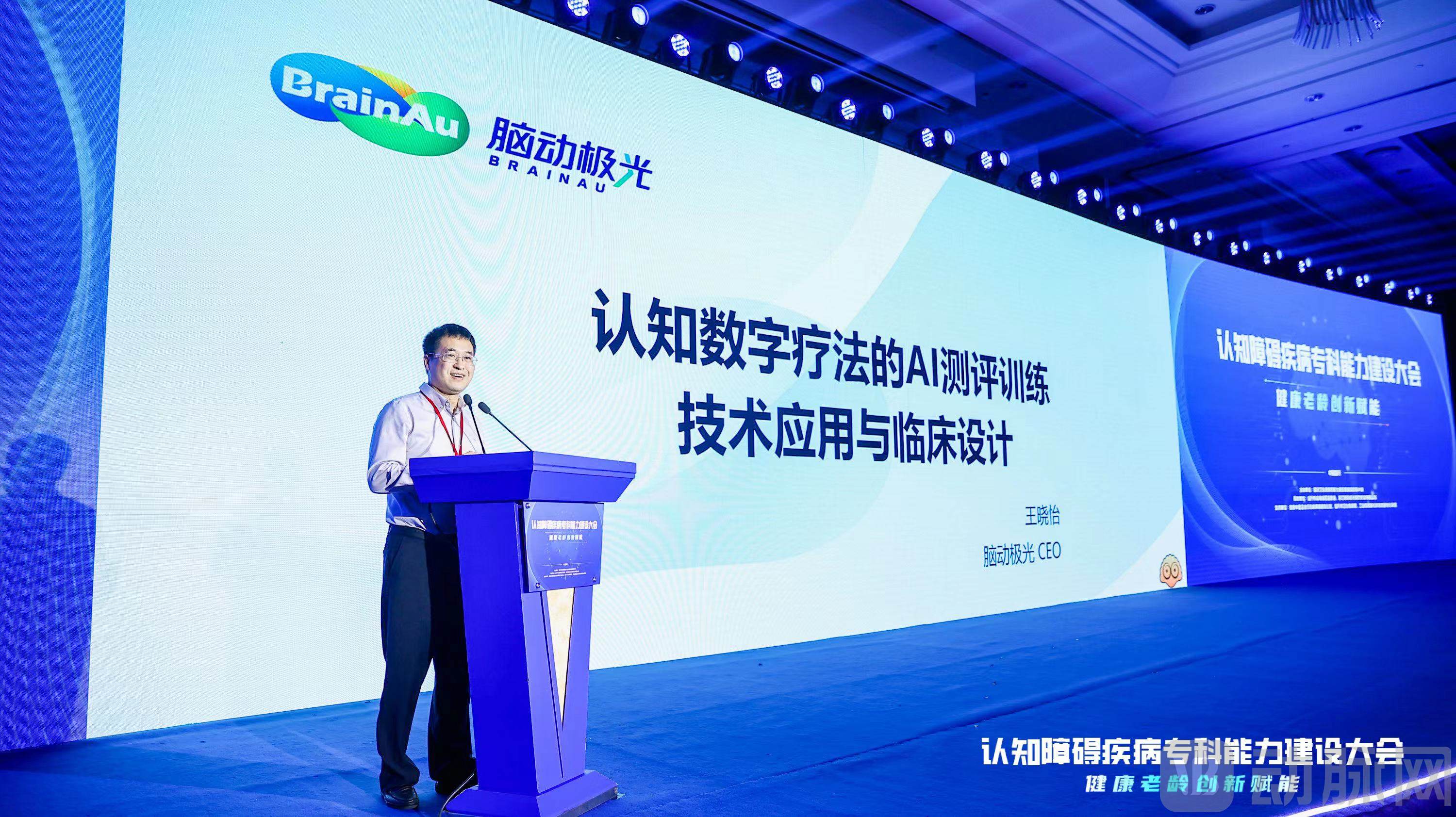
Dr. Wang Xiaoyi shared the development history of BrainAurora and cognitive digital therapeutics, and introduced relevant practices in cognitive diagnosis and cognitive intervention. He stated that cognitive digital therapeutics are a novel therapeutic approach based on brain cognitive science research and grounded in evidence-based medicine, integrating big data and artificial intelligence algorithms. This approach enables the assessment, treatment, and optimization of regimens for cognitive impairment, facilitating cross-disease, multi-domain collaborative, and multi-modal cognitive assessment, intervention, and management.
BrainAurora, a leading digital health technology company, has established the “AI Brain for Cognitive Disorder Diagnosis and Treatment” by integrating big data and AI. It offers an “In-Hospital Cognitive Disorder Diagnosis and Treatment System” and an “Out-of-Hospital Patient Disease Management Platform,” helping healthcare institutions achieve more precise disease assessment, diagnosis, and intelligent intervention and treatment, thereby supporting the development of digital infrastructure in cognitive care centers.
Roundtable Discussion: Policy Environment, Market Trends, and Cross-Industry Opportunities—A Multidimensional Analysis of Brain Cognitive Health
Roundtable Discussion byWang Xue, Deputy Director of the Medical Affairs Department, Beijing Anding Hospital, Capital Medical UniversityHost, in the first dialogue, invitedCao Yunpeng from the First Affiliated Hospital of China Medical University, Zhang Nan from Tianjin Medical University General Hospital, Liu Jun from the Second Affiliated Hospital of Guangzhou Medical University, Peng Guoping from the First Affiliated Hospital of Zhejiang University School of Medicine, and Mao Fan from the Chinese Center for Disease Control and PreventionA discussion was held on the topic of “Innovative Development Opportunities in the Era of Brain Cognitive Health,” with specific insights shared on the government’s heightened emphasis on brain cognition, the significance of releasing the Brain Cognitive Health Index, and practical approaches adopted by medical institutions to address population aging.
The second roundtable dialogue focused on the innovative integration of "medical, industrial, academic, and research" sectors in brain cognitive health.Tang Yi from Xuanwu Hospital of Capital Medical University, Lv Zeping from the Affiliated Rehabilitation Hospital of National Research Center for Rehabilitation Technical Aids, He Dian from the Affiliated Hospital of Guizhou Medical University, Li Xia from Shanghai Mental Health Center affiliated to Shanghai Jiao Tong University School of Medicine, and Wang Xiaoyi from BrainAuroraParticipated in the discussion and engaged in an exchange of ideas on specific issues, including the empowerment of clinical practice by digital technologies, the conduct of large-scale cohort studies on cognitive impairment, and the translation of scientific and technological achievements in the field of brain cognitive health.
Finally, the First National Conference on Building Specialty Capacity for Cognitive Disorders concluded amidst applause. The forum’s distinguished guests included academicians, hospital presidents, physicians, leading industry enterprises, and innovative companies. Drawing from diverse perspectives, they jointly advanced the standardization of diagnosis and treatment for cognitive disorders, aiming to address the societal challenges of prevention and care in the context of population aging.