

Meeting the Health Needs of 1.2 Billion People: JD Health Launches Dedicated Dermatology Hospital

JD Health
Internet Medical and Health Service Platform Provider
Acne, Hair Loss... When faced with such common issues, do you also tend to first pick up your phone to search and ask before deciding what to do? In dermatological conditions, middle-aged and young patients constitute a high proportion, and they are accustomed to making healthcare decisions based on internet information.
A set of data also supports this. According to the latest survey by JD Health, patients with skin diseases are more inclined to seek treatment plans online; moreover, these patients show a clear trend toward younger demographics, with those under 25 years old accounting for nearly 50%. The younger demographic demonstrates higher acceptance and awareness of internet-based healthcare services.
Dermatology patients significantly overlap with internet users, creating a more favorable environment for the promotion and adoption of online dermatology consultations compared to other chronic diseases that predominantly affect aging populations.
In this context, on April 22, 2023, JD Health launched its Dermatology Hospital, exploring a new model for specialized internet hospitals. After analyzing its resource supply, service offerings, and collaboration models, VCBeat found that the innovation of the Dermatology Hospital not only strengthens value delivery to all stakeholders—including physicians, patients, and pharmaceutical providers—but also carries deeper industry significance.
# JD Health’s Specialty Centers Have Long Been Recognized in the IndustrySince its inception, JD Health has been aggregating medical resources and implementing refined operational strategies through specialty centers, building upon its foundation of routine internet-based diagnosis and treatment.
To date, JD Health has established 27 specialized medical centers, attracting over one hundred experts at the level of discipline leaders. Leveraging the head effect, it has drawn nearly 50,000 physicians at the associate chief physician level or above to join the JD Health Internet Hospital. By integrating internal and external physicians, non-clinical professionals, and industry partners, JD Health provides users with “solution-oriented” services. Clearly, these specialized centers have served as a key vehicle for JD Health’s expansion from pharmaceutical supply chain operations into healthcare services in recent years.

JD Health Dermatology Hospital Launches
How do specialized dermatology hospitals differ from previous specialty centers?
First, integrate medical resources across all levels to achieve complementary advantages. JD Health has invited 30 leading experts in the field of dermatology to establish online single-disease specialty studios. More than 3,000 dermatologists from Grade A tertiary hospitals have joined the platform, and a full-time team of dermatology specialists has been formed. The full-time physician team provides rapid, round-the-clock response to patient needs, while renowned experts handle complex and refractory cases or facilitate referrals for offline care.
Secondly, there is a sharper focus on specialized disease categories. JD Health Dermatology Hospital has established seven specialty clinics focusing on pediatrics, geriatrics, Traditional Chinese Medicine (TCM), acne, allergies, hair loss, and complex or refractory conditions. In the future, as more single-disease expert studios are established, the number of specialty clinics will continue to grow.
Finally, emphasis is placed on synergy within the industry ecosystem. Concurrent with the launch of its dermatology hospitals, JD Health, in collaboration with over ten brand institutions, established the “Dermatological Health Ecosystem Alliance.” The alliance will initiate a series of patient survey reports focusing on patients’ living conditions, mental health status, and urgent needs, particularly for difficult-to-treat and high-burden diseases such as psoriasis and severe acne. Meanwhile, leveraging its existing data collection and follow-up systems, it will conduct real-world studies to explore the clinical application of dermatological products and directions for innovative R&D. Additionally, joint science popularization activities will be carried out to dispel public misconceptions about skin diseases.
Overall, JD Health Dermatology Hospital can be understood as a major specialty department or diagnostic and treatment center within a general hospital that has been upgraded into a specialized hospital.
Why was dermatology chosen for this upgrade?
A Direct Cause: According to JD Health statistics, dermatology accounts for as high as 15% of the total number of online consultations on the platform. Among dermatology consultations, common conditions such as eczema, acne, and hair loss see high volumes. This indicates a strong and urgent demand for internet-based medical services among patients with skin diseases.
From the perspective of the entire dermatology field, there is a wide variety of skin diseases, with over 3,000 known types. Statistics show that the prevalence of skin diseases in China exceeds 70%, with approximately 150 million people suffering from skin conditions annually. The sub-healthy population surpasses 900 million, and around 1.2 billion people have skin health needs. Among skin diseases, chronic conditions account for a high proportion; most dermatological disorders are characterized by seasonal recurrence, requiring long-term management and frequent medical visits.
During the diagnostic phase, skin diseases present with external, visible symptoms. Experienced physicians can make relatively accurate diagnoses through thorough symptom observation and patient communication. Once the etiology is clearly identified, there is a high degree of consistency between online and offline consultations for dermatological conditions, and subsequent treatment relies minimally on diagnostic tests and examinations.
Given the prolonged treatment cycles for dermatological conditions, a significant portion of care for both outpatients and inpatients occurs outside hospital settings. In these out-of-hospital treatment and management phases, internet healthcare can play a pivotal role. Furthermore, digital platforms help alleviate the embarrassment associated with face-to-face consultations for privacy-sensitive conditions, thereby facilitating more comprehensive communication between patients and physicians regarding their medical conditions.
Overall, the large and diverse population of patients with skin diseases presents unique challenges in diagnosis, treatment, and management, necessitating more focused approaches and specialized content to better serve these patients.
While dermatological conditions possess many inherent advantages for the development of internet-based medical consultations, certain limitations also exist.
During online consultations, various factors may influence physicians’ diagnoses. According to the survey findings in VCBeat’s “2022 Internet Hospital Report,” insufficient access to patients’ medical records by physicians may compromise healthcare quality. Meanwhile, if patients fail to provide or upload necessary disease-related information, describe their condition unclearly, or inaccurately understand physicians’ responses, communication barriers between doctors and patients may arise, thereby affecting diagnostic accuracy and overall healthcare quality.
Media outlets have reported that patients question whether online consultations, despite their convenience, may lead to misdiagnosis due to the limitation of describing symptoms through text and images alone.
Offline, clinical pathways and medical guidelines provide direction for physicians’ diagnostic and treatment processes. Online, given the characteristics of internet-based communication, it is also necessary to establish clinical pathways. Through institutional and technical design, these pathways enable physicians to obtain more comprehensive and accurate patient information and render diagnoses.
In September 2022, JD Health released the Core Systems for Medical Quality Control at JD Health Internet Hospital and the Standardized Clinical Pathways at JD Health Internet Hospital (hereinafter referred to as the “Standardized Clinical Pathways”), aiming to explore the standardization of online diagnosis and treatment processes and content, thereby providing physicians with clear guidelines and evidence-based frameworks for their online medical practice.
“Standardized Clinical Pathways” aims for “practicality,” helping physicians provide personalized, comprehensive consultation solutions by addressing multiple dimensions, including identification of patient chief complaints, diagnosis and differential diagnosis, medication recommendations, suggestions for auxiliary examinations, lifestyle and dietary advice, recommendations for offline clinical care, and referrals to renowned specialists and hospitals.
As of January 2023, the "Standardized Diagnosis and Treatment Pathways" covered 201 diseases across 19 specialties.
Taking androgenetic alopecia in dermatology as an example, the "Standardized Diagnosis and Treatment Pathway" starts with the disease definition, etiology, pathogenesis, and clinical manifestations. By integrating online consultation data from JD Health Internet Hospital, it compiles common chief complaints, consultation processes, and relevant disease guidelines and consensus statements for androgenetic alopecia. It proposes a standardized consultation workflow and provides treatment regimens to guide physicians in delivering safe and standardized solutions to patients. Additionally, the "Standardized Diagnosis and Treatment Pathway" offers recommendations on auxiliary examinations, applicable products, and lifestyle modifications.
Furthermore, similar to other specialties, dermatology also faces the challenges of insufficient medical resources and uneven distribution.
Currently, there are approximately 30,000 dermatologists in China, with over 90% concentrated in tertiary hospitals and above. The country has only two dermatologists per 100,000 people, a figure that drops to just one per 100,000 in the less developed central and western regions. This shortage of medical resources is further exacerbated by the need for guidance across multiple out-of-hospital medication and management scenarios for patients.
JD Health leverages technological capabilities to maximize the efficiency of limited resources.
Currently, JD Health’s medical knowledge system covers an extensive network of health-related knowledge relationships and has been applied to core processes such as intelligent diagnostic assistance, achieving an organic integration of medical AI technology with physicians’ professional expertise.
At JD Health Dermatology Hospital, physicians can leverage intelligent platforms such as the AI-assisted diagnosis system and post-consultation management platform to enhance efficiency. For instance, the AI-assisted diagnosis system features functions including intelligent triage, automated medical record generation, intelligent quality control, smart follow-up, and disease progression management, thereby assisting physicians in delivering efficient patient care.
In collaboration with renowned medical experts, JD Health has leveraged its platform resource advantages to establish a learning platform tailored for primary care physicians, thereby facilitating their professional development and career advancement, as well as expanding the pool of medical talent.
JD Health’s Dermatology Hospital has developed an AI-powered skin analysis tool, trained on a dataset of millions of skin images. After users upload clear photos according to the specified guidelines, the tool generates a skin type report within five seconds. This helps patients accurately describe their chief complaints, enabling physicians to assess their conditions more quickly and comprehensively, thereby indirectly enhancing clinical efficiency.
While overcoming supply-side constraints, internet-based healthcare for dermatological conditions can deliver substantial value to patients.
As previously mentioned, a significant portion of the treatment and management of many dermatological conditions occurs outside of hospital settings, making patients and their families the primary agents in executing these care plans. However, in real-world scenarios, patients often lack adequate knowledge about medications and demonstrate poor medication adherence.
Most skin diseases require pharmacological treatment, including oral and topical medications. Topical medications, as an example, are one of the primary therapeutic approaches for dermatological conditions, second in importance only to oral medications.
The treatment with topical medications requires determining the dosage and duration of application based on the location, size, and severity of the skin lesions. When applying topical ointments, it is crucial to pay attention to pre-application preparation, the amount to be used, the application tool, the technique of application, and the duration of drug contact. However, studies have shown that outpatients with chronic skin diseases lack knowledge about the proper use of topical dermatological medications, and there is widespread non-compliant medication use and misconceptions regarding drug usage.
In offline settings, the rapid turnover of outpatients, coupled with insufficient emphasis on medication counseling by healthcare professionals and pharmacists or inconspicuous medication alerts, may lead to patients’ lack of medication knowledge.
Given that a significant proportion of medication administration occurs outside hospital settings, the pervasive issue of medication adherence in chronic disease management cannot be overlooked. Poor medication adherence is a prominent characteristic among patients with dermatological conditions, which directly undermines overall treatment efficacy.
Studies have shown that the main reasons for poor medication adherence among patients with skin diseases include: lack of basic knowledge about the disease, skepticism about the effectiveness of medications, and inconvenience in taking medications.
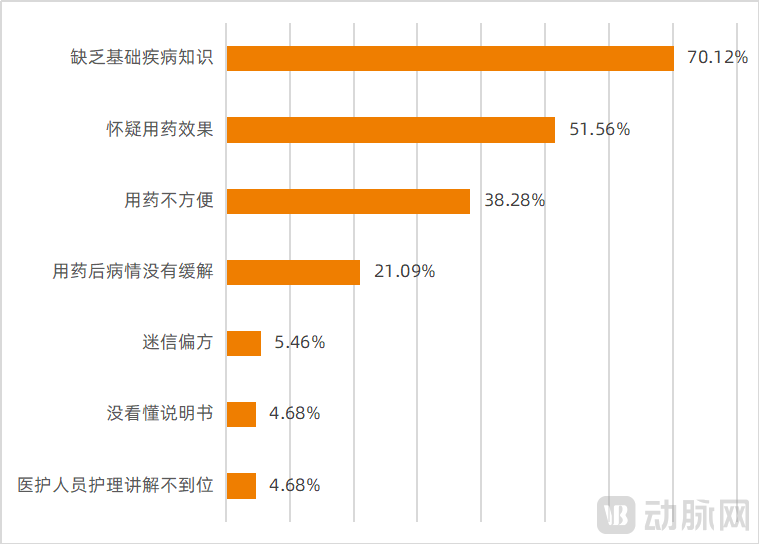
Reasons for Poor Medication Adherence in Patients with Skin Diseases. Source: Electronic Journal of Clinical Medical Literature, compiled by VCBeat
Internet-based healthcare not only provides patients with convenient access to medication knowledge but also needs to deeply engage in the process of patient treatment and management to improve overall therapeutic outcomes.
In response, JD Health Dermatology Hospital has developed accurate, practical, and engaging educational content, integrating medical resources with technological tools to support patients in continuous treatment and management through online platforms. For instance, the acne management tool provides personalized medication and skincare recommendations from physicians. Through intelligent follow-up, doctors can accompany patients throughout the entire course of treatment, ultimately improving therapeutic outcomes.
Another medication-related issue pertains to accessibility.
Guan Xin, a dermatology expert at Peking University Third Hospital, believes that leveraging the JD Health Dermatology Hospital can extend medical services to patients across China, particularly those in primary care settings. While dermatology is advancing rapidly, with some new drugs and therapies offering breakthrough efficacy, many patients remain unable to access them. She hopes that internet-based healthcare will play a more significant role in the field of dermatology.
Indeed, there remains a substantial unmet medical need in the treatment of skin diseases. Dermatology has become a hotbed for new drug development in recent years, with VCBeat reporting an increasing number of financing rounds for companies specializing in novel dermatological therapies.
According to data released by the Center for Drug Evaluation (CDE) of the National Medical Products Administration, a total of 205 new dermatological drugs were approved for clinical trials in China from 2015 to 2022, including 84 biological products and 121 chemical drugs. A total of 22 new dermatological drugs and 3 new drug indications were approved for marketing. Innovation in dermatological drugs in China is showing a year-on-year increasing trend.
In March 2023, upadacitinib, an innovative targeted therapy for atopic dermatitis developed by AbbVie, was launched exclusively on JD Health. It is indicated for adult and adolescent patients aged 12 years and older with refractory, moderate-to-severe atopic dermatitis. Following its exclusive launch on JD Health, patients can consult online and purchase prescriptions, eliminating the need to travel to offline hospitals for prescription renewals.
Over the past two years, multiple internet healthcare platforms, including JD Health, have engaged in collaborations for the inaugural launches of new drugs. This approach helps pharmaceutical companies establish commercialization channels with greater efficiency and lower costs, while also enhancing patient access to new drugs and novel therapies.
For JD Health, there is both a medical service system and a pharmaceutical supply chain system that meets the needs of various drug deliveries. As more and more new and effective dermatological drugs come to market, JD Health Dermatology Hospital will play an even greater role in helping to improve the accessibility of innovative drugs and therapies.
Notably, dermatology holds a special significance in internet healthcare: it is the specialty for which the industry has most frequently called for the opening of online initial consultations, with psychiatry and psychology also seeing similarly strong demands.
Although internet-based healthcare is currently positioned primarily for follow-up consultations, VCBeat believes that the foundation for exploring initial consultations is gradually being laid.
In March 2023, on the occasion of the inaugural Digital Health Yinchuan Summit, VCBeat held discussions with the Yinchuan Municipal Health Commission. From the perspective of the Yinchuan Municipal Health Commission, online initial consultations indeed facilitate patient access and provide internet hospital-related enterprises with greater scope for application. Therefore, the local authorities are considering selecting certain conditions that do not require extensive physical examinations and can be diagnosed through online consultation. However, this requires extensive data comparison and careful selection of individual cases within specific diseases. The relevant data will be submitted to the appropriate departments of the National Health Commission for approval, after which initial consultation pilots will be conducted under the premise of ensuring safety.
# Why Is the Foundation for Initial Consultation Exploration Being Gradually Laid? There Are Several Reasons:
First, the high volume of online consultations and the wide variety of specialized disease categories enable the accumulation of substantial data sets, providing a reference for policy decision-making.
Taking JD Health as an example, its annual consultation volume exceeded 100 million in 2022, with dermatology accounting for 15%, reaching 15 million consultations. Meanwhile, JD Health Dermatology Hospital has further subdivided its outpatient services based on dimensions such as high-incidence age groups and prevalent conditions.
Conditions suitable for initial online consultations may be limited to specific diseases within certain specialties or to particular patient populations. Only by analyzing large volumes of consultation data and granular disease-specific data can we identify the evidence needed to establish policy-making standards.
Second, internet-based healthcare can provide patients with continuous management throughout the entire course of disease, with health records covering the full spectrum of medical visits.
Internet-based healthcare integrates pre-consultation, during-consultation, and post-consultation phases to establish patient health records, providing patients with continuous, whole-course management that covers triage, diagnosis, treatment, and rehabilitation guidance. This comprehensive, end-to-end health management approach facilitates the identification of patient risk factors, such as lifestyle habits and comorbidities, which can also serve as a basis for decision-making in initial consultations.
Third, comprehensive medical quality and safety systems serve as safeguards, ensuring that exploration proceeds with patient safety as the prerequisite.
Corporate integrity-driven innovation and industry self-regulation provide the environment for policy formulation. In addition to the Core Systems for Medical Quality Control in Internet Hospitals and Standardized Diagnosis and Treatment Pathways introduced earlier, JD Health Dermatology Hospital has established four special committees composed of experts from various fields, building upon its existing platform-wide safety protocols to further enhance medical quality and safety in light of the specific characteristics of dermatological diseases.
Among the four specialized committees, the Quality Committee is responsible for establishing clinical quality management standards and internet-based diagnosis and treatment pathways for single diseases; the Research Committee oversees the design and operation of real-world study projects; the Science Popularization Committee handles medical science communication to help more users understand skin diseases, and also reviews professional content to ensure that disseminated information is accurate, useful, and engaging; and the Technology Committee is in charge of developing specialty-specific digital therapeutics and applying technologies such as AI. This structure also helps integrate professional expertise with platform resources, thereby enhancing the disciplinary capabilities of dermatology.
Policy-making often lags behind industry innovation. Before innovative initiatives emerge, policymakers frequently struggle to accurately determine which practices warrant encouragement and which require regulation. In the field of internet healthcare, medical quality and safety constitute the fundamental baseline. On this basis, enterprises need to provide practical, actionable recommendations for policy decisions, drawing on their own exploratory processes and outcomes.
JD Health has revealed that the goal of its dermatology hospital is to help more patients with skin conditions achieve “on-demand consultations for minor ailments,” “effective management of chronic diseases,” “early warning for serious conditions,” and “access to specialists for complex and refractory cases.” This objective encompasses patients across the entire spectrum of disease severity. JD Health has already aligned multi-tiered medical resources on the supply side; going forward, it will need to bridge the gap between current realities and this ideal through refined operational strategies. Moreover, in addressing more serious and challenging issues—such as exploring initial diagnosis protocols—JD Health must further demonstrate its social responsibility as a leading enterprise in internet healthcare.