

Thirty Years of Turbulence in China's Dental Industry: Innovators' Endeavors, Challenges, and the Road Ahead
MEI WEI DENTAL GROUP
Oral Health Service Provider
In 1993, a piece of news “set off a bombshell” in Tianjin’s medical community: Guo Pingchuan, who had served as the director of a public stomatological hospital for many years, formally submitted his resignation to the hospital.
As public institutions, public hospitals have long been a coveted career choice for physicians, with hundreds or even thousands of candidates competing for the same position. It was uncommon in the 1990s for doctors to voluntarily give up their “iron rice bowl,” and resignations by hospital presidents were even rarer.
But Guo Pingchuan was resolute in his decision.
At that time, China’s reform and opening-up were in full swing, with a surging tide of professionals “plunging into the sea” of business, and new opportunities and emerging phenomena cropping up endlessly.
Witnessing the profound changes quietly unfolding in the era, Guo Pingchuan also sought to explore his own potential. Thus, disregarding the efforts of the Tianjin Hexi District Health Bureau and several municipal leaders to retain him, he resolutely chose to embark on an entrepreneurial venture.
After numerous twists and turns, Guo Pingchuan established Tianjin’s first Sino-foreign joint venture private dental clinic—“Aichi Dental Clinic”—embarking on a 30-year entrepreneurial journey in the private dental sector.
Around the same time, passionate young people who shared Guo Pingchuan’s vision also flocked to this burgeoning trend.In Shenzhen, Guangdong, Li Changren founded Liuhe Dental; in Xi’an, Shaanxi, Zhao Haitao established Haitao Dental; in Leshan, Sichuan, Gao Donghua founded Leshan Xiehe Stomatological Hospital; in Dalian, Liaoning, Liu Jia built Jiamei Dental; in Beijing, Zou Qifang opened Arrail Dental Clinic; in Hangzhou, Zhejiang, Lv Jianming established Topchoice Medical... Private dental institutions across China have gradually emerged.
Amidst this confluence of events, a new era for the private dental industry is dawning.
The First Ripples: Pioneers and Exploration in the “Wild West” Era
(1993–2000)
To this day, Guo Pingchuan still vividly remembers the opening day of Aichi Oral Disease Clinic.
Outside the outpatient clinic, eight potted plants were arranged in a row. Behind them stood leaders at various levels, friends, and other guests from the district who had come to offer congratulations and tour the facility. Guo Pingchuan could hardly contain his excitement and was moved to tears of joy. The journey had begun with preparations in 1995, followed by the acquisition of approval documents from the Ministry of Health and the Tianjin Municipal Commission of Foreign Trade and Economic Cooperation in 1996, culminating in the official launch of operations in 1997.The entire process, from preparation to the official opening of the outpatient clinic, spanned two years.. Guo Pingchuan went to great lengths and undertook substantial work for this purpose.
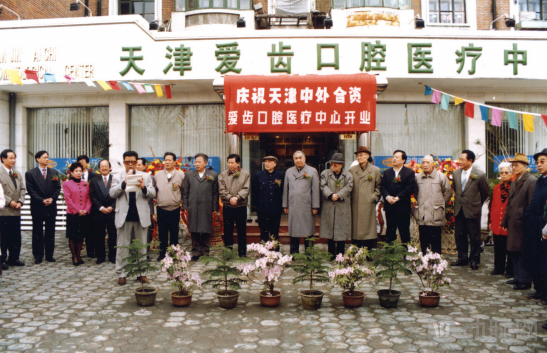
(The opening ceremony of Tianjin Aichi Dental Medical Center in 1997)
“In the 1990s, the process for establishing a private dental clinic was relatively complex.“Guo Pingchuan told VCBeat, ‘No one had done it before; we lacked experience.’”
But hard work pays off. Guo Pingchuan deeply cherishes this opportunity as his clinic finally opens its doors. Having practiced dentistry since 1973, when he began seeing patients at the age of 18, Dr. Guo has gained profound insights into the needs of patients with oral diseases over his more than two decades of medical practice.
“Previously, there was a shortage of medical resources and medicines,”To receive treatment for oral diseases, patients must begin queuing at 4 a.m. to obtain appointment tickets, with a daily limit of 20 patients; after securing a ticket, they must wait further to be seen by the doctor.“Guo Pingchuan recalled, ‘The public primarily sought relief from toothaches and basic dental prosthetics. These needs, which appear quite simple by today’s standards, were difficult to meet effectively at that time.’”
andWith China's reform and opening-up, the domestic oral healthcare industry has gradually aligned with international standards, and an increasing number of new technologies and equipment have been introduced into the country.In order to better address the oral health concerns of the general public, Guo Pingchuan has been continuously striving to learn and adopt new technologies.
For instance, in 1987, Guo Pingchuan was formally introduced to dental implantology—a field then little known in China—by attending the inaugural “Workshop on Biomaterials for Dental Implants” hosted by the School of Stomatology at West China University of Medical Sciences. In 1991, he placed his first dental implant, thereby becoming one of the earliest pioneers in dental implantology in China. It is worth noting that during the 1980s, removable dentures remained the mainstream option in the domestic dental industry, and dental implants did not gain widespread popularity in China until around 2010.
However, Guo Pingchuan soon felt the presence of a bottleneck.
“At state-run hospitals back then, purchasing equipment was no easy feat, as the approval process was complex and time-consuming,” said Guo Pingchuan. “My aspiration has always been to introduce more new technologies.” This became one of the key motivations for him to leave the public sector and establish Aichi Dental.
Starting a business is not easy.On the one hand, the private dental industry in the 1990s was still in a “wild west” phase, with public awareness of oral health remaining insufficient; on the other hand, private entrepreneurs generally lacked business knowledge and market experience.
These factors led to setbacks for private dental enterprises at the time. For instance, Aichi Oral Disease Clinic experienced a six-month period of losses.
Soon after, Guo Pingchuan optimized the clinic’s operations upon identifying the issues. Aichi Dental gradually got back on track, seeing a rapid increase in patient visits and establishing a strong reputation in Tianjin.
How prosperous was the business? In the book *Guo Pingchuan: The Explorer of China’s Private Dental Sector*, Guo Pingchuan later recalled the scene at that time: “As soon as I pushed open the door to start work in the morning, I would see a room full of people—an unprecedented boom. Even the offices were packed with patients waiting for treatment. That period could be described as a glorious peak for Aichi Dental. We never had to worry about a lack of patients; in fact, we had more patients than we could handle.”
Behind this, in addition to the efforts of Aichi Oral Disease Clinic in diagnosis and treatment services, it is also related to China's rapid economic growth.
According to data from China Economic Net,In the 1990s, China's average annual per capita GDP growth rate exceeded 10%, and people's "wallets" became increasingly full.A cohort of Chinese nationals who were among the first to accumulate wealth, along with foreign professionals pursuing careers in China, possess both the willingness and the financial capacity to invest in oral health care, driven by their disposable income.
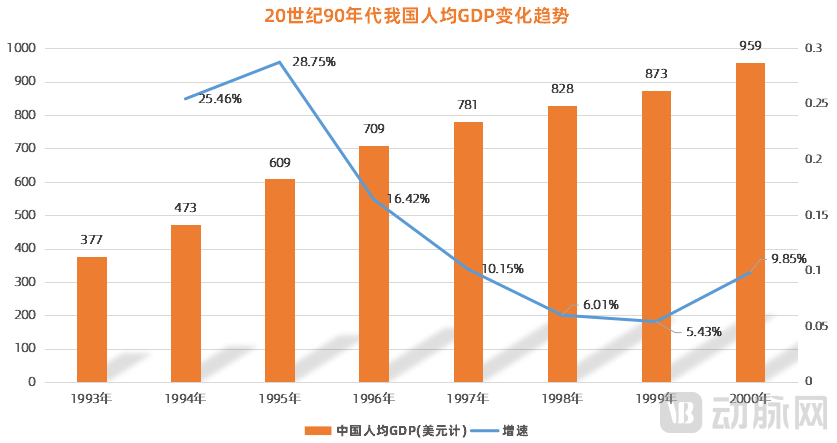 (Trends in China’s Per Capita GDP in the 1990s, Chart by VCBeat)
For example, in Tianjin, where Beijing Aichi Oral Disease Clinic is located, the Binhai New Area was established in the 1990s, attracting many medium-to-large foreign-invested and joint-venture enterprises, including well-known companies such as Motorola and Master Kong, which drove local economic income growth.
“In the early days, we didn’t really understand marketing; we mainly published popular science articles on oral health in newspapers, which attracted a significant number of patients. Additionally, Aichi Dental had foreign dentists on staff, which drew many expatriate patients seeking dental care,” said Guo Pingchuan.
Like Aichi Dental, Zou Qifang, the founder of Arrail Group, once told VCBeat that in the early days of his venture, it was orders from expatriates at various embassies in Beijing that helped him gradually break into the market, subsequently attracting the interest of large corporate clients.
From this perspective, pioneers in the dental field undoubtedly encountered numerous challenges during the “wild west” era of exploration. At the core was the task of going from zero to one—namely, how to establish a private dental clinic and raise public awareness of oral health.
Fortunately, propelled by favorable policies, private dental institutions quickly gained broader recognition. Coupled with the rapid rise in people’s economic status and growing health awareness, private enterprises have achieved unprecedented growth, allowing pioneering innovators to reap substantial rewards.
For example, Li Changren, the founder of Liuhe Dental, established his reputation in the Shenzhen Special Economic Zone and, within two to three years, operated six affiliated clinics, including the Luohu Border Inspection Clinic, the Second Luohu District Clinic, and the Luohu Commercial City Clinic. This laid a solid foundation for his subsequent establishment of Bybo Dental.
As the new millennium dawned, private dental practices continued to build momentum, awaiting a pivotal moment.
A Surging Tide: A Single Document Officially Ushers in the “Era of Rapid Acceleration”
(2000–2008)
The oral healthcare industry’s explosive growth has arrived faster than anticipated.
In 2000,The release of a single document has officially ushered the private dental industry into an era of “explosive growth.”In the “Implementation Opinions on the Classified Management of Urban Medical Institutions” issued by the former Ministry of Health, it was clarified that for-profit medical institutions would adopt policies and management models different from those applied to non-profit institutions. This became a milestone event in the market-oriented development of private healthcare in China.
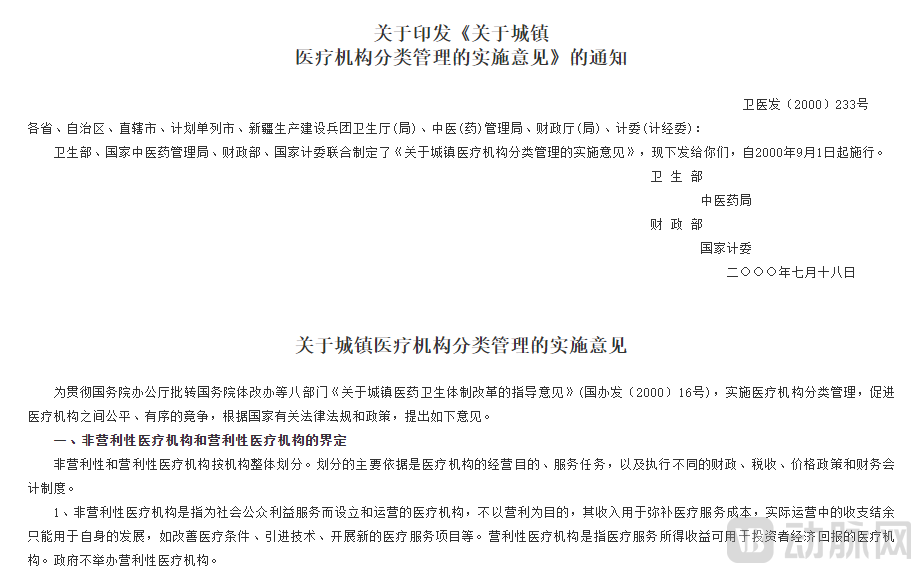 (2000, "Implementation Opinions on the Classified Management of Urban Medical Institutions" issued by the former Ministry of Health)
Not only that, in 2001, China joined the WTO (World Trade Organization) and committed to gradually opening up its medical trade within three to five years. Among the first three specialties to be opened was “dental care.” This commitment by China meant that foreign concepts and capital for dental healthcare services would soon flood into the country. A market boom was imminent.
At the forefront of this trend, private dental practices have emerged as the first beneficiaries. A large number of entrepreneurs have flocked to this sector, with private dental institutions springing up like mushrooms after rain.
According to survey data from the Private Dental Medical Institution Management Group of the Chinese Stomatological Association in 2003, there were 43,000 private dental institutions holding a "Medical Institution Practice License" that year.
Behind the buzz, an increasing number of people are joining the industry.
In 2007, Zhu Liya, a graduate of the School of Stomatology at Shanghai Jiao Tong University, decided to transition from the role of “clinician” to that of “entrepreneur.” Together with her partners, she established a dental clinic, embarking on her first entrepreneurial venture.
Chen Xizhu, who comes from a family with a long tradition of practicing Traditional Chinese Medicine, accepted an entrepreneurial invitation from the former president of a stomatological hospital and partnered with him to open his first clinic. In the same year, he co-founded a second clinic with a classmate. This establishment later became the predecessor of Hengmei Dental.
“At that time, the industry was in a phase of rapid growth, with demand outstripping supply and limited competition,” Chen Xizhu told VCBeat. “A community official approached us about organizing a potted plant competition for the elderly and asked if we were interested. We initially thought we were being invited to participate, but later realized they simply wanted us to lend our name to the event and provide some prizes.”
As a result, more than ten people came in for oral examinations after the event. “Looking back, I realize that was the earliest form of so-called sponsorship and brand exposure,” Chen Xizhu said with a smile.
On the other hand, the iteration of dental treatment methods and technologies has also made more patients willing to accept dental treatments.“Prior to 1994–1995, the primary option for patients with missing teeth was removable dentures, followed by porcelain-fused-to-metal crowns, which remained prevalent for over a decade. After 2006–2007, dental implants began to see widespread adoption in major cities such as Beijing, Shanghai, Guangzhou, and Shenzhen.” At that time, Hai Ou, who had already been working in private dental institutions for more than ten years, witnessed the technological evolution of the dental industry.
She told VCBeat that in the early days, removable dentures were not very stable, and cases of patients accidentally swallowing their dentures were common. “This is a terrifying experience for patients, which can lead to dental anxiety and avoidance of future dental care.” Therefore,Technological advancements have largely driven the development of the industry.
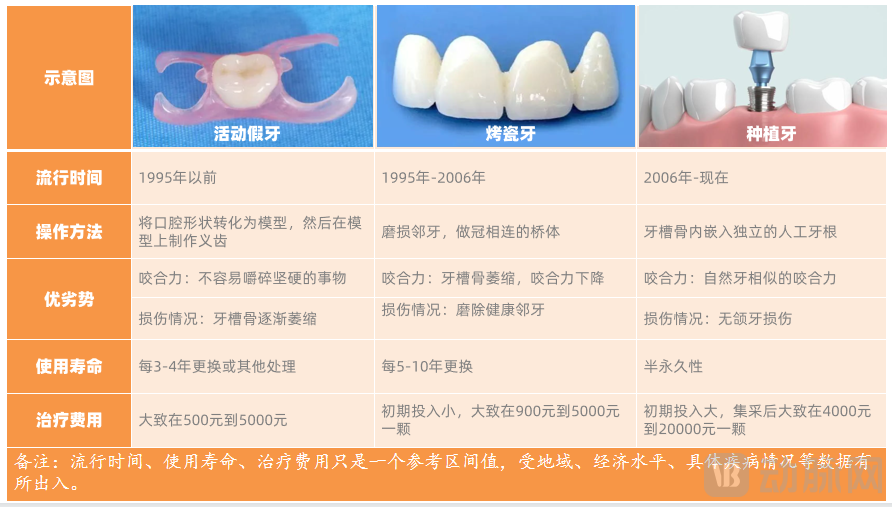 (The Evolution and Differences Between Dentures, Porcelain-Fused-to-Metal Crowns, and Dental Implants; Graphic by VCBeat)
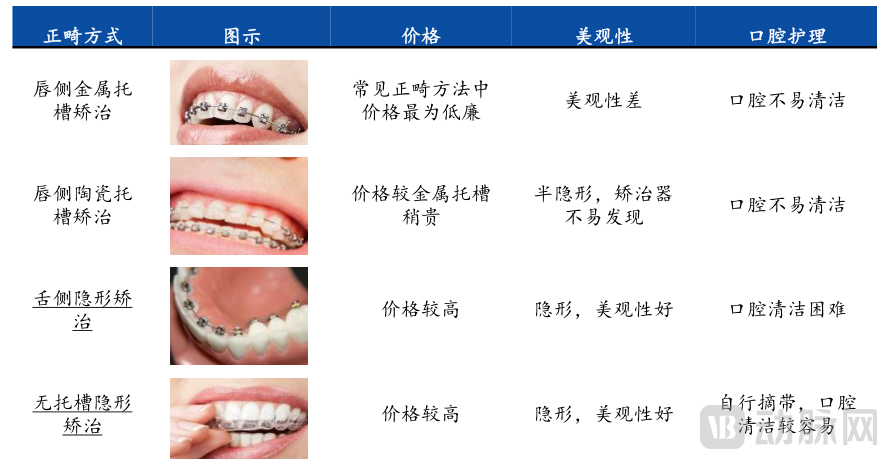 (Evolution and Differences in Orthodontic Methods Image Source: Guoyuan Securities)
Meanwhile, private dental practitioners who are adept at embracing new technologies and concepts have also reaped the benefits of industry growth.
For instance, Aichi Dental focused on dental implantation as its core business and continuously introduced advanced foreign technologies and equipment, such as four-handed dentistry, central vacuum pumps, and imported anesthetics. These were leading technologies and equipment in China at the time, enabling Aichi Dental to achieve rapid growth. From 2006 to 2007, Aichi Dental’s annual revenue reached nearly RMB 30 million, ranking among the top private dental institutions in Tianjin.
During the same period, Jiamei Dental actively adopted new technologies and introduced new products, with 80% of its products utilizing imported materials and equipment. The company expanded rapidly, reaching an impressive total of 30 chain clinics at that time, and secured investments from Songhe Capital and Fengli Capital.
Leveraging favorable timing, location, and human resources, innovative institutional brands experienced a significant revenue surge and accelerated business expansion in those years.
The event that brought this wave to its peak was Topchoice Medical’s backdoor listing through ST Zhongyan in 2007, making it the first dental care company listed on China’s A-share market.
After its listing on the secondary market, Topchoice Medical achieved a compound annual growth rate (CAGR) in profits of over 20% for the first ten years, creating a myth of a tenfold increase in its stock price within six years. This has highlighted the immense growth potential of the dental industry.
Amid the market’s rapid growth, undercurrents are stirring in the dental industry.
Surging Tides: Capital Enters the Fray, Industry Competition Reaches a Fever Pitch
(2009–2019)
After entering the second decade of the 21st century, China’s venture capital market began to thrive.
According to data released by Zero2IPO Research, China’s venture capital market reached record highs in 2010 across fundraising, investment, and exits. As a result, a substantial amount of capital is urgently seeking high-quality sectors and target companies with certain technological barriers and high growth potential.
As a healthcare sector with strong consumer attributes, dentistry has naturally attracted widespread attention from venture capital (VC) and private equity (PE) firms. Various investors have begun conducting intensive due diligence on dental service providers and are actively entering the market.
In 2010, Arrail Group secured $20 million in Series A financing, with investors including Qiming Venture Partners and KPCB China. From 2011 to 2012, Byer Dental successively attracted investments from Haitong Kaiyuan Investment and CCB Medical Fund within two years. In 2013, Happy Dentistry received investment from Shiji Changhe Group... The dental industry has witnessed wave after wave of financing activities.
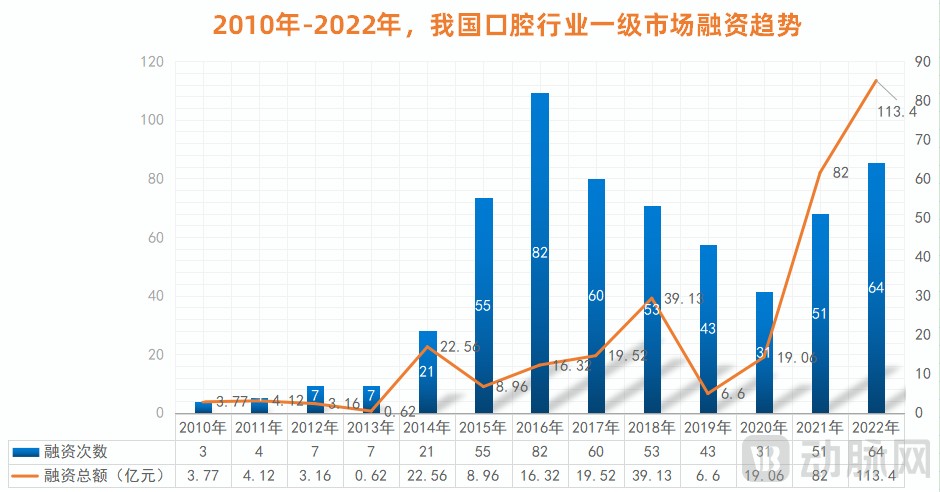 (Data source: Artery Orange Database, Tianyancha; graphic by VCBeat)
During this period,The dental industry, in a frenzied rush, has been driven by capital to engage in aggressive expansion—establishing clinics and hospitals with great fanfare.Chain expansion, standardization, and capitalization have become the goals pursued by many dental institutions, with an increasing number of private dental clinics emerging.
A landmark event is,Since 2015, the number of private dental hospitals has surpassed that of public dental hospitals (data from the National Health Commission)., and the gap in numbers between the two continues to widen. The proportion of private dental hospitals among specialized dental hospitals has been increasing year by year, which has also driven the continuous expansion of the private dental market.
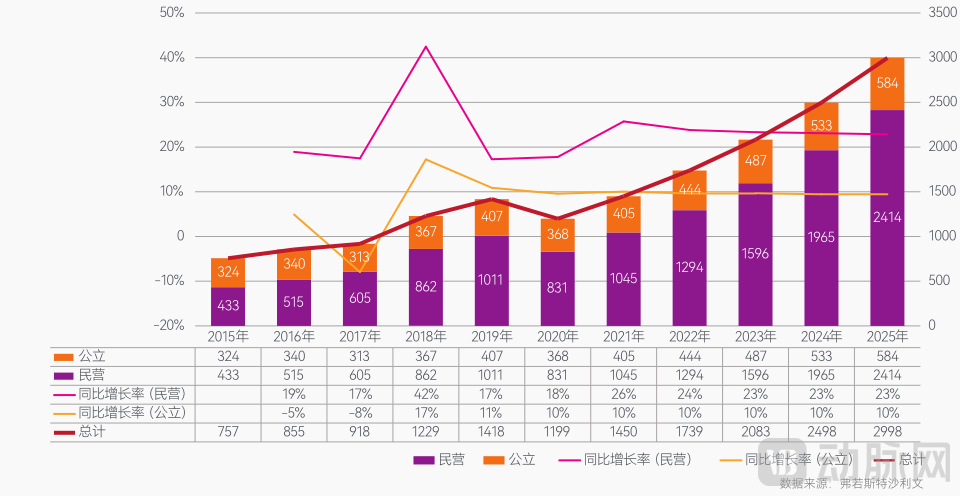 (Trends in Market Size of Public and Private Dental Services, Unit: CNY 100 Million)
A surge of new entrants has intensified competition to a fever pitch.
andTo rapidly capture market share, commercial competition has become frequent.During periods of industry frenzy, marketing strategies such as “$0 dental implants” and “buy one, get one free” have emerged in endless succession, intensifying price wars.
A “veteran” of the oral healthcare industry told VCBeat, “In the competitive landscape at that time, many dental practice owners were particularly impatient. Price wars, being the simplest and most blunt marketing tactic with the quickest visible results, became the preferred choice for managers, leading to a frenzy of price cuts.”
According to VCBeat, around 2015, a chain clinic slashed dental implant prices by 50%, instantly attracting a large influx of patients and quadrupling its quarterly revenue.
“Price wars are about stripping down to the bone, penetrating cost structures, and engaging in a ‘life-or-death’ struggle.” A veteran of the dental industry told VCBeat, “At that time, many business owners formed a consensus—now proven false—that market share was more important than per-unit profit.”
In addition,As the most critical and scarce resource in dental institutions, dentists have become a focal point of competition among various organizations.
How to Snatch?
Beyond offering higher compensation to poach talented dentists from competitors, a more critical channel was recruiting from public hospitals. At that time, the country was vigorously promoting policies enabling physicians to practice at multiple sites: the former National Health and Family Planning Commission repeatedly stated its intention to improve the management of physician practice registration, thereby facilitating the smooth, orderly flow and scientific allocation of high-quality medical resources. This provided private institutions with an opportune moment to attract talent.
By chance, Guo Pingchuan learned that a doctor at a certain clinic was earning an annual income of up to one million yuan, far exceeding the annual salary of dentists at Aichi Dental. “It was then that I realized the private dental industry had undergone significant changes,” said Guo Pingchuan.
In Chen Xizhu’s view, the private dental industry has transitioned from a phase of extensive growth to one of intense competition.
Faced with industry changes, many professionals have begun to contemplate the future trajectory of development and have accordingly proposed their own innovative solutions.For instance, Topchoice Medical launched the “Regional General Hospital + Branch Clinics” model in 2010; Taikang strategically invested in Bybo Dental in 2018, evolving toward a “dental insurance closed-loop” model, among others.
As for the possibilities within the dental industry, Zhu Liya, who is already embarking on her second entrepreneurial venture, has gradually developed her own unique perspectives.
“Around 2015, I was constantly contemplating how to identify an appropriate breakthrough point for the dental industry. To this end, in addition to exchanging ideas with domestic experts, I made multiple trips abroad to study the business models of local dental enterprises,” recalled Zhu Liya. During these overseas visits, the team met with leading dental chain operators such as Pacific Dental Services and Smile Brands. “I was deeply impressed. It is worth noting that at the time, the largest dental chain in China had nearly 200 clinics, whereas Pacific Dental Services already operated on a scale of more than 500.”
Through repeated reflection, analysis, and communication, Julia realized that Dental Support Organizations (DSOs) could bring significant growth and support to dental chain practices.
“China’s dental industry has skilled dentists and reputable dental institutions, but it lacks effective enabling partners that provide support in areas such as clinical care, funding, talent, operations, and management.” In 2016, Zhu Liya and her team founded Meiwei Dental Group, the first dental healthcare enterprise in China to adopt the DSO (Dental Support Organization) model, and invited Hai Ou to become one of its founding partners.
Unlike the U.S. “DSO” model, MEI WEI DENTAL GROUP has pursued localized innovations, integrating multiple roles—including industrial investment firm, management company, executive search firm, internet company, physician group, and medical standards setter—into a single entity. This approach not only helps dental healthcare institutions address operational challenges but also aims to empower them to scale up and strengthen their market position, facilitating their development into leading players in their respective regions or niche segments.
“Competition among dental chains should not be based on quantity and scale; the core focus should be on management models and philosophies, as well as the resulting improvement in the quality of medical services.“Julia told VCBeat.”
With its advanced philosophy, MEI WEI DENTAL GROUP has emerged as a dark horse in the dental chain industry by simultaneously establishing its own Weile Dental brand and acquiring multiple dental chain brands. These include Aichi Dental, founded by Guo Pingchuan; Hengmei Dental, founded by Chen Xizhu; and Tsinghua Sunshine Dental, among others.
Reflecting on the collaboration with MEI WEI DENTAL GROUP, Guo Pingchuan considers it the best encounter. At that time, Beijing Aichi Oral Disease Clinic was in a bottleneck period and struggled to achieve breakthroughs, prompting Guo Pingchuan to search extensively for suitable partners. Meanwhile, MEI WEI DENTAL GROUP was in its early stages of development and urgently needed experienced industry partners. Thus, after being introduced by a mutual friend, Guo Pingchuan and Zhu Liya engaged in multiple in-depth discussions about industry development, leading to an immediate meeting of minds.
“Ms. Julia Zhu, the founder of MEI WEI DENTAL GROUP, is a dentist herself. She has a deep understanding of dentists’ needs as well as management,” Guo Pingchuan told VCBeat, noting that MEI WEI DENTAL GROUP’s emphasis on healthcare-centric philosophy resonated strongly with his own views. “It felt like we had met too late.”
Under the strategic cooperation agreement at that time, MEI WEI DENTAL GROUP granted Aichi significant operational autonomy. First, Aichi Oral Clinic was not required to change its name. Second, the original team retained a portion of the equity, with MEI WEI DENTAL GROUP holding 51% and the original team holding 49%.
In other words, under the business partner model of MEI WEI DENTAL GROUP, dentist-owners have not been phased out but have instead become managers of the new institutions.
The results have been gratifying. During the five-year partnership with MEI WEI DENTAL GROUP, Beijing Aichi Oral Disease Clinic has achieved rapid development, doubling its business volume and currently reaching an annual turnover of approximately RMB 50 million.
Meanwhile, in the face of rapid development in the oral care industry, capital investment has become increasingly frequent.
Around 2018 alone, more than ten dental institutions secured financing. Arrail Dental completed a $90 million Series D funding round; Moore Dental announced the completion of a B-round financing in the hundreds of millions of yuan; Youmu Dental announced the completion of a B-round financing totaling RMB 65 million; Jicheng Pediatric Dentistry secured tens of millions of yuan in Series A investment; Happy Dental received hundreds of millions of yuan in Series B investment; and MEI WEI DENTAL GROUP obtained RMB 300 million in investment...
Behind this are star investors including Legend Capital, Fortune Capital, Matrix Partners China, Hillhouse, IDG Capital, Cypress Holdings, Daotong Investment, and Dianliang Fund.
With capital and talent in place, everything in the dental industry appears to be advancing rapidly in the expected direction.
Survival of the Fittest: Dilemmas and Tough Choices at the Industry’s Crossroads
(2020-2022)
During the period of rapid expansion in the dental industry, the sudden outbreak of the COVID-19 pandemic in 2020 brought practitioners’ growth strategies to a halt: dental institutions experienced unprecedented shocks and impacts during this epidemic.
During dental procedures, specialized equipment such as high-speed turbine handpieces and dental scalers generates substantial amounts of water mist, droplets, or aerosols. If patients in the incubation period of an infectious disease seek treatment unknowingly, this poses a significant risk of transmission. In response, health commissions across multiple regions in China have issued notices suspending routine outpatient dental services.
Business suspension means no revenue, yet expenses continue.
A succession of expenses, including base costs for rent and labor, has emerged. A questionnaire survey released in March 2020 by Guangzhou Ai Li Bi, a third-party hospital management consulting firm, revealed that nearly 60% of private hospitals had less than two months of cash flow runway. These figures underscore the incalculable loss of dividends resulting from the stagnation of the RMB 100 billion dental market.
“Unimaginable.” Zou Qifang, founder of Arrail Group, used this single word to describe the impact of the pandemic. In February of that year, Arrail Group was unable to open for business, resulting in a loss of nearly RMB 100 million in revenue within a month. Meanwhile, fixed costs such as rent, utilities, and labor continued to accrue, placing immense pressure on the company’s cash flow.
“The pandemic left dental healthcare providers in a truly helpless position, as they were unable to fully leverage their capabilities,” Zhu Liya, Founding Partner and CEO of MEI WEI DENTAL GROUP, told VCBeat. Cash flow and staff turnover are testing the sustainable operations of these institutions.
Sun Yan, founder of the IDSO Dental Alliance and Vice Chairman of Happy Oral Care Medical Group, also observed that patient revenue at a large number of clinics in the industry has declined by approximately 30%. “First-tier cities experience high staff turnover, more concentrated outbreak clusters, and greater challenges in implementing control measures; consequently, dental institutions in these areas have been more severely affected.”
Across China, more than 60,000 dental clinics are facing a severe survival crisis.
However, in reality, the sudden outbreak of the epidemic was merely an external factor; internally, it exposed the long-standing profitability challenges plaguing the dental industry amid its rapid expansion.
The pandemic has exacerbated this difficulty.
According to a report by “Kan Yi Jie,” approximately 30% of dental hospitals and clinics across China are struggling on the brink of survival, 40% are operating in a rather dismal state, and only about 30% are achieving relatively strong profitability.
On one hand, labor costs in the dental industry remain high. In dental institutions, dentists are the core productive force and the primary providers of patient care. Clinic services rely heavily on dentists’ clinical expertise; however, dentist resources are relatively scarce in China. With only 15.7 dentists per 100,000 people, China’s ratio is significantly lower than that of countries such as the United States, South Korea, and Japan. Consequently, dentist-related labor expenses constitute the largest cost factor in scaling dental chains, accounting for approximately 40% of an institution’s total revenue.
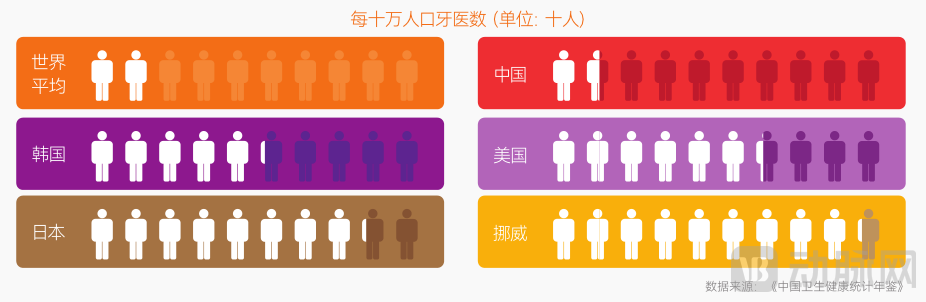 (Image source: "2023 Insights Report on Oral Healthcare Services")
On the other hand, against the backdrop of increasing supply, customer acquisition costs have been rising steadily. This has led dental institutions to invest not only in offline advertising but also in online marketing and other channels. Coupled with patients’ growing demands for service experience, customer acquisition costs remain persistently high, with some clinics spending as much as RMB 3,000–4,000 per patient.
Under these circumstances, numerous dental institutions have gone bankrupt or been deregistered. The "2023 Dental Medical Services Insight Report," jointly released by VCBeat and Meituan, shows that between 2019 and 2022,The annual number of deregistrations among dental medical service institutions continues to rise, with a total of over 13,000 closures in the past three years. The process of market consolidation is accelerating.
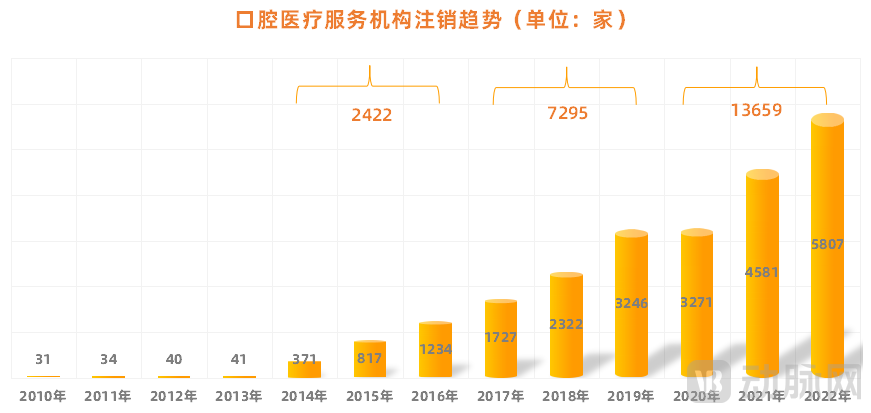 (Data source: "2023 Dental Care Services Insights Report")
The industry has reached a crossroads where a critical decision must be made.
Steadfast Commitment: With Digitalization as the Foundation, a New Tomorrow Is Dawning
(2023–Future)
How to Innovate and Embrace Change?
Amidst the turbulence, fluctuations, setbacks, and hardships of the three-year pandemic, this issue has become a subject of contemplation for all dental institutions.
In a 2022 survey of 1,000 dental healthcare service providers conducted by VCBeat in collaboration with Meituan, it was found thatNearly 90% of dental institutions believe that the solution lies in digital upgrading.To this end, approximately 30% of institutions will initiate digital upgrades within the next year, and 45% plan to establish dedicated digital departments.
“Why is it so difficult to operate dental clinics, especially chain practices? The core issue remains standardization. Upon expansion, management systems become ‘overly burdensome,’ risk tolerance declines, and vulnerabilities are easily exposed during sudden crises such as the pandemic.” According to a veteran in the dental industry, digitalization can theoretically help dental institutions address challenges such as high marketing costs, non-standardized operations, and information opacity. This enables institutions to focus more on improving clinical quality and operational capabilities, thereby achieving normalization and standardization, which in turn creates greater potential for scaled-up development.
Top-tier institutions are already taking action.At the South China International Dental Exhibition held earlier this year, Arrail Group launched its FRIDAY digital-intelligence dental healthcare platform, offering digital solutions that span every stage from clinic establishment and patient acquisition to clinical care enhancement. Topchoice Medical has developed Ortholink, a digital orthodontics platform that enables rapid and precise measurements of digital models and X-rays via measurement software, with real-time visualization of results. Taikang Bybo Dental is continuing to advance the clinical application of digital technologies in dental implantology, among other developments.
Zhu Liya told VCBeat that MEI WEI DENTAL GROUP has been focusing on digitalization since its inception in 2016, continuously accumulating expertise in standard output, supply chain optimization, management empowerment, and financial/data support. Most importantly, the company has prioritized the development of its overall IT system to better empower dentists.
To this end, MEI WEI DENTAL GROUP has developed the “Wei Xiao Mei Medical Cloud Intelligence Platform,” an information system centered on enhancing management and operational efficiency. It integrates systems such as HIS, finance, supply chain, human resources, and OA, thereby meeting the needs for refined enterprise management while comprehensively supporting multi-organizational business coordination and data sharing.
“"There is no such thing as an IT system that escapes criticism."“From Julia’s perspective, digitalization can generate the entire treatment plan for full-mouth rehabilitation, including the therapeutic regimen and clinical workflow. TheseWhat is more important is how the process is ultimately executed and implemented step by step.“The key is to translate the languages of both IT personnel and frontline staff into a common language that everyone can understand, enabling IT system developers to know how to conduct R&D while also ensuring that frontline staff understand how to effectively implement the resulting products.”
To this end, MEI WEI DENTAL GROUP has established a robust support system to ensure that every employee, manager, city general manager, and clinic director recognizes and understands how to leverage IT systems to deepen management practices, achieve paperless operations, and enhance efficiency.
However, the implementation of digitalization is no easy feat; it tests the wisdom of managers.
“For example, in 2021, Shanghai Weile fully advanced its digital transformation. Some doctors were accustomed to their previous workflows and found it difficult to shift their mindset. Because the entire process was automated, it recorded where users performed poorly, exposing bad habits, which led many to resist adoption. How did we address this? We organized competitions with substantial rewards to encourage active participation,” Hai Ou, General Manager of the Shanghai Division of MEI WEI DENTAL GROUP, told VCBeat. “For instance, with intraoral scanners, the system backend records each user’s operation time. If a scan takes 10 minutes, that is unacceptable, as it causes discomfort for patients. We must complete scans quickly and up to standard within three minutes.”
Although the process was “painful,” once medical staff mastered the use of digital equipment and streamlined workflows, many logistical and communication challenges in clinical transportation were significantly reduced. “Doctors have gradually come to appreciate its advantages.”
“IT is also a top-leader-driven initiative.“Julia stated, ‘To better implement digitalization, it is crucial to achieve unity of knowledge and action. In this regard, I am deeply grateful to our COO and CTO, Mr. David Song, who possesses both technical expertise and in-depth understanding of the dental industry. As a result, our IT systems place particular emphasis on practical usability at the frontline.’”
The results have been promising. To date, on the fully shared digital-intelligence platform, MEI WEI DENTAL GROUP has achieved a high level of integration of data related to personnel, finance, and resources, forming a robust ecological closed loop. This approach minimizes manual intervention, enhances operational efficiency, and reduces operational costs and management risks. It allows professional physicians pursuing independent practices to focus on clinical work with greater peace of mind, while enabling entrepreneurial partners in the early stages of their ventures to acquire more business knowledge. Furthermore, it provides them with broader development opportunities and enables greater operational efficiency.
Leveraging continuous innovation in digitalization and replicable standardized capabilities, MEI WEI DENTAL GROUP boasts strong endogenous growth momentum. It currently operates 16 brands and nearly 200 dental medical institutions, maintaining steady growth.
Certainly, in addition to digitalization in management and marketing, digital transformation in areas such as dental equipment and supply chains is also becoming a powerful driver for industrial upgrading.
For example, the widespread adoption of intraoral scanners has disrupted the traditional clinical workflow of taking impressions and fabricating plaster models. It eliminates numerous tedious steps, such as waiting for impression materials to set, disinfecting impressions, and pouring models, while also reducing material and labor costs. This enables clinicians to directly acquire digital dental models, thereby streamlining clinical procedures.
For instance, the advent of CBCT has facilitated the rapid adoption of digital orthodontics and dental implantology. First, CBCT enables dentists to pay closer attention to the thickness, height, and functional remodeling of the labial and lingual bone plates during orthodontic treatment, which is crucial for achieving high-quality orthodontic outcomes and ensuring long-term post-treatment stability. Second, CBCT plays a significant role in assisting dentists in observing condylar morphology and joint space.
Currently,In specialized dental sectors such as clear aligner orthodontics, CBCT, supply chain management, and implant platforms, a cohort of innovative Chinese enterprises is emerging. By actively collaborating with dental healthcare service providers, these companies are accelerating the implementation of digital solutions in clinical practice and have become an integral part of the broader oral health ecosystem.
“As Meivi’s self-built brand, Shanghai Weile will take the lead in piloting the development of a dental hospital comprehensively designed around comfort and digitalization, and will introduce more cutting-edge high-tech equipment across its clinics in Shanghai. Meanwhile, it will fully integrate digital connectivity with upstream and downstream partners, establish a digital remote diagnosis and treatment center, and launch remote consultation rooms to enable the sharing of expert medical resources,” said Hai Ou, General Manager of the Shanghai Division of Meivi Dental.
Undoubtedly, underpinned by digitalization, the dental industry’s journey of innovation is turning a new page.
From the “entrepreneurial boom” of the 1990s, to the launch of the “rapid expansion era” triggered by a single policy document, intensified competition fueled by capital influx, the pandemic-exacerbated industry challenges, and the subsequent pursuit of digital transformation as a breakthrough, the private dental sector has undergone earth-shaking changes over the past three decades of turbulent development.
Amidst the sweeping changes of time, it is the passion, perseverance, conviction, and steadfastness of generations of dental professionals that have driven the industry forward. Throughout this journey, continuous innovation and exploration have remained a prominent and consistent theme.
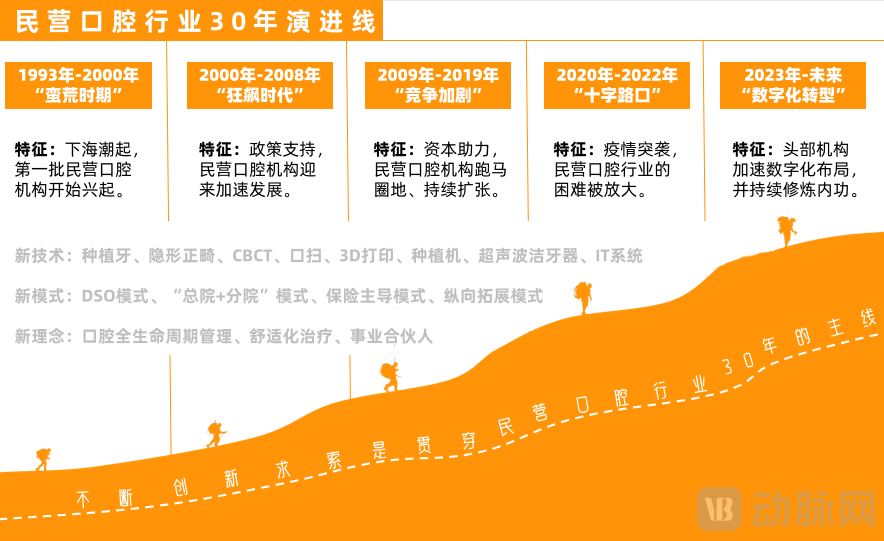
(Schematic of the 30-Year Evolution of China’s Private Dental Industry, Chart by VCBeat)
From the user’s perspective, this is reflected in the evolving oral health needs of the Chinese population over the past 30 years, shifting from simply alleviating pain and restoring masticatory function to pursuing higher levels of comfort and aesthetics.
“In the past, people generally sought dental care only after experiencing toothache. Nowadays, a growing number of individuals undergo regular annual oral health check-ups, including basic preventive services such as dental scaling, to facilitate early detection and prevention of oral diseases,” Haiou told VCBeat. “We aim to raise public awareness of the importance of fundamental oral healthcare, shifting the focus from treatment to prevention—a long-term commitment that requires sustained effort.”
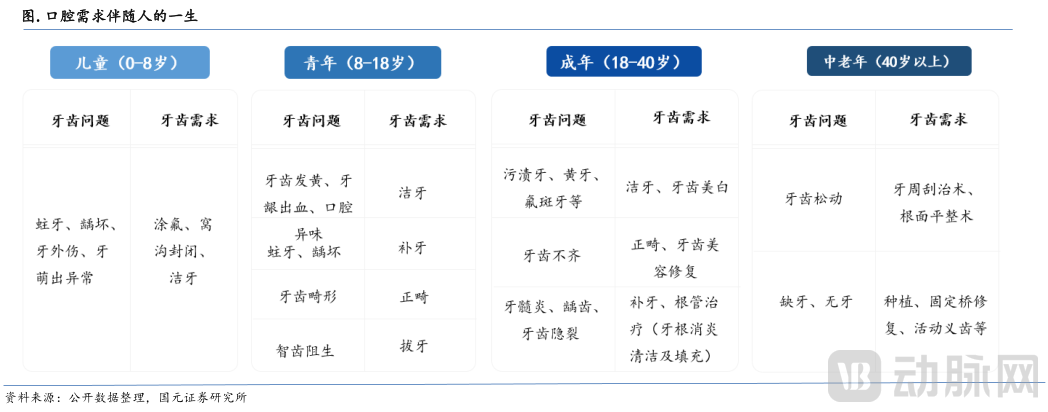 (Oral health needs accompany people throughout their lives. Image source: Guoyuan Securities)
From Chen Xizhu’s perspective, achieving comprehensive family-wide oral care and safeguarding oral health has always been his steadfast direction. “Moving forward, we will design and optimize more service experiences centered around lifecycle management of oral health.”
In this process, talent development is a priority for Guo Pingchuan, who is actively fostering the growth of outstanding young and middle-aged professionals and strengthening disciplinary talent building. For instance, Guo Pingchuan and MEI WEI DENTAL GROUP plan to establish a special fund to support outstanding young and middle-aged talents in pursuing overseas studies.
“Our philosophy is centered on patients and medical excellence, which is why MEI WEI DENTAL GROUP places particular emphasis on the power of long-term value. For this reason, we strive to find partners who view dentistry as a lifelong career and are committed to continuous investment in technical expertise, even amidst solitude and hardship.” In Zhu Liya’s view, achieving success in the dental industry requires the conviction and courage to hone one’s craft over a decade.
In a flash, 30 years have passed. And these 30 years are merely the beginning.
Drawing on the development trajectory of the U.S. dental industry, per capita disposable income and population aging are the two major factors accelerating the growth of dental care services. China is currently at a stage comparable to that of the United States around 1975: per capita GDP has entered the new phase of exceeding $10,000, population aging is deepening, and public awareness of dental care continues to rise.
In other words,The oral care industry is entering a “golden age” characterized by both high growth rates and a strong emphasis on high-quality development.
Facing a Brand-New Tomorrow, the Story of Innovation and Exploration by Private-Sector Dental Professionals Will Continue.
References:
1: “2023 Dental Care Services Insights Report” by VCBeat
2: “Guo Pingchuan: A Pioneer in China’s Private Dental Sector” by Lü Fang
3: “Identifying the Success Potential of Dental Chains Through Supply-Demand Analysis and Business Models” Guoyuan Securities
4: "The Dental Industry Amid the Pandemic: Some Suffered Losses Exceeding 100 Million, While Others Went Bankrupt" Qila Smart Dentistry