

BioVentrix Secures $230 Million in Total Funding and Files for IPO to Advance Revolutionary Minimally Invasive Myocardial Anchoring Therapy for Heart Failure

BioVentrix
Minimally Invasive Therapy Developer
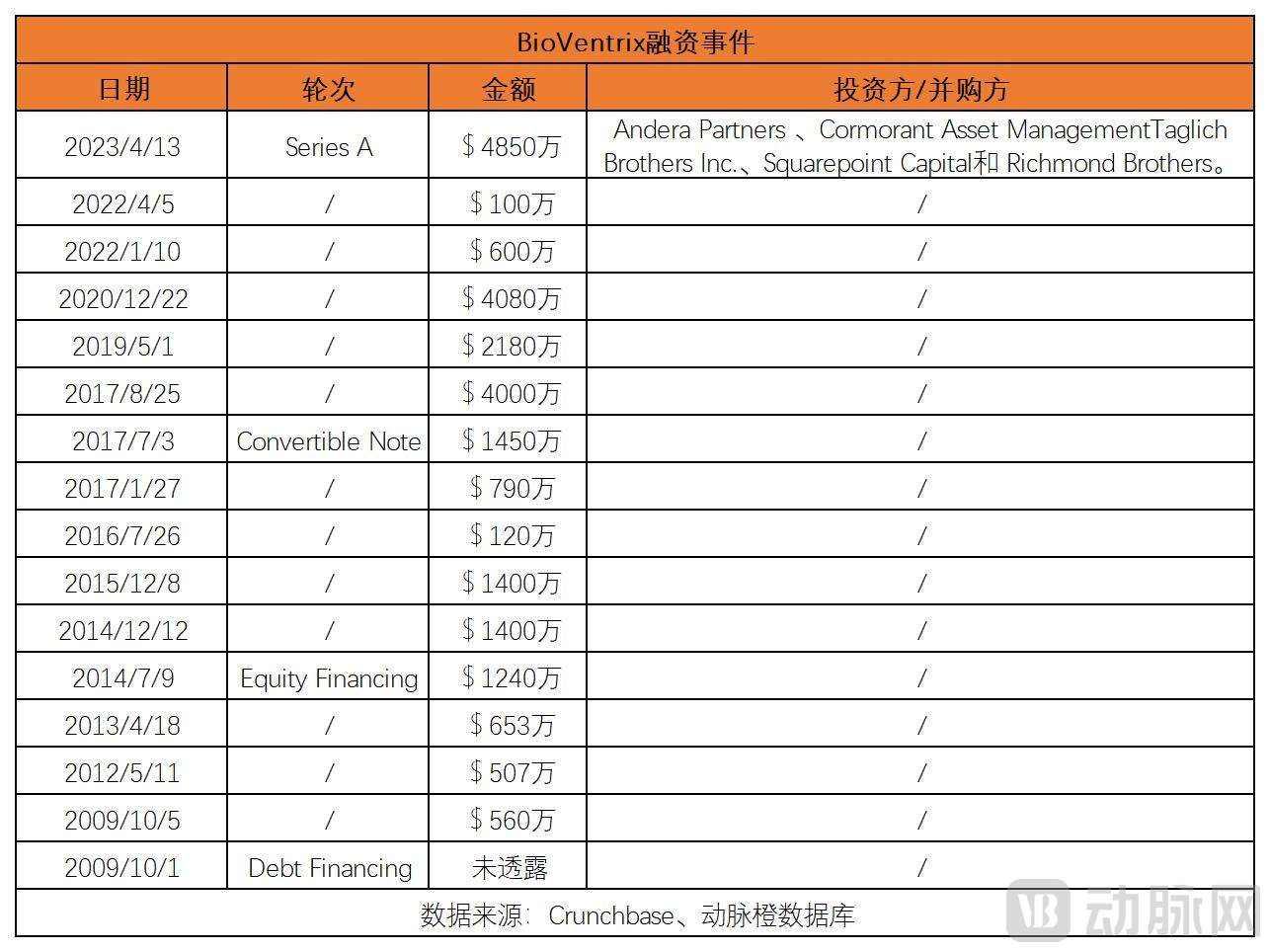
Recently, U.S. medical device company BioVentrix completed a $48.5 million Series A financing round. The round was led by the renowned life sciences venture capital firm Andera Partners. The company focuses on developing minimally invasive therapies that directly address left ventricular dilation to treat a failing left ventricle, the most common cause of heart failure.
To date, the medical device company, founded in 2003, has secured over $230 million in investment. This Series A funding will support BioVentrix in obtaining Pre-Market Approval (PMA) for its Revivent TC System.
Left Ventricular Aneurysm (LVA) is a common complication following myocardial infarction, characterized by hypokinesis, akinesis, or dyskinesis in a segment of the left ventricular wall. Common clinical manifestations include congestive heart failure, life-threatening ventricular arrhythmias, and sudden cardiac death.
BioVentrix, Inc.’s myocardial anchoring device—the Revivent TC Transcatheter Ventricular Enhancement System—has revolutionized the traditional cardiopulmonary bypass surgical approach for treating ventricular aneurysms, enabling minimally invasive left ventricular reconstruction.
The traditional approach to treating ventricular aneurysms is open-chest left ventricular volume reduction surgery. This procedure requires resection and suturing of the thin-walled aneurysmal area under conditions of cardiac arrest and cardiopulmonary bypass. The extensive thoracotomy required is associated with high mortality and complication rates, placing significant demands on both surgical expertise and patient physiological reserve.
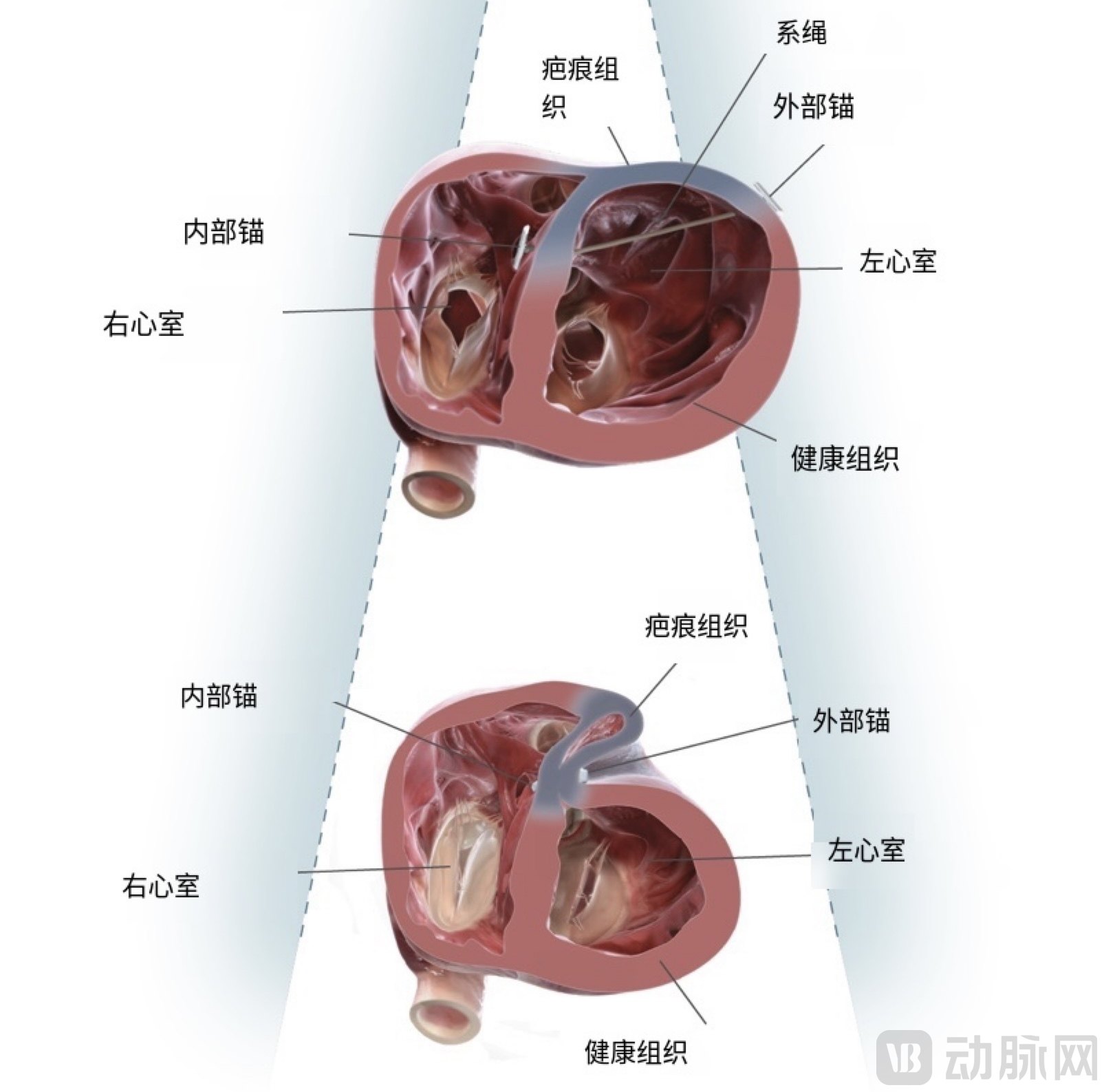
LIVE (Minimally Invasive Ventricular Enhancement) Therapy: Efficacy Diagram
Image source: BioVentrix
The procedure utilizing the Revivent TC Transcatheter Ventricular Enhancement System is known as Less Invasive Ventricular Enhancement (LIVE) therapy. It employs micro-anchor myocardial implants to plicate and anchor ventricular aneurysms, thereby achieving left ventricular volume reduction and improving cardiac performance. Performed off-pump via a combined approach involving neck vein access and a 4 cm mini-thoracotomy, this technique reduces surgical risks for a broader population of patients with ischemic heart failure.
During the procedure, a transcutaneous channel is established from the jugular vein through the right ventricle and left ventricle into the thoracic cavity. The internal anchor is positioned at the interventricular septum of the right ventricle, while the external anchor is advanced to appose the cardiac scar tissue. Tension is applied and tightened using force monitoring to secure both anchors against the ventricular wall aneurysm. Most patients require only 2–4 anchoring devices to complete left ventricular reconstruction.
In July 2017, the REvivent System initiated the ALIVE clinical study in the United States, enrolling a total of 126 patients with symptomatic heart failure in a 2:1 two-arm clinical trial. The post-procedural efficacy endpoints included no new or worsening hospitalizations for heart failure, an increase in the 6-minute walk distance of more than 25 meters, an improvement in the Minnesota Living with Heart Failure (MLHF) quality of life score of more than 10 points, and an improvement of more than one class in the New York Heart Association (NYHA) functional classification. This clinical trial was successful and completed registration in April 2022.
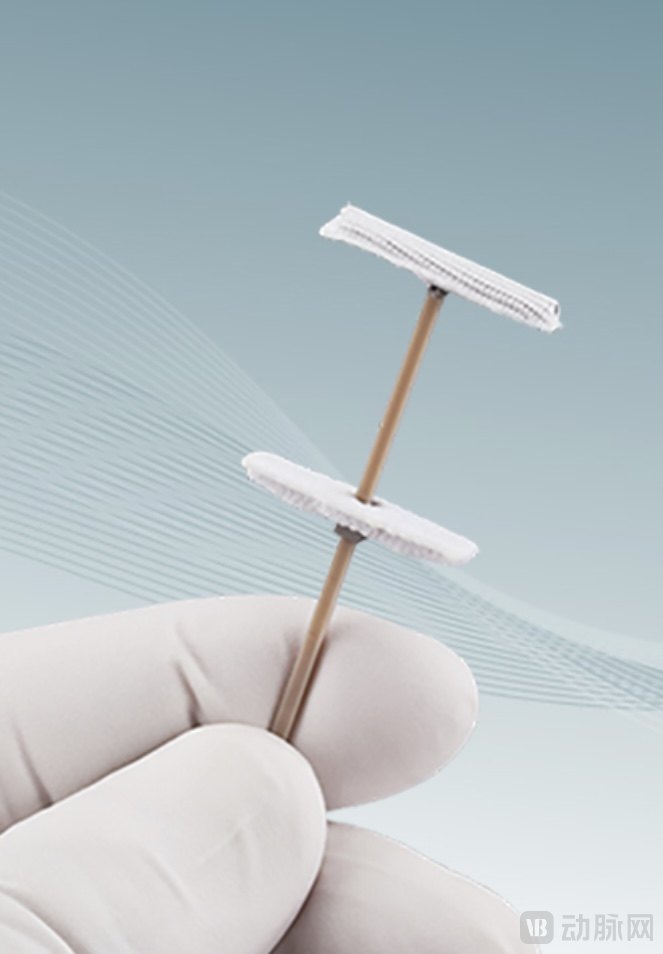
Revivent TC Transcatheter Ventricular Enhancement System
Image source: BioVentrix
Furthermore, BioVentrix has initiated the Revivent-HF trial in Europe, a two-arm randomized controlled study enrolling 180 patients. Of these, 120 will receive treatment with the Revivent TC System, while the remainder will receive guideline-directed medical therapy (GDMT), serving as the control group. The trial demonstrated that treatment with the Revivent TC System is more effective than GDMT for ischemic heart failure.
A new study published in the Journal of Clinical Medicine in 2023 demonstrated that the Revivent TC procedure reduces left ventricular (LV) volume globally. The study found that once the non-functional scarred LV segments are plicated, regional wall motion in the basal and mid-LV segments improves, and regional function of the non-infarcted myocardium is enhanced, thereby reversing adverse myocardial remodeling in patients.
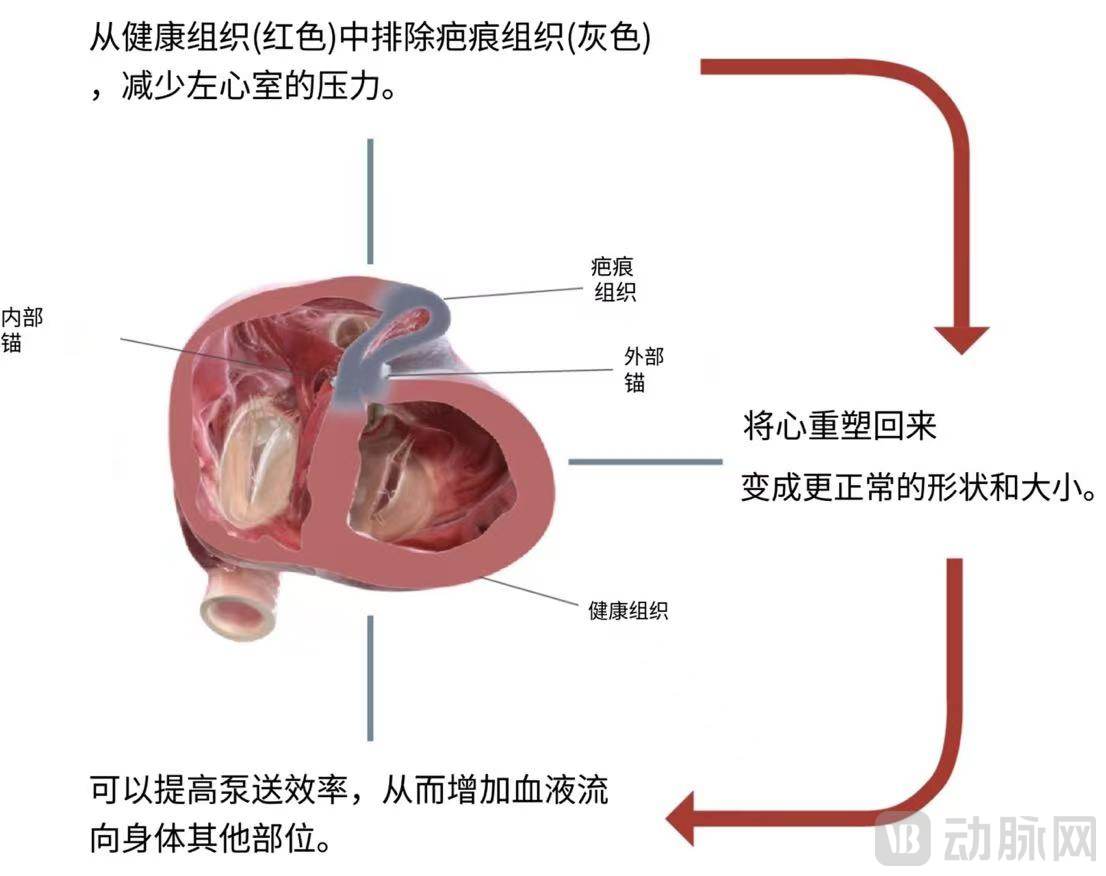
Principle of the Revivent TC System
Image source: BioVentrix
In China, data from the Cardiovascular Hospital of Xiamen University indicate that among 26 cases of minimally invasive left ventricular volume reduction performed using the Revivent TC system at this institution, the procedural success rate was 100%. The mean operative time was 304.3 ± 69.3 minutes, and the mean hospital stay was 9.9 ± 2.8 days. The incidence of major adverse cardiovascular events (MACE) was 7.69% (2/26). Left ventricular end-systolic volume, left ventricular end-systolic volume index, left ventricular end-diastolic volume, and left ventricular end-diastolic volume index all showed significant improvement compared with preoperative values. NT-proBNP levels, NYHA functional class, and six-minute walk test results also demonstrated favorable changes. Furthermore, in patients with concomitant severe mitral regurgitation, mitral regurgitation was significantly reduced postoperatively.
BioVentrix, based in a leading nation for medical device innovation, has navigated a rigorous and lengthy path of experimentation and regulatory exemptions. From the first implantation of the Revivent TC System in preclinical models in 2015 to January 2023, when the U.S. Food and Drug Administration (FDA) approved the Expanded Access Program for the system, this program enables patients with serious or immediately life-threatening diseases or conditions to access investigational medical products for treatment outside of clinical trials.
Building on this foundation, BioVentrix is actively preparing for the Pre-Market Approval (PMA) of its Revivent TC System.
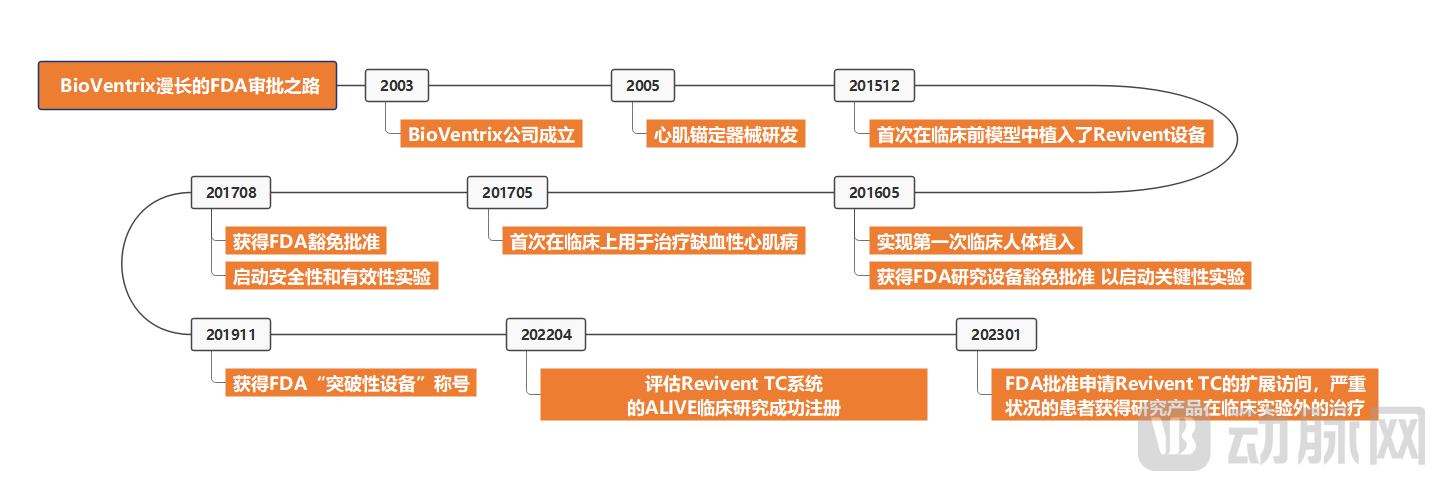
Graphic: VCBeat
Content sources: BioVentrix, Massdevice, Prnewswire
In addition to FDA approval, the Revivent TC system had already obtained the CE mark in the European Union in 2016, authorizing its sale across all EU member states and paving the way for commercialization. In 2020, it was announced that the CE mark validity had been extended until 2024.
From 2017 to 2019, the system received the highest-level NUB1 reimbursement status in Germany on three occasions. This reimbursement status allows participating hospitals to obtain full reimbursement for the product, as well as supplemental payments for technologies not yet listed in the German healthcare system.
In China, the Revivent TC system was launched and introduced into clinical practice as early as 2017. In March, the first minimally invasive left ventricular volume reduction surgery in the Asia-Pacific region was successfully performed using this system, and by January 2019, a total of 26 procedures had been successfully completed.
Clinical trials and commercialization are advancing in parallel, mutually reinforcing and interacting with each other—this reflects BioVentrix’s holistic thinking and global strategy in promoting the Revivent TC System.
In step with the global expansion of the Revivent TC System, BioVentrix is continuously expanding its team of specialized professionals to build a core management team deeply rooted in the field of heart failure.

BioVentrix Chief Medical Officer Dr. Ori Ben-Yehuda (left), President and CEO Jim Dillon (right)
Image source: BioVentrix
In February 2023, during the critical phase of the PMA submission for the Revivent TC System, Dr. Ori Ben-Yehuda, a clinical cardiologist, served as Chief Medical Officer. Dr. Ben-Yehuda is a Professor at the University of California, San Diego, Editor-in-Chief of Coronary Artery Disease, and Associate Editor of Structural Heart: The Heart Team Journal. With over 25 years of experience in treating heart disease, he also serves as Executive Director of the Clinical Trials Center at the Cardiovascular Research Foundation (CRF). He brought extensive clinical trial expertise to BioVentrix, contributing to the successful execution and outcome of the ALIVE-EAP trial.
In 2021, Jim Dillon was appointed President and Chief Executive Officer. He previously served as Co-Founder and CEO of Reprieve Cardiovascular, a company developing innovative therapies for acute decompensated heart failure. Under his leadership, the company completed its first-in-human clinical trial, obtained FDA Breakthrough Therapy Designation, and secured Series A financing.
In 2022, BioVentrix appointed Steve Chartier, who has more than 25 years of executive experience in the pharmaceutical industry, as Chief Operating Officer; Andrew Coats, President of the Heart Failure Association of the European Society of Cardiology, joined the Board of Directors; and other appointments were made.
In January 2022, BioVentrix acquired MateraCor for an undisclosed amount. MateraCor is a startup focused on developing approaches to prevent progression and reverse advanced heart failure. Its approach involves injecting inert and well-tolerated alginate hydrogel into specific regions of the myocardium, where it remains permanently within the ventricular wall to reduce wall stress, improve contractility, and enhance oxygen uptake.
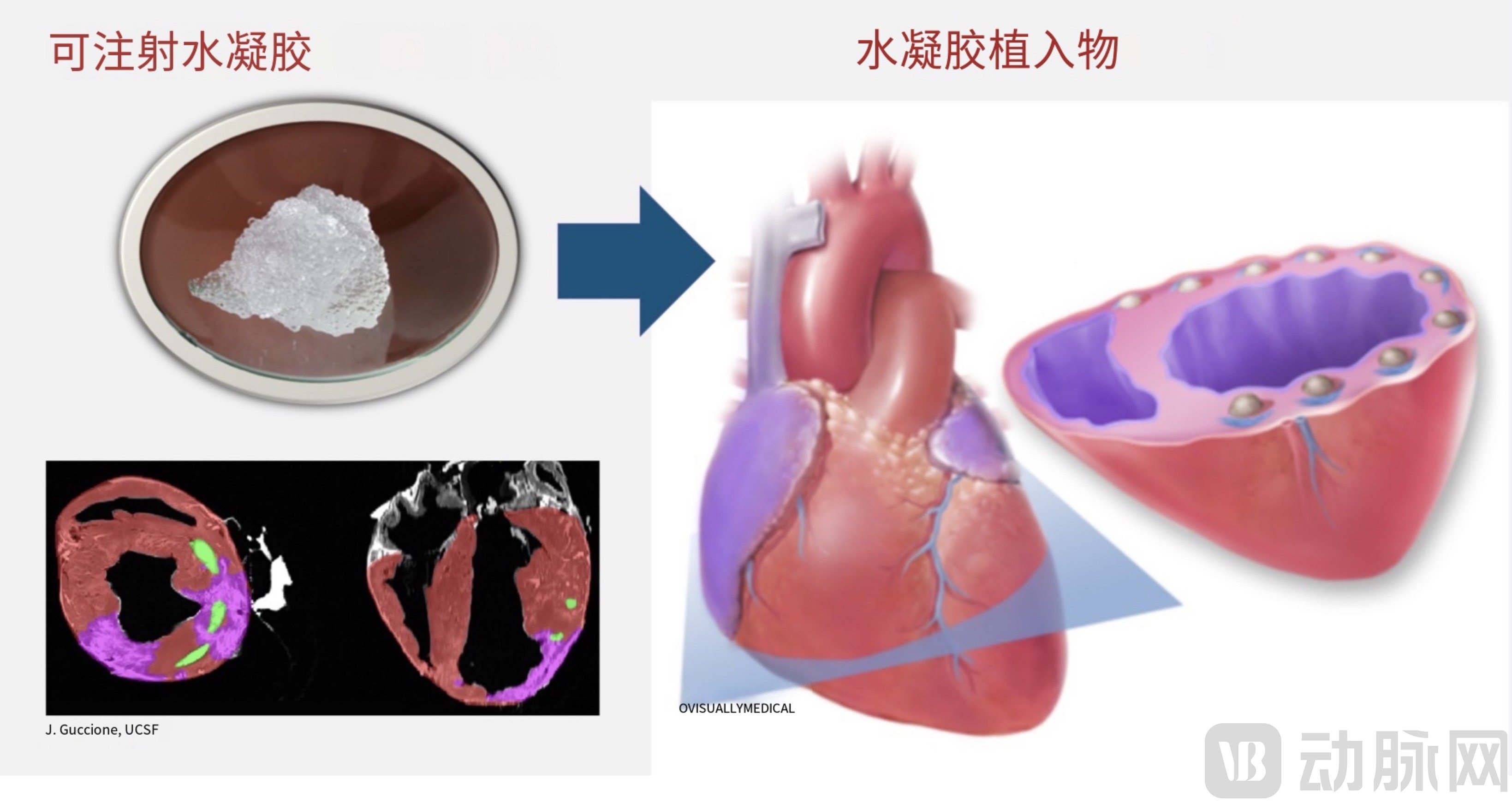
Rendered Image of Injectable Alginate Hydrogel Product
Image source: MateraCor
Experimental data demonstrate that the hydrogel exhibits safety and efficacy, with significant improvements in patients' motor function and marked optimization of quality of life, transitioning from severe physical limitations to mild restrictions in daily activities.
This acquisition has enriched BioVentrix’s portfolio of heart failure therapies and solutions, solidifying its position in the treatment of left ventricular heart failure. Meanwhile, MateraCor is leveraging BioVentrix’s transcatheter minimally invasive approach through this collaborative acquisition, focusing on the development of novel hydrogel injection procedures that enable direct targeting via minimally invasive incisions.
MateraCor has completed preclinical testing and is currently conducting clinical development of its combined catheter and hydrogel system.
In China, the industrialization of medical devices in the cardiovascular field has entered a phase of rapid growth. According to the "Report on Cardiovascular Health and Diseases in China 2021," from September 1, 2020, to August 31, 2021, 68 medical devices entered the innovative medical device review channel, among which 58 were domestically produced original products, accounting for 85.3%. Of these, 31 were cardiovascular-related products, representing 45.6%. During the same period, 15 medical devices entered the priority medical device review channel, including 2 cardiovascular-related products. This demonstrates that innovation in the cardiovascular field plays a dominant role in China's medical device innovation landscape.
Notably, China’s domestically developed left ventricular assist devices (LVADs) have successively entered clinical trials and reached the market, keeping pace with global advancements. The implantable LVAD systems EVAHEART I from Chongqing Yongrenxin, CH-VAD from Suzhou Tongxin, and HeartCon from Aerospace Taixin have received marketing approval. Additionally, Shenzhen Core Medical’s CorHeart 6, Jiuanxin, and the extracorporeal magnetically levitated artificial heart MoyoAssist by XinQing have entered the clinical trial stage.
In the same arena of injectable hydrogels for ischemic myocardial infarction, Professor Li Junjie’s team at Tianjin University has successfully developed a novel hydrogel, with related findings published in the prestigious journal Advanced Functional Materials. The transcatheter minimally invasive hydrogel therapy for heart failure, developed by Professor Wang Yunbing’s team at Sichuan University, completed the world’s first clinical trial in March 2021, and its latest research progress was reported in Biomaterials, a top-tier journal in the field of biomaterials.
As Jim Dillon, President of BioVentrix, stated, “Left ventricular restoration for the treatment of patients with advanced heart failure is now considered by the clinical cardiology community to be a timely approach.” How will innovative devices for the treatment of advanced heart failure evolve? Only time will tell.