

A Century-Old Medical Packaging Veteran Navigates China's Trillion-Yuan Market
Have you ever paid attention to the packaging of pharmaceuticals or medical devices?
What are your perceptions of this seemingly “thin” layer of packaging? Do you consider it to lack significant technical sophistication, or do you believe it holds little commercial value?
However, is this truly the case? According to an analytical article on China’s pharmaceutical packaging industry in 2022 published by Huajing Intelligence Network, “With the improvement of China’s healthcare system in recent years, the disordered and backward state of pharmaceutical packaging will undergo a fundamental transformation. Coupled with the rapid development of the downstream pharmaceutical sector, this has provided strong momentum for the growth of the (pharmaceutical packaging) industry.” Against this backdrop,In 2021, the market size of China's pharmaceutical packaging industry reached RMB 135.86 billion, a year-on-year increase of 16%.
These figures represent only the market data for the pharmaceutical packaging industry. As for an indispensable application area within medical packaging—medical devices—although VCBeat did not identify specific market data, it obtained a figure from Tong Zhongbao, General Manager of Oliver Healthcare Packaging (Suzhou) Co., Ltd. (hereinafter referred to as “Oliver (Suzhou)”): the market size is at the tens of billions of yuan level.
In recent years, the medical device industry has seen significant growth, indicating a broad market prospect for the medical packaging sector; however, there is limited external awareness of its development. Against this backdrop, VCBeat conducted an interview with Tong Zhongbao, General Manager of Oliver Healthcare Packaging (Suzhou) Co., Ltd., aiming to outline the general landscape of this industry’s development and highlight Oliver Healthcare’s exploratory journey, achievements, and progress in the Chinese market.
The domestic medical packaging market in China is characterized by three features: complexity, fragmentation, and insufficient awareness.
Here, “complexity” can be broken down into two aspects. First, the complexity of the entire packaging process, which spans from the selection of materials and technologies, to the design of packaging solutions, and then to production, validation, and transportation, involving numerous considerations such as ease of use, safety, and sealing integrity. Second, there are already relatively detailed industry standards covering every stage from production to transportation, including material selection, sterilization conditions, and even the choice of printing inks.
Taking sterilization methods as an example, medical device packaging can be sterilized using ethylene oxide (EtO), high-temperature saturated steam, gamma radiation from Cobalt-60, or plasma. The primary packaging formats are pouches or thermoformed trays sealed with lid materials. Pouches are predominantly paper-plastic or all-paper types; aluminum foil pouches and film-to-film pouches are also available to meet specific packaging requirements or accommodate different sterilization methods. Thermoformed trays are typically made from PET, PP, or PETG, while the sealing lid materials are mainly DuPont Tyvek. Relevant quality standards include ISO 11607, EN 868, and GB/T 19633.
It is evident that even a small piece of medical packaging paper (or box) involves multiple processes and adheres to various standards (with each stage having its own specific sub-standards).
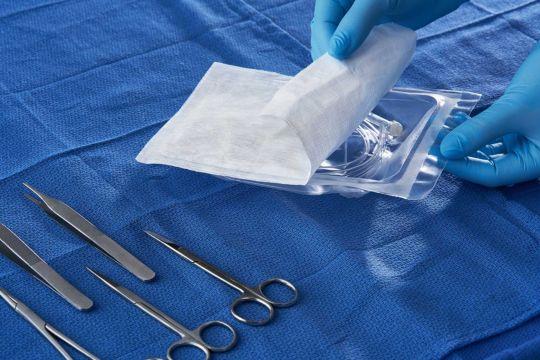
According to Tong Zhongbao,Although the domestic medical packaging market in China is relatively competitive in terms of tiered market structure, this “full competition” is largely confined to the manufacturing segment. Local companies still lag behind in other areas, such as the research and development and application of innovative materials, as well as packaging design.
Meanwhile,Perhaps due to the complexity and diversity of standards across the entire medical packaging process, many companies in China’s pharmaceutical, medical device, and precision diagnostics industries still have only a rudimentary understanding of product packaging.To quote Tong Zhongbao, “They may choose the same packaging solution upon seeing a competitor adopt it, unaware of the considerations behind the competitor’s choice or the factors they themselves should take into account when selecting packaging.”
However, B-side customers’ insufficient understanding of packaging-related knowledge and standards may lead to two issues: first, non-compliant packaging; second, low cost-effectiveness of packaging. But perhaps,Precisely because some domestic pharmaceutical, medical device, and precision diagnostics companies lack sufficient understanding of medical packaging, meeting their needs for compliant and efficient packaging while promoting the positive development of the medical packaging industry has placed higher demands on medical packaging enterprises: “Stay one step ahead of pharmaceutical and medical device companies in packaging considerations.”
Coincidentally, this is one of the corporate values upheld by Oliver Healthcare. Therefore,Rather than offering a single product, Oliver Healthcare Packaging is more inclined to provide comprehensive packaging solutions for B2B clients.But there is no doubt that this is a greater test of Oliver Healthcare Packaging’s own capabilities.
Oliver Healthcare Packaging traces its origins to a machinery company founded in 1890.
In 1968, Oliver officially transitioned into the medical packaging sector. It entered the Chinese market in 2006 and established a new production base in Suzhou in 2018, integrating global technologies while being rooted in China to serve the local market.To date, Oliver Healthcare Packaging operates six technical laboratories and eight manufacturing facilities worldwide, with a workforce of 1,100 employees, and continues to expand.
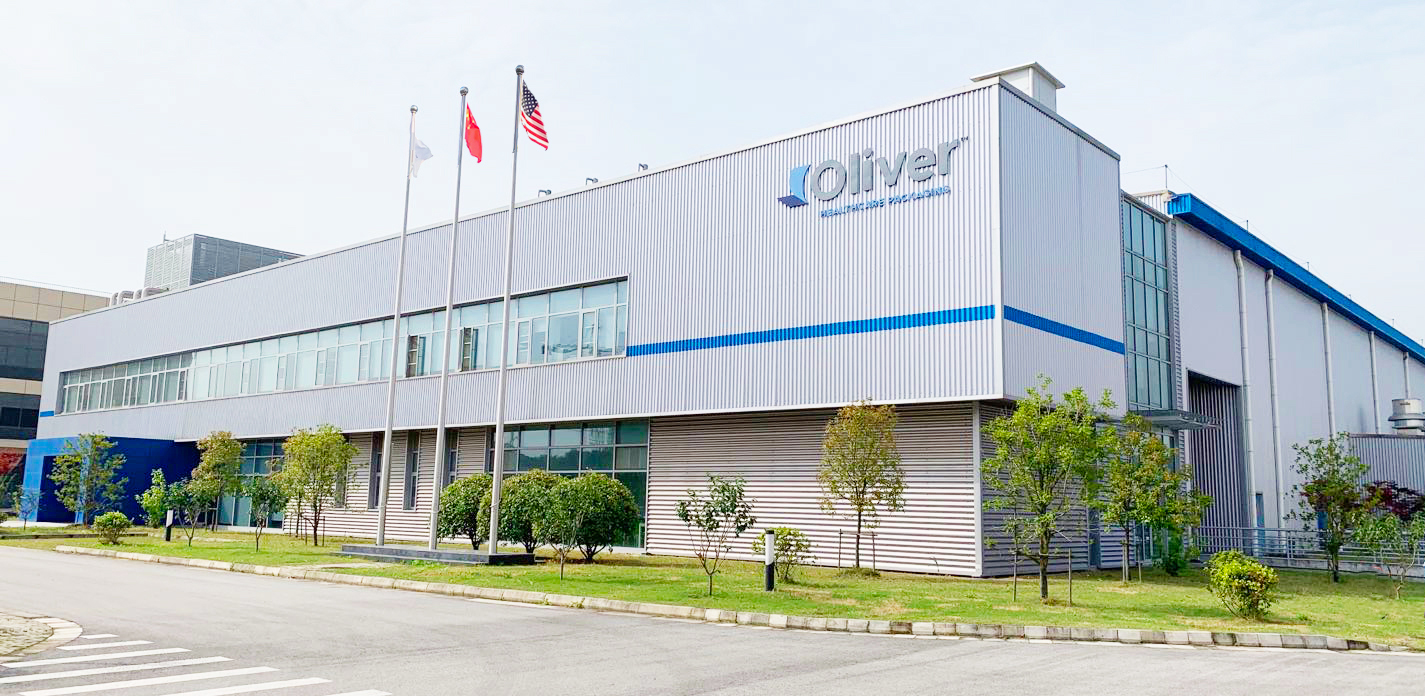
Although, literally speaking, Oliver Healthcare Packaging’s presence in the Chinese market is primarily focused on production,However, according to Tong Zhongbao, Oliver Healthcare Packaging (Suzhou) is positioned as a regional hub integrating R&D, technical services, production, and sales. Its Suzhou manufacturing base serves not only the Chinese market but the entire Asia-Pacific region.
From the perspective of its specific product portfolio, Oliver Healthcare Packaging provides medical-grade flexible packaging solutions to medical device manufacturers, pharmaceutical companies, and IVD enterprises. These products include sterilization pouches, die-cut lid materials, rolls, internal support cards, buckle-free coiled tubing, forming films, and other related items. However, as previously mentioned, rather than merely supplying individual products, Oliver is more inclined to develop personalized packaging solutions tailored to customer needs.
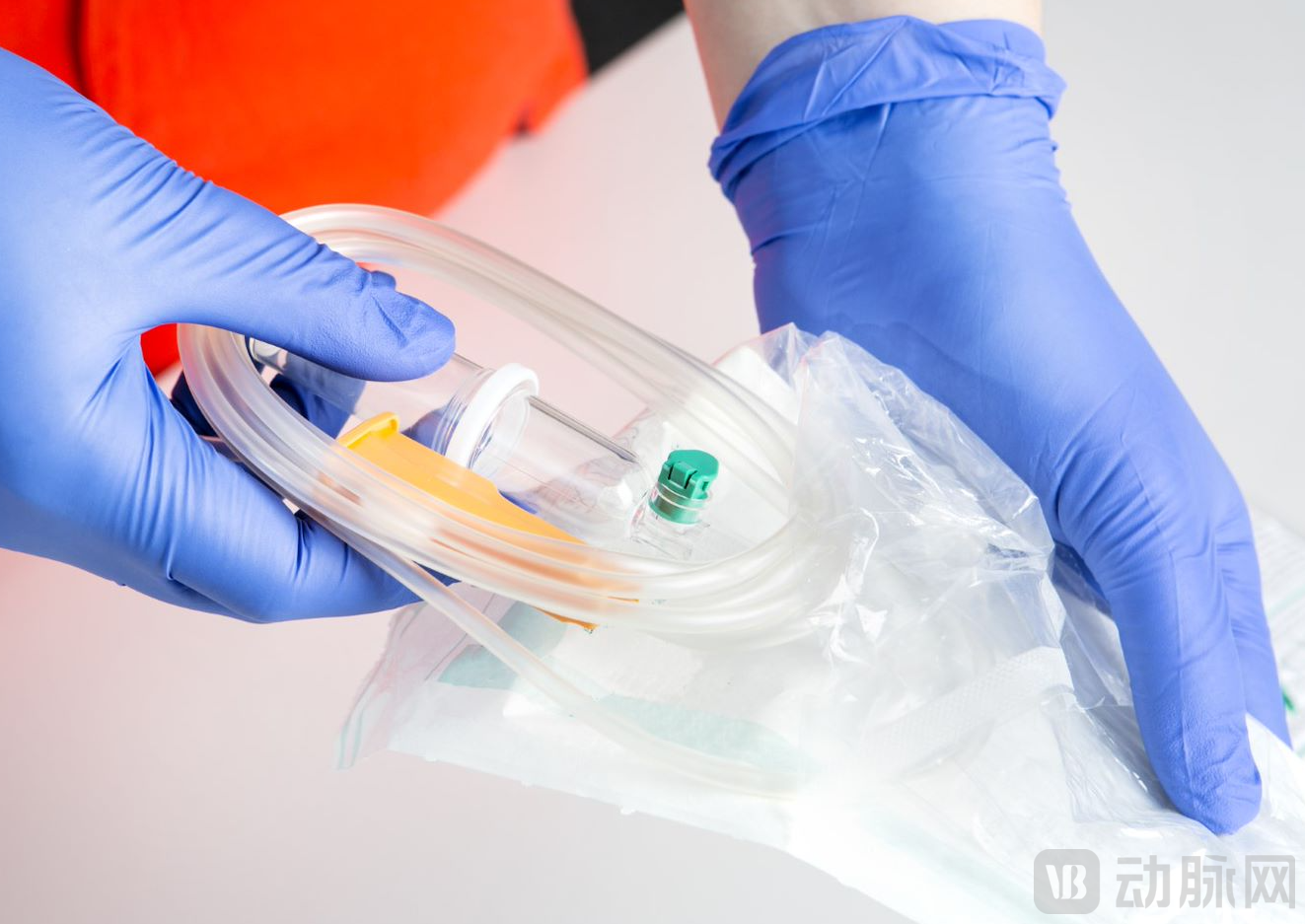
During the interview, VCBeat asked Oliver Healthcare Packaging (Suzhou) Co., Ltd. why it promotes customized packaging solutions. Tong Zhongbao stated that customized packaging solutions are essentially a “one-stop” solution to address the packaging challenges faced by pharmaceutical and medical device companies.
For instance, companies often lack a clear understanding of the regulatory details governing packaging and have limited knowledge of the packaging materials suitable for their products. Oliver Healthcare Packaging can assist enterprises in meeting regulatory standards and ensuring device validation across all stages, from material selection to packaging methods. This addresses precisely the area where pharmaceutical and medical device companies exhibit the weakest understanding of packaging.
Furthermore, according to Tong Zhongbao, Oliver Healthcare has been deeply engaged in overseas markets for many years, developing mature packaging solutions and technologies for established pharmaceutical and medical device products. Leveraging these proven packaging solutions and technologies, pharmaceutical and medical device companies can achieve more time-efficient, labor-saving, and hassle-free customization while ensuring greater safety.
In other words,Oliver Healthcare Packaging’s solutions encompass everything from packaging design and material selection to product validation. With its expertise and rigorous standards in design, manufacturing, and quality control, Oliver Healthcare Packaging not only helps pharmaceutical and medical device companies easily address packaging compliance issues, but also “liberates” them from the numerous cumbersome tasks associated with packaging design and production, thereby saving time and effort.
Furthermore, it is important to note that packaging plays a critical role in accelerating product time-to-market. To address this, Oliver Healthcare Packaging not only helps companies save decision-making time by recommending suitable, mature packaging solutions and technologies, but also maintains close collaboration with clients on innovative products lacking established industry packaging standards. By closely monitoring product development progress and formulating or adjusting packaging strategies in a timely manner, the company strives to maximize packaging efficiency, thereby facilitating the market launch of innovative products.
“Nowadays, all companies are implementing strict cost-saving measures, and packaging costs are one of the areas targeted for reduction. Switching packaging materials or lowering material specifications is one of the primary ways to reduce packaging costs.” Kevin Zacharias, Technical Director at Oliver Healthcare Packaging, once wrote an article specifically to express his views on reducing packaging costs.
For pharmaceutical and medical device companies, the cost of packaging materials is also a consideration, provided that safety and compliance are ensured. This represents another competitive advantage of Oliver Healthcare Packaging: its capability to develop innovative materials and technologies.
““We have the capability to develop raw materials, rather than merely processing and printing them. This is one of our key differentiators compared to other manufacturing enterprises,” said Tong Zhongbao. Furthermore, Oliver Healthcare Packaging operates seven technical laboratories in Grand Rapids and Feasterville (USA), Anaheim (USA), Galway (Ireland), and Singapore, which also provide material and technological innovation support to Oliver Healthcare Packaging (Suzhou).
Possessing capabilities in material development and technological innovation enables Oliver Healthcare Packaging to maintain sustained innovative growth in the medical packaging sector. If existing packaging solutions are essentially permutations of current materials, technologies, and manufacturing processes under regulatory compliance constraints, then the emergence of new materials and technologies not only diversifies these combinations but also offers better cost-effectiveness and superior performance, thereby more precisely meeting the packaging needs of pharmaceutical and medical device companies. “Just as medical devices undergo continuous updates and iterations, medical packaging must also evolve iteratively to meet the new requirements posed by next-generation medical devices,” stated Tong Zhongbao.
Meanwhile, Tong Zhongbao revealed,Over the next 1–5 years, Oliver Healthcare Packaging will sequentially launch innovative materials, offering more diverse and safer packaging solutions for pharmaceuticals, medical devices, and precision diagnostic products.
As for the production process,According to VCBeat, Oliver Healthcare Packaging (Suzhou) Co., Ltd. commenced operations at its new facility in 2018, which spans over 6,300 square meters. All production workshops are maintained as cleanroom environments certified to ISO Class 7 standards. The Suzhou facility also houses testing laboratories, a technical service center, a microbiology laboratory, and warehousing and distribution centers, with all equipment meeting or exceeding the quality standards stipulated by ISO 13485.
Moreover,In 2022, the expansion of Oliver’s Phase II Class 10,000 cleanroom workshop was completed, with a comprehensive upgrade of the purification system engineering.A Class 10,000 cleanroom with a total area of nearly 1,500 square meters is also a rarity in the medical packaging industry.
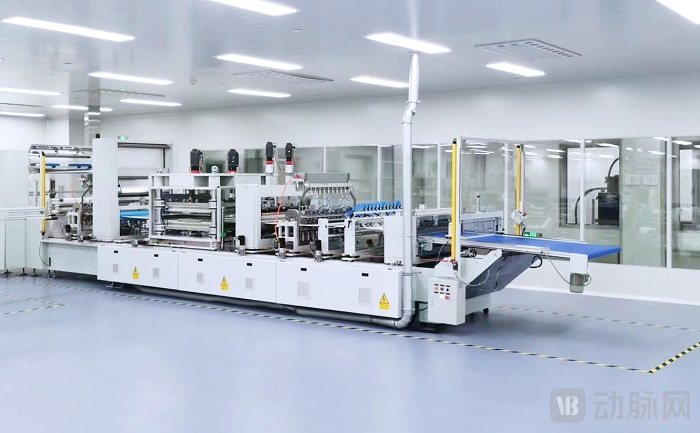
Furthermore, Tong Zhongbao stated that in terms of production, Oliver Healthcare would also take a “proactive approach” to capacity planning—“When existing business volume reaches 70% of current production capacity, Oliver Healthcare Packaging will consider investing in the construction of a new factory. ‘Over the next one to three years, we will also build a new sterile workshop and introduce new production machinery to continuously strengthen Oliver’s production capabilities.’”
At this point, it appears that one issue remains unexplored: how to enhance pharmaceutical and medical device companies’ awareness and understanding of medical packaging-related content and standards. As previously mentioned, the introduction of customized “one-stop” medical packaging solutions serves to extricate these companies from numerous compliance issues, thereby shielding them from directly confronting such regulatory challenges. Consequently, while the “one-stop” medical packaging solution can be viewed as a direct resolution provided by Oliver Healthcare Packaging for these enterprises, it may not sufficiently improve the companies’ own cognitive grasp and problem-solving capabilities regarding these matters.
So, how can companies improve their understanding of medical packaging? The answer provided by Oliver Healthcare Packaging is embedded in its marketing strategy.
Training, dissemination of popular science content; marketing plans for specific market activities; continuous customer follow-up to deeply explore needs and convert them are the three major marketing methods of Oliver. Among them, the main purpose of disseminating popular science content and training activities is "market education." It is reported that Oliver not only took the lead in formulating group standards for industry associations but also participated multiple times as a keynote speaker in special events organized by provincial and municipal medical industry associations. Additionally, they hold quarterly online seminars on packaging topics, continuously providing high-quality content, answering customer questions, and offering comprehensive technical support for pharmaceutical and medical devices from the customer's perspective.
However, market education cannot be achieved overnight. Encouragingly, the scale and growth potential of China’s medical packaging market are highly promising. This is one of the key reasons why Oliver Healthcare Packaging has increased its investment in the Chinese market since 2016. As a significant player in China’s medical packaging industry, Oliver Healthcare Packaging believes that only by maintaining patience, continuously enhancing its capabilities, keeping pace with the development of B-side clients, and precisely meeting their needs can it establish a firm foothold amid the industry’s rapid evolution and even drive its progress.