

IDG Capital Doubles Down on Corestar Diagnostics: What Makes This POCT Innovator So Attractive?
According to Shenzhen Kerida Biotechnology Co., Ltd. (hereinafter referred to as “Kerida Biotech”), its new round of financing is currently being launched,IDG Capital has confirmed its participation in Keruida Biotech's new round of financing. This round of financing will be used for the construction of R&D laboratories, research and development of new technologies and processes, and capacity expansion.
In fact, less than a year has passed since Kerida Biotech announced the completion of its Series A financing before launching this round of funding—In June 2022, Keruida Biotech announced the completion of its tens-of-millions-yuan Series A financing round, led by IDG Capital.Why Has IDG Capital Increased Its Investment in the Short Term Again? What Makes Kerida Bio So Attractive to Investors? We Spoke with Mr. Huang Bo, Founder of Kerida Bio.
Rapidly Growing Demand for Medical Care: POCT Manufacturer Kerida Bio Enters the Fray
Mr. Huang Bo’s decision to enter the POCT (Point-of-Care Testing) sector is driven by his optimistic outlook on the overall market development of POCT.
“POCT technology first emerged in the mid-20th century. Compared with Europe and the United States, China’s POCT industry started later, with the concept being formally introduced to China only in 2004. However, driven by the continuous improvement of related disciplines in China, technological advances such as immunochromatography and biosensors, the strengthening of healthcare system infrastructure, and growing demand for medical services, the POCT industry has experienced rapid development in China.”
The rapid development of the market is being reflected through data. According to the data presented in the "2022 Comprehensive Panorama of China's Point-of-Care Testing (POCT) Industry" released by Qianzhan Industry Research Institute,By the end of 2021, the market size of POCT in China reached RMB 11 billion, and it is expected that the overall market size will exceed RMB 26 billion by 2027. The development speed of the domestic POCT market far exceeds the global POCT industry's growth rate of 7.4%. Moreover, the POCT sector has become one of the fastest-growing segments in China's IVD industry.
Behind the rapid market growth lies the maturing industrial structure and stable development of the POCT sector, coupled with national-level policy support and emphasis. Recognizing the latent demand in the POCT market early on, Kerida Biotech seized the industry opportunity by establishing its company in 2017 to enter this field.
As a healthcare diagnostics company integrating independent R&D, manufacturing, and sales to provide rapid and reliable POCT systems and solutions, Kerida Bio places great emphasis on building and cultivating its scientific research team. To date, the R&D team for instruments and reagents at Kerida Bio accounts for 54% of the company’s total workforce.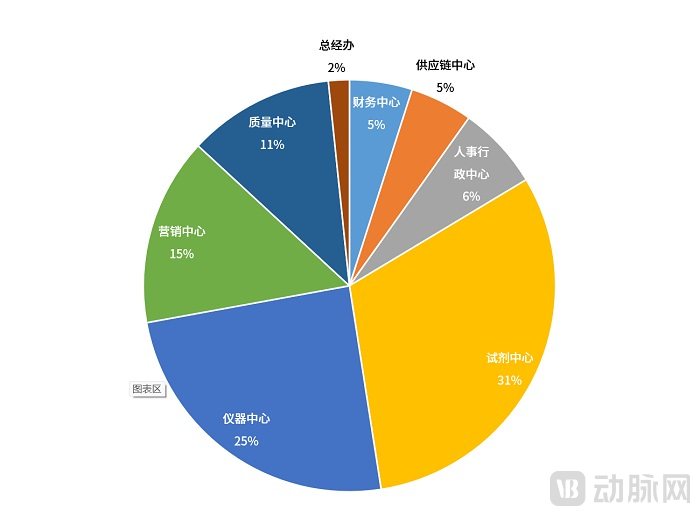
Professor Zhang Yuanqing, Chief Scientist of the R&D team and a professor at Sun Yat-sen University, completed his postdoctoral fellowship at Weill Cornell Medicine. He has 16 years of professional experience in the fields of microfluidic chips and liquid biopsy. Under his leadership, the Kerida Bio R&D team has developed the CORESTAR-100, a globally leading microfluidic chemiluminescence POCT system, and secured more than 20 patents.
In addition to possessing an innovative team, Kerida Biotechnology collaborates with platforms such as Sun Yat-sen University, the National-Local Joint Engineering Laboratory for New Drug Druggability Assessment and Evaluation, and the Guangdong Provincial Key Laboratory of Chiral Molecules and Drug Discovery to accelerate the innovative research and development of related products and reagents.
In fact, Kerida Bio has accelerated its development since completing its Series A financing in 2022. By the first quarter of 2023, Kerida Bio had successfully completed the product upgrade and transfer to production for its CORESTAR-100 POCT series, which was officially launched for commercial sales. With the completion of CE certification for its products, Kerida Bio is also accelerating the expansion of its global business. During the same period, the CORESTAR-POCT management system was officially launched for sale, working in conjunction with the CORESTAR-100 to create intelligent and informatized solutions for the iPOCT era.
It is worth noting that Kerida Bio’s new four-channel product, the CORESTAR-100 Pro, has also completed its final technical validation, entered the certification phase, and is expected to be launched this year.
Targeting Clinical Medical Needs to Accelerate the Market Launch of Multi-Pipeline Products
For Kerida Bio, product research and development as well as strategic layout are grounded in meeting clinical needs. In the words of Mr. Huang Bo, founder of Kerida Bio, the company “closely follows national policy guidance, conducts in-depth research into clinical laboratory testing needs, and carries out product design and planning in alignment with the requirements of the tiered diagnosis and treatment system and the development of the five major medical centers. Upholding the business philosophy of ‘improving clinical medical conditions and enhancing physicians’ diagnostic and therapeutic efficiency,’ we fully leverage our R&D team’s advantages in microfluidics technology and chemiluminescent immunoassay technology to advance the development of testing items for critical and severe illnesses, common diseases, and chronic diseases, thereby providing the clinical community with more precise, convenient, and rapid laboratory testing solutions.”
Currently, its products and solutions are being gradually applied in a wide range of medical scenarios, including clinical departments, primary healthcare institutions, the “Five Major Centers,” and ambulances. The primary healthcare sector is one of its key target markets, which aligns with the challenges currently faced by these institutions. Studies have shown that the majority of patients with acute chest pain first seek care at primary healthcare facilities. This necessitates that such institutions not only possess the capability to diagnose and treat common conditions but also have robust capacities for detecting and screening critical and life-threatening emergencies. However, primary healthcare institutions often struggle with rapid diagnosis due to issues such as insufficient professional expertise among physicians and inadequate hardware and software infrastructure. Kerida Bio’s product series effectively helps address these challenges.
First, to develop precise and portable POCT products.The CORESTAR-100 is a point-of-care testing (POCT) device that integrates microfluidics technology with chemiluminescent immunoassay technology. It enables physicians to provide rapid, on-site guidance for medication management, thereby creating a continuous process encompassing testing, diagnosis, and treatment.
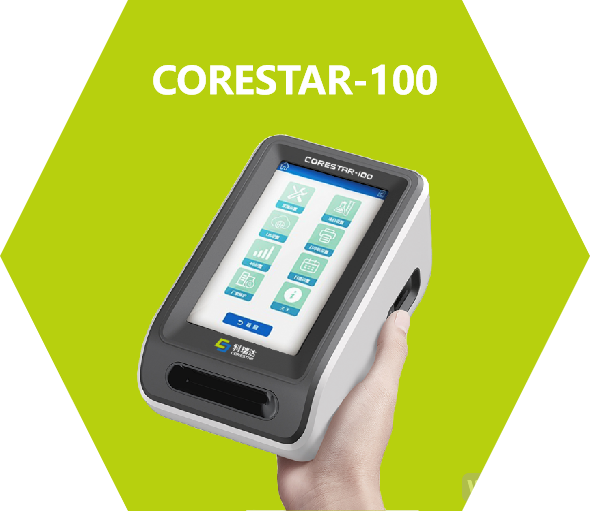
Chemiluminescent immunoassay was selected due to its high sensitivity, rapid response, strong specificity, and excellent stability., capable of detecting ultra-trace levels of protein substances in samples, making it highly suitable for the detection of cardiac markers, sex hormones, infectious disease markers, and other analytes. Kerida Biology has achieved chip-based integration of chemiluminescence immunoassay systems based on microfluidic technology,Achieved a single-chip solution for the full closed-loop process of “sample processing + diagnostic analysis,” meeting the automated testing requirements of clinical laboratories for “sample in, results out.”, and offers advantages such as precise results, rapid testing, simple operation, and lower costs compared to similar products.
Second, the research, development, and production of multiple reagent cartridges.The product portfolio covers cardiac marker, hormone, and inflammation series, with the cardiac marker series being its flagship products.
The development and launch of the reagent cards are, in essence, the result of a precise understanding of clinical needs. As one of the cardiovascular diseases receiving the most public attention, coronary heart disease has shown a year-on-year increase in mortality rate. Kerida Bio has developed a full-cycle diagnostic panel for Acute Coronary Syndrome (ACS). Among its offerings is its proprietary product, Ischemia-Modified Albumin (IMA), which was the first biomarker approved by the U.S. FDA primarily for the diagnosis of myocardial ischemia. IMA can be detected in the blood within 5–10 minutes after the onset of myocardial ischemia, sensitively reflecting ischemic status, and is widely used in the assessment and detection of diseases associated with myocardial ischemia. By overcoming technical barriers, Kerida Bio has achieved point-of-care testing (POCT) for IMA, thereby better leveraging its performance characteristics. When used in combination with other early biomarkers, it holds significant value for the early diagnosis, risk stratification, and treatment guidance of ACS. It is reported that the company will continue to focus on critical and severe conditions, striving to provide increasingly precise, efficient, and convenient clinical laboratory solutions.
Third, the development of a cloud-based iPOCT management platform.Kerida Biologics recognizes the need to build a digital platform to further enhance the management efficiency of POCT devices. To support improved management efficiency of POCT products both within and across healthcare institutions, Kerida Biologics has simultaneously developed the CORESTAR-POCT Management Software, enabling intelligent connectivity, control, integration, and sharing for POCT, thereby addressing challenges across the dimensions of “personnel,” “equipment,” “materials,” and “methods.”
In summary, Kerida Biotech has launched the CORESTAR-100 series, suitable for multi-scenario applications including clinical departments of tiered hospitals, five major centers, ambulances, and primary healthcare institutions, building an intelligent and informatized iPOCT solution that promotes lean management of clinical laboratory testing, provides more efficient, precise, and convenient diagnostic and therapeutic services for clinical laboratory medicine, emergency care, and primary healthcare, and creates a veritable “pocket laboratory.”
Accelerate product commercialization in the domestic market and advance regulatory approval for overseas markets.
Currently, the development of Kerida Biotech is accelerating further.
From a team perspective, in addition to continuously deepening their applied research on microfluidics and chemiluminescent immunoassay technologies, they are also closely monitoring the development of cutting-edge POCT technologies. In 2022, Kerida Bio established a molecular diagnostics R&D team; by early 2023, its molecular diagnostics project had officially launched after multiple rounds of investigation and feasibility studies.
From a product perspective,On one hand, Kerida Biotechnology is meeting domestic clinical testing demands and establishing its presence in China’s medical testing market, thereby facilitating the rapid promotion and deployment of its products. On the other hand, Kerida Biotechnology is continuously exploring overseas medical testing markets; with its related products having obtained CE certification, the company will also accelerate the sales of its medical devices abroad.
Perhaps investors’ perspectives can help us better understand the advantages of Kerida Bio. Liu Yikun, Partner at IDG Capital, stated, “Years of investment experience in the diagnostics sector have given IDG Capital a profound understanding and unique insight into diagnostic products that are urgently needed in clinical practice.”Kerida Bio’s POCT products are precise, affordable, and rapid, closely aligning with the testing demands of vast markets. Meanwhile, through years of process accumulation and iteration, the company has established large-scale production capabilities ready for global market deployment.“We believe that, leveraging its advantages in microfluidic chemiluminescence technology and the core features of its products—‘precision, automation, and cloud integration’—Kerida Bio is poised to emerge as a dark horse in the industry, driving the POCT sector into a truly smart era.”
“This is by no means an attempt to boast. In fact, as a technology-driven enterprise, Kerida Biotech places great emphasis on talent development and technological innovation, striving to become a globally trusted supplier of POCT devices. Moving forward, we will continue to adhere to national policy guidelines, persist in independent technological innovation, focus on market demands, remain at the forefront of point-of-care testing equipment, help improve healthcare conditions, enhance diagnostic and treatment efficiency, and make unremitting efforts to provide the public with optimal product solutions,” stated Mr. Huang Bo.
What surprises will Kerida Biotech bring us in the future? Let’s wait and see.