

Intensity Therapeutics Files IPO: Biotech Behind Novel Intratumoral Therapy Enabling 100% Preoperative Tumor Necrosis, Partnered with Merck and BMS

Intensity Therapeutics
Solid Tumor Cancer Therapeutics Developer
“Cancer cell membranes exhibit greater fluidity than those of healthy tissues, which may be leveraged by a novel drug delivery technology.”
In 2012, Lewis H. Bender founded Intensity Therapeutics (“Intensity”) with this vision. In less than five years, this simple concept evolved into an anticancer drug candidate that has progressed through two phases of clinical trials.
However, since its inception, Intensity has raised only $11.5 million across three funding rounds, an amount far insufficient to cover drug development costs, let alone advance commercialization. Currently, Intensity is pursuing an initial public offering (IPO), aiming to raise $8.1 million.
It is a biotech firm out of favor in the market, yet it is also a “dark horse” engaging in pipeline development collaborations with Merck & Co. and Bristol Myers Squibb (hereinafter referred to as “BMS”). Its story is more akin to a microcosm of the earlier generation of biotech companies: diligently working behind the scenes and acting as gamblers in scientific research.
Intensity Therapeutics, Inc. is a clinical-stage biotechnology company headquartered in Connecticut, USA, dedicated to helping patients extend their survival and improve their quality of life by developing anticancer drugs with fewer side effects to reduce tumor burden.
It seemed to exhibit an untimely stubbornness from its very inception. While numerous biotech companies were establishing multi-pipeline portfolios to mitigate R&D risks, Intensity Therapeutics resolved to bring its lead candidate, INT230-6, to market, thereafter focusing exclusively on the development of this single product.
Before introducing INT230-6, we inevitably first mention Intensity’s proprietary technology platform, DfuseRx.
DfuseRx enables the direct injection of therapeutic agents into solid tumors while enhancing their absorption. Once injected, DfuseRx facilitates the diffusion of the drug solution throughout the entire tumor, potentially delivering the medication into cancer cells.
According to data published by Intensity Therapeutics in the International Journal of Molecular Sciences in 2020, DfuseRx enables drug dispersion throughout the tumor and increases the concentration of potent drugs within cancer cells. DfuseRx-based pharmacotherapy can effectively kill tumors and trigger adaptive immune responses against mutant cells.
It is precisely the intratumoral delivery technology based on the DfuseRx platform that enables INT230-6 to exert its therapeutic effects.
The lead drug candidate, INT230-6, consists of two proven anticancer cytotoxic agents—cisplatin and vinblastine sulfate—combined with an amphiphilic molecule (SHAO), all formulated in a single vial.
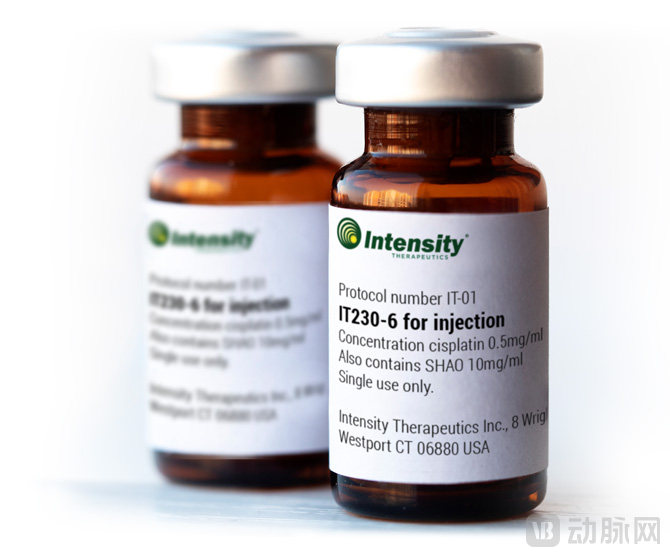
INT230-6 Appearance Diagram
Image source: Intensity Therapeutics official website
Intensity has established multiple pipelines related to INT230-6 for different types of metastatic cancer. Meanwhile, Intensity has also unlocked a substantial market opportunity. The late-stage soft tissue sarcoma pipeline alone could potentially generate a market value exceeding $100 million for Intensity.
According to Grand View Research’s 2018 market research report, the global sarcoma drug market was estimated at $703 million in 2017 and is projected to grow to $1.1 billion by 2023. The compound annual growth rate (CAGR) from 2018 to 2023 is expected to be 8.5%. Intensity Therapeutics’ candidate drugs may also be applicable to other large cancer treatment markets.
In 2017, Intensity Therapeutics initiated a Phase I/II dose-escalation study (the IT-01 study) of INT230-6 in the United States and Canada.Data from preclinical studies and clinical trials indicate that INT230-6 exhibits extensive dispersion within injected tumors, is well absorbed, and effectively delivers therapeutic agents to tumor cells, thereby inducing tumor cell death while simultaneously activating a systemic immune response against cancer. Furthermore, INT230-6 can prolong patient survival with minimal toxicity.
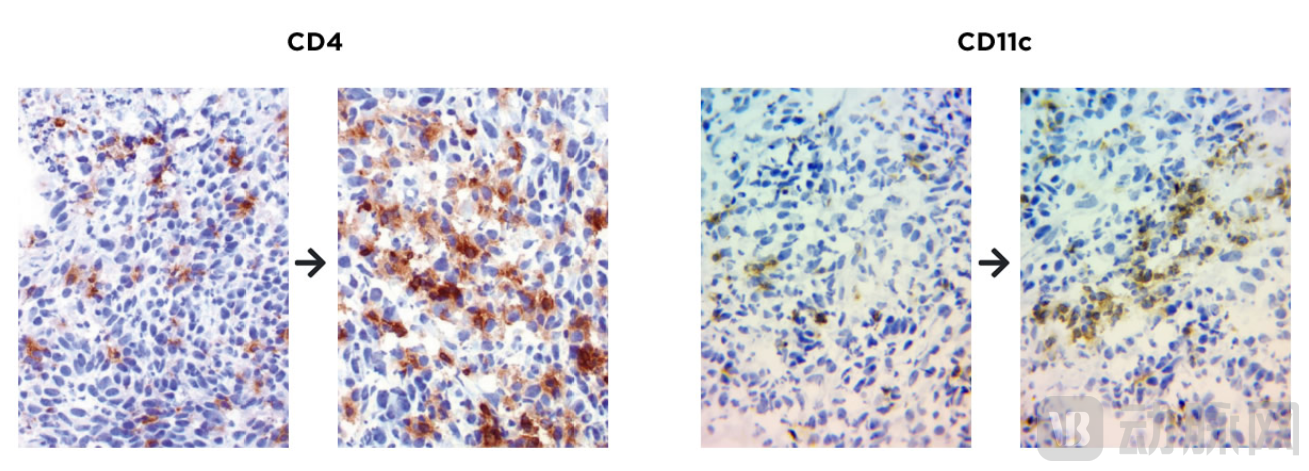
IHC Analysis of Untreated and INT230-6–Treated Colon-26 Tumors Approximately 10 Days After Administration
Image source: Intensity Therapeutics official website
In 2021, Intensity Therapeutics entered into an agreement with The Ottawa Hospital Research Institute and the Ontario Institute for Cancer Research to conduct a randomized controlled Phase II neoadjuvant study (the INVINCIBLE study) in patients with early-stage breast cancer, thereby evaluating INT230-6 as a preoperative treatment for early-stage breast cancer.
Professor Angel Arnaout of the Ontario Institute for Cancer Research noted that a breast cancer diagnosis is a traumatic experience for patients. There is a waiting period before surgery, which can last several weeks. Currently, there are no treatment options available during this waiting period, leaving both surgeons and patients feeling powerless.
INT230-6, as a novel drug delivery method involving direct intratumoral injection, can be utilized during the preoperative waiting period. Data from the INVINCIBLE study demonstrate that INT230-6 induces 100% necrosis of breast cancer tumors prior to surgery when administered during the window between diagnosis and surgical intervention.Pathway enrichment analysis revealed alterations in T cell activation, lymphocyte activation, and inflammatory response.
As of September 30, 2021, Intensity Therapeutics had treated 115 patients in the IT-01 and INVINCIBLE studies.
Limited R&D funding has taught Intensity Therapeutics to manage costs effectively—it chooses to maintain independent intellectual property rights while collaborating with private entities, corporations, or government agencies to fully leverage their laboratory resources.
This choice may be linked to Lewis H. Bender, the founder and CEO. With over 28 years of leadership experience in biotherapeutics, Bender previously held positions such as President and CEO, Chief Technology Officer, and Senior Vice President of Business Development before founding Intensity Therapeutics. During this period, he excelled at forging partnerships with major pharmaceutical and biotechnology companies through joint ventures, licensing agreements, and collaborative research arrangements.
As early as 2014, the Vaccine Branch of the U.S. National Cancer Institute (NCI), part of the National Institutes of Health (NIH), entered into a Cooperative Research and Development Agreement (CRADA) with Intensity Therapeutics to explore the mechanisms by which Intensity’s products elicit cancer immune responses. This collaboration ultimately resulted in two peer-reviewed publications, published in the International Journal of Molecular Sciences and OncoImmunology, respectively.
To investigate the synergistic effects of INT230-6 in combination with other drugs, Intensity Therapeutics has collaborated with Merck and Bristol Myers Squibb (BMS) to develop distinct pipelines:
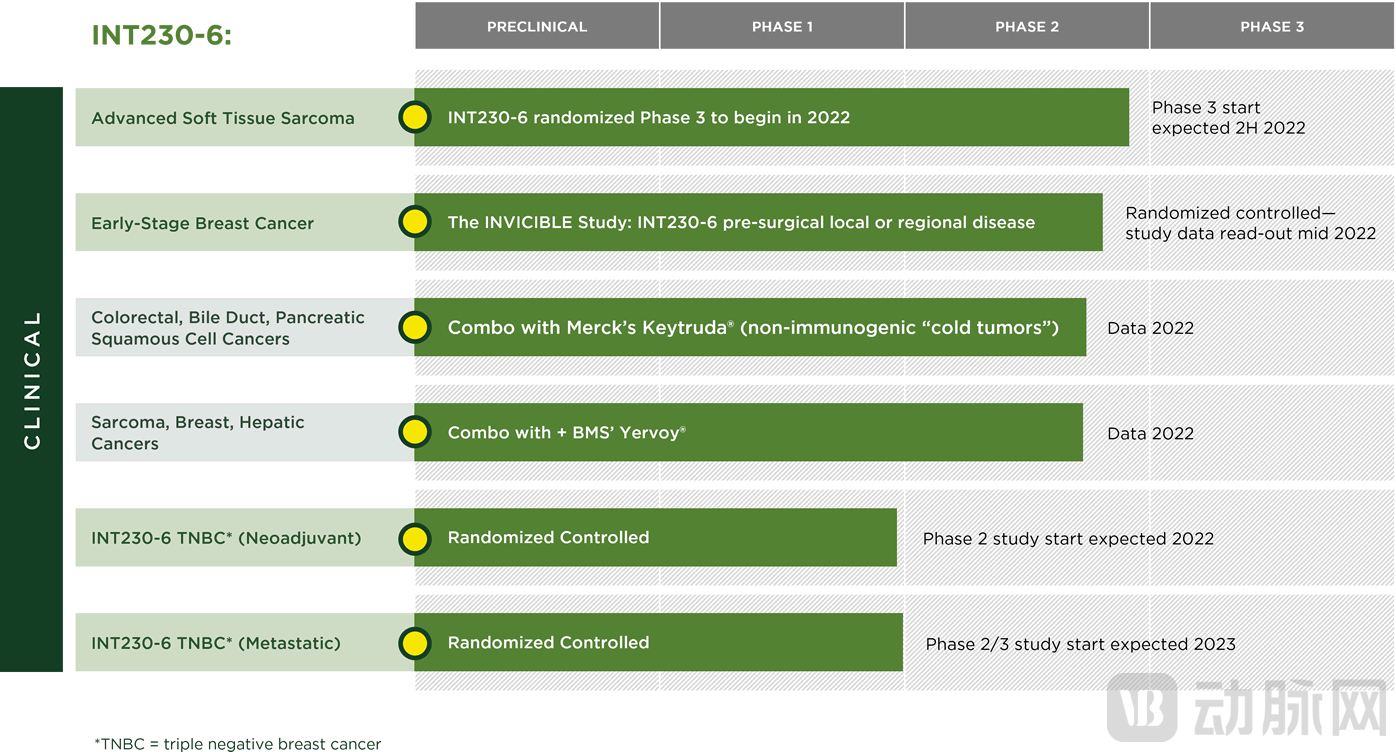
Intensity's Current Pipeline
Image source: Intensity Therapeutics official website
In 2019, Intensity Therapeutics entered into a clinical collaboration agreement with Merck to evaluate the combination of INT230-6 and Merck’s pembrolizumab in patients with advanced solid tumors. Data from the ongoing Phase I/II clinical trial demonstrated that INT230-6 exhibits efficacy and tolerability both as a monotherapy and in combination with pembrolizumab.Among these, using the RECIST criteria, the disease control rate (DCR) for INT230-6 monotherapy administered for more than 50 days was 50.9%; the DCR for INT230-6 in combination with pembrolizumab was 47.6%.
In 2020, Intensity Therapeutics entered into a clinical collaboration agreement with Bristol Myers Squibb (BMS) to evaluate the combination of INT230-6 and BMS’s immune checkpoint inhibitor ipilimumab in patients with advanced sarcoma, breast cancer, and liver cancer. Preliminary data indicate that INT230-6, either as monotherapy or in combination with ipilimumab, can directly kill tumors and induce an anti-tumor immune response within injected lesions in soft tissue sarcoma (STS).Furthermore, an exploratory analysis indicated that overall survival was improved in patients with a tumor burden of ≥40% treated with INT230-6, compared with historical benchmarks for this patient population.
Compared with competitors that possess substantial financial, technical, and other resources, Intensity Therapeutics’ financial strength appears negligible.
According to the prospectus disclosed by Intensity, as of September 30, 2021, its R&D expenses exceeded $4.4 million, representing a year-on-year increase of 21.2%. Since its inception, Intensity has incurred net losses every year, with an accumulated deficit of $28.7 million as of September 30, 2021. For the nine months ended September 30, 2021, and for the fiscal years 2020 and 2019, Intensity’s net losses were $5.5 million, $6.0 million, and $5.4 million, respectively.
As of September 30, 2021, Intensity Therapeutics held $7.4 million in cash, cash equivalents, and investments. Additionally, Intensity Therapeutics raised $32.1 million through channels including the founders’ initial investments and private equity financing. Intensity Therapeutics stated that,Cash reserves, combined with the net proceeds from the planned IPO, are sufficient to meet its business and capital expenditure needs through September 2023.
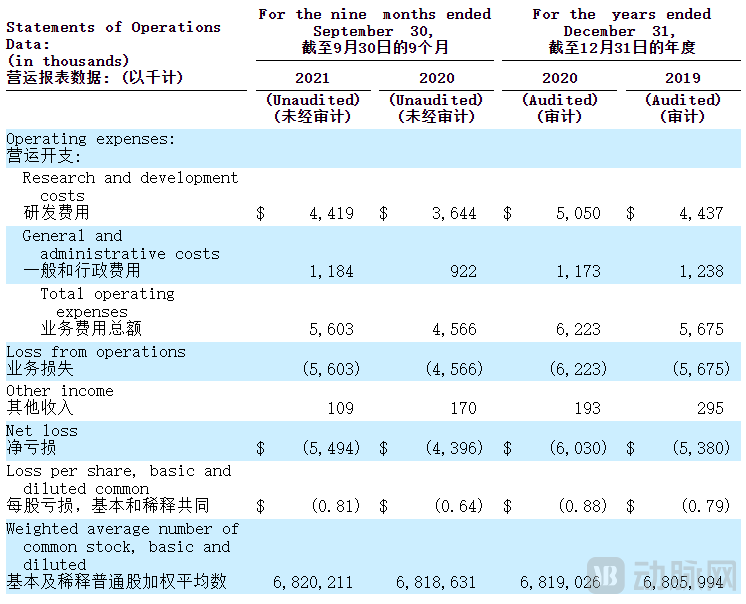
Revenue Disclosed by Intensity
Image source: sec.gov
However, from the perspective of Intensity Therapeutics, the key competitive factors influencing the development and commercial success of its candidate products are efficacy, safety, tolerability, reliability, convenience, price, and reimbursement.
Many competitors are also attempting to develop intratumoral delivery therapies. Amgen has launched talimogene laherparepvec (T-Vec), a novel immunotherapy based on genetically modified oncolytic viruses, which has been approved for the intratumoral treatment of cutaneous melanoma. Oncosec Immunotherapies is developing cytokine-based intratumoral immunotherapies designed to stimulate the human immune system to target and attack cancer.
Other local therapies explored by companies such as Merck also aim to recruit immune cells into the local tumor microenvironment through intratumoral delivery of other drugs.
However, these companies are currently focused on stimulating immune cells to achieve therapeutic efficacy, rather than directly killing tumor cells within the tumor. In contrast, Intensity Therapeutics employs a direct therapy approach that delivers potent drugs into the tumor to kill cancer cells, offering high local cytotoxicity while maintaining a non-toxic systemic anticancer profile.From this perspective, Intensity still retains certain market advantages.