

Evolutionary Computation Enables Broad-Spectrum Coverage: Wuhan University Team May Break the 'Always One Step Behind' Dilemma in Vaccine Development
As People Thought the COVID-19 Pandemic Was Over, a New VariantXBB.1.16Striking Again: In the Past Month (March 20, 2023–April 16, 2023), There Were Still 2.8 Million Confirmed Cases and 18,000 Deaths Worldwide.
In fact, human understanding of viruses is directly related to our own lives and health. Especially with the global pandemic trend of COVID-19, the research and development of vaccines based on its pathogenic agent, SARS-CoV-2, has become a major hotspot.
As early as during my doctoral studies,Professor Xu Ke, Principal Investigator (PI) at the State Key Laboratory of Virology, Wuhan Universitybegan focusing on research into broad-spectrum influenza vaccines. After two decades of technological innovation and accumulation, in January 2023, she led her team to deliver new achievements in the field of broad-spectrum vaccine research—Science Translational MedicinePublished the research paper “Vaccination with Span, an antigen guided by SARS-CoV-2 S protein evolution, protects against challenge with viral variants in mice” and proposed a new strategy for designing broad-spectrum vaccines to address the continuous mutation of the novel coronavirus.
Only by clarifying the direction of viral evolution can we outpace the speed of viral mutation.
As the virus spreads and circulates over time, it continuously undergoes iterative mutations. Coupled with the selective pressures exerted by human immunity and vaccine-induced immunity, SARS-CoV-2 has evolved from the original wild-type strain into multiple lineages of variant strains.
Currently, the World Health Organization designates significant circulating variant viruses as Variants of Concern (VOC), which include five major lineages: Alpha, Beta, Gamma, Delta, and Omicron.
“Although the progression of variants appears to be largely unpredictable, there are clearly some underlying trends in viral evolution,” said Xu Ke. After conducting a comprehensive study of more than 11 million SARS-CoV-2 sequences, the team discovered for the first time that among the viral isolates surviving in the human population,Mutations in the SARS-CoV-2 spike protein (hereinafter referred to as the S protein) are not random but evolve along three directional pathways.
The first pathway is characterized by “high cellular infectivity + weak immune evasion capability,” as represented by the Delta and Lambda variants; the second pathway features “low cellular infectivity + strong immune evasion capability,” exemplified by the Gamma variant; and the third pathway entails “high cellular infectivity + strong immune evasion,” typified by the Beta variant, albeit with a relatively smaller number of such variants.
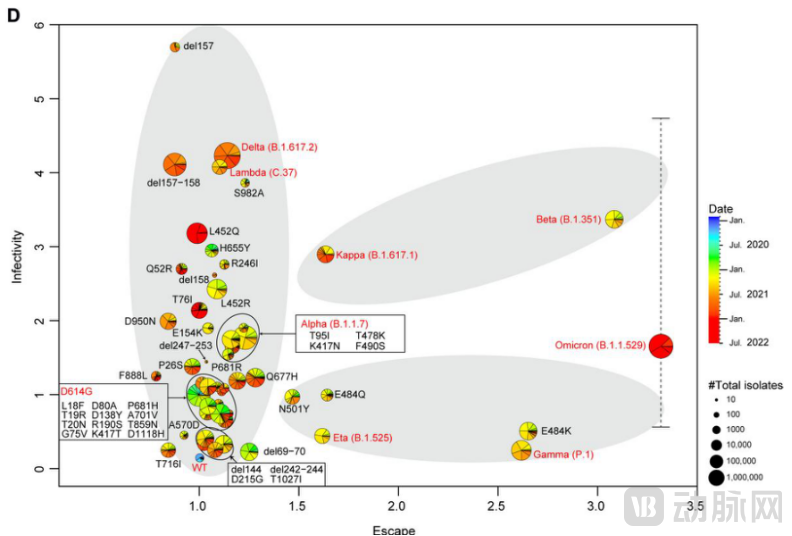 Evolutionary Patterns of the SARS-CoV-2 Spike Protein
The S protein has evolved along divergent pathways, either toward high infectivity combined with low immune resistance or toward low infectivity combined with high immune resistance. Mutations driven by directional evolution have led to antigenic heterogeneity. This is also the currentSingle-strain vaccines provide only narrow-spectrum protection against a specific group of variants., which is a key reason why it fails to provide broad-spectrum protection against other variants.
“The laws of viral evolution tell us that if we allow a narrow view to obscure our judgment and pursue the virus along only a single trajectory, we risk missing variants evolving in other directions, which can directly lead to vaccine failure. Therefore, we need to adopt an entirely new approach to predict the trajectory of viral evolution, offering the best chance of staying ahead of the pace of viral mutation,” said Xu Ke.
Design of Artificial Antigen Span Based on Viral Evolutionary Consensus Sequences
How Can Vaccine Development Stay Ahead of Viral Mutations?
In response, Xu Ke’s team was the first to propose a universal vaccine strategy against influenza viruses—Development of COVID-19 Vaccines via the “Creation Method” Targeting Conserved Epitopes in Consensus Sequences.
When asked about the reasons, Xu Ke said, “I have been following the development of universal influenza vaccines since 2003. Both influenza and COVID-19 are respiratory diseases, and shortly after the outbreak of COVID-19, we observed significant similarities in their patterns. Therefore, we also realized that these two viruses are likely intertwined.”
To further validate this hypothesis, Xu Ke’s team co-infected experimental mice with influenza and SARS-CoV-2, observing progressively severe pathological manifestations of pulmonary infection. This indicates that the two viruses can exhibit additive effects and cause coinfection.
These experimental findings underscore the necessity of a bivalent influenza and COVID-19 vaccine, and the results were published in the most influential scientific journal in the Asia-Pacific region.《Cell Research》This further clarified the team’s research direction: given the similar characteristics of the two viruses, the influenza vaccine design strategy previously developed by the team, based on consensus sequences of viral evolution, is likely applicable to SARS-CoV-2 as well.
The so-called viral evolutionary consensus sequence is based on tracking common mutation sites through evolutionary computation. It eliminates the bias of artificial selection, and thenFair and comprehensive identification of conserved variants retained within viral mutant populations.
“These common mutations are retained in both the parental and progeny viruses, representing the broadest spectrum of evolutionary trajectories for viral adaptation to the host. Therefore, such mutations are relatively conserved in the virus and tend to confer more stable and optimized functions,” explained Xu Ke.
Deriving the consensus sequence of viral evolution is both a search process and a computational one. It is understood that Xu Ke’s team first downloaded data from databases2,675 itemsAmino acid sequence of the SARS-CoV-2 S protein, followed by evolutionary classification and computational analysis, ultimately leading to the design of a construct that covers common mutations.Neopeptide (Span) Fitting。
Among them, the computational method adopted by the team isEvolutionary Clustering, cluster each time axis and evolutionary distance of the sequence. When the clustering structure of the data undergoes significant changes, team members must adjust the algorithm to reflect the new structure.
After performing extensive computational and statistical analyses, Xu Ke’s team identified the most common mutations across five distinct clades, including D614G, del69-70, del144, N501Y, and P681H, and calculated the occurrence frequency of all mutation sites. In the reconstructed phylogenetic tree, the Span sequence was located at the center, indicating its consensus characteristics.
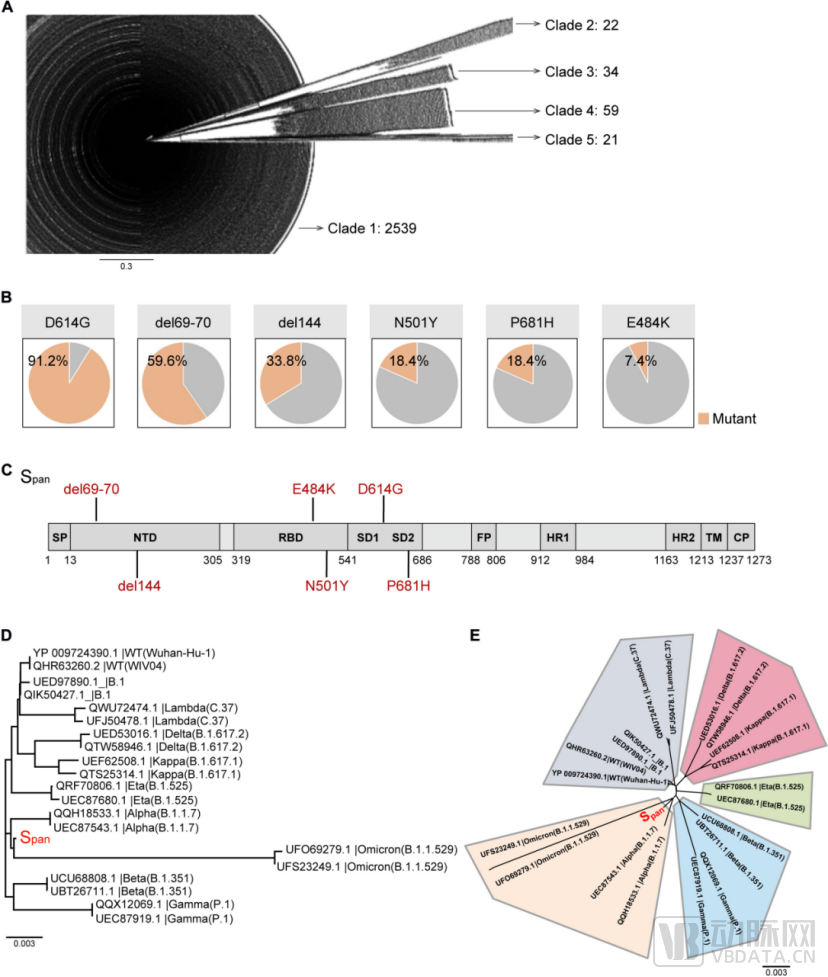 Evolution of the SARS-CoV-2 S Protein Guides the Design of Pan-Sequences for the S Protein
“No matter how SARS-CoV-2 mutates within the population, all variants share a common ancestor and evolve toward greater adaptation to the host. This evolutionary trajectory is orderly rather than random. Therefore, an ideal broad-spectrum vaccine antigen should retain the imprint of the ancestral virus while incorporating consensus sites representative of the majority of variants along this evolutionary path, thereby facilitating broad neutralization against these and other variants,” said Xu Ke.
Not only that, the neoantigen Span also possesses extremely strongProactiveness.This is because future viruses will also carry conserved sites. Notably, Span, which had already been designed prior to the emergence of Delta (February 2021), was able to efficiently induce broad-spectrum neutralizing antibodies against Delta, Omicron, and their variants that emerged after its design.
Experimental validation remains the sole criterion for determining whether Span can truly serve as a broad-spectrum vaccine antigen against heterogeneous variants.
Therefore, Xu Ke’s team conducted two mouse experiments that not only evaluated the ability of the Span vaccine to protect mice against wild-type (WT), Beta, and Delta SARS-CoV-2 variants, but also demonstrated that mice receiving a Span vaccine booster were fully protected against lethal infection with the Omicron variant.
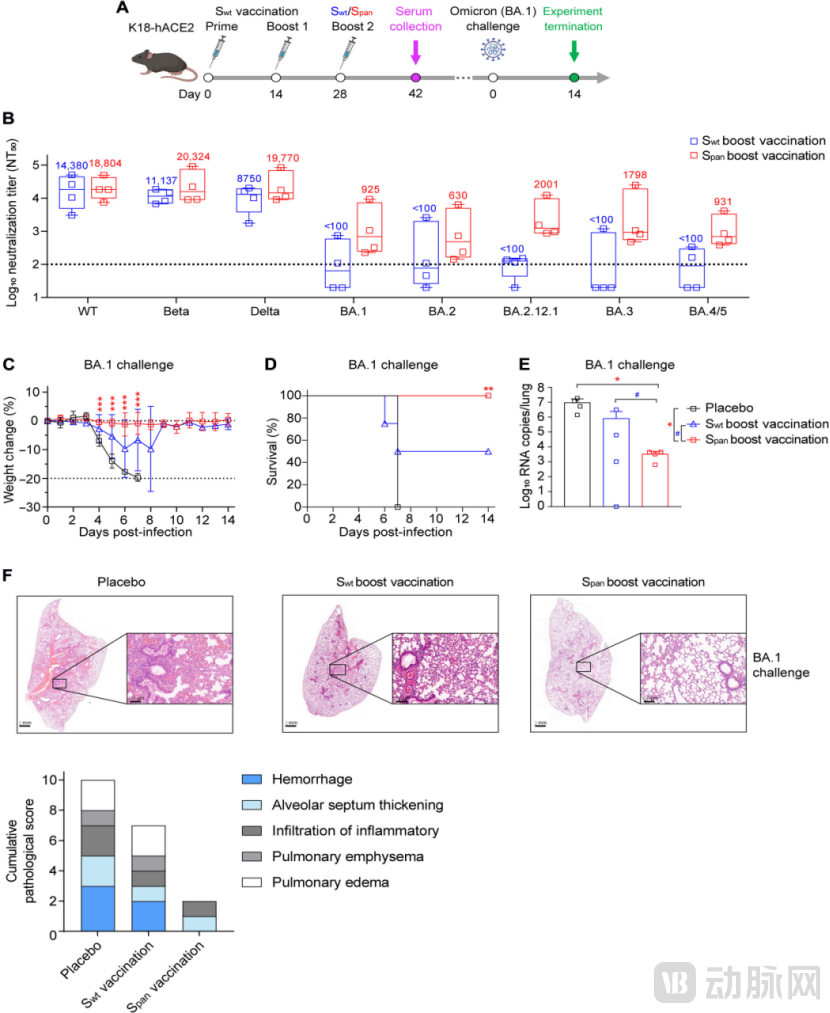 Span-Enhanced Vaccination Protects Mice Against the Omicron Variant: An Experimental Study
R&D to Address Future Mutations, Translation Oriented Toward Future Needs
"Bringing Research Findings Out of the Lab."
Currently, this innovative conceptual design for a broad-spectrum COVID-19 vaccineProof of concept completed. Meanwhile, Xu Ke’s team also hopes that their achievements will bring greater value to society.
On one hand, it meets enormous market demand; given that the entire population is susceptible to constantly mutating viruses, broad-spectrum vaccines are an inevitable future direction. In Xu Ke’s view, if COVID-19 broad-spectrum vaccines can achieve industrial-scale production, they are expected to circulate globally and capture an unpredictable share of the market. Theoretically, broad-spectrum vaccines can be applied to the entire human population; for instance, even the domestic market in China, with a vaccination rate of only 10%, representsBlue Ocean Awaiting Development, and it can also be used as a booster dose for vaccinated populations.
On the other hand, based on the underlying technology of virus evolution consensus sequences, the teamwill alsoEstablished an innovative company and laid out multiple pipelinesAccording to reports, this technology overcomes the limitations of limited breadth associated with existing approaches for broad-spectrum vaccines, such as those targeting internal antigens, stem regions, and mosaic chimeras. It is based on sequence optimization guided by antigenic evolutionary principles, representing a novel top-level design theory for broad-spectrum vaccines. Consequently, it is regarded as the technical approach most likely to offer predictive capability and coverage against future mutations.
“Not Only the Currently Prevalent Novel Coronavirus, we were able to rapidly respond to market demands and become the world’s first research team to develop a broad-spectrum vaccine for the prevention of COVID-19. In addition, weIt also focuses on other respiratory diseases in urgent need of broad-spectrum vaccines, as well as areas where vaccine efficacy is suboptimal, such as hand, foot, and mouth disease..” Xu Ke said.
Of course, to achieve steady and long-term success in the path of transformation, one cannot do without inner cultivation.
Under Xu Ke’s leadership, the team has accumulated20 Yearsresearch experience, not only inScience Translational Medicine、Vaccinepublished research papers in multiple international journals, and also filed a patent application for “S Protein of Novel Coronavirus Mutant Strains and Its Subunit Vaccines”Invention Patent, guiding vaccine design with theoretical and experimental sciences.
 Professor Xu Ke (second from left) and his team members. Photo provided by the interviewee.
It is understood that the current team size has reached23 people, with more than half of its members dedicated to applied research on broad-spectrum vaccines,Efforts are being further intensified to advance the translation and commercialization of a series of innovative vaccines.
AppendixRecruitment by Professor Xu Ke’s Research Group
(1) Director, CMC Drug Product Department (1 position)
1. Familiar with the processes of expression, purification, and large-scale production of protein products; well-versed in IND submission standards; prior experience in vaccine R&D is preferred.
(2) 1 Postdoctoral Fellow
1. Under 35 years of age, with no more than three years since obtaining a Ph.D. in virology or about to receive the degree; must have published at least one high-quality research paper as the first author in an SCI-indexed journal;
2. Possess a professional background in virology, immunology, microbiology, or related fields; be proficient in standard experimental techniques in virology, cell biology, and biochemistry; have experience in small animal research and prior work experience in biosafety laboratories;
3. Possess the ability to independently lead and conduct scientific research projects, and actively apply for various postdoctoral programs and national funding grants; demonstrate strong English proficiency in both oral and written communication, with the capability to independently draft and publish SCI-indexed papers;
4. Strong team spirit, with a conscientious and responsible work attitude and an enthusiastic, innovative approach to scientific research.
*Work Address:State Key Laboratory of Virology/College of Life Sciences, Wuhan University, No. 8 Bayi Road, Wuchang District, Wuhan City, Hubei Province
Application Method:Applicants are requested to compile their curriculum vitae, three representative papers, letters of recommendation, and other relevant materials into a single PDF document and send it to Professor Zhou at zhouchanjuan@whu.edu.cn. Please indicate “Postdoctoral Application + Name + University” in the email subject line, and ensure that the CV file name matches the email subject. For any further inquiries, please call 027-68753227. All application materials will be kept strictly confidential.